
Marketplace Seller Offboarding: What Happens When a Seller Leaves

Marketplace seller offboarding is everything that happens after the account goes dark: the orders in flight, the open return window, and the money you can still deduct from, and that tail decides the real date you parted.
Switching an account off takes a second. The obligations left behind live for months.
It is those obligations rather than the day you switched the account off that decide what the parting costs you. The first seller who leaves without a plan will show you that, in buyers waiting for a parcel and in money, you have nobody left to deduct from.
This article breaks down:
- Why is a departure a tail rather than a date?
- What access does a departing seller still need?
- When do you settle their balance?
- Which 3 kinds of departure cost most?
Key insights
- A seller's departure is a tail rather than a date because the obligations outlive the account: 40 unshipped orders, 600 orders inside an open return window, and 30 open cases come to 66 tail cases and about 32 hours of work.
- A departing seller still needs narrowed access rather than none: shipping confirmations and tracking numbers, decisions on returns and complaints, replies to buyers, and their own settlements, for the length of the tail, which in the worked example is 60 days.
- You settle the balance after the return window closes rather than on the day they leave, holding back a reserve the size of the expected corrections: on €264,000 due, 36 expected returns make that 12%, so €232,320 is paid out and €31,680 is held.
- The three kinds of departure cost 4, 21, and 37 hours: a seller leaving with notice closes their own tail, a suspended one hands you the parcels and half the cases, and a silent one leaves everything, which across 300 accounts a year is 652 hours with two thirds of it spent on the silent ones.
Why is a seller's departure a tail rather than a date?
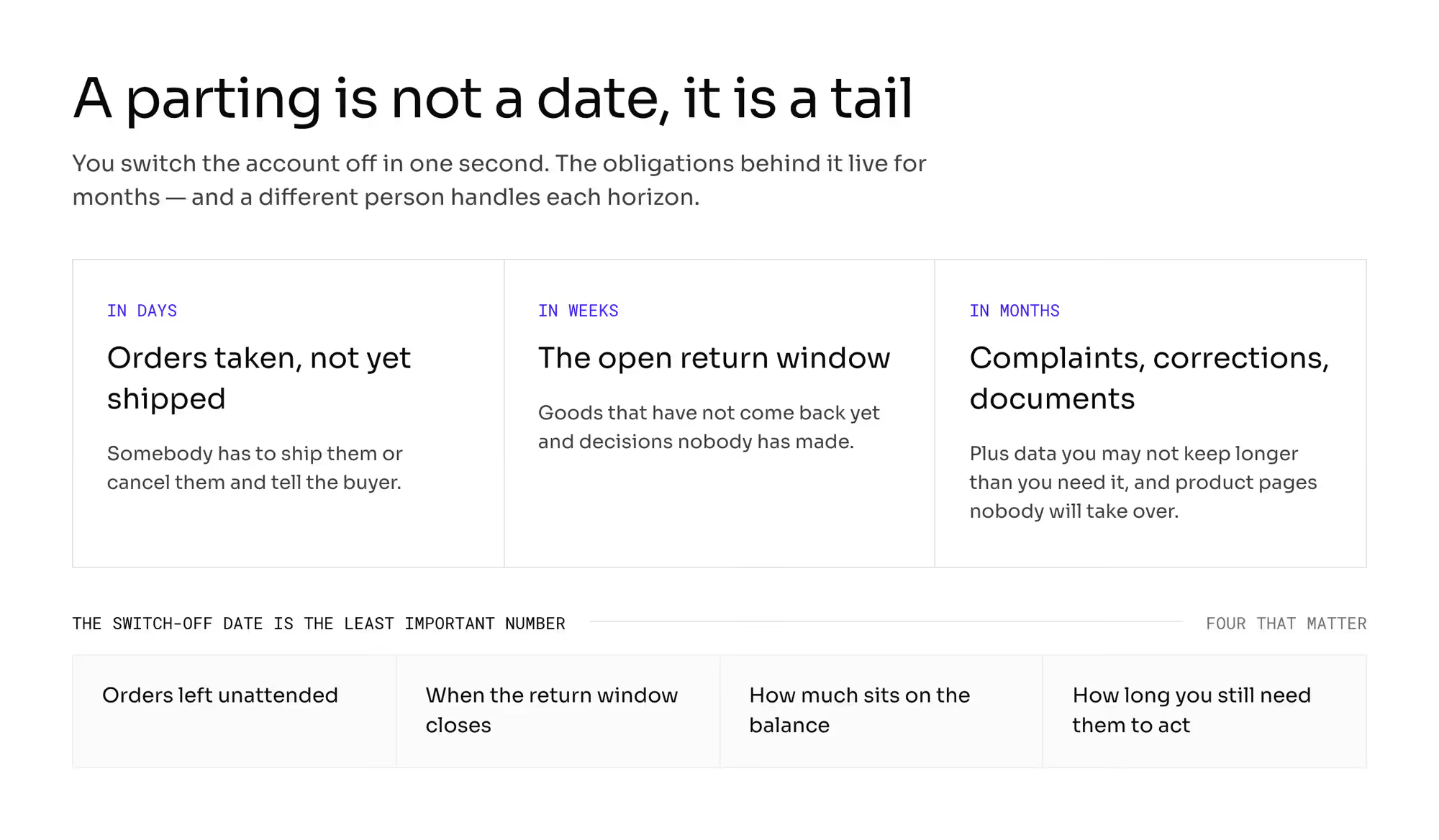
You switch the account off with one click. The obligations behind it live for months.
They are what sets the day you parted ways.
The tail has three horizons and a different person handles each one. In days, you have orders taken and not yet shipped: somebody has to ship them or cancel them and tell the buyer.
In weeks, you have the open return window, goods that have not come back yet, and decisions nobody has made. In months you have complaints about the conformity of the goods, settlement corrections, documents still to be issued, data you are not allowed to keep longer than you need it, and product pages nobody will take over.
The date you switch the account off is the least important number in all of this. Four others matter: how many orders are left unattended, when the return window closes, how much is sitting on the balance, and how long you still need the seller to do things for you.
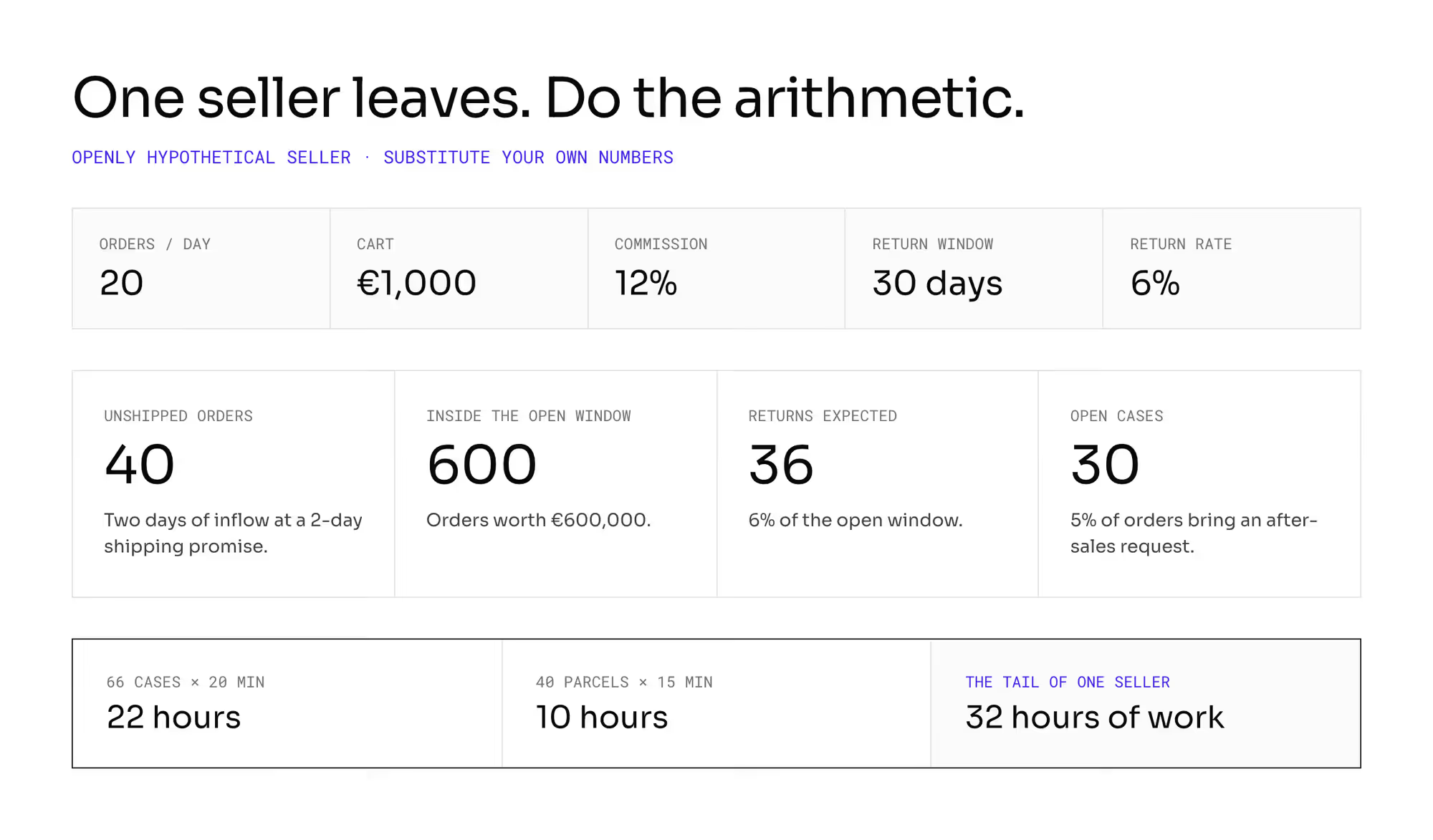
Let us do the math on an openly hypothetical seller we will keep coming back to. They do 20 orders a day on a €1,000 cart at a 12% commission, so they receive €880 from each one.
Your return policy gives the buyer 30 days, their return rate is 6%, and the shipping promise is 2 business days.
On the day they leave, you therefore have 40 unshipped orders (two days of inflow), 600 orders inside the open return window worth €600,000, of which 36 returns are expected, and 30 open cases (assuming 5% of orders bring an after-sales request). That is 66 tail cases and 40 parcels.
That comes to 32 hours of work: 66 cases at 20 minutes each comes to 22 hours, and 40 parcels at 15 minutes each adds another 10.
What access does a departing seller still need?
On the day you part ways, you stop being anyone to that seller. There is no sales target, no account manager, and no reason to log in.
And you still need three things from them: a tracking number for those 40 parcels, decisions on returns and complaints, and a consent or a document to close out the settlement.
Hence the conclusion that turns the whole project around: offboarding is narrowing access rather than cutting it off. That is design work which appears in no feature matrix, so nobody prices it.
What stays on: handling orders in flight (shipping confirmation, tracking number, cancellation), decisions on returns and complaints, replies in threads with buyers, reading and downloading their own settlements and documents, one channel to your team. What goes dark: new offers and price changes, taking part in campaigns, adding users, import schedules outside the tail.
For how long: the full tail scope until the return window closes plus time for goods to come back and decisions to be made, which in our example is 60 days; then read access to documents for as long as you have to keep them; then nothing.
The narrowing applies to two routes rather than one. Most offers come in through integrators, so if the technical credential dies together with the account, the seller handling the tail loses the ability to act on the day you need them most (the seller panel).
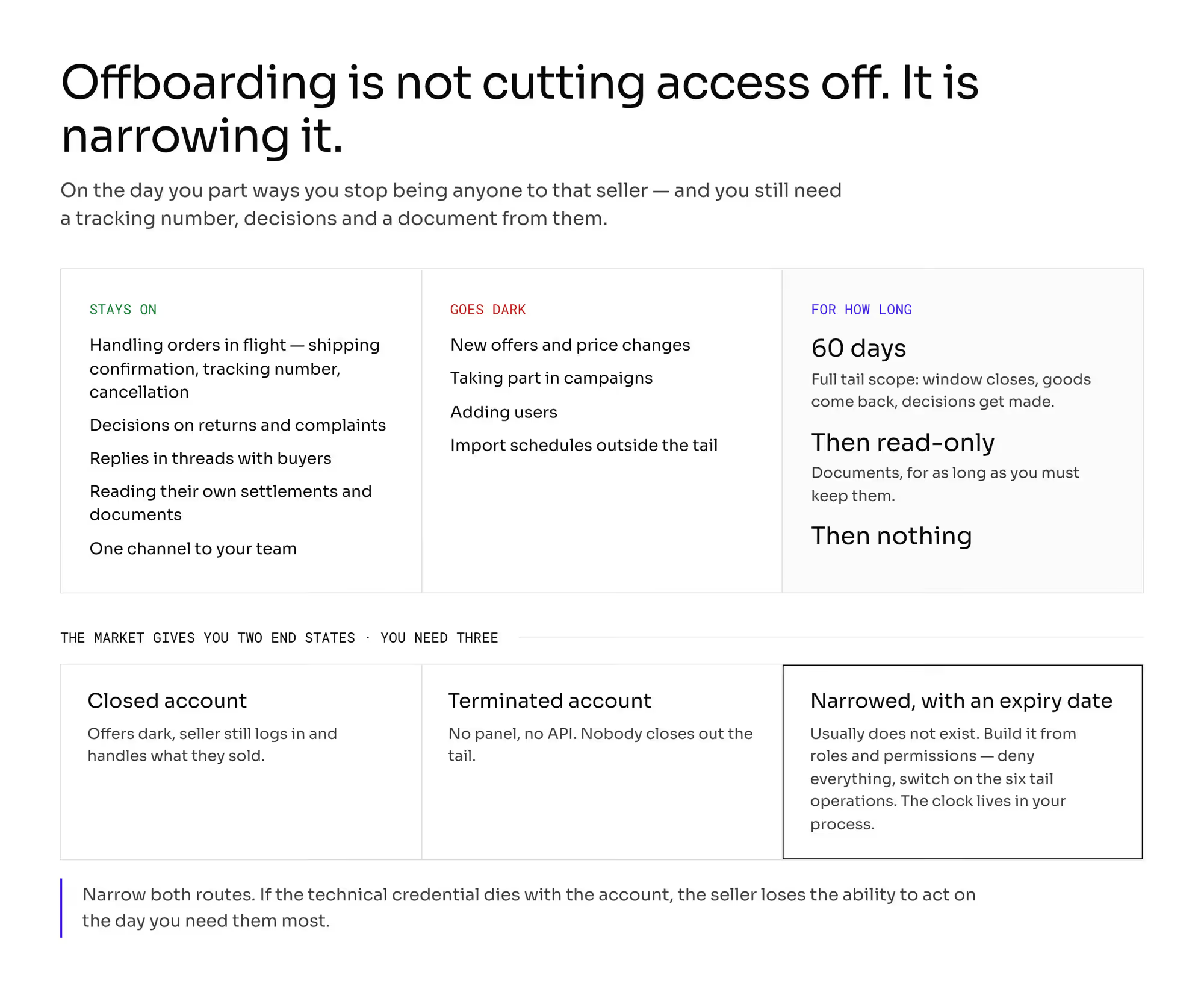
The market usually gives you two end states, and you need three. The first is a closed account.
The offers go dark, the seller still logs in and handles what they sold, and in some products they still pay the subscription fee. The second is a terminated account.
They cannot log in, and they cannot use the API. The third one, access narrowed with an expiry date, usually does not exist, so you have to build it out of what is there: roles and permissions.
The pattern is familiar from access management: you start by denying everything and switch on only the operations somebody has to perform. What you will not find on the shelf is permissions that expire on a clock.
That clock has to live in your own process.
And one variant to rule out at the demo: a single "delete account" button that takes away the seller's ability to close out open orders and does not hand it to you. Then nobody ships those 40 parcels.
It is worth knowing too that in practice an account is never deleted: the order and settlement history has to stay, so "deleting a seller" is always a change of state and never a disappearance.
When do you settle the balance of a departing seller?
The payout after a departure is the only payout where you get no second chance to deduct. Anything you hand over too early you will be recovering rather than offsetting.
Back to the numbers. On a twice-monthly cycle, on the day they leave, you are holding 15 days of sales: 300 orders × €880 = €264,000.
Expected returns across the whole open window come to 36 units, which is €31,680 of their share and €4,320 of your commission. A reserve set at the size of the expected corrections is therefore 12% of the amount due: you pay out €232,320 and hold €31,680 until the window closes.
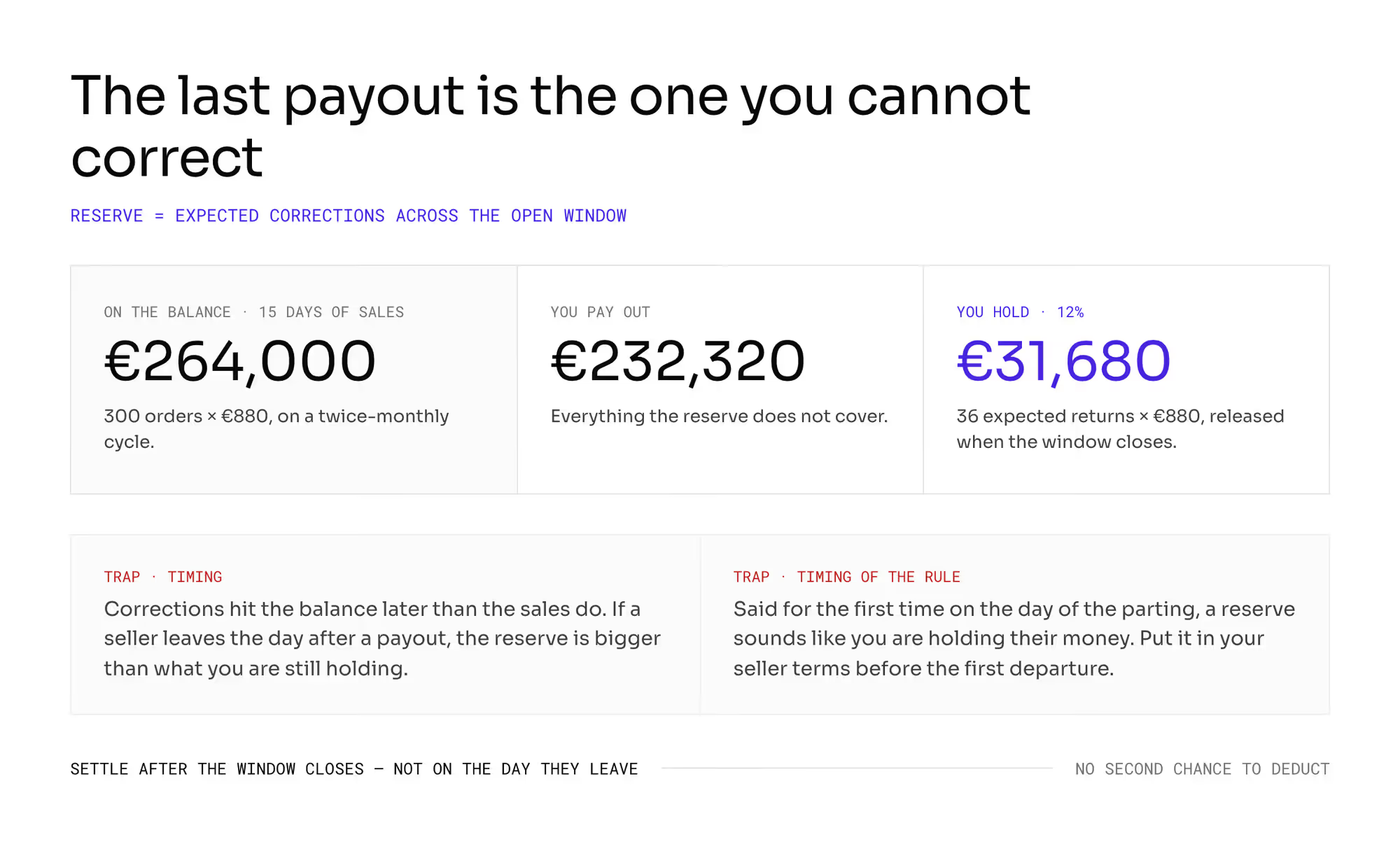
And that is the sentence that has to sit in your terms with sellers before the first one leaves. Said for the first time on the day of the parting, it sounds like you are holding their money.
It comes back as a dispute in which your reserve has no basis beyond your own decision (the rules on decisions about sellers and requests from sellers). There is one more trap in the same calculation: corrections hit the balance later than the sales do.
If a seller leaves the day after a payout, the reserve is bigger than what you are still holding.
Two boundaries for this chapter: a negative balance is a decision about debt collection rather than a settlement (chargebacks and an empty seller balance), and the mechanics of holds and reserves have their own chapter (payout cycles, holds and reserves).
What does a departing seller leave behind in the system?
Offers go dark, pages stay. A product with no buyable offer is a page promising something that does not exist.
That is a separate decision with its own retirement ladder (retiring what does not sell). If they created the page and owned its data, once they are gone, the page is maintained by somebody with neither the rights to it nor the knowledge (field ownership and disputes over product data).
Their photos and descriptions are a question of a content license, and the contract settles that rather than the system (the documents you sign with a seller). Personal data from their account and from their orders you keep for as long as the purpose requires, and not a day longer (who controls the personal data).
Who answers the buyer after the seller leaves?
The buyer has an open complaint, a right that did not vanish along with the account, and no interest whatsoever in your supply problems. Who fulfills their rights, and out of what is who delivers the buyer's rights.
What counts here is one decision: how much you are willing to pay out of your own pocket for somebody else's parting.
Put numbers on it. If the balance is at zero and you have to refund all 36 returns yourself, that is €36,000: half the monthly commission this seller was giving you (600 orders × €120 = €72,000).
That is the price of one bad parting, and at the same time the proof that the money has to be planned rather than found: either out of a reserve deducted earlier, or out of the budget for the promise to the buyer. On top of that, two limits written down before the first case: a maximum per parting and a maximum per year.
Without them, the decision is made by whoever happens to pick up the phone.
Which 3 kinds of departure cost you different amounts?
What does each kind of departure cost you in hours? | Resignation with notice | Suspension turning into termination | Silent disappearance |
|---|---|---|---|
Where the start date comes from | the seller gives it | from your decision (seller quality thresholds and reinstatement and the probation period) | there is none. An inactivity rule sets it |
Unattended orders on the start date (items) | 0 | 40 | 60 and rising |
Work on your side (hours) | 4 | 21 | 37 |
Balance on the start date | settled to plan | positive, with a reserve and usually with a dispute | often negative |
Who notices the problem first | you | you | the buyer |
What it demands of the system | winding the inflow down to a date | narrowed access after suspension | detection and automatic retirement of offers |
The math behind the table is simple. The seller with notice closes the inflow a week before the date, so nothing is left unshipped, and they close the 66 tail cases themselves.
You are left with 4 hours of supervision. The suspended one hands you 40 parcels (10 hours) and half the cases (33 × 20 minutes = 11 hours), 21 in total.
The silent one is detected after three days, so 60 orders sit unattended (15 hours), and all 66 cases are yours (22 hours), 37 in total.
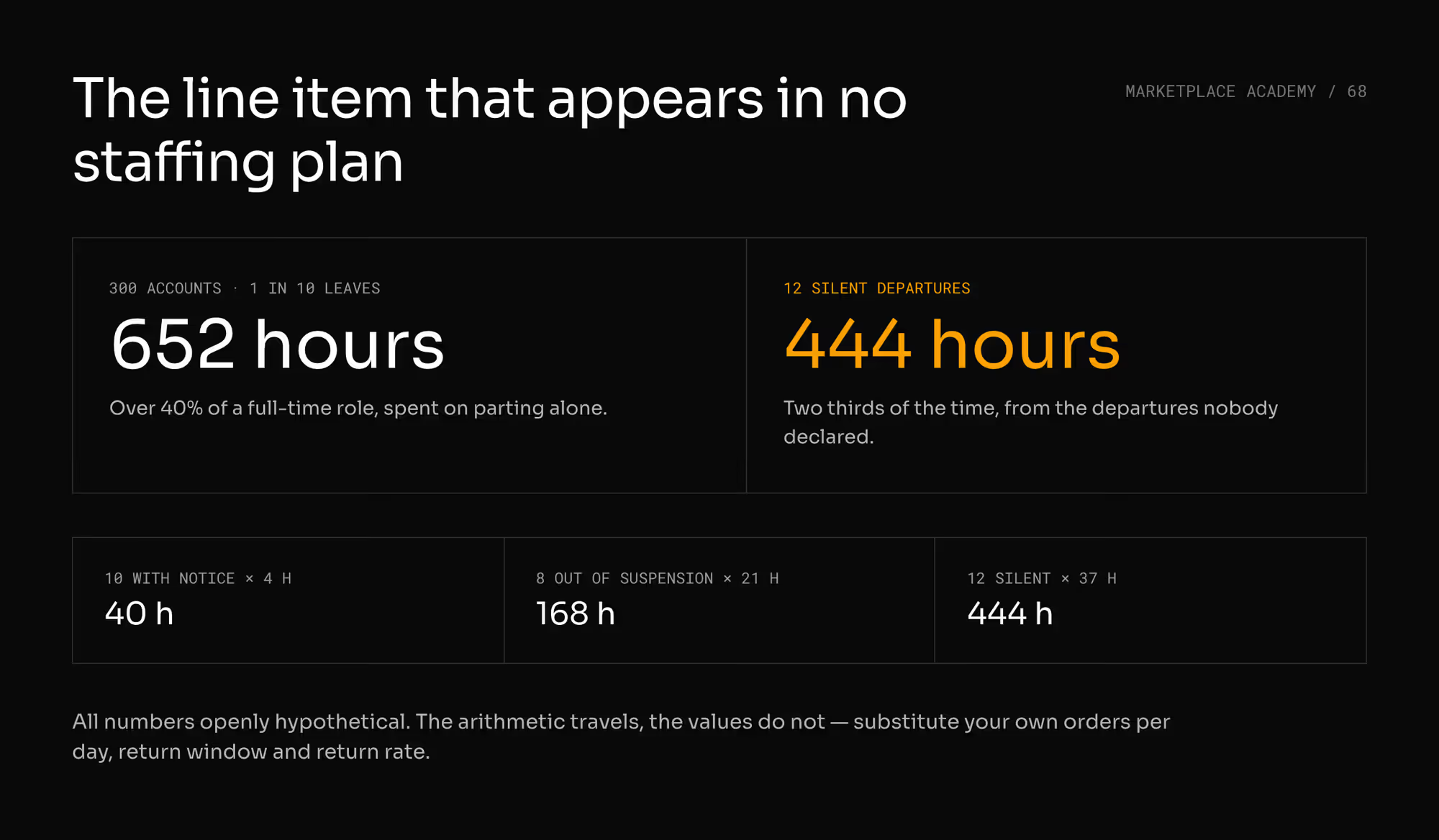
Now scale that to a year. Take 300 accounts and assume one in ten leaves: 10 with notice, 8 out of suspension, and 12 silent.
That comes to 652 hours, which is over 40% of a full-time role spent on parting alone. The silent ones eat 444 of those hours, two-thirds of the time.
That line item appears in no staffing plan.
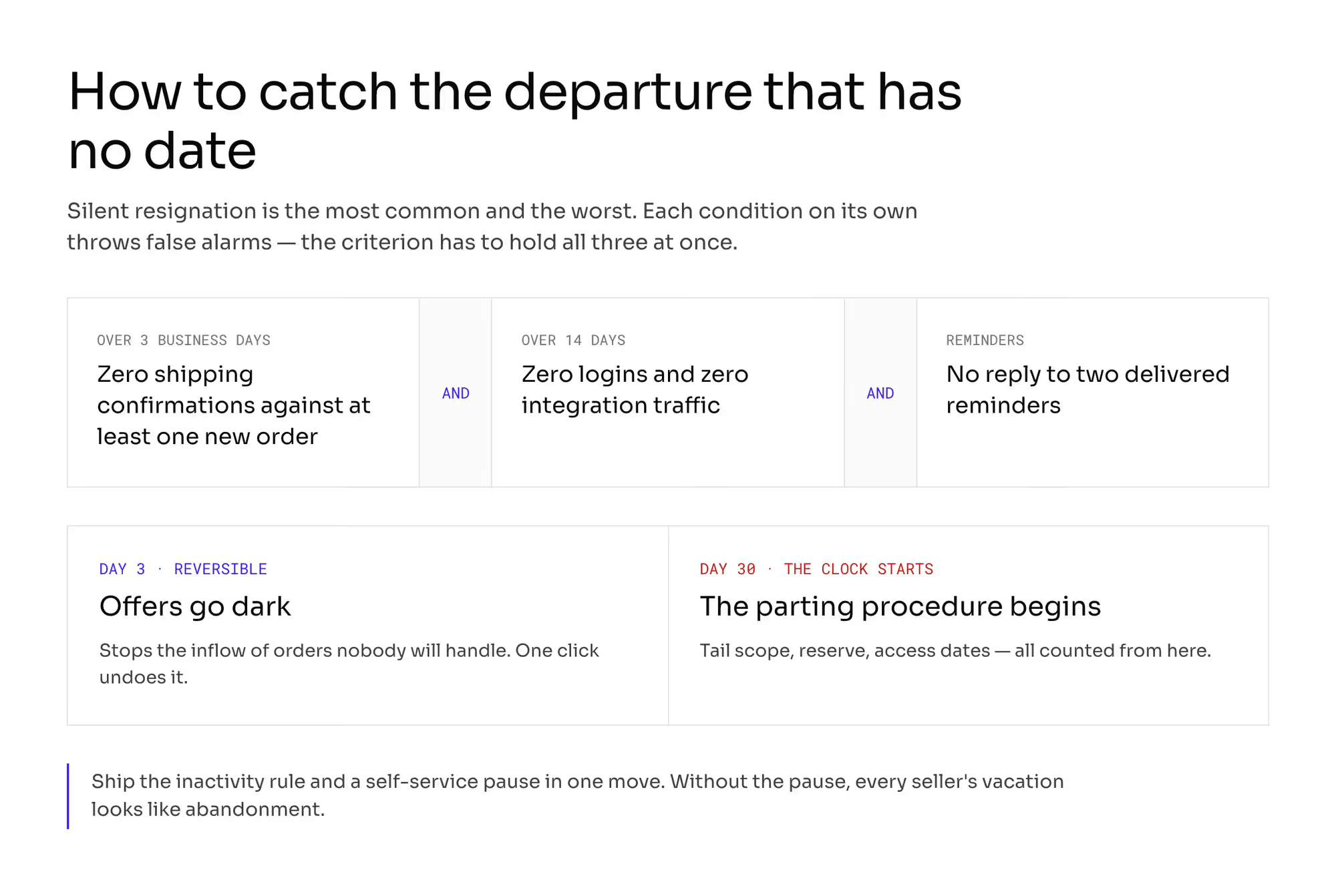
Silent resignation is the most common and the worst, because there is no date from which anything starts running. The criterion that catches it has to combine three conditions at once, because each one on its own throws false alarms: zero shipping confirmations against at least one new order over three business days, zero logins and zero integration traffic over fourteen days, and no reply to two delivered reminders.
The effect comes in two steps. On day three, the offers go dark, which stops the inflow and can be reversed.
On day thirty, the parting procedure starts.
The mechanism is not our invention: access management standards require inactive accounts to be disabled after a declared period. In your case, the same rule prevents sales that nobody will handle.
And the condition without which it will punish honest sellers: give the seller a self-service pause. Without it, every vacation looks like abandonment.
What does seller offboarding change about the rest of your build?
1. Account state has to be more than a flag
You need, separately: the reason for the parting, the end date of the tail scope, the end date of access to documents, and a "tail closed" marker. Four things a status will not replace.
2. Your payout policy has to know the day of departure
The cycle, the reserve, and the hold have been risk tools until now. At a parting, they become the only protection you have, because there will be nothing left to deduct from.
3. A parting is a process with a clock, so it has an owner
The seller's account manager does not want to run it, because they are losing a target; finance does not want it, because it is not their process. An unassigned tail does not disappear; it comes back as a ticket from a buyer.
How do you run seller offboarding, step by step?
- Work out your own three tail numbers for the median seller: unshipped orders, orders inside the open return window, expected returns, and cases. Multiply by handling time, and you have hours, and hours are an argument at the committee meeting.
- List the tail activities and map them to permissions, starting from denying everything. The list in this article has six items, and it is a good place to start.
- Set two dates: the end of the full tail scope and the end of access to documents. Both counted from the closing of the return window rather than from the day the account went off.
- Write the balance rule into your terms with sellers, together with the way the reserve is calculated. Do it before that rule becomes a party to a dispute.
- Set up the inactivity rule and the self-service pause in one move. On its own, the first punishes vacations, and on its own, the second detects nothing.
- Set the limit on what you pay out of your own pocket for one parting and for a year.
- Run an offboarding once on an empty account. A test account with one open order and one open complaint, taken all the way through: can the seller still upload a tracking number, can the return be settled, does the access expire on its own. That one rehearsal will find more than all your questions to the vendor.
Three questions for the demo:
- Whether you can leave a seller order and return handling while taking selling away, and whether that state has an expiry date?
- What exactly does your "account closure" do to their technical credentials and to the integration?
- Who can close out an open order after the account is switched off: them, us, or nobody?
Which mistakes do operators make about seller offboarding?
1. A parting designed as an account deletion
The orders, returns, balance, and documents stay, and you have cut yourself off from the only person who can close them. You see the cost within a week, in buyer tickets.
2. A payout on the day of departure
Without a reserve calculated from the open window, you hand over money you will need for returns. You also move from the position of the party that deducts to the one that chases a debt.
3. Narrowing the panel and forgetting the integration
Formally, the seller has access. In practice, they have nothing to work with, because they ran the whole operation through an integrator.
4. No rule for silence
The most common departure has no date, so no process starts, the offers go on selling, and the first auditor of your supply is the buyer.
5. Agreeing the rules of parting during the first parting
A rule on the balance, the reserve and the limit, negotiated with the other side of a dispute, stops being a rule and becomes a precedent you will pay twenty times over.
What do you still have to settle about your own offboarding?
This article does not settle the mode of termination, the form of the justification, or the deadlines toward a business. That is the core of the rules on decisions about sellers and a question for a lawyer, who is also worth asking about the regulations on transparency between platforms and sellers, commonly known as P2B: how much notice a parting requires and what exactly you have to deliver.
This article does not cover the situation where the seller is not leaving but changing entity. The account dies, the relationship continues, and that is an entirely different bill (a change in the seller's legal form).
Quality thresholds and the ladder of sanctions are seller quality thresholds, reinstatement and the probation period reinstatement and the probation period.
All the numbers here are openly hypothetical. The arithmetic travels, the values do not: substitute your own orders per day, your own return window, and your own return rate, because every conclusion above depends on them.
That includes how much of a full-time role parting with sellers eats up at your company.
Summary: What does a seller's departure leave behind?
Parcels, open returns, and money you can no longer deduct from. The account goes dark in a second; the obligations behind it run for weeks in the return window and months in complaints, corrections, and documents.
That is why offboarding is narrowing access rather than removing it: on the day you stop being anyone to that seller, you still need a tracking number for 40 parcels and decisions on 66 cases. It is also why the balance is settled after the window closes, with a reserve sized to the expected corrections and written into the terms long before the first parting.
And the cheapest version of all this is the seller who tells you they are going, because a silent departure costs nine times as many hours as one with notice.
Ask a vendor what a seller can still do the day after you close their account, and whether their integrator credential survives it. Building a marketplace where a parting is a process with a clock, an owner, and a reserve?
Frequently asked questions on marketplace seller offboarding
What is seller offboarding on a marketplace?
Seller offboarding on a marketplace is the handling of everything the account leaves behind: orders taken and not yet shipped, the open return window, complaints, corrections, and the documents you still have to issue. The date you switch the account off is the least useful number in it; the tail is what decides when you have really parted.
What access should a seller keep after leaving a marketplace?
A seller should keep exactly the access the tail requires and nothing beyond it. Shipping confirmations, tracking numbers, decisions on returns and complaints, replies to buyers, and their own settlements stay on; new offers, price changes, campaigns, and new users go dark.
The same narrowing has to reach the integrator credential, because that is how most sellers act on your platform.
When should a marketplace pay out a leaving seller's balance?
A marketplace should pay out a leaving seller's balance once the return window has closed and the corrections are known. Until then, hold a reserve the size of the expected corrections, and write that rule into the seller terms before the first departure.
Explained for the first time on the day somebody leaves, a reserve reads as withholding their money.
Ready to build?
We build marketplaces where a departing seller keeps exactly the access the tail needs, and the balance is settled once the return window has closed.