
P2B Regulation on a Marketplace: Ranking, Terms Changes, and Suspension

The P2B regulation is the EU rulebook for how a marketplace treats the businesses selling on it, and it turns ranking, fee changes, and suspensions into decisions you have to be able to justify.
Your platform makes decisions every day that settle other companies' revenue: who wins the product page, whose rate changes, who stops selling. Regulations require you to be able to show the reason behind each one and deliver it to the seller concerned.
That is a requirement on your system.
This article breaks down:
- Which 3 things must every decision about a seller carry?
- Which 3 classes of decision does P2B separate?
- What exactly must you disclose about ranking?
- What must you record when you suspend a seller?
Key insights
- Every decision about a seller needs three things: a reason from a list you published, proof you told them, and a record in the system.
- A decision with no record did not happen. In a dispute you have a memory of a meeting and they have their version of events.
- You explain how your ranking works. You do not hand over the code, or weights precise enough for anyone to game.
- Changing a commission is an event. Save the version, the date it starts, and the list of sellers it reached.
- In a mixed catalogue you favour your own offers without deciding to. Ship same-day with free delivery and every change of weights hands you the page.
Which 3 things must every decision about a seller carry?
Conversations about obligations toward sellers usually open with "what do we put in the terms?" Wrong question: the document is the easy part. The hard one reads like this: your platform makes decisions about other businesses without pause, and either each is a recorded event, or you have nothing to defend yourself with in a dispute.
Every such decision needs three things at once:
- A reason from a closed list. Not a sentence an operator types out, but a ground you published in advance in your terms of cooperation, pointed to along with the specific facts. That includes the impulse coming from someone reporting an infringement.
- Proof of delivery. The seller has to be informed on a durable medium, and you have to be able to show when and about what. A panel message that left no record is not delivery.
- A trail in the system. An event with a timestamp, an author, the ground, the statement of reasons, and what came next: whether the seller appealed, who reviewed it, what the outcome was.
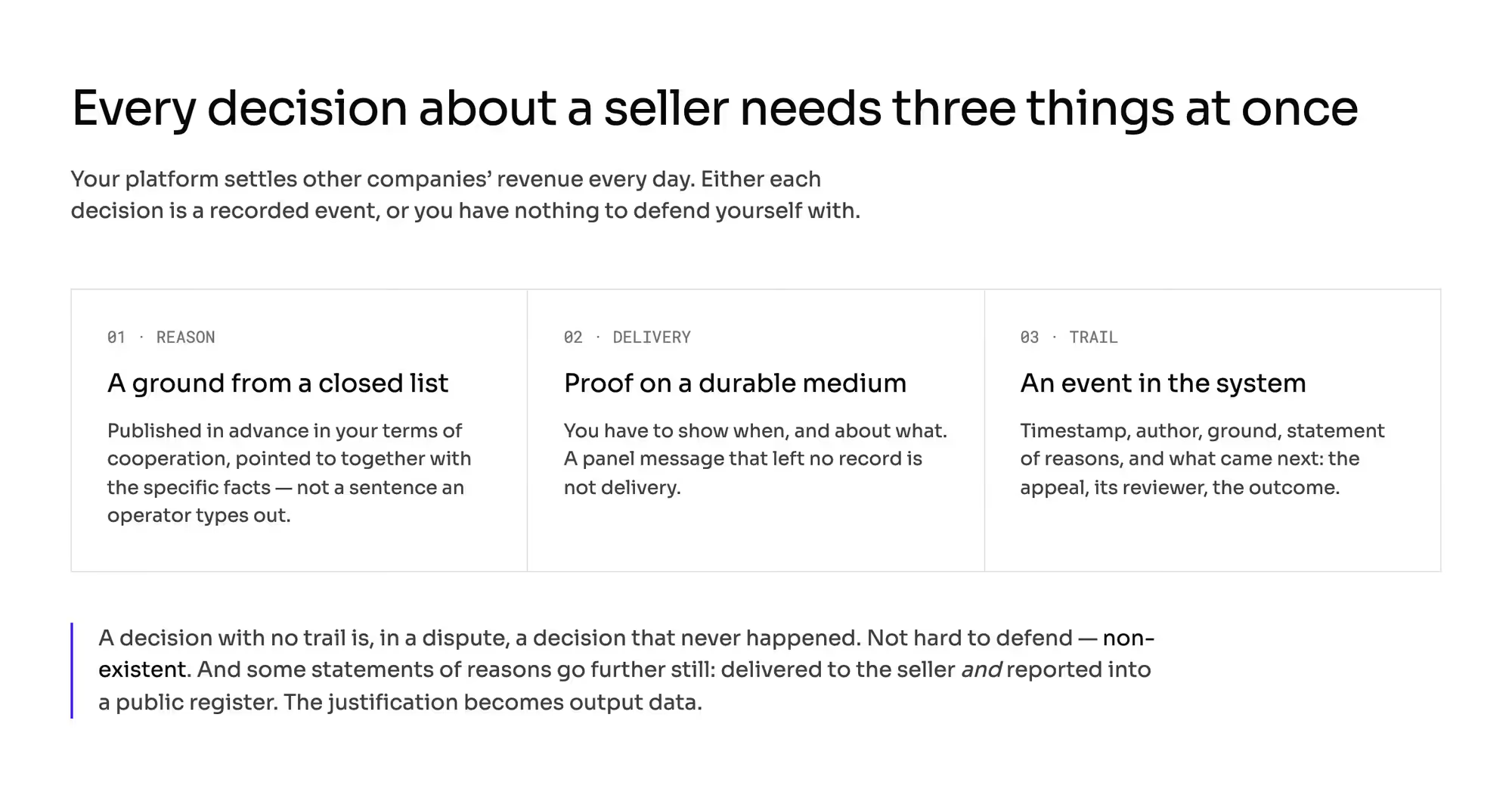
Repeat it to your board like this: a decision with no trail is, in a dispute, a decision that never happened.
The other side comes with its version of events, and you come with a memory of a meeting. There is a second face to this.
Some statements of reasons must be delivered to the seller and also reported into a public register kept by an authority. The justification becomes output data.
Which 3 classes of decision about a seller does P2B separate?
Everything you do to a seller falls into one of three classes, and each carries a different requirement, so mixing them into one process is expensive.
1. Visibility: ranking, page winner, featured slots
This covers ranking, picking the winner of a product page, featured slots, and paid placements. The duty is collective and forward-looking: you have to describe up front how it works, and every individual result follows from that description.
2. Terms: commission, fees, and the rules of selling
This covers a change of commission, fees, catalog rules, shipping requirements, and returns policy. The duty is forward-looking and individual: the change has to reach the seller before it takes effect, with a window in which they can disagree and leave.
3. Existence: restriction, suspension, and termination
This covers restriction, suspension, and termination of the contract. The bar sits highest here: a statement of reasons with specifics, delivery tied to the moment the decision bites, notice before you part ways, and a real path to explain the facts.
What does each class require? | Visibility | Terms | Existence |
|---|---|---|---|
Typical decision | ranking, page winner, featured slot | change of commission, fees, rules | restriction, suspension, termination |
What it rests on | published description of main parameters | published changed terms | ground from a closed list plus facts |
When the seller learns | in advance, collectively | before the change takes effect | when it bites; earlier when you part ways |
What they can demand | an explanation of how you calculate | to leave without consequences | the facts explained, the appeal reviewed |
What you record | description version, weights version | terms version, who got it and when | event, author, ground, delivery, outcome |
What breaks with no trail | you cannot prove you do not favor yourself | you cannot reconstruct what was in force | you cannot defend the decision or its reversal |
What exactly must a marketplace disclose about its ranking?
The duty is narrower than it sounds in the room and broader than it looks in the document. You disclose the main parameters that decide the order, and why some weigh more than others.
You do not disclose the algorithm, the code, or weights precise enough to let anyone game them. Commercial sensitivity alone is not a reason to give no parameters.
The bar is comprehensibility. "We take quality into account" does not satisfy the duty, because it says nothing.
You have to say what quality means at your company and why it weighs what it weighs. The influence of money on the order gets disclosed separately, in two forms: the direct one, meaning paid exposure, and the indirect one, where a seller improves their position by taking an add-on service from you.
Fulfillment, shipping, and returns handling sit in that second form. It gets left out more often, because nobody inside the company calls it a preference.
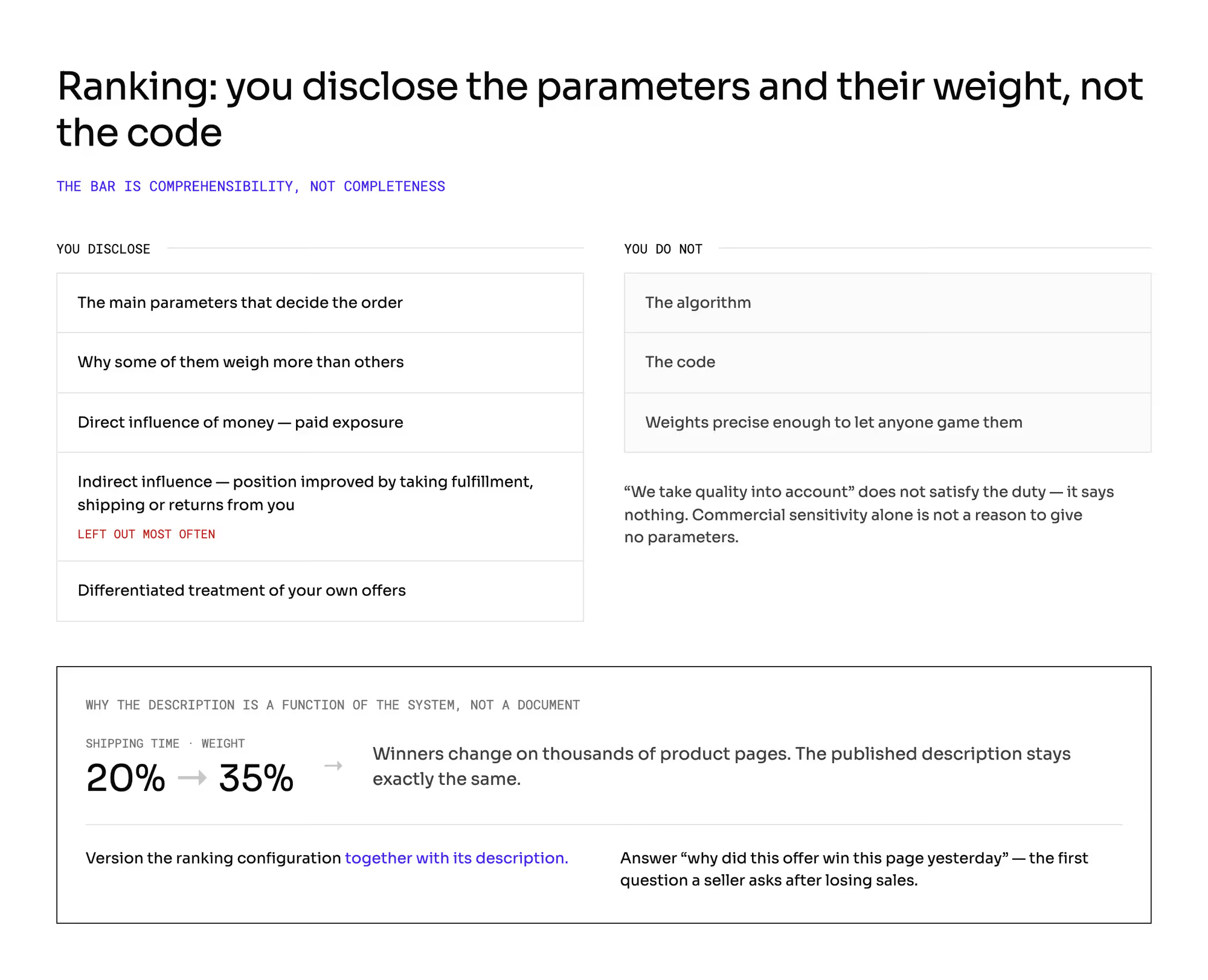
Hence a requirement no feature matrix shows: the description of your ranking is a function of the system. Take five parameters: total price, shipping time, cancellation rate, return rate, completeness of the product page.
Raising the weight of shipping time from 20 percent to 35 percent changes the winners on thousands of pages, while the published description stays the same. So you need versioning of the ranking configuration together with its description, plus an answer to "why did this offer win this page yesterday?" That is the first question a seller asks after losing sales.
The algorithm picking the winner of a product page has a chapter of its own.
And now the part nobody raises at internal meetings: in a mixed catalog, favoring your own offers happens by accident. Not because anyone decided to, but because that is how the weights were set.
If your own offers ship the same day and carry free delivery baked into the business model, every shift of weight toward delivery time and cost hands you the ties wholesale. Sellers see it faster than you do, because they look at one category every day.
Regulations require you to describe your differentiated treatment of your own offers. You can only describe, though, what somebody has counted.
The test is cheap: the share of your own offers among page winners in mixed categories, measured monthly. Without that number, you have no answer to the accusation, only a reassurance.
Why is a change of commission an event and not a field edit?
A change of terms has to reach the seller in advance, and they have to have time to leave. The product consequence is hard: a rate cannot be a field that somebody overwrites.
It has to be a version with an effective date, a record of who introduced it, and the list of sellers it went to.
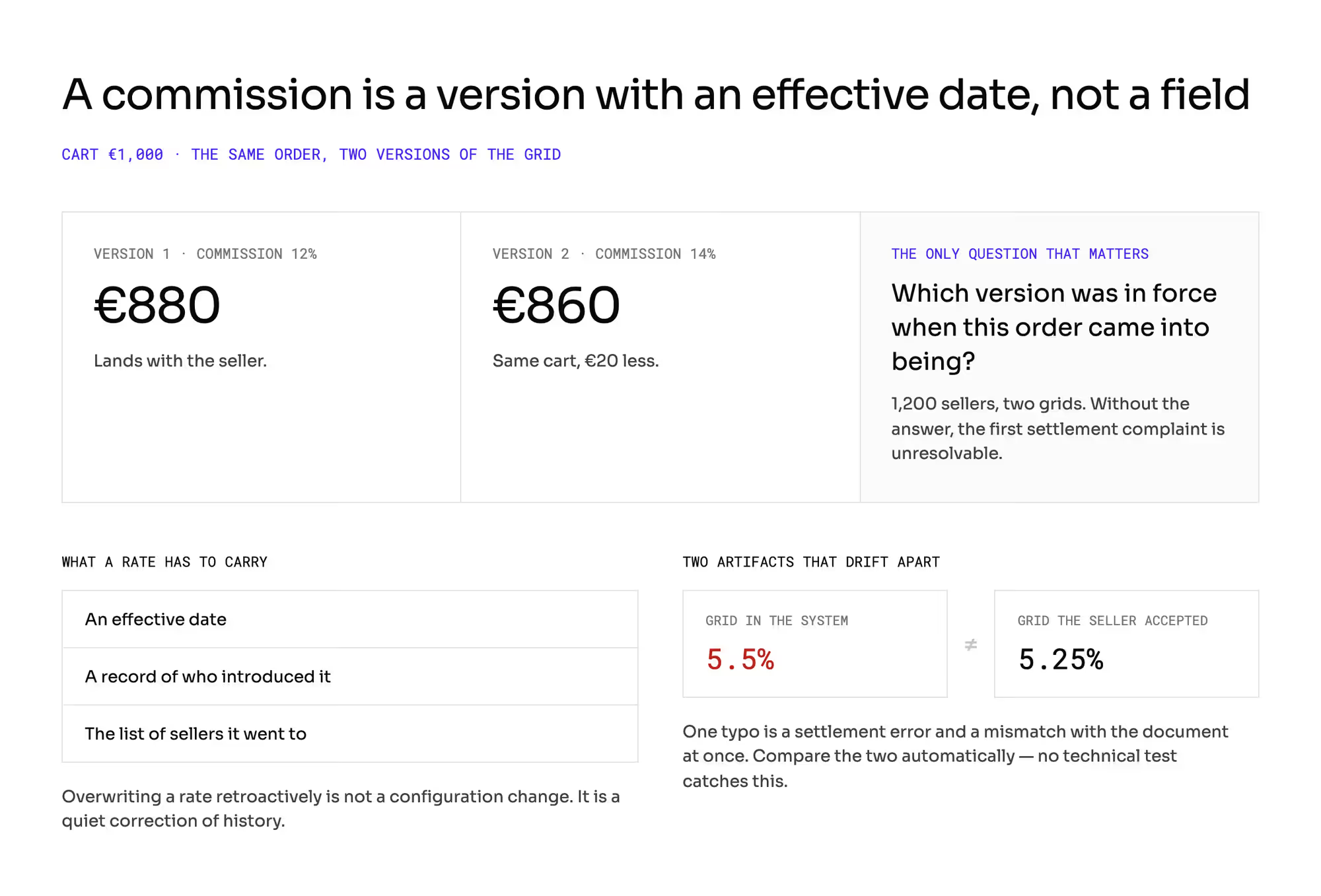
The canonical example of this series: a cart of €1,000, a commission of 12%, and €880 landing with the seller. After a raise to 14% the same cart leaves them €860.
With 1,200 sellers and two versions of the grid, one question decides everything: which version was in force when this order came into being. Without it the first settlement complaint is unresolvable, and the reconciliation from "Marketplace Payment Reconciliation: How to Match Platform, Payment Provider, Bank, and Your Accounting" has nothing to hold its calculation against.
Overwriting a rate retroactively is not a "configuration change." It is a quiet correction of history.
One more trap, and no technical test catches it: the grid in the system and the grid in the published document are two artifacts, and they can drift apart. A typo (5.5 instead of 5.25) is at once a settlement error and a mismatch with the document the seller accepted.
Practitioners solve this by automatically comparing rates in the system against the table shown to sellers. "Marketplace Seller Agreement and Terms: Which Documents Do You Need?" describes how documents get changed.
What matters here is that it has a counterpart in the data.
What must you record when you suspend or drop a seller?
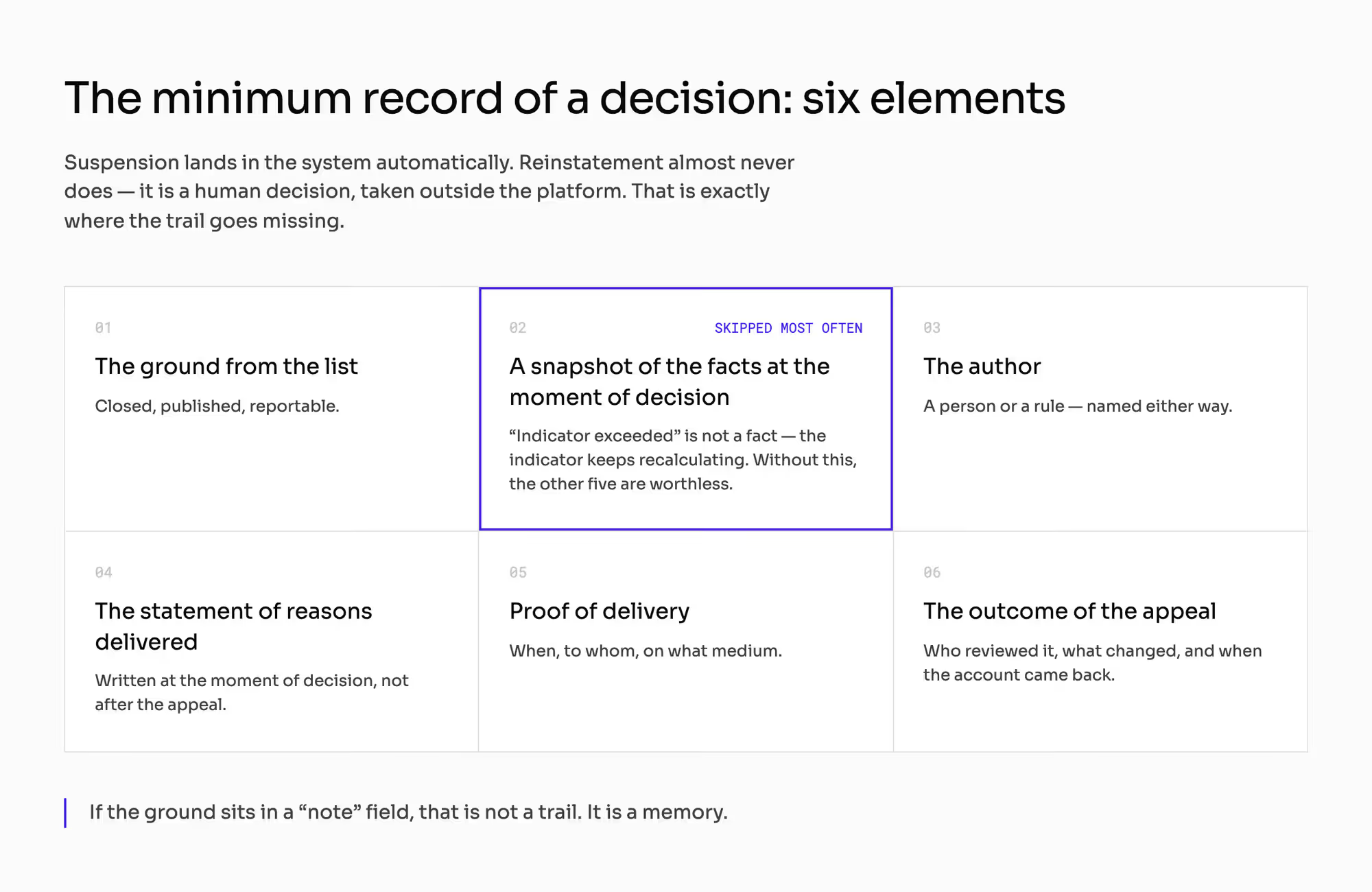
Suspension usually lands in the system automatically. A quality rule fires, an alert fires, someone takes a risk decision.
Reinstatement almost never runs automatically. It is a human decision, taken outside the platform, after the seller explains themselves, sometimes after a remediation plan.
Practitioners observe this as the rule, and this is where the trail goes missing, because the finding is reached in conversation and only its effect shows up in the system.
The minimum record of a decision has six elements: the ground from the list, a snapshot of the facts at the moment of decision, the author, the statement of reasons delivered, proof of delivery, the outcome of the appeal. The second gets skipped most often, and without it the rest is worthless.
Record only "indicator exceeded" and you cannot reconstruct its value two weeks later, because the indicator keeps recalculating. Measuring quality belongs to the chapter on seller quality, the probation period after an account is restored belongs to the chapter on reinstatement.
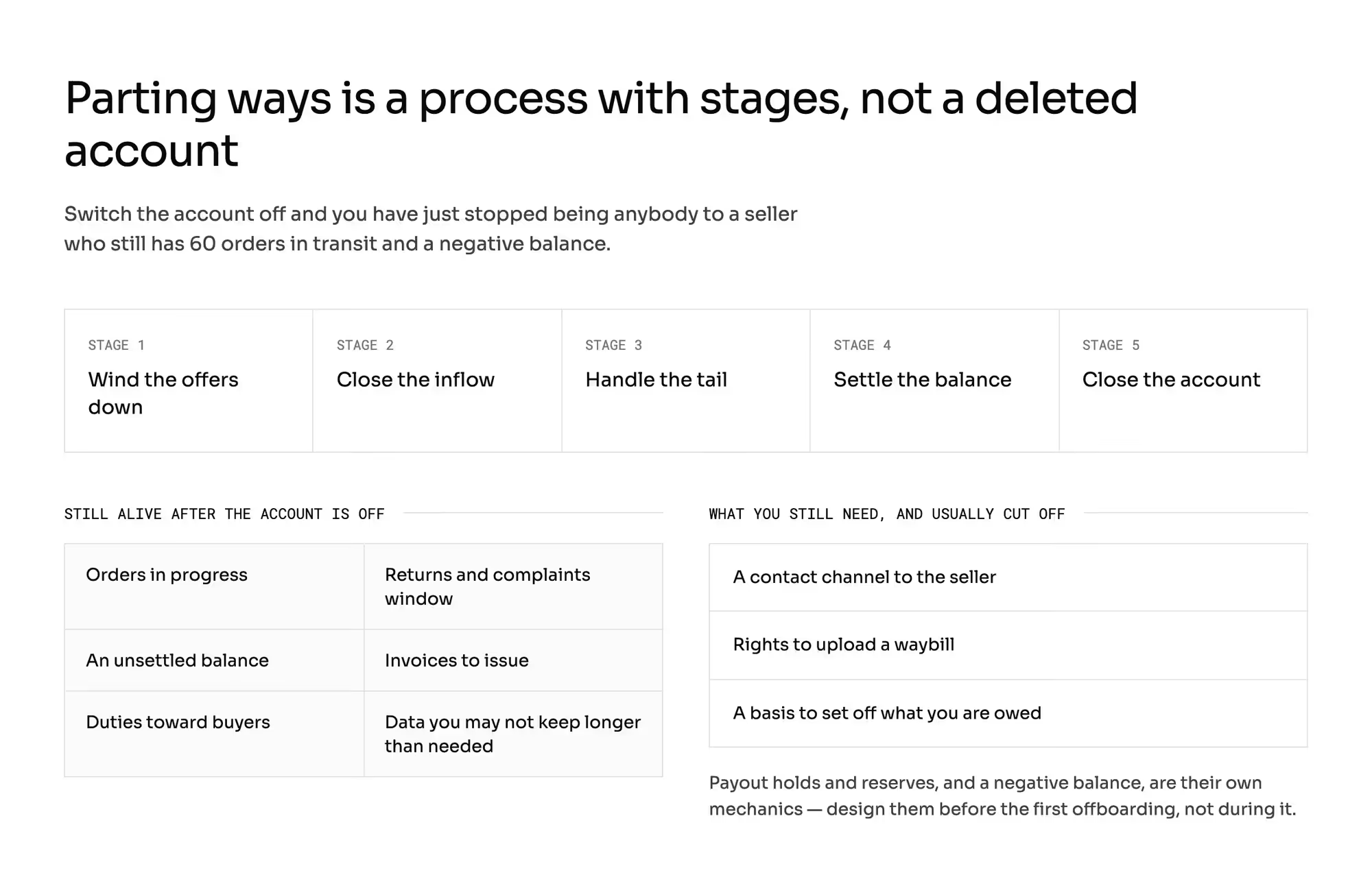
Parting ways with a seller does not end your obligations. The account is off, and these are still alive: orders in progress, the window for returns and complaints, an unsettled balance, invoices to issue, and duties toward buyers from "Marketplace Consumer Rights: Who Delivers Them?", and data you may not keep longer than needed ("Marketplace GDPR: Controller, Processor, or Joint Controller?").
Picture a switched-off seller with 60 orders in transit and a negative balance. You still need a contact channel, rights to upload a waybill, and a basis to set off what you are owed, and you have just stopped being anybody to them.
That is why offboarding is designed as a process with stages: winding offers down, closing the inflow, handling the tail, settling the balance, then closing the account. "How Marketplace Seller Payouts Work: Cycles, Holds, and Reserves" covers payout holds and reserves, "Marketplace Chargebacks: Who Carries the Cost, and What if the Seller's Balance Is Empty?" covers a negative balance.
What does an internal seller complaints procedure require?
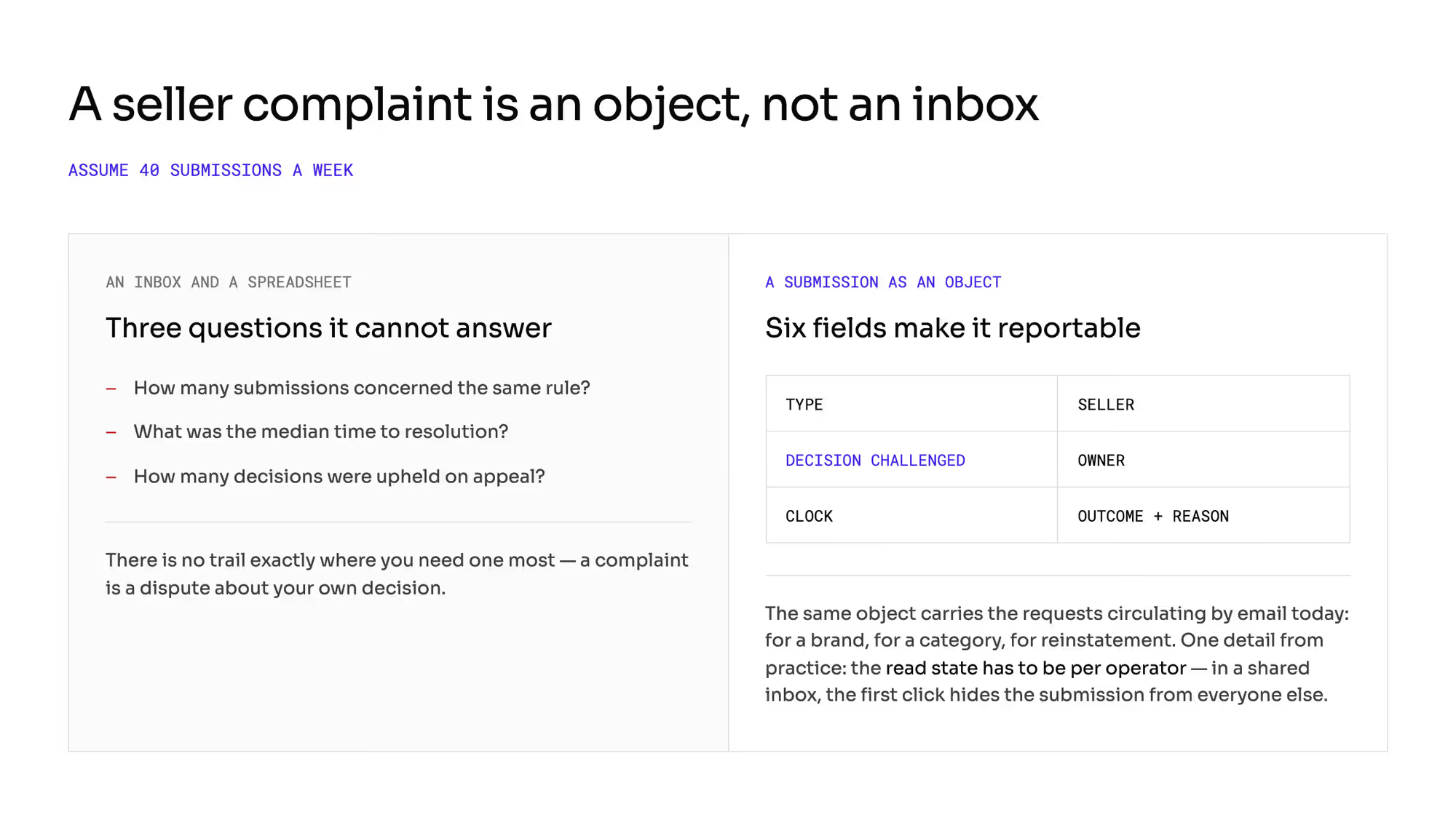
Regulations require an internal procedure for handling seller complaints, resolving them within a reasonable time, and naming the mediators you will talk to when that procedure fails. Market practice looks like this: an inbox, a spreadsheet, and a decision reached in conversation.
There is no trail exactly where you need one most, because a complaint is a dispute about your own decision.
The difference between an inbox and an object is measurable. Assume 40 submissions a week.
An inbox will not answer three questions: how many concerned the same rule, what the median time to resolution was, how many decisions were upheld on appeal. So a submission needs a type, a seller, a pointer to the decision it challenges, an owner, a clock, and an outcome with a reason.
The same object will carry the requests circulating by email today: for a brand, for a category, for reinstatement. One detail from practice.
The "read" state has to be per operator, because in a shared inbox the first click hides the submission from everyone else.
Where does P2B meet competition law on a marketplace?
Two things here also sit in competition law, worth flagging rather than developing. The first: you sit between competing businesses and you see their prices, their stock levels, and their margins.
What you hand back to them can be assessed as an indirect exchange of information between competitors, especially where it touches pricing intentions. That covers benchmarks, hints like "your price is above the winning one," and price recommendations.
The second: favoring your own offers is a separate question from the duty to disclose it, and the assessment sharpens as your position on the market grows. Check both with a competition lawyer before you switch on price recommendations for sellers.
What does the P2B regulation change about your platform?
1. Your data model needs a decision object
Not a status flag on the seller, but an event with a ground, an author, and a delivery. A status tells you how things stand now.
The obligation is about how they stood and why.
2. Terms and ranking configuration have to be versioned over time
Anything that touches money or visibility needs an effective date. Without one you can reconstruct neither the settlement ("Marketplace Ledger: Why Balances Must Match the Transfer" and "Marketplace Payment Reconciliation: How to Match Platform, Payment Provider, Bank, and Your Accounting") nor the reason a product page was lost.
3. The operator panel stops being a tool and becomes evidence
Impersonation, manual corrections, and exceptions are decisions too. If they leave no trail, every other trail you keep is incomplete.
4. Onboarding collects more than a payout needs
A business's identification data serves not only the verification from "Marketplace Seller Verification: KYC, Beneficial Owners, and Sanctions", but the buyer's right to know who they are contracting with ("Marketplace Liability: Are You an Intermediary or a Seller?").
How do you check P2B compliance with a vendor and a lawyer?
Four questions for the demo. Each calls for a demonstration:
- Show me the record of a suspended seller: where does the ground sit, the author, the statement of reasons, the proof of delivery? If it is a "note" field, that is not a trail. It is a memory.
- Change the commission rate for one seller, then show me an order from last week. Which terms does the system treat as binding for them, and how does it know?
- Show me the description of the ranking parameters and what happens to it when we change the weights. Is the configuration versioned together with the description, or is the description a separate file?
- Show me the list of seller submissions with time to resolution and outcome. If the answer is "that goes by email," work out how much of your own labor you are adding to the scope.
Two questions for your lawyer: which grounds may appear on our closed list of reasons for suspension and termination, and what exactly we deliver and in what form for each of the three classes in the table.
Which mistakes do operators make about the P2B regulation?
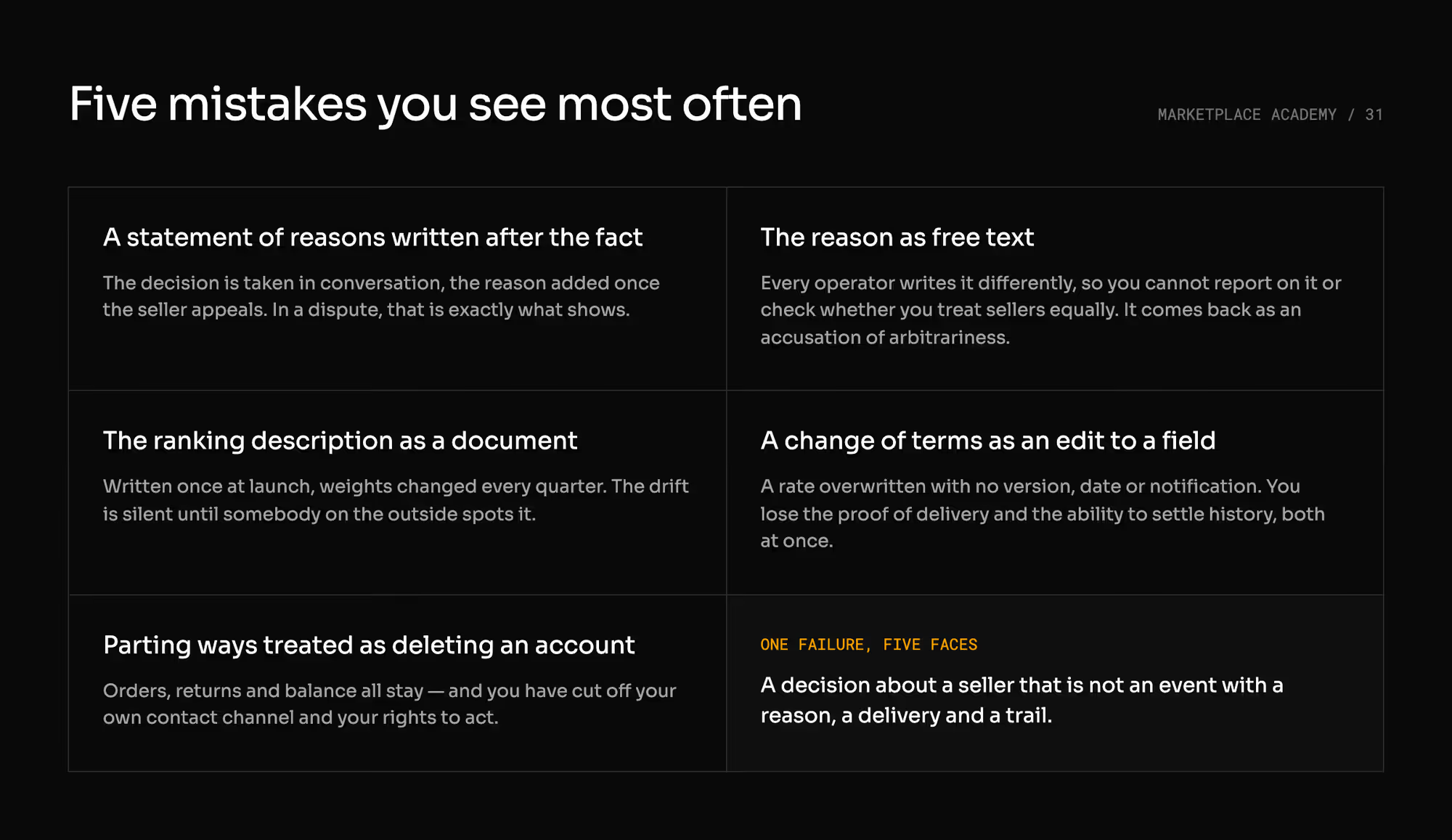
1. A statement of reasons written after the fact
The decision is taken in conversation, and the reason gets added once the seller appeals. In a dispute, that is exactly what shows: at the moment of decision, there was none.
2. The reason as free text
Every operator writes it differently, so you cannot report on it or check whether you treat sellers equally. It comes back as an accusation of arbitrariness; you have no data to answer.
3. The ranking description as a document rather than a function
Written once at launch, weights change every quarter. The drift is silent.
Nobody reports it until somebody on the outside spots it.
4. A change of terms as an edit to a field
A rate overwritten with no version, date, or notification. You lose the proof of delivery and the ability to settle history, both at once.
5. Parting ways treated as deleting an account
Orders, returns, and balance all stay, and you have cut off your own contact channel and your rights to act.
What do you still have to settle yourself about the P2B regulation?
This guide is a map of mechanisms and data requirements. It deliberately carries no provision numbers, time limits or thresholds, because those change far faster than the requirements on your system.
Before you launch, walk through four families of regulation with a lawyer and establish which apply to your scale and your markets:
- regulations on transparency between a platform and its sellers, known in the trade as P2B, covering terms, ranking, differentiated treatment of your own offers, statements of reasons and the complaints procedure;
- regulations on digital services and the liability of intermediaries, known in the trade as the DSA, covering statements of reasons for decisions, appeal paths, traceability of businesses and notices of illegal content;
- the regime for the largest platforms, known in the trade as the DMA, covering self-preferencing and the use of seller data;
- competition law, covering the exchange of information between competing sellers, price parity clauses and the position of your own offers.
Settle the timing with that lawyer too: how much notice a change of terms requires, and how much parting ways requires, plus how long you keep trails and statements of reasons. One last thing.
This family of rules is itself in motion. A proposal has appeared to move part of the transparency duties into other, broader regulations.
The duties do not disappear, only the address changes ("Marketplace Compliance: Adding a Required Attribute to a Million Offers").
Our claim is narrower than those answers and independent of them: if every decision about a seller is an event with a reason, a delivery and a trail, then a change in the rules is, for you, a change to a list of grounds and time limits. It is not a rebuild of the platform.
Summary: What does P2B ask of your platform?
That every decision touching a seller's revenue leaves an event behind: a ground from a published list, a statement of reasons that was delivered, and a record of what happened next. Rates and ranking weights become versions with effective dates.
Get that right, and a change in the rules is a change to a list of grounds, rather than a rebuild.
Ask your platform to show the record of one suspended seller: ground, author, reasons, proof of delivery. Building a marketplace where every decision about a seller has to leave a trail? Talk to us about the build.
Frequently asked questions on the P2B regulation
What does the P2B regulation require from a marketplace?
That decisions about the businesses selling on your platform are justified in advance and delivered in a form the seller can keep. It covers the content of your terms, how you change them, what you disclose about ranking, how you treat your own offers, and what a suspension has to carry.
Whether and how far it applies to you is a question for a lawyer.
Does a marketplace have to disclose its ranking algorithm?
No. You disclose the main parameters and the reasons some weigh more than others.
The code and weights must be precise enough to let anyone game the order stay yours. The test is whether a seller can understand what drives the ranking, so a sentence like "we take quality into account" fails it.
Can a marketplace suspend a seller without warning?
Only on grounds you published in advance, and with a statement of reasons the seller receives. You also owe them a route to explain the facts, and parting ways needs notice.
Record a snapshot of the facts as they stood at the moment of decision — that is the element most often skipped, and without it the rest of the record proves little.
Ready to build?
We build marketplaces where every decision about a seller carries its ground, its reasons, and proof that they were delivered.