
Seller Reinstatement on a Marketplace: Probation After a Suspension
Seller reinstatement on a marketplace is the decision to let a suspended seller sell again, and because a machine fires the suspension while a person signs the return, it is the step that decides whether your sanctions ladder is a policy or a lottery.
Suspending a seller takes the system one second and needs nobody's approval. Reinstating one takes your team several days, has no owner in any feature matrix, and it is the step that decides whether your sanctions ladder is a policy or a lottery.
This article breaks down:
- Why is suspension automatic and reinstatement manual?
- What does a probation period have to do?
- What comes back after reinstatement?
- Which 5 fields belong in a reinstatement log?
Key insights
- Suspension is automatic, and reinstatement is manual because the machine has thresholds, a window, and a counter, while the way back needs an explanation, a condition, and a signature, and under some regimes a decision taken on appeal may not rest on automated means alone.
- A probation period has to do three things: mark the settled events as closed so they stop feeding the counter, hold the machine off for a fixed time, and require a human decision to suspend again, because a seller reinstated at 19% against a 12% threshold is suspended again within the hour.
- After reinstatement, the offers come back, and the ranking does not, because for eighteen days somebody else was winning the product page and recent sales are what the rule counts: that gap is about 77 orders, €67,760 for the seller and €9,240 of commission for you.
- The five fields in a reinstatement log are which suspension decision it concerns, what the seller explained, the outcome from a closed list, the conditions of return, and who signed it and when.
Why is suspension automatic and reinstatement manual?
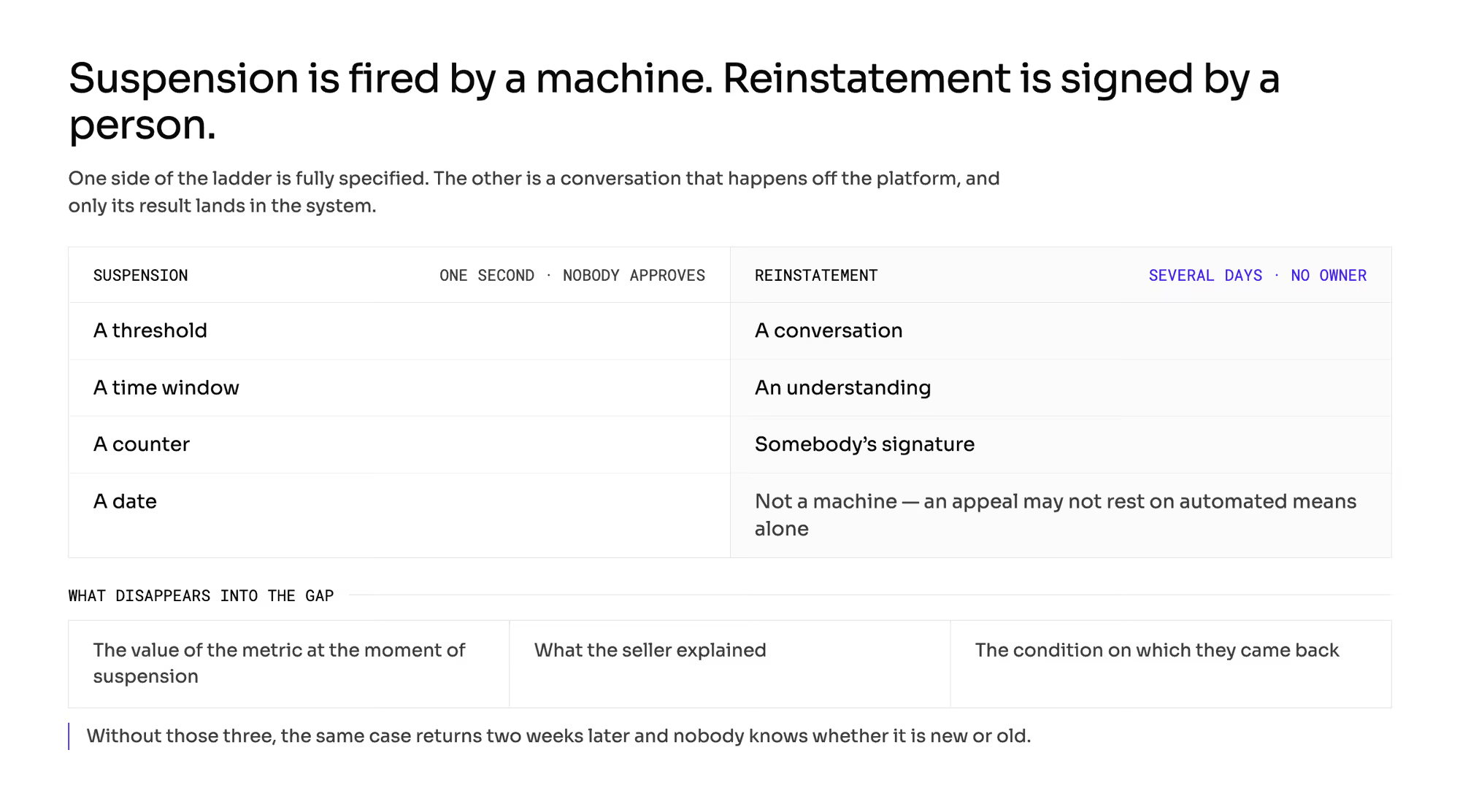
Suspension has everything a process has: thresholds, a time window, a counter, and a date. Reinstatement has none of that.
It has a conversation, an understanding, and somebody's signature. That is why product descriptions define the "suspended" state so carefully, sometimes even splitting it into automatic and manual, while the way out is a single operator action with no content behind it.
In practice, the decision to reinstate is taken in internal messages, off the platform, and only its result lands in the system. The rules on decisions about sellers carry the trail and the delivery, and requests from sellers cover the seller's request as an object.
More importantly, under some legal regimes there will be no machine here, even if somebody builds one: a decision taken on appeal may not rest on automated means alone, and when you reverse your own decision you have to reinstate the seller without undue delay and give back their access to the data. "We will reinstate in the next cycle" is not an answer.
Between the machine and the signature there is a gap, and what you need later disappears into it: the value of the metric at the moment of suspension, what the seller explained, and the condition on which they came back. Without those three, the same case returns two weeks later, and nobody knows whether it is new or old.
What separates an expired trigger from a cause that was fixed?
This distinction settles the rest. The metric can drop out of the time window on its own, with nothing repaired on the seller's side.
Your system will not tell the two apart.
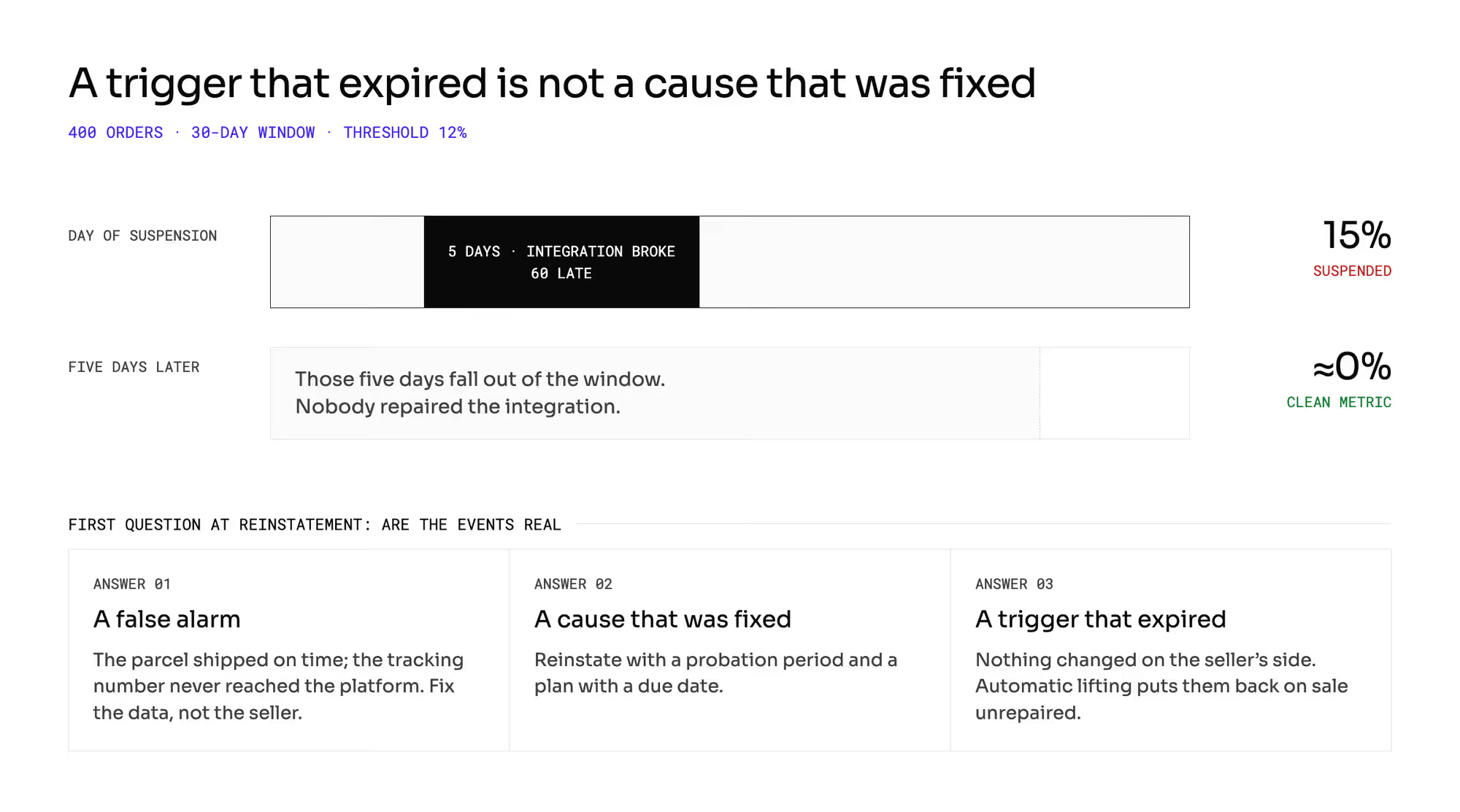
An example with numbers. A seller has 400 orders in a thirty-day window, 60 of them shipped after the deadline.
That is 15% against a suspension threshold of 12%, so the machine suspends the account. Except that all 60 delays come from a single five-day stretch when their integration broke, and shipping data stopped reaching the platform.
Once those five days fall out of the window, the metric drops to almost nothing. Nobody had to repair the integration.
Two failure modes follow, and you see both. If the platform lifts the suspension automatically the moment the counter falls below the threshold, you put someone back on sale who has changed nothing.
If it never lifts it, an account with a clean metric stays suspended forever, because nobody looks there. And the seller who cost a recruiter's work to win (finding your first sellers) stops replying.
Practitioners describe a third class: a suspension for events that never happened. The parcel went out on time, but the tracking number never reached the platform, so in the data it reads as an unshipped order.
That is why the first question at reinstatement is not "has the seller improved". It is this: are the events the threshold fired on real.
There are three possible answers: a false alarm, a cause that was fixed, and a trigger that expired by itself. Each one has to lead to a different decision.
Thresholds and the measurement of quality belong to seller quality thresholds. Here we assume the threshold exists and fired.
What does a probation period have to do with reinstatement?
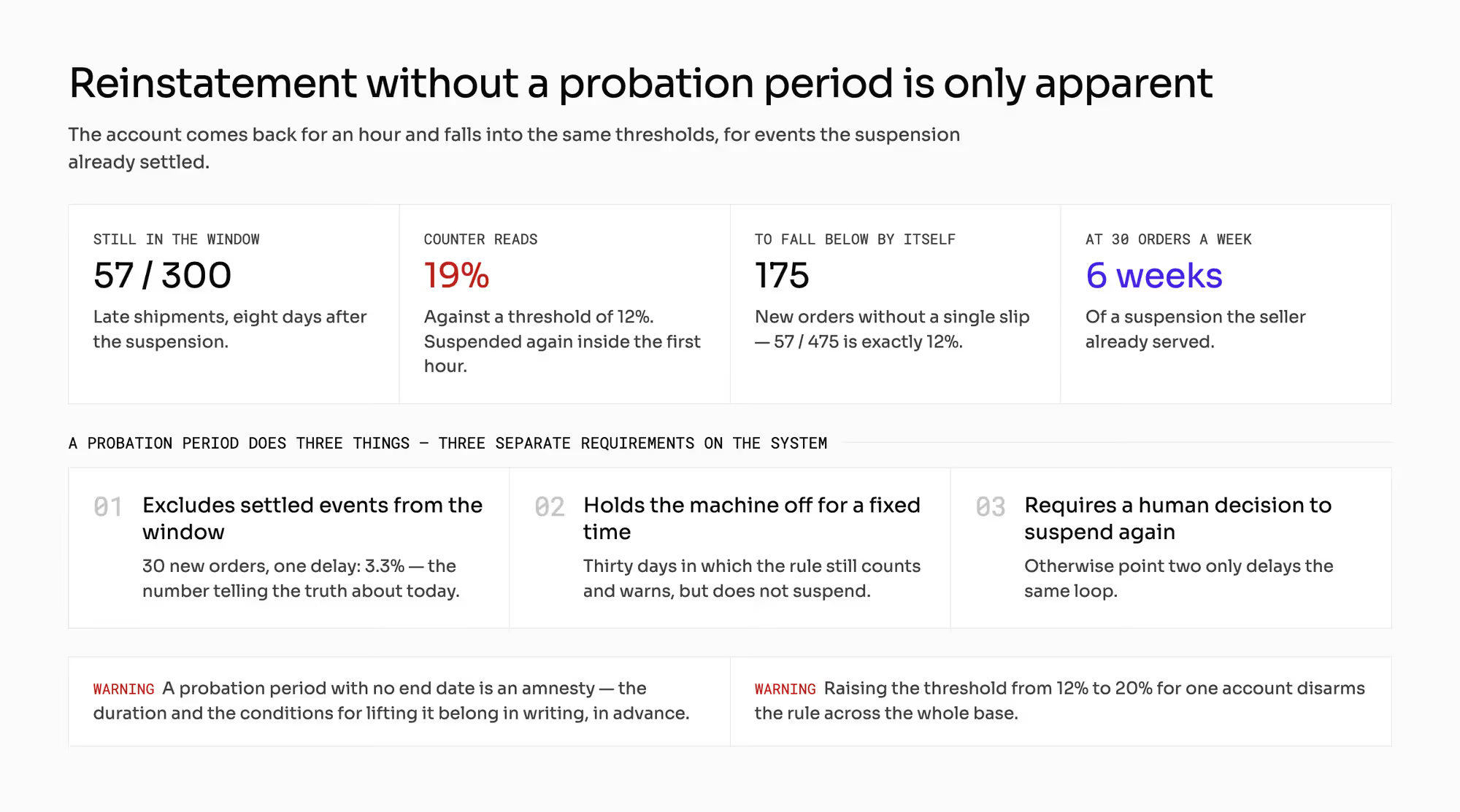
Say you reinstate the account after eight days. The thirty-day window still holds 300 orders, 57 of them late, which is 19% against a threshold of 12%.
The seller comes back and ships everything on time. The machine suspends them again inside the first hour, because the counter still reads 19%.
Work out what it takes for the metric to come down by itself: 57 delays across 475 orders is exactly 12%, so the seller needs 175 new orders without a single slip. They do 30 orders a week, so that is nearly six weeks.
Reinstatement without a probation period is therefore only apparent. The account comes back for an hour and falls into the same thresholds, for events the suspension already settled.
A probation period does three specific things, and each one is a separate requirement on the system:
- It excludes settled events from the window. Those 57 delays get marked as closed by this suspension and stop feeding the counter. After reinstatement, the seller has 30 new orders and one delay, which is 3.3%, and that is the number telling the truth about today.
- It holds the machine off for a fixed time. Thirty days, for example, in which the rule still counts and warns, but does not suspend.
- It requires a human decision to suspend again during that time. Otherwise, point two only delays the same loop.
Two warnings. A probation period with no end date is an amnesty: a year later you have several dozen accounts permanently carved out of the rule.
Public guidance on sanction decisions runs the other way. The duration of a restriction and the conditions for lifting it are supposed to be written down in advance rather than agreed case by case.
If your premium tier grants "immunity from suspension", that is the same mechanism handed out permanently and without a decision. That one already belongs to seller quality thresholds.
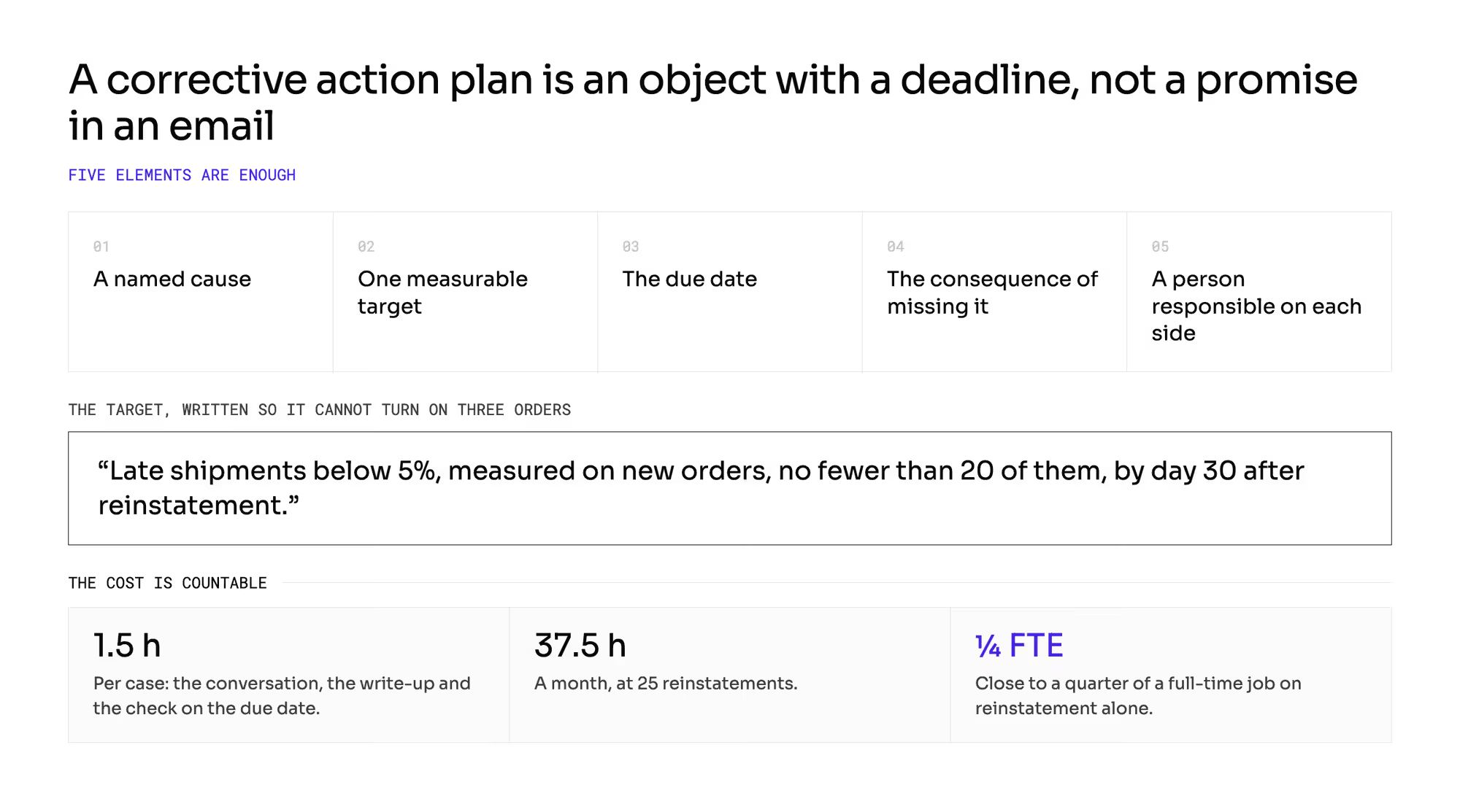
A corrective action plan is an object with a deadline rather than a promise in an email. Five elements are enough: a named cause, one measurable target, the due date, the stated consequence of missing it, and a person responsible on each side.
Add a minimum volume so the measurement does not turn on three orders: "late shipments below 5%, measured on new orders, no fewer than 20 of them, by day 30 after reinstatement." On the due date, somebody has to be handed a task rather than left to remember. The cost is countable.
The conversation, the write-up, and the check on the due date come to about 1.5 hours per case. At 25 reinstatements a month that is 37.5 hours, or close to a quarter of a full-time job on reinstatement alone.
What comes back after reinstatement, and what never does?
The most important observation here: reinstating an account is not reinstating sales, and the seller finds that out a week later. The offers come back, because that is one field.
The ranking does not come back, because for eighteen days somebody else was winning the product page, and the ranking mechanism counts recent sales, which a suspended seller did not have (the rule that picks the winning offer).
Part of the account | State during the suspension | Does it return by itself | What is left to do by hand |
|---|---|---|---|
Offers and visibility | switched off, data kept | yes, usually with one toggle | check stock levels and prices from two weeks ago |
Ranking position, product pages won | lost to other offers | no | rebuilt through sales; against a cheaper competitor it may never return |
Quality metrics | keep counting, or reset | depends on the product (a question for your vendor) | exclude settled events from the window |
Panel access | usually kept, features limited | yes | confirm orders in flight can be handled |
Orders in flight and returns | carry on regardless of account status | not applicable | contact channel and permissions (the rules on decisions about sellers and the tail of obligations after a seller leaves) |
Payouts and balance | held, or put under a reserve | depends on your payout policy | release and settlement (payout cycles, holds and reserves) |
Time carries a price on both sides. A seller doing 30 orders a week loses roughly 77 orders over eighteen days of suspension.
Take the standing example of this series: a €1,000 cart, a 12% commission, €880 to the seller. That is €67,760 they do not have and €9,240 of commission you do not have.
The second number appears in no quality report, and it is the only argument that stops reinstatement from being a job you get to "sometime this week".
When does a third suspension end the relationship?
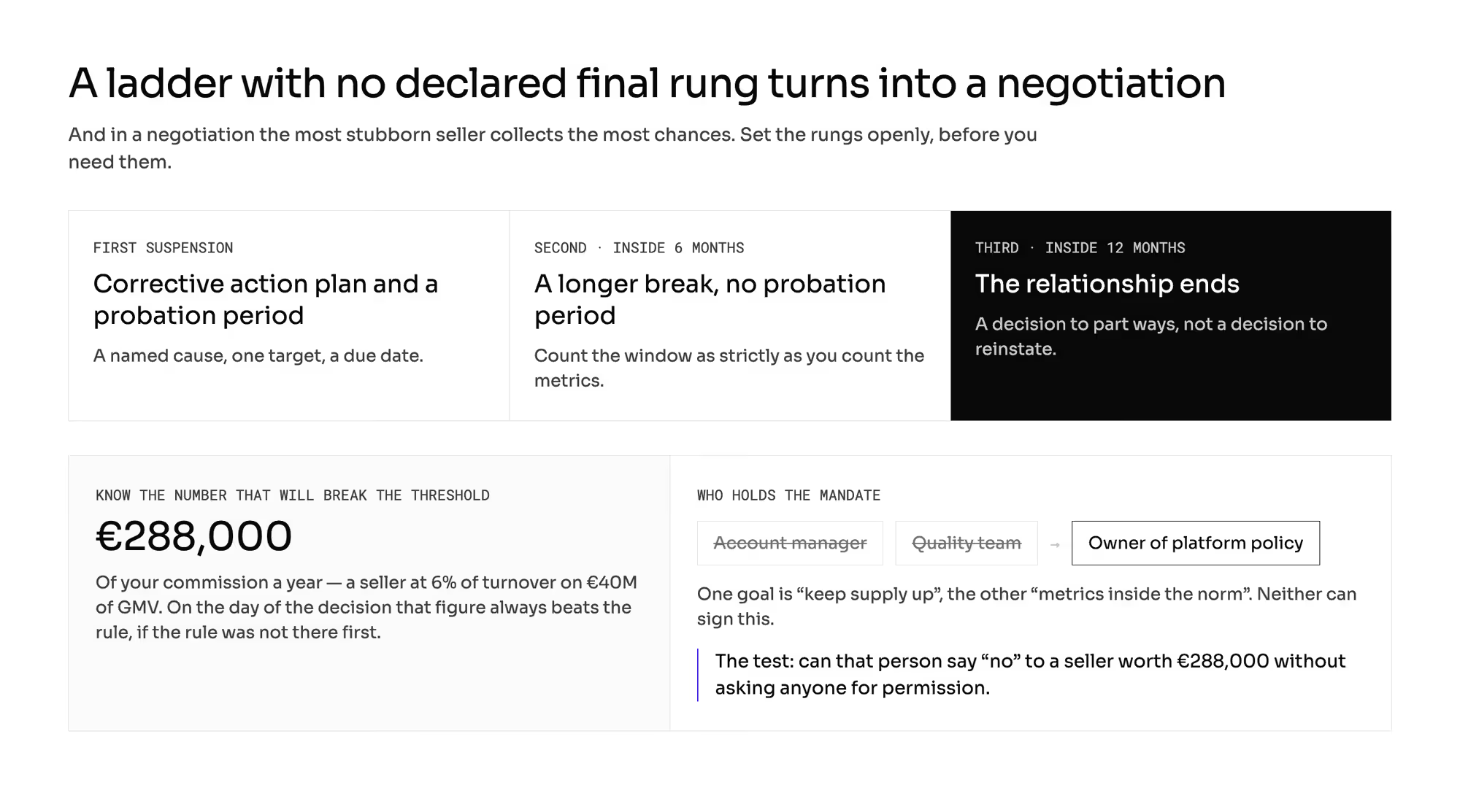
Set this threshold openly, and before you need it. A ladder with no declared final rung turns into a negotiation, and in a negotiation the most stubborn seller collects the most chances.
The minimum version: the first suspension ends with a corrective action plan and a probation period, the second inside a six-month window ends with a longer break and no probation period, and the third inside a twelve-month window ends the relationship, which the tail of obligations after a seller leaves carries. Count that window as strictly as you count the metrics.
Otherwise, every seller is a repeat offender after two years.
Know the number that will break this threshold. A seller who brings 6% of turnover on €40 million of GMV is €2.4 million of sales and €288,000 of your commission a year.
On the day of the decision, that figure always beats the rule, if the rule was not there first. An exception to the ladder is allowed, but it has to be a named decision with an author and a reason rather than silence.
Which raises the question of mandate. The seller's account manager does not decide, because their goal is "keep supply up", and the quality team does not decide, because their goal is "metrics inside the norm".
Reinstatement and parting ways belong to the owner of platform policy. That is whoever answers for the marketplace as a whole and reports to the sponsor on the board.
The test is simple. Can that person say "no" to a seller worth €288,000 in commission without asking anyone for permission?
If they cannot, your sanctions ladder has three rungs for small sellers and one for large ones.
Which 5 fields belong in a reinstatement log?
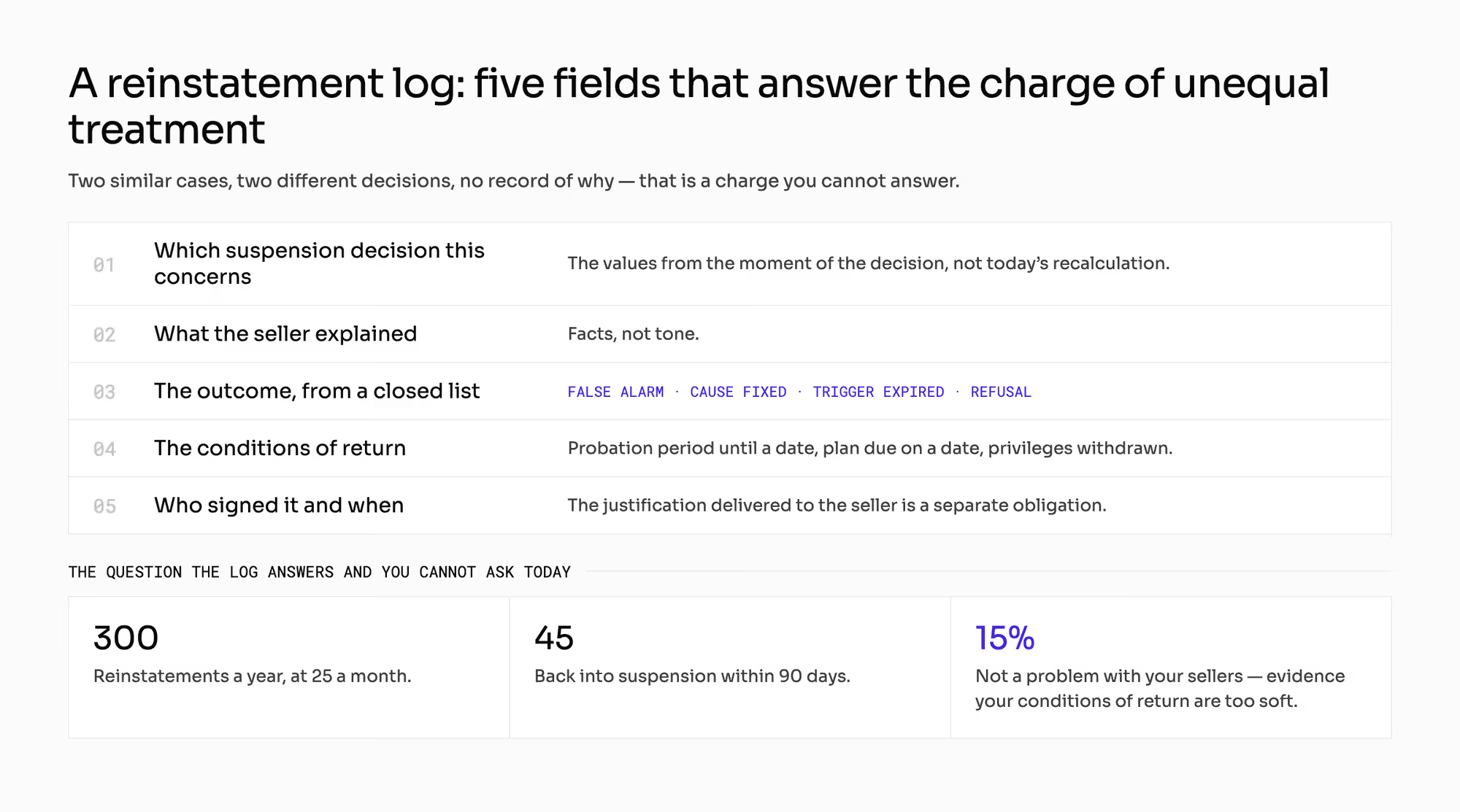
Two similar cases, two different decisions, no record of why. That is a charge of unequal treatment you cannot answer.
In disciplinary practice outside e-commerce, this is an explicit rule: when you settle a case, you look at how similar ones were settled before, and you write down the decision and the reason for it.
Five fields are enough: which suspension decision this concerns · what the seller explained (facts rather than tone) · the outcome from a closed list (a false alarm in the data, a cause that was fixed, a trigger that expired by itself, refusal) · the conditions of return (probation period until a date, plan due on a date, privileges withdrawn) · who signed it and when. The justification delivered to the seller is a separate obligation, and that one is the rules on decisions about sellers.
The log also answers a question you cannot ask today: how many reinstated accounts go back into suspension within 90 days. At 25 reinstatements a month, that is 300 cases a year.
If 45 of them come back, you have 15%, and that is not a problem with your sellers. It is evidence that your conditions of return are too soft, or that you are measuring the wrong thing.
What does reinstatement change about the rest of your build?
1. Account state has to be more than a flag
You need, separately: the reason for the suspension with the values from the moment of decision, a "settled event" marker, a probation period with an end date, and a count of suspensions inside the window. Four things that a "status" field will not replace.
2. Not every cause qualifies for a corrective action plan
Operational inability does. Deliberate action, such as pulling customers off the platform (customers leaking off the platform) or knowingly wrong prices, is a path to parting ways rather than a second chance, and it pays to settle that before the first case.
3. Reinstatement is a request, so it comes with a clock
It is the most expensive request you receive: every day of delay is sales that neither they nor you have. How to turn it into an object with a deadline is requests from sellers.
4. The seller panel has to work during a suspension, in a narrower scope
An account with no right to sell still has orders in transit and returns, and no integration will click through a complaint for the seller (the seller panel).
How do you check reinstatement with a vendor?
Five things to have shown in the demo, by clicking rather than by describing:
- Show me a suspended account. Do I see the metric values from the moment of the decision, or only today's recalculation? If only today's, a week later you will not reconstruct what it was suspended for.
- Reinstate it. Does the system ask for an outcome and the conditions of return and create a separate record, or is this one status toggle?
- Switch the machine off for a single account for 30 days without moving the threshold globally. If the only answer is "raise the threshold", there is no probation period here.
- Exclude specific events from the metric window. That is the second half of a probation period and the half most often missing.
- Show me the list of reinstatements from the last 90 days: the reason, the author, and which accounts went back into suspension.
One question for your own organization, more important than those five: who here signs a reinstatement, and does that person have the mandate to refuse your largest seller?
Which mistakes do operators make about reinstatement?
1. Reinstatement as a status toggle
One changed field is all that is left. The consequence: in the second case, you do not know whether this is a repeat, and you cannot defend the difference between two similar matters.
2. A probation period handled by raising the threshold
Somebody moves the threshold from 12% to 20% so one account can come back. The consequence: the rule is disarmed across the whole base, and nobody reverses it, because nobody remembers why.
3. A probation period with no end date
A year later, you have a list of accounts permanently taken out of the machine. The consequence: the rule works on the weak and not on anyone who once negotiated an exception.
4. A corrective action plan with no due date and no consequence
Nobody comes back to the case. The consequence: sellers learn that a suspension is a formality to sit out.
5. Repeat offenses settled case by case
The consequence: a small seller drops out at the second suspension, a large one gets a sixth, and your files hold two contradictory decisions from a single quarter.
What do you still have to settle about your own reinstatement policy?
This article does not say how to measure quality or where to put the threshold. That is, seller quality thresholds, together with tiers and simulating what a rule will do.
This article does not settle the form, the content, or the deadline of a justification given to a business; it does not carry the parting of ways and the tail of obligations behind it; it does not cover payouts and reserves under suspension; and it does not cover verification at the entrance (verifying a seller at the entrance).
This article does not settle whether you are allowed to grant your probation period selectively. That is a question about the equal treatment of businesses rather than about configuration, and it has two addresses on your lawyer's desk.
The first: the regulations on transparency in the platform-to-seller relationship, known in the trade as P2B: the justification of a decision, the route for complaints, and the duty to reinstate a seller after you reverse your own decision. The second: the regulations on digital services, known in the trade as the DSA: the requirement that a decision on an appeal not rest on a machine alone, and that the policy together with the duration of any restriction be described in advance.
Ask as well whether your repeat-offense ladder has to be published in your terms of business before you use it.
All the numbers above are openly hypothetical. The arithmetic travels, the values do not: substitute your own window, threshold and volume, because every conclusion here depends on them, and the one about six weeks most of all.
Summary: What does it take to let a seller back?
A decision somebody signs, and a condition that outlives the conversation. The machine suspends on a counter; the way back needs an answer to a different question, which is whether the events the threshold fired on were real at all.
A false alarm, a cause that was fixed, and a trigger that expired on its own look identical in the data and have to lead to three different decisions. Reinstatement without a probation period is only apparent, because the window still holds the settled events and the account falls into the same threshold within the hour.
And what returns is narrower than what was taken away: the offers come back on one field, the position on the product page takes weeks of sales to rebuild.
Ask a vendor to switch the machine off for a single account for thirty days without moving the threshold globally. Building a marketplace where a reinstatement is a record with an outcome, a condition, and an author rather than a status toggle?
Frequently asked questions on seller reinstatement
How should a marketplace reinstate a suspended seller?
A marketplace should reinstate a suspended seller on a recorded decision rather than a status toggle. The record needs an outcome from a closed list, the conditions of return, and an author, because the second case is where you have to show why two similar matters were settled differently.
What is a probation period for a marketplace seller?
A probation period for a marketplace seller is a fixed stretch after reinstatement in which the rule still counts and warns but cannot suspend on its own. It also closes the events the suspension already settled, so the counter measures what the seller does now.
Thirty days with a named end date is the working version; with no end date, it becomes a permanent exemption.
Does a seller get their ranking back after reinstatement?
A seller does not get their ranking back after reinstatement, even though the offers return the moment the account reopens. The rule that picks the winning offer counts recent sales, and a suspended seller had none, so the position has to be earned again over weeks of orders.
Ready to build?
We build marketplaces where a reinstatement carries an outcome, a condition, and an author, and where the machine can be held off one account for thirty days.