
Marketplace Seller Recruitment: Where to Find Your First Sellers

Marketplace seller recruitment is the work of getting the first sellers onto a platform that has no volume to show them yet, which is why, at the start, supply is bought rather than argued for.
The platform is ready on deployment day. The marketplace starts on the day a buyer has something to choose from in your categories.
Between those dates sits the one part of the project you cannot buy with the license.
If you are looking for the acquire-and-retain framing of the same subject, that is covered in our guide to vendor hunting and farming. This chapter is about the first hundred: what you pay with, which channels deliver, and how much supply a category needs before a buyer sees a choice.
This article breaks down:
- Which 5 currencies buy your first sellers?
- Which 4 recruitment channels deliver sellers?
- How many offers per page count as critical mass?
- What does a seller pipeline have to record?
Key insights
- The five currencies that buy your first sellers are traffic from your own store, a promotional commission, category exclusivity, taking over the integration, and listing the catalog for them, and the only one a competitor cannot copy is your own traffic.
- The four channels deliver very different volumes: a recruiter's own network closes about four sellers a month, the website form collects only the people already looking for you, a vendor's ready-made seller network is a sales argument, and the integrator your candidates already use reaches hundreds of them at once.
- Critical mass counts in offers per product page: five sellers with 300 items each give 0.3 offers per page in a 5,000-page category and 1.9 in an 800-page one, which is why finishing three categories beats opening forty.
- A seller pipeline has to record: the categories and brands they trade in, how they will list offers, the channel they came from, and every promise made with its end date, because a channel that lives in one person's spreadsheet leaves when that person does.
Why are the first hundred sellers bought rather than recruited?
The first meeting with a seller runs to a fixed script. After ten minutes of pleasantries, the question arrives: how much will I sell with you?
And here you have nothing to show. There is no volume because there are no sellers, and no sellers because there is no volume.
You do not win supply with an offer. You win it with proof, and at the start you have none.
Platform economics has a name for this loop: the chicken-and-egg problem of a two-sided market, described in the literature for more than two decades. It has one known solution, and a better presentation is not it.
One side has to be subsidized so the other has a reason to show up. The platform pays for the more price-sensitive side and earns on the one whose value grows faster as the first one grows.
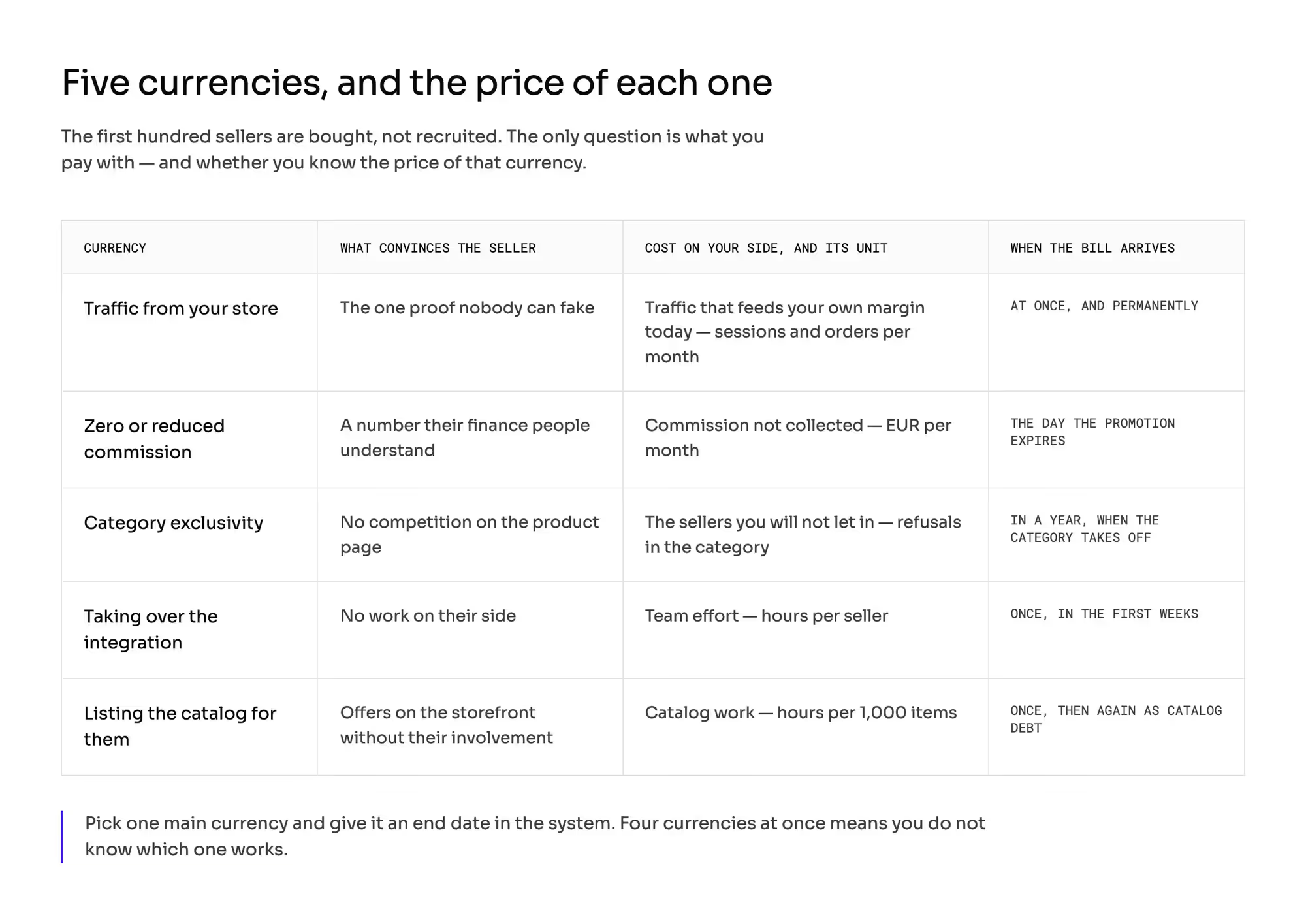
Hence the sentence worth putting to the committee plainly: the first hundred sellers on the supply side are bought rather than recruited. The only question is what you pay with and whether you know the price of that currency.
There is good news in it. Practitioners in digital markets treat supply as the easier half of the equation and demand as the harder one.
You walk into the conversation with demand already built, and that settles which of the five currencies below is your strongest.
Which 5 currencies pay for your first sellers?
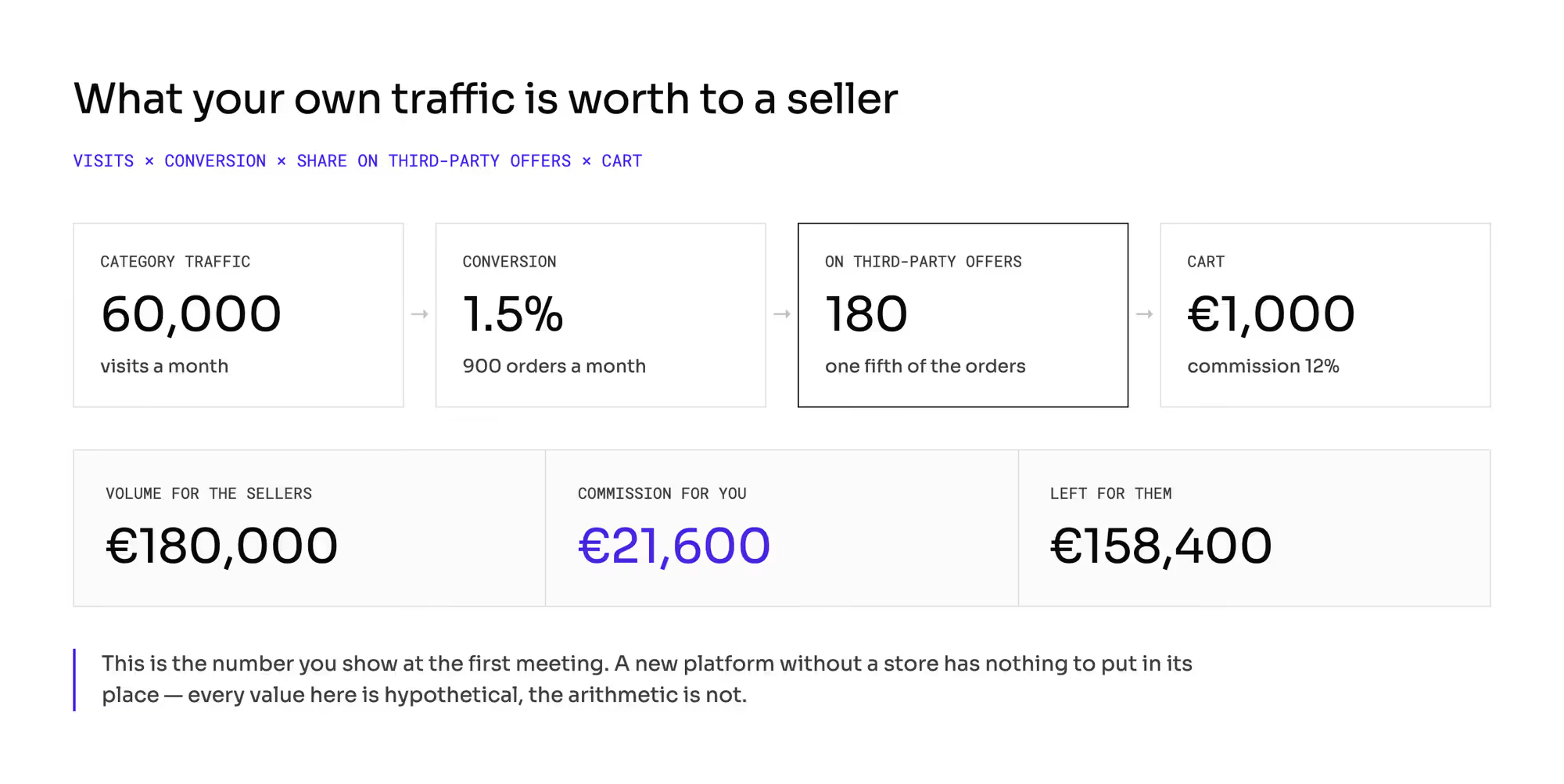
Traffic from your own store is the only currency a competitor cannot fake. A category with 60,000 visits a month and a 1.5% conversion rate produces 900 orders.
If one-fifth land on third-party offers, that is 180 orders, and at a €1,000 cart, €180,000 of volume for the sellers and €21,600 of commission for you (12%, with €158,400 left for them). That is the number you show at the first meeting.
A new platform without a store has nothing to replace it with.
A zero commission at launch buys sellers who leave when the first invoice arrives. Fifty sellers at 20 orders a month on a €1,000 cart is €1,000,000 of volume, so €120,000 of commission not collected every month and €360,000 across a quarter of promotion.
You are buying speed rather than a relationship, and only on one condition: the promotional rate has an end date in the system and returns to the standard grid by itself. Otherwise, a person in a spreadsheet watches the deadline, and the promise turns open-ended.
A change of terms is an event that has to be delivered rather than edited in a field (the rules on decisions about sellers).
Category exclusivity is cheap today and expensive a year from now. You promise it when three sellers want into the category.
The bill arrives when twelve do, and you have to turn nine away or break your word. Exclusivity on a brand rarely closes, because a brand lives in several categories at once.
Taking over the integration and listing the catalog for a seller are the same currency in two denominations: your hours. If onboarding costs 20 hours of support per seller, fifty cost 1,000 hours, more than six person-months at 160 hours a month.
Catalog work is counted in items. Fifty sellers times 300 items, at two minutes per item, is 500 hours, or three person-months.
All of it before the approval queue from the approval queue.
Why is your first seller a supplier you already buy from?
The cheapest source of supply already works for you: the suppliers and brands you hold a trade contract with. The data, the contact, and the trust exist, so the cost of reaching them is zero.
And that is exactly why it is the hardest conversation in the project. You are asking a partner to stand next to you on the same product page.
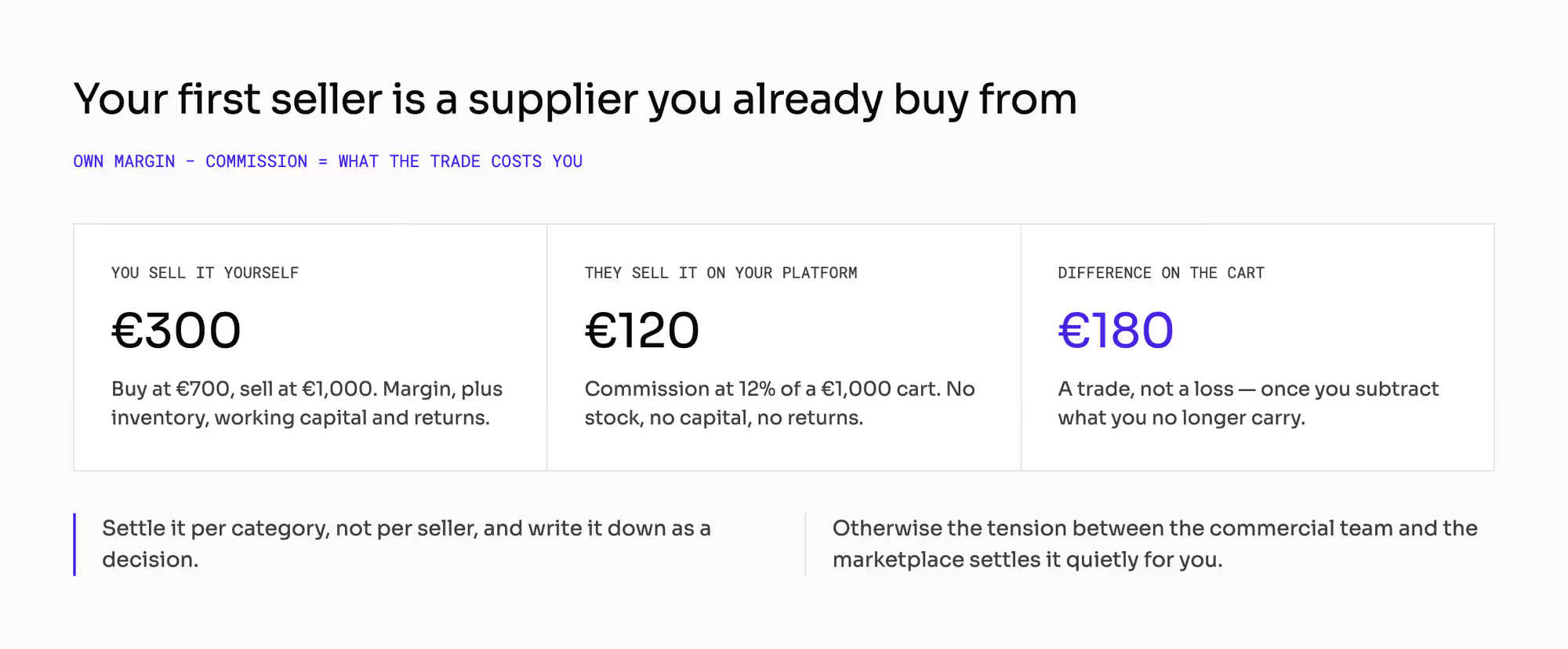
That conversation has a price, and you count it before you walk in rather than after. You buy from them at €700 and sell at €1,000, so €300 of margin.
If they sell the same product themselves on your platform, you collect €120 of commission, and the difference is €180 on the cart. That is a trade.
Out of those €180 comes the cost of inventory, working capital, and returns, which you do not carry in the commission model. Settle it per category rather than per seller, and write it down as a decision.
Otherwise, the tension between the commercial team and the marketplace will settle it quietly for you.
Which 4 recruitment channels deliver sellers?
The recruiter's own network works, and it is narrow. In the rollouts, we know it is the main channel for the first hundred: the company hires someone who ran supply at another marketplace and buys their phone list with them.
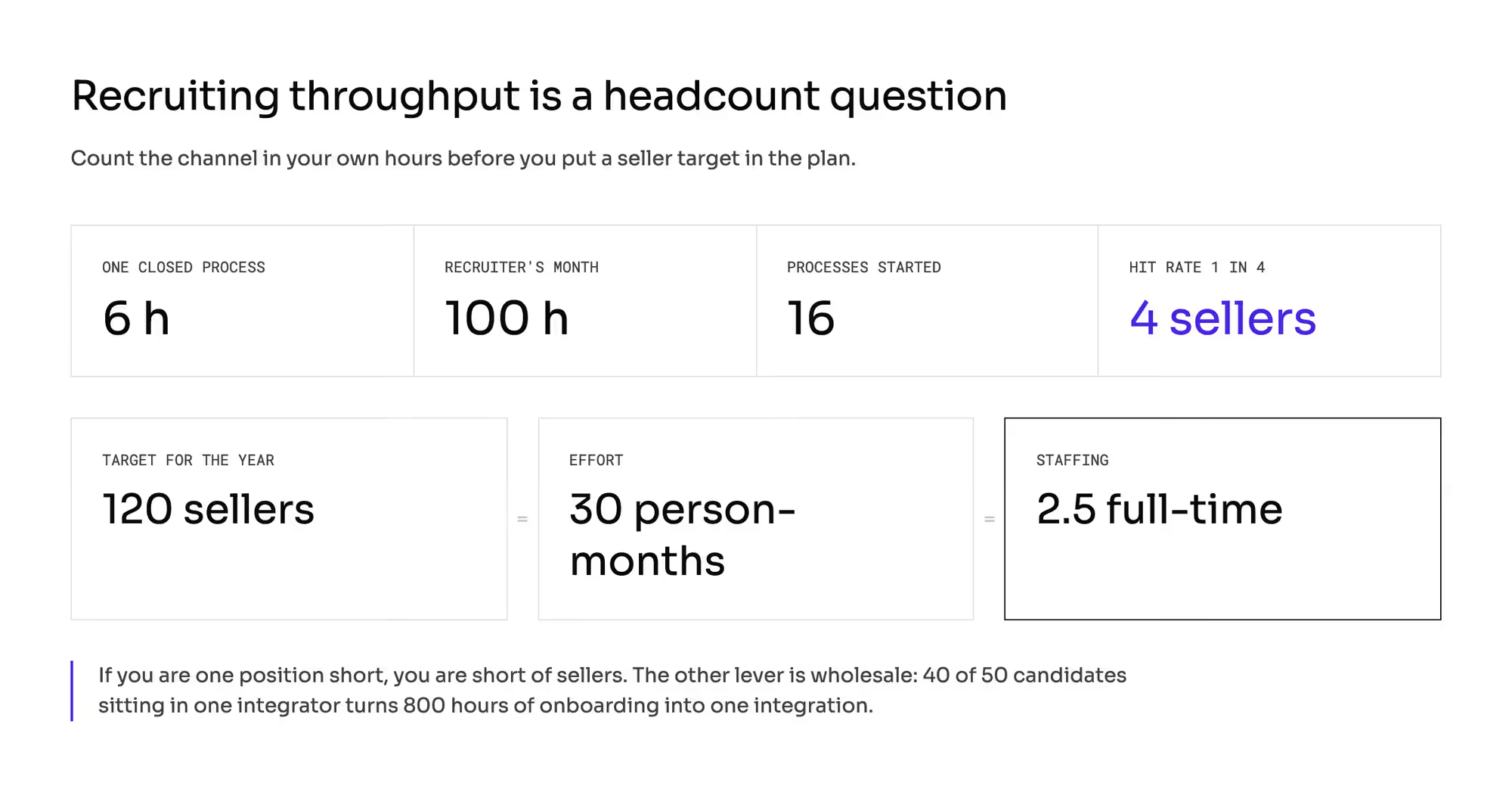
Count the throughput in your own hours. If one closed process takes 6 hours and the recruiter has 100 hours a month for it, that gives 16 processes, and at a hit rate of one in four, 4 sellers a month.
A target of 120 sellers in a year is 30 person-months, or 2.5 recruiting full-time positions for a year. You lay that number next to your growth plan.
A form on the website delivers very little. Practitioners agree: it collects the people who were already looking for you.
It has one function you cannot waste. It captures intent, so it must land in a pipeline with an owner and a clock rather than in an inbox.
A "ready-made seller network" at a platform vendor is a sales argument rather than a channel. Some vendors run one as a separate product, with a subscription and a fee on volume paid by the seller.
On local markets, practitioners rate its usefulness as marginal, and it makes more sense when you enter a foreign market. The question that closes the topic at a demo: how many sellers from that network sell on my market today, in my three categories.
Show me the list.
The integrator is the only wholesale channel there is. Sellers run their channels out of multichannel systems rather than by hand, and in the rollouts we know most offers arrive that way, with direct API integration playing a marginal part.
Being present in an integrator popular on your market means access to hundreds of sellers at once. The condition is being supported in it.
That moves integration from a technical task to a sales position, one of the few things that genuinely shortens recruitment. The math: if a seller's own onboarding takes 20 hours of your support and 40 of your 50 candidates sit in one integrator, supporting it removes 800 hours.
Two traps. It often falls outside the scope and the maintenance commitment of your platform vendor, and the assumption that "the integrator handles everything" is false.
Some events a seller can only click through in the panel (the seller panel).
Which 5 questions does a seller ask before signing?
At the first meeting, you will always hear the same questions:
- How much volume does my category do with you
- How many sellers do you have in it
- What is the commission, and who pays for delivery and returns
- How do I list my catalog, and are you in my integrator ·
- When do I get paid (payout cycles, holds, and reserves carry the last one).
The last two you answer with configuration. The first three you cannot know before launch: there is no traffic on pages that do not exist, and no conversion on an assortment you do not carry.
Say so plainly and substitute the numbers you do have (category traffic in your own store, your own conversion rate, the count of product pages with no offer). Then propose a measurable condition: a review after 90 days, and what you will do if the volume does not arrive.
A lie here comes back as churn in the third month. A seller you promised 100 orders a month, who got 12, will add up the cost of joining and walk out.
And the seller community in a category is small, and it talks.
Why does critical mass count per category rather than per marketplace?
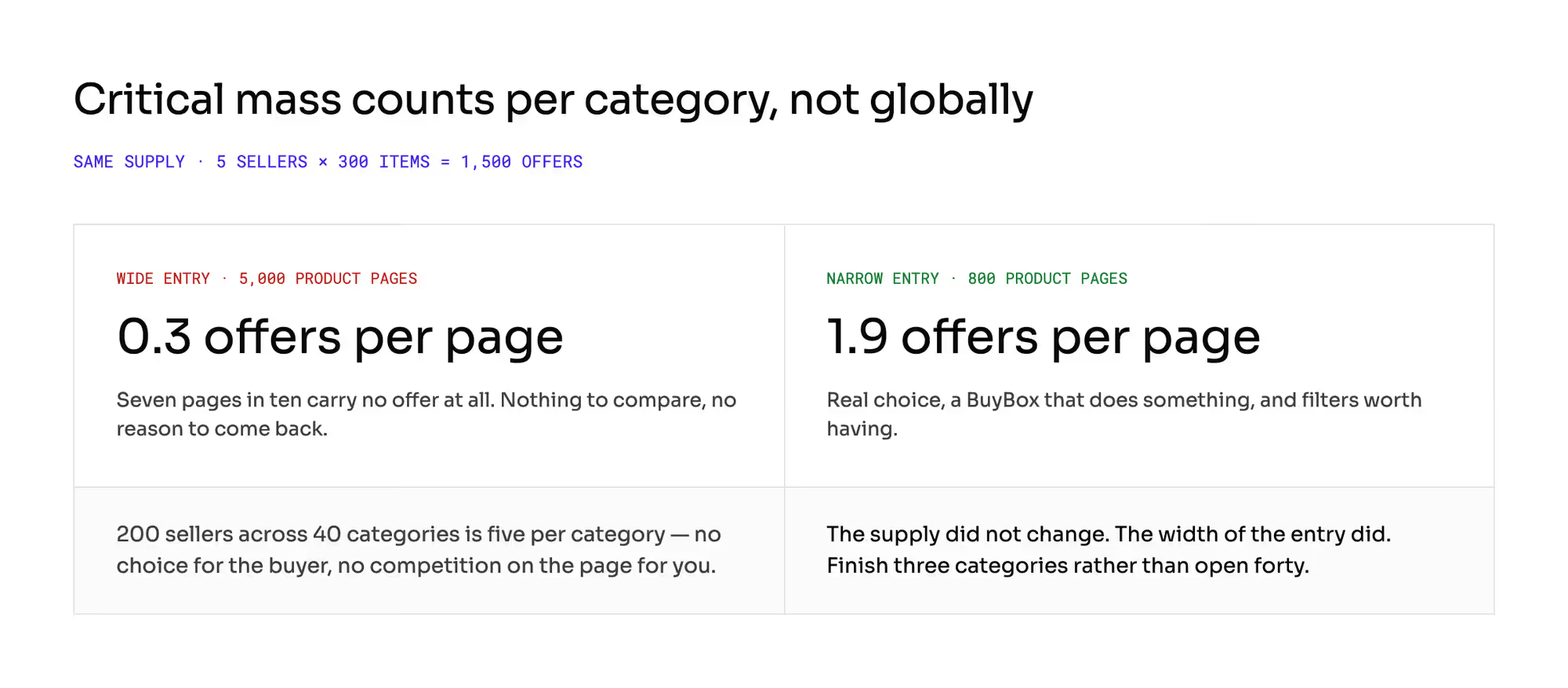
Two hundred sellers spread across forty categories is five per category: no choice for the buyer, no competition on the page for you. The unit of critical mass is the number of offers per product page rather than the number of sellers.
The same example at two widths. Five sellers list 300 items each, which is 1,500 offers.
In a category with 5,000 product pages, that is 0.3 offers per page. Seven pages in ten have no offer and nothing to compare.
In a category with 800 pages, the same 1,500 offers give 1.9 offers per page, which means real choice, a BuyBox that does something (the rule that picks the winning offer) and filters worth having. The supply did not change.
The width of the entry did.
So it is better to finish three categories than to open forty. One caveat: you may narrow the category and the functional scope, but not the organizational commitment.
A narrow entry with a full team works. A wide one on a test budget ends as a "failed experiment".
Be careful with the assortment too. Most experienced sellers do not push their whole catalog onto a new channel, so the "sellers times their SKUs" forecast runs high.
What does a seller pipeline have to record?
For a seller who has not signed yet, you need seven things:
- the company details,
- the categories and brands they trade in,
- how they will list their offers (integrator, file, API),
- the owner of the relationship,
- the stage and date of the last contact,
- the channel they came from, and the promises made to them, together with their end dates.
- The last item matters most, because a currency spent in recruitment later turns into configuration: a rate with a date on it, a catalog rule, an exception in the terms.
That this knowledge lives today in one person's spreadsheet is a recurring theme in this series. Here it carries a different cost.
A supply channel that is somebody's contact list walks out of the company with that person. The market for experienced recruiters is narrow, and poaching between new marketplaces is the norm.
Practitioners also say plainly that exporting the seller list with their results takes a minute and leaves no trace. The conclusion for the board: staffing risk is supply risk here, and the defense is a pipeline in a system.
That means permissions, channel attribution, and a log of exports.
One number to measure from the first week: the cost of closing a seller in working hours, per channel. Without it you fund whichever channel is loudest in the meeting.
What does seller recruitment change about the rest of your build?
1. Recruitment ends with a signature. Supply starts with the first sale
The funnel from registration to the first order, and the activation thresholds: onboarding to the first sale.
2. Every currency spent in recruitment turns into configuration
A promotional rate needs a date and a version. Exclusivity needs a catalog rule.
Listing the catalog for a seller feeds straight into approval queue throughput.
Coming in through an integrator changes the scope of the implementation as well as the onboarding.
How do you run marketplace seller recruitment, step by step?
- Pick three categories rather than forty. Choose them by the number of product pages and by your own traffic rather than by assortment ambition.
- Set the target in offers per page, rather than in the number of sellers. Below one offer per page, the storefront looks empty.
- List your existing suppliers and settle it per category: where your own sales stay and where the commission takes over.
- Pick one main currency and give it an end date in the system rather than in a spreadsheet. Four currencies at once means you do not know which one works.
- Find out which integrator your candidates sit in, and write support for it into the implementation scope, with a named owner for maintenance.
- Calculate the recruiting headcount from your own hours and compare it with the target. If you are one position short, you are short of sellers.
- Stand up the pipeline as an object before the first conversation: an owner, a stage, a channel, and the promises made.
Three questions for your vendor:
- Does the promotional rate expire by itself and return to the standard grid?
- Can I record in the system who runs a seller before the contract is signed, and does exporting that list leave a log?
- Who owns the integration with the integrator on my market, and its maintenance after that integrator changes its API?
Which mistakes do operators make about seller recruitment?
1. A zero commission with no end date
A person in a spreadsheet watches the deadline. The consequence: churn in exactly the quarter in which you were supposed to show revenue.
2. Exclusivity sold at the start
The cheapest currency of the first month blocks the category at the moment it starts to work. The consequence: a choice between breaking your word and stopping growth.
3. Forty categories opened at once
Two hundred sellers give you five per category. The consequence: the buyer sees no difference from an ordinary store, and the sellers see no volume.
4. A promise of volume you do not know
The consequence is double: churn in the third month, and your reputation in a community where everybody knows everybody. The second cost you cannot reverse.
5. A supply channel locked inside one person
When the recruiter leaves, the pipeline, the conversation history, and the promises made leave too. The consequence: recruitment restarts from zero against the same plan.
What do you still have to settle about your own recruitment plan?
The numbers circulating on the market for "how many sellers one recruiter handles" and "how many days to the first sale" come from platform vendor materials and other people's case studies, so they do not travel.
Every number above is openly hypothetical. The arithmetic travels, the values do not.
Qualitatively, this much holds: the first sale arrives in weeks rather than days.
This article settles nothing that happens after the signature. Onboarding is onboarding to the first sale.
The account model, seller quality and suspensions, and tickets from sellers each have a chapter of their own. The commission grid and team staffing have chapters of their own.
This article is not a legal opinion. Two things to check with a lawyer before you promise them: category exclusivity and selective admission of sellers have a competition law dimension, and a promise made during recruitment becomes a condition of the cooperation.
That comes with requirements as to form, notice period, and delivery of changes.
Summary: What does it take to get your first sellers?
Five currencies are available, and each has a price: your own traffic is the only one a competitor cannot copy, a promotional commission buys speed and needs an end date in the system, exclusivity is cheap in month one and expensive in month twelve, and taking over the integration or the listing work is paid in your own hours.
The channel that moves the most supply is the integrator your candidates already sit in, because being supported in it reaches hundreds of sellers at once. And the target is offers per product page in three categories, since two hundred sellers spread across forty of them is five per category and no choice for anybody.
Ask a vendor whether a promotional rate expires by itself and returns to the standard grid. Building a marketplace where every promise made in recruitment becomes a dated setting rather than a line in somebody's spreadsheet?
Frequently asked questions on marketplace seller recruitment
How do you get sellers onto a new marketplace?
You get sellers onto a new marketplace by paying for them, in one of five currencies: traffic from your own store, a promotional commission, category exclusivity, taking over the integration, or listing their catalog for them. A new platform has no volume to show, so the first meeting runs on proof you do not have yet.
The currency you choose decides what the first hundred sellers cost and how long they stay.
How many sellers does a marketplace need in a category?
A marketplace needs enough sellers in a category to put more than one offer on a product page, which is a per-category number rather than a platform-wide one. Five sellers listing 300 items each give 0.3 offers per page across 5,000 product pages and 1.9 across 800.
The supply is identical; the width of the entry is what changed.
Which channel brings sellers to a marketplace fastest?
The channel that brings sellers fastest is the integrator they already use, because being supported in it reaches hundreds of sellers at once. A recruiter's own network closes roughly four sellers a month at six hours per process, a form on the website collects only people already looking for you, and a vendor's seller network is worth asking one question about: how many of its sellers trade in your categories on your market today.
Ready to build?
We build marketplaces where every promise made in recruitment becomes a dated setting: a rate that expires by itself and a pipeline that outlives the recruiter.