
Marketplace Disintermediation: Customers Leaking Off the Platform

Marketplace disintermediation is the buyer and the seller moving their next transaction off your platform, and because the seller holds access to the buyer, a legitimate reason to contact them, and your commission on the table, it can be priced and made harder rather than prevented.
A seller who ships a parcel to your buyer has physical contact with them and a legal interest in the next purchase happening without you. The question is not whether this happens.
It is how much it costs you and which defenses are worth their price.
This article breaks down:
- Can a marketplace prevent disintermediation?
- Which 5 channels carry customers off the platform?
- What will a content filter never catch?
- What is leakage worth to a seller?
Key insights
- A marketplace cannot prevent disintermediation, because the seller holds access to the buyer, a legitimate reason to contact them, and your commission on the table; the two levers that work are cutting the profit from leakage and raising its risk.
- The five channels are an insert in the parcel, the content of messages on an order, data in the sales document, the shop name in an offer title or description, and direct contact during a return, and they differ by an order of magnitude in what detection costs.
- A content filter will never catch intent: it recognises an email address, a phone number, a domain, or a link, while "write to us directly and we will do it cheaper" carries none of those, and the 150 hits a month it does produce cost about 12.5 hours of review.
Can a marketplace prevent disintermediation?
Any strategy that assumes the platform can be sealed loses in a predictable place: the first parcel with a slip of paper carrying somebody's own shop address.
The reason is structural rather than moral. The seller has three things at once: access to the buyer, a genuine reason to contact them, and money on the table.
Access comes from the shipment and after-sales service. The reason is legitimate: they have to agree a delivery time, take a complaint, hand over a document.
The money is your commission, unpaid if the next transaction happens on their site.
In the literature on platforms, disintermediation is sometimes called a weak point of the business model itself rather than an execution mistake. That frame changes the question.
Instead of "how do we block this", you ask: what is leakage worth to the seller, what does making it harder cost me, and how much of the first do I remove with the second. There are two levers: cutting the profit from leakage and raising its risk.
Which 5 channels carry customers off the platform?
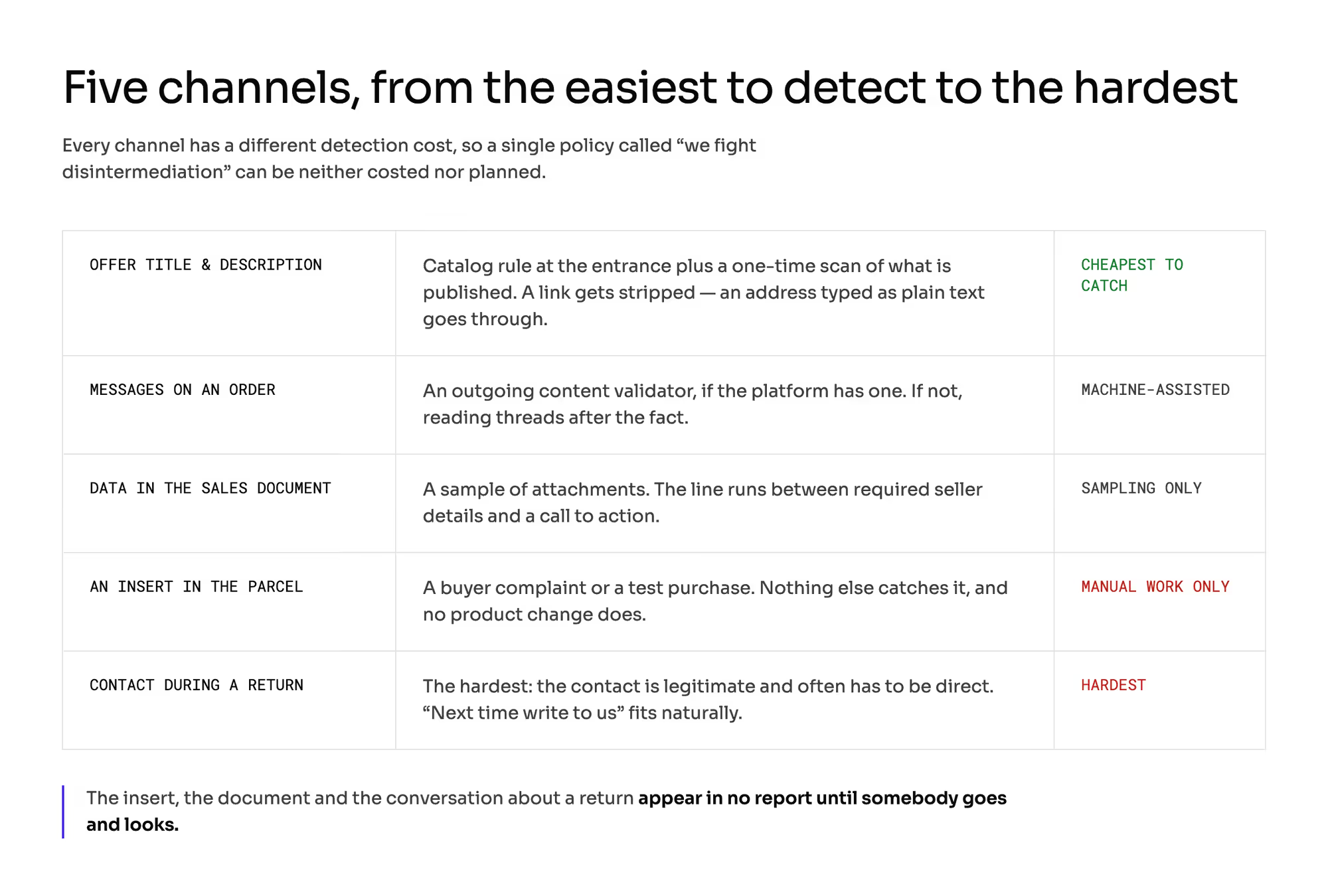
Every channel carries a different detection cost, so one blanket policy called "we fight disintermediation" can be neither costed nor planned.
An insert in the parcel. A leaflet, a business card, a coupon for the next purchase somewhere else.
You catch it through a buyer complaint or a test purchase, and nothing else catches it. No product changes that.
Do the math on the one tool that works: at 300 active sellers and two test purchases per seller a year, that is 600 orders, and at 20 minutes to unpack and write up each, 200 hours of work a year. That is one-eighth of a full-time job at 1,600 effective hours, plus 600 returns through your support.
What else travels in the parcel is carried by showing who the seller is.
The content of messages on an order. A link to the seller's own shop pasted into the thread under cover of a returns form.
You catch this with an outgoing content validator, if your platform has one. If not, by reading threads after the fact.
Data in the sales document. An invoice and a receipt have to carry the seller's details, so there is nothing here to ban.
The line runs between required data and a call to action: a coupon for a purchase off the platform is not part of the document. You catch this on a sample of attachments.
The shop name or an address in the offer title and description. The cheapest to catch: a catalog rule at the entrance plus a one-time scan of what is already published (catalog rules).
Stripping links out of descriptions exists as a ready-made feature, but with a known edge: an address typed as plain text goes through where a link would have been cut.
Direct contact during a return or a complaint. The hardest, because here the contact is legitimate and often has to be direct, and a conversation about a return is the natural moment for "next time, write to us directly".
The first three channels share one thing: they appear in no report until somebody goes and looks.
What can a content filter catch, and what will it miss?
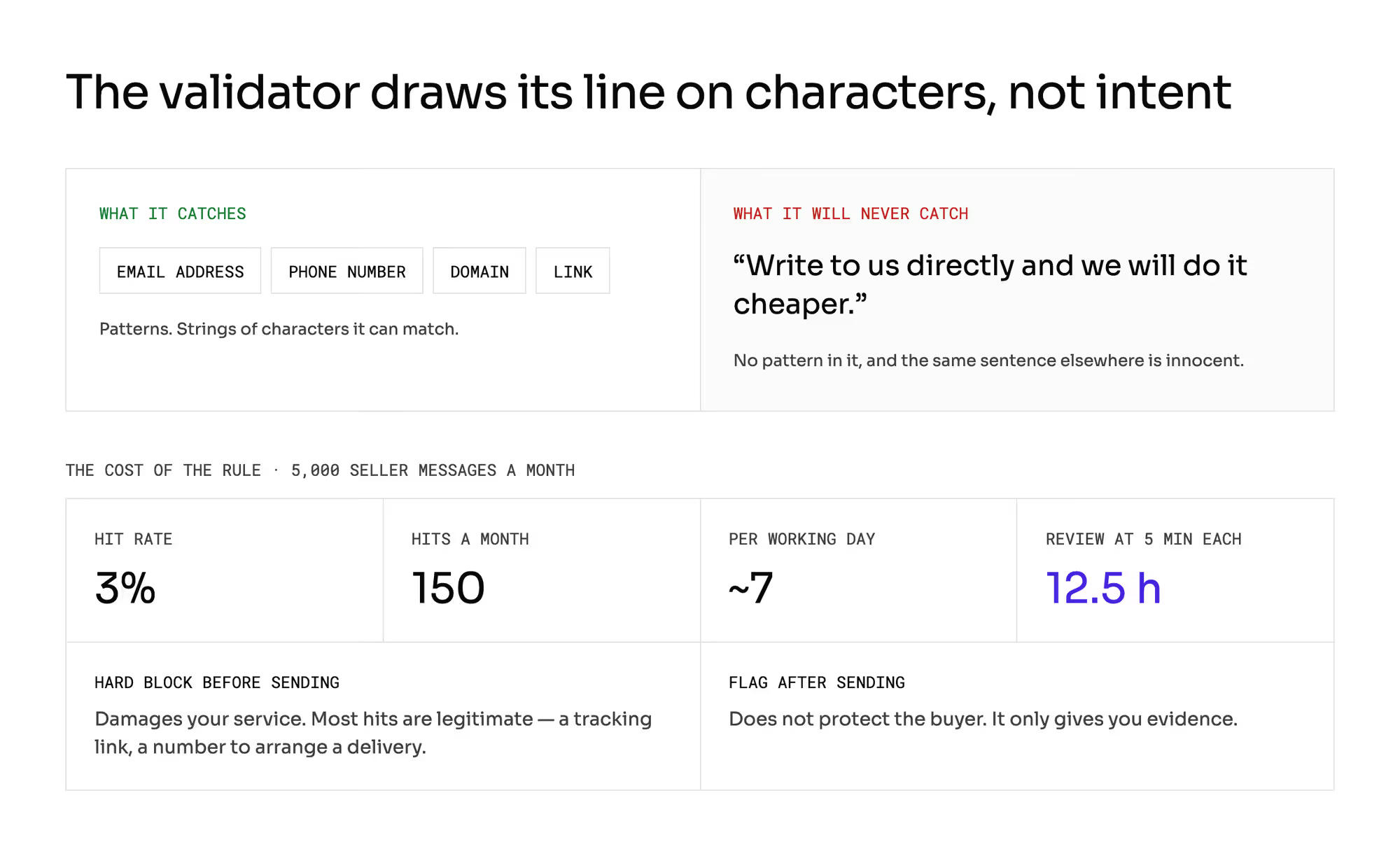
An outgoing content validator recognizes patterns: an email address, a phone number, a domain, a link. It does not recognize "write to us directly and we will do it cheaper".
There is no pattern in it, and the same sentence elsewhere is innocent. The machine draws its line along strings of characters rather than intent.
Now count the other side. At 5,000 seller messages a month and a 3% hit rate on the rule, you get 150 hits a month, about 7 per working day, and at 5 minutes each, 12.5 hours of review a month.
Most will be legitimate: a tracking link, a number to arrange carrying a washing machine to the third floor. Hence a choice to make deliberately.
A hard block before sending damages your service, and a flag after sending does not protect the buyer. It only gives you evidence.
And one thing to clear up before you sign a contract: some solutions do not let you filter outgoing content to the buyer at all. The message channel is then a closed whole, and you can only read the thread later.
Automatic message analysis, where it exists, usually aims at buyer dissatisfaction rather than a policy breach, and it runs on an hourly cycle. That is after the fact by definition.
Practitioners describe enforcement as steady reactive work rather than a feature you switch on. That is the normal state of this field rather than a failed rollout.
Say it to the board at the start rather than in the third quarter.
How do you detect disintermediation in your own numbers?
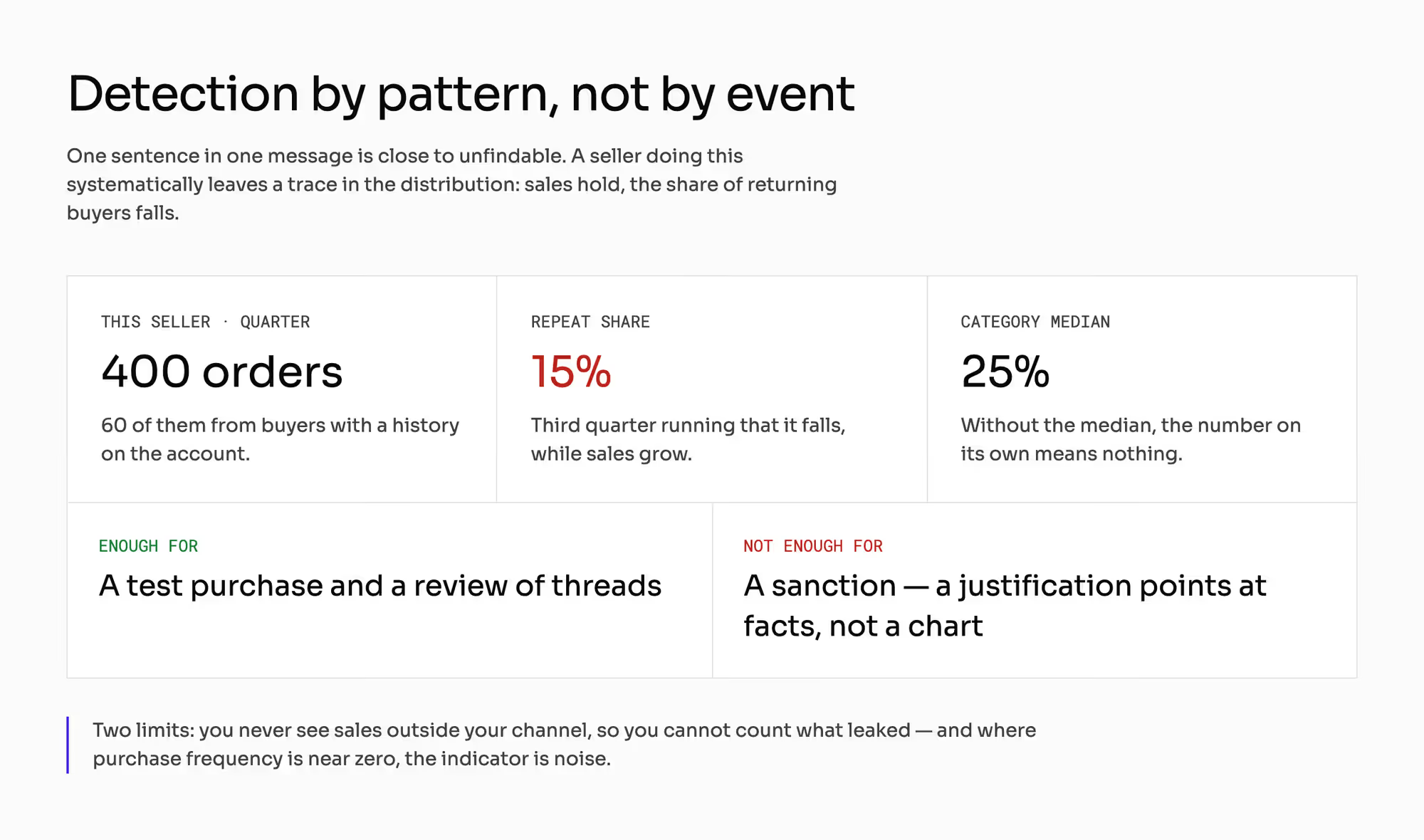
One sentence in one message is close to unfindable. But a seller who does this systematically leaves a trace in the distribution rather than the content: their sales do not fall; what falls is the share of orders from buyers who bought from them before.
An example. A seller has 400 orders in a quarter, 60 of them from buyers with a history on that account.
That is 15% repeat orders, against a category median of 25%. Sales are growing, and the repeat share has fallen for a third quarter running.
That is enough for a test purchase and a review of threads. It is not enough for a sanction.
A justification has to point at facts rather than at a chart (the rules on decisions about sellers).
Be honest about the limits. You do not see their sales outside your channel and you never will, so you cannot count how much leaked.
All you can count is that the distribution on their account looks different from their category neighbors. The second limitation is more serious: where purchase frequency is low, the indicator is noise.
Customer value models derive future value from how recently and how often somebody bought. Where frequency sits near zero, there is nothing to detect and nothing to lose.
What is taking a buyer off the platform worth to a seller?
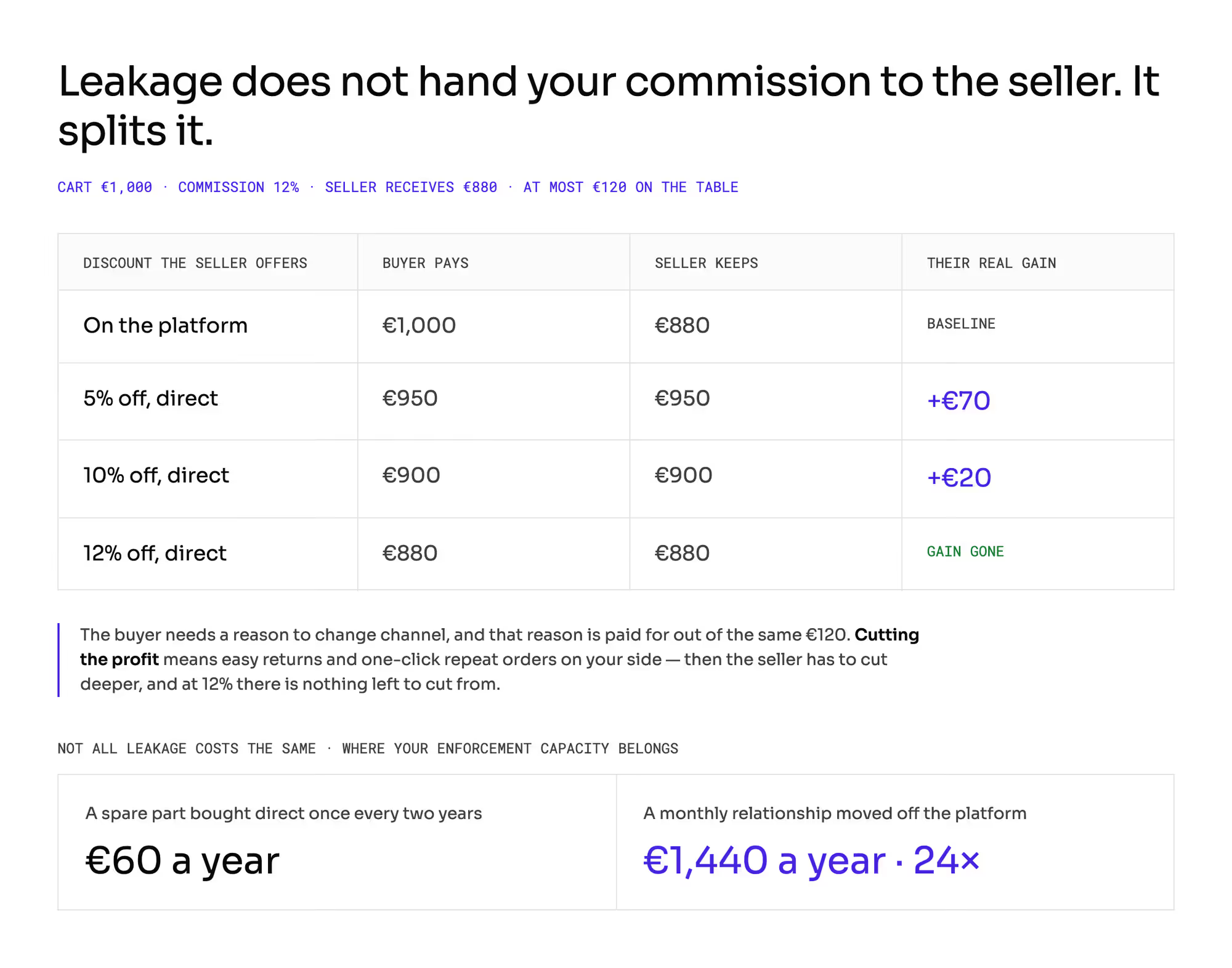
The canonical example of this series: a cart of €1,000, a commission of 12%, the seller receives €880. Taking the buyer off the platform is worth at most €120 per transaction to that seller.
At most, because the buyer needs a reason to change channels. If the seller tempts them with a 5% discount, they sell direct for €950 and keep €950 instead of €880, which is a gain of €70 rather than €120.
At a 10% discount, the price is €900, and the gain is €20. At 12% the gain disappears.
Leakage does not move your commission over to the seller: it splits that commission between the seller and the buyer. That is the first lever.
Now the other side of the inequality. A seller with 40 orders a month has 40 × €880 = €35,200 of revenue a month on your platform.
For €70 per transaction, they risk something more than five hundred times larger in monthly terms (€35,200 ÷ €70 ≈ 503). That inequality looks like your advantage, and it is one only when the sanction is real.
If your only response is an email asking them not to do it, the cost on their side is zero and the €70 stays.
Cutting the profit is work on the buyer's side: after-sales service handled by you, an easy repeat order, your own loyalty program, whose mechanics belong to the chapter on promotions. If a return on your platform takes no effort and a repeat purchase is one click, the seller has to cut deeper on price, and at a 12% commission there is nothing to cut from.
A gain of €20 per transaction is not worth losing the channel.
Raising the risk is a sanction you apply in practice, plus open information that you apply it. Research hints at the order of magnitude: in a natural experiment on a large services platform, closing an external communication channel reduced disintermediation by roughly one sixth.
It reduced it rather than removing it. That is a realistic ceiling on friction.
Two things enforcement policies stay silent about. First: part of the leakage is started by the buyer rather than the seller.
Research measures that separately, so a catalog of seller offenses covers half the problem. The second defuses board panic: part of the leakage does you no harm.
A buyer who buys a spare part directly once every two years brings you €120 of commission every two years, which is €60 a year. A seller who moves the whole relationship with a buyer ordering every month takes 12 × €120 = €1,440 a year.
That is twenty-four times more. Your enforcement capacity is small, and it belongs on the second case.
Which 3 tools reduce leakage, and what do they cost?
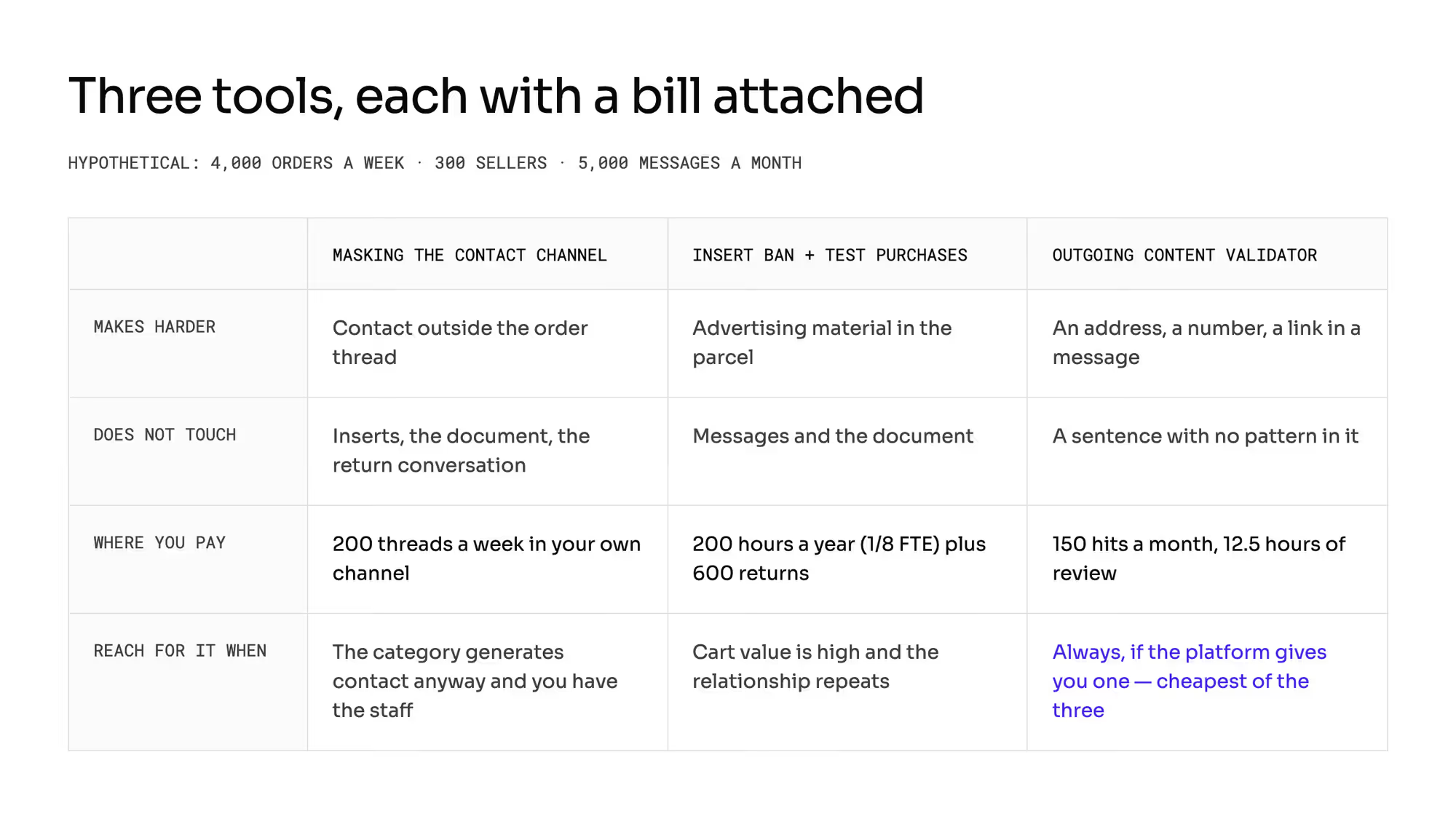
Assumptions for the table, all hypothetical: 4,000 orders a week, 300 sellers, 5,000 messages a month, one order in twenty needing delivery details agreed.
Masking is also a way of protecting the buyer's data, and its core is limiting what you pass on to what is necessary (who controls the personal data).
Now the sanction. Count it before you write it down.
Suspending sales for two weeks for a seller with 40 orders a month means roughly 20 orders that never happen, or 20 × €120 = €2,400 of lost commission of your own, charged against an insert worth €70 to them. A sanction more than thirty times more expensive for you than the breach gets applied once, for show, and never again.
And a sanction you never apply teaches sellers that the rule is decoration.
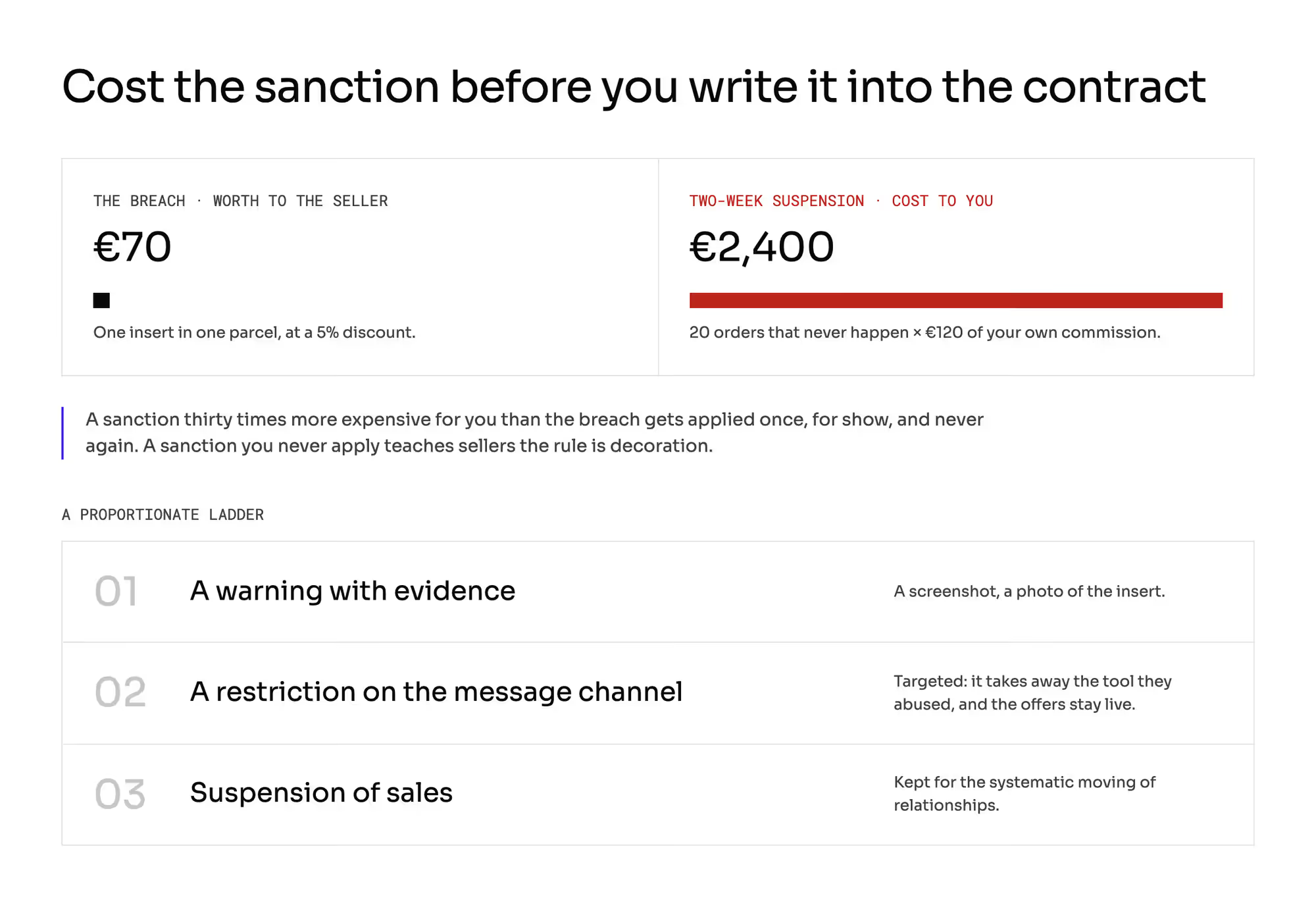
The ladder therefore has to be proportionate: the first case is a warning with evidence (a screenshot, a photo of the insert), and a repeat case is a restriction on the message channel to the buyer rather than a suspension of sales. Cutting a seller off from the conversation is often a separate setting, so it works without switching off their offers, and it is a targeted sanction because it takes away the tool they abused.
Keep suspension for the systematic moving of relationships. The justification and the trail are carried by the rules on decisions about sellers, the thresholds by seller quality thresholds, and an appeal lands where seller tickets land: requests from sellers.
What does disintermediation change about the rest of your build?
1. Leakage is a line in the cost model rather than an incident
It enters through three numbers: hours on test purchases, the load on support after masking, and the review of false positives. Without them, "we fight disintermediation" is a declaration with no budget behind it.
2. The level of your commission sets the strength of the temptation
Every percentage point is money the seller can use to buy the buyer. Enforcement policy and your price list are one subject rather than two (split payments and who pays the fees and the chapter on commissions).
3. The validator sits at the entrance to the system rather than on a form in the panel
Sellers work through integrators, so content arrives through a technical channel, and a rule guarding a text box in the panel guards the smallest stream of all (the seller panel).
4. The contract has to name channels rather than intent
"A ban on soliciting purchases off the platform" cannot be proved; "a ban on advertising material in the parcel" and "a ban on contact details in messages" can be checked (the documents you sign with a seller).
How do you check disintermediation controls with a vendor?
Five questions for your vendor, each answered by a demonstration on screen rather than an entry in a feature matrix:
- Can I filter content going out to the buyer? Does the block work before sending or after? If after, what do I see, and in what time window?
- Does the rule apply to content arriving through the technical interface and integrators, or only to the form in the panel?
- Can I restrict a seller's message channel to the buyer without suspending their sales?
- Can I see the full history of a thread with its attachments, and does deleting a message leave a trail? Without that, you have no evidence behind a warning.
- Is a repeat-order share report available per seller and per category? Without the category median, the number on its own means nothing.
Two things on your own side: measure the baseline repeat-order share in the category before you accuse anybody, and cost out every sanction before you write it into the contract. A sanction that costs you more than the breach is not a sanction, only a threat.
Which mistakes do operators make about disintermediation?
1. A policy of sealing the platform
The plan assumes zero leakage, the budget goes on a validator, and the parcel channel stays untouched. The consequence: money spent, the phenomenon untouched, and the team stops looking, because "we have that solved".
2. A sanction more expensive than the breach
Suspending sales over a single insert: €2,400 of lost commission for an offense worth €70. The consequence: you apply it once, then quietly drop it, and that one time comes back as a dispute over a response disproportionate to the facts.
3. An accusation built on an indicator
The seller demands facts, and you have a chart. The consequence: you withdraw the decision, and the message that "nobody checks anything over there" travels between sellers faster than your own announcement.
4. Chasing every case with equal energy
The same effort on a one-off insert and on moving an entire relationship. The consequence: enforcement goes into the noise, and the one case that costs you money is left untouched.
What do you still have to settle about your own enforcement?
This article is not legal advice. Two things here need a specialist.
First: how far you can contractually restrict a seller's contact with their own customer. That is a question for a lawyer in competition law, because it concerns restricting somebody else's sales channel, and the sharpness of the assessment grows with your market position.
Second: on what basis you mask the buyer's data and what you may pass to the seller. That is the family of regulations on personal data protection, and who controls the personal data carries the mechanism.
A sanction has its own regime of justification and delivery, while the thresholds and the ladder are carried by seller quality thresholds.
This article does not settle what travels in the parcel or how to communicate who is selling. That is showing who the seller is.
This article does not design a loyalty program or coupons (the chapter on promotions). It does not set the level of your commission or the wording of your clauses.
All the numbers here are openly hypothetical. Substitute your own and the arithmetic holds.
And one thing no vendor and no advisor will ever settle for you: the size of the sales happening outside your channel. That number does not exist and never will; every decision here is taken without it.
Summary: What can you do about customers leaking off the platform?
Price it, make it harder, and spend your enforcement where the money is. The seller has access to the buyer, a legitimate reason to use it, and your commission as the prize, which is why a sealed platform is not one of the options.
Five channels carry the leak, and only two of them are cheap to detect; the parcel insert, the most common of all, is caught by test purchases and nothing else. The arithmetic is more useful than the policing: on a €1,000 cart the prize is €120 and shrinks with every point of discount the seller has to offer, while the relationship they put at risk is worth five hundred times more a month.
That inequality is your advantage only when the sanction is real and proportionate.
Ask a vendor whether you can filter content going out to the buyer, and whether the block lands before sending or after. Building a marketplace where leakage is a line in the cost model with a sanction somebody will apply?
Frequently asked questions on marketplace disintermediation
What is disintermediation on a marketplace?
Disintermediation on a marketplace is a buyer and a seller who met on your platform taking their next transaction elsewhere. It is described in the literature on platforms as a weak point of the business model rather than an execution mistake, because the seller ships the parcel, answers the complaint, and keeps your commission if the next order happens on their own site.
How can a marketplace reduce disintermediation?
A marketplace reduces disintermediation with two levers: cutting the profit from leakage and raising its risk. Easy returns, one-click repeat orders, and your own loyalty mechanics force the seller to discount deeper, and at a 12% commission there is nothing left to discount from.
Masking the contact channel helps too, though a natural experiment on a large services platform cut leakage by roughly one sixth rather than removing it.
Can a marketplace detect when a seller takes buyers off the platform?
A marketplace can detect the pattern rather than the sentence. A seller who does this systematically shows growing sales with a falling share of orders from buyers who bought from them before: 15% repeat orders against a category median of 25% is enough for a test purchase and a look at the threads, and not enough for a sanction.
Ready to build?
We build marketplaces where leakage is priced: a filter on outgoing content, masked contact details, and a sanction proportionate to what the breach is worth.