
The marketplace platform you can make your own
Two editions, one engine. Mercur Open Source gives your team a working marketplace core to build and run independently. Enterprise adds advanced financial & operational controls, vendor integrations, and a team accountable for maintaining the licensed platform.
One engine in three layers
The open-source core is the foundation. Enterprise extends it.
Your own layer makes the marketplace yours.
Your layer
Your workflows, interfaces, and integrations, built on official extension points. Customizations stay separate from platform code, making upgrades easier to manage.
Mercur Enterprise
Additional financial controls, marketplace operations, and vendor integrations, with source access for licensees and maintenance from Mercur.
Mercur Open Source
The public, MIT-licensed engine for vendors, catalogs, offers, orders, commissions, and payouts. Run it on its own or extend it with Enterprise.
Which Mercur edition fits your marketplace?
Open source · MIT
Mercur Open Source
Build and run it with your own team.A working marketplace engine with vendor management, catalogs, multi-vendor orders, commissions and payouts. MIT-licensed and public, so your developers can inspect the architecture, run the code, and build on it directly.Your team owns implementation, deployment, and ongoing maintenance, with documentation and community channels to help along the way.
Enterprise
Mercur Enterprise
Extend the engine. Bring its builders onto your team.Everything in Open Source, plus capabilities such as financial settlement, BuyBox, vendor integrations, and enterprise access controls. A designated Platform Specialist, architectural guidance, and an SLA give your team a direct relationship with the people maintaining the platform.Choose Enterprise when your requirements call for these capabilities and you want Mercur to take responsibility for the licensed code. Implementation can be scoped separately.
The full engine in the open
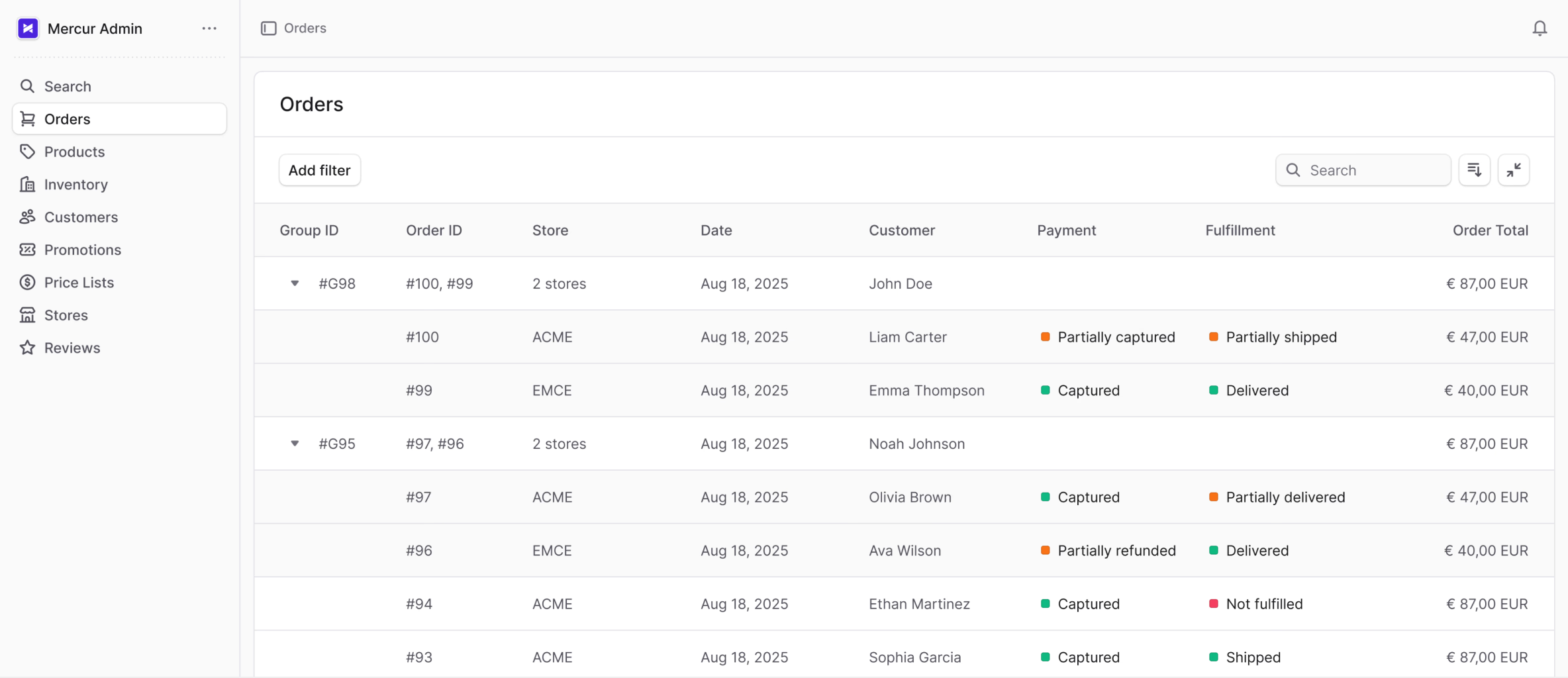
Open Source is not a teaser or a trial. It is a complete, working multi-vendor marketplace engine – and the code is public, so you can judge the architecture before you ever talk to us.

Vendors
Full vendor lifecycle, multi-user stores, and team roles.

Orders
Multi-vendor carts that split into per-vendor orders, from a single customer payment.

Payments
Rule-based commissions with an audit trail, and vendor payouts via Stripe Connect.

Catalog
Per-vendor catalog with custom attributes and fields, offers, and pricing.

Operations
Shipping, fulfillment, inventory, returns, and promotions, scoped per vendor.

Developer platform
Registry blocks you copy into your repo, a dashboard SDK, a typed client, a CLI, and a one-line plugin.
Where Open Source ends. What Enterprise takes on.
The core handles marketplace transactions. Enterprise adds the controls and support your team needs when finance must settle vendor balances, operations must resolve disputes, and security must trace who did what.Use your requirements to draw the line between what your team will build and maintain, and what Mercur provides under the Enterprise license.Discuss your Enterprise requirementsExplore the full module catalog
| Your requirement | Open Source provides | Enterprise adds |
|---|---|---|
| Run a multi-vendor marketplace | Vendor accounts, catalogs, offers, split orders, commissions, and payouts | The shared core, covered by Mercur's platform support |
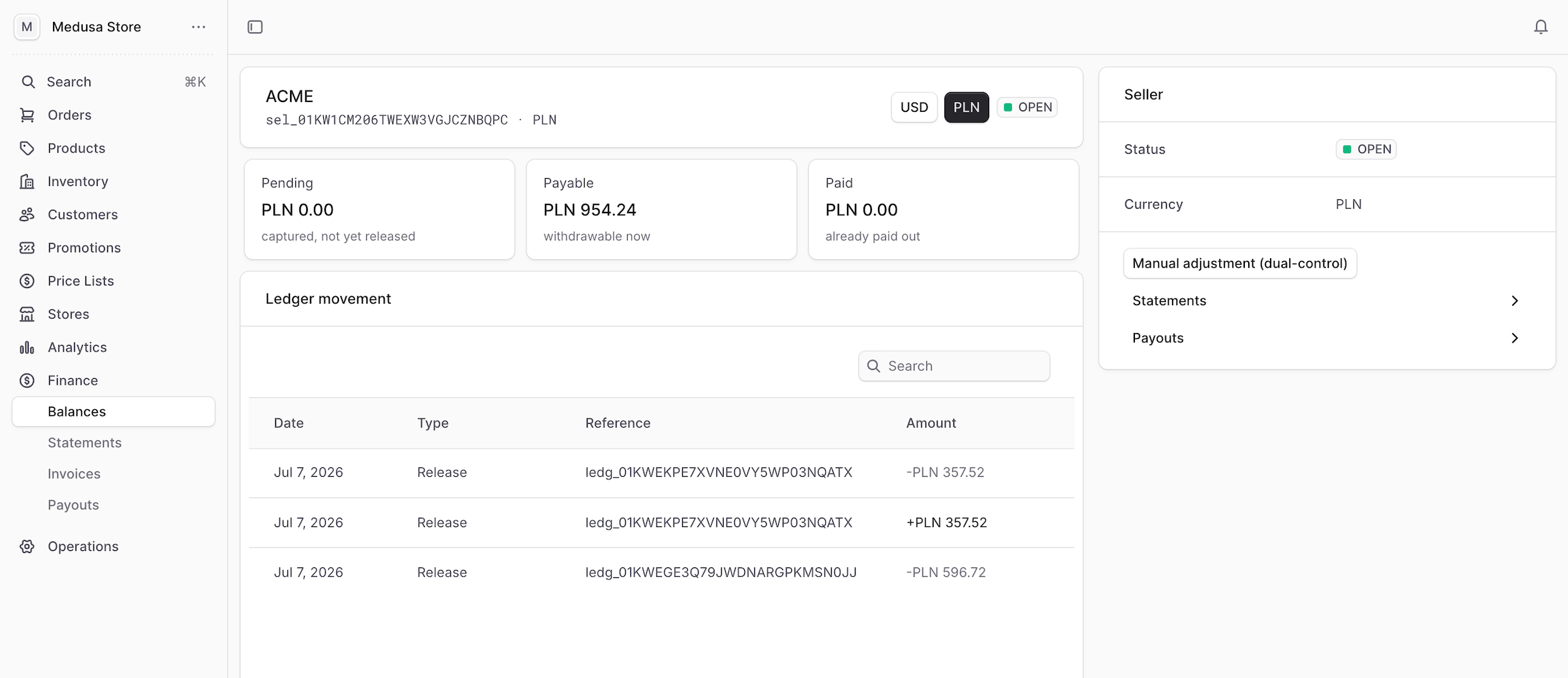
| Settle marketplace finances | Payments, refunds and vendor payouts | Double-entry ledger, settlement, and configurable payout cycles |
| Control offers and operations | Product offers, pricing, and order workflows | BuyBox, command center, dispute management, and operational analytics |
| Review access and activity | Role-based access and vendor data isolation | Enterprise SSO, audit logging, and data controls |
| Connect vendors' existing stores | APIs and extension points for your team to build on | Integration framework and supported Shopify and Magento / Adobe Commerce connectors |
| Resolve platform issues | Public issue tracker and community channels | Priority resolution, a designated Platform Specialist, and an SLA |
| Maintain and extend the platform | Public releases for your team to evaluate and adopt | Enterprise releases during the term, maintenance, architectural guidance, and upgrade support |
Enterprise is licensed as a complete suite. Building your marketplace and connecting your own ERP, PIM, OMS, or custom feeds are separate implementation.
Enterprise includes the team behind the platform
Your Platform Specialist keeps the context of your marketplace and connects you with the engineers responsible for the code. You get a dedicated support channel, guidance on architectural decisions, and support through major upgrades.Mercur maintains the Enterprise modules, the framework they run on, and the integrations we support. Your custom code and third-party modules remain outside that maintenance scope.
Keep control of what you build
Inspect the code
The core is public under MIT. Enterprise licensees also get source access to the Enterprise modules.

Choose your infrastructure
Run either edition in your own cloud, on-premise or in an air-gapped environment. Managed hosting is available separately through Mercur Cloud.

Keep your version
If your Enterprise license ends, you retain the version you paid for. The software is not disabled. Enterprise updates and support end, and your team takes over maintenance.
Comparing Mercur with a marketplace SaaS?
Compare the capabilities, then look at how each platform handles customization, deployment, fees, and your ability to leave. These decisions shape what your team can build and what it will cost to operate.
| Decision | What to check with a SaaS provider | Mercur |
|---|---|---|
| Source access | Can your team inspect and modify the platform code? | Public MIT core; Enterprise source access for licensees |
| Customization | Which changes can your team ship, and which require the provider? | Your team builds through APIs, events, hooks, and extension points |
| Deployment | Can you choose where the application runs and who operates it? | Your cloud, on-premise or air-gapped; optional Mercur Cloud |
| Platform fees | Are fees linked to GMV or transaction volume? | Zero GMV fees; Enterprise license quoted for your marketplace |
| Integrations | Which connectors are included, and what implementation work costs extra? | Supported vendor connectors included in Enterprise; operator-system integrations scoped separately |
| Exit | Can you keep running the software when the contract ends? | Keep your paid-for version; take over maintenance when the license ends |
| Operating responsibility | Who owns hosting, platform defects, and custom code? | Mercur supports licensed code; infrastructure and custom development have separately defined responsibilities |
With Mercur, you decide how much to build and operate yourself. Enterprise gives you a maintained platform and direct engineering support, with implementation available as a separate engagement.Discuss Enterprise licensing
Let's scope your Enterprise marketplace
Talk to us about an Enterprise license, marketplace implementation, or both.We'll map your requirements to the platform, define the work your launch needs, and discuss deployment and commercial terms.
Building independently with Open Source?