
Marketplace Seller Quality Metrics: What to Measure and When to Suspend

Marketplace seller quality metrics are the numbers that decide which sellers keep selling, so a threshold is a decision about how much supply you are ready to lose in the month you switch it on.
You do not set a quality threshold to measure. You set it to cut someone off from selling, and that is why you need to know its price before you switch it on rather than after the first week.
This article breaks down:
- Which 4 families of seller quality metrics matter?
- What window and minimum volume does a metric need?
- Which 5 rungs belong on a ladder of sanctions?
- Which number tells you your thresholds are wrong?
Key insights
- The four families of seller quality metrics are order fulfillment, the after-sales effect, communication, and compliance with your rules, and the line that matters cuts across all four: a metric you can enforce names an action the seller can take.
- A metric needs a time window and a minimum volume, or it measures noise: a seller with twelve orders and one complaint sits at 8.3% against a 5% threshold, and the same events read as 5% in a 30-day window and 3% in a 90-day one.
- The five rungs on a ladder of sanctions are a warning with a deadline, a hold on new offers, a category restriction, a stop on selling with service kept on, and suspension of the account, and jumping straight to the last one is expensive: three days of suspension on a seller doing 400 orders a month is €4,800 of your commission.
- The number that tells you your thresholds are wrong is the share of suspensions reversed after the seller explains: nine reversals out of twenty is 45%, and it says your data is worse than your rule rather than that your sellers are worse than you thought.
Why is a quality threshold a decision about supply?
It says one thing: how many sellers you are ready to lose this month.
The question "which metrics do we measure" has a boring answer that everybody in the room already knows: the share of orders with a complaint, the share of returns, cancellations, on-time shipping, response time. Mature platforms have that calculated, and the argument about the list itself rarely outlasts one meeting.
The hard part is the second question. A threshold switched on without a simulation on history suspends part of your seller base in the first week and comes back to you as a decision you have to reverse.
It comes back as a run of conversations in which you undo what the system just did.
So this is not a decision for the quality team. A threshold is a bet on supply: it settles how much GMV you put up for negotiation in the month you turn it on.
The line to carry into the committee meeting: we are not asking which threshold is right; we are asking what each of the three we are considering costs.
Which 4 families of seller quality metrics can you measure?
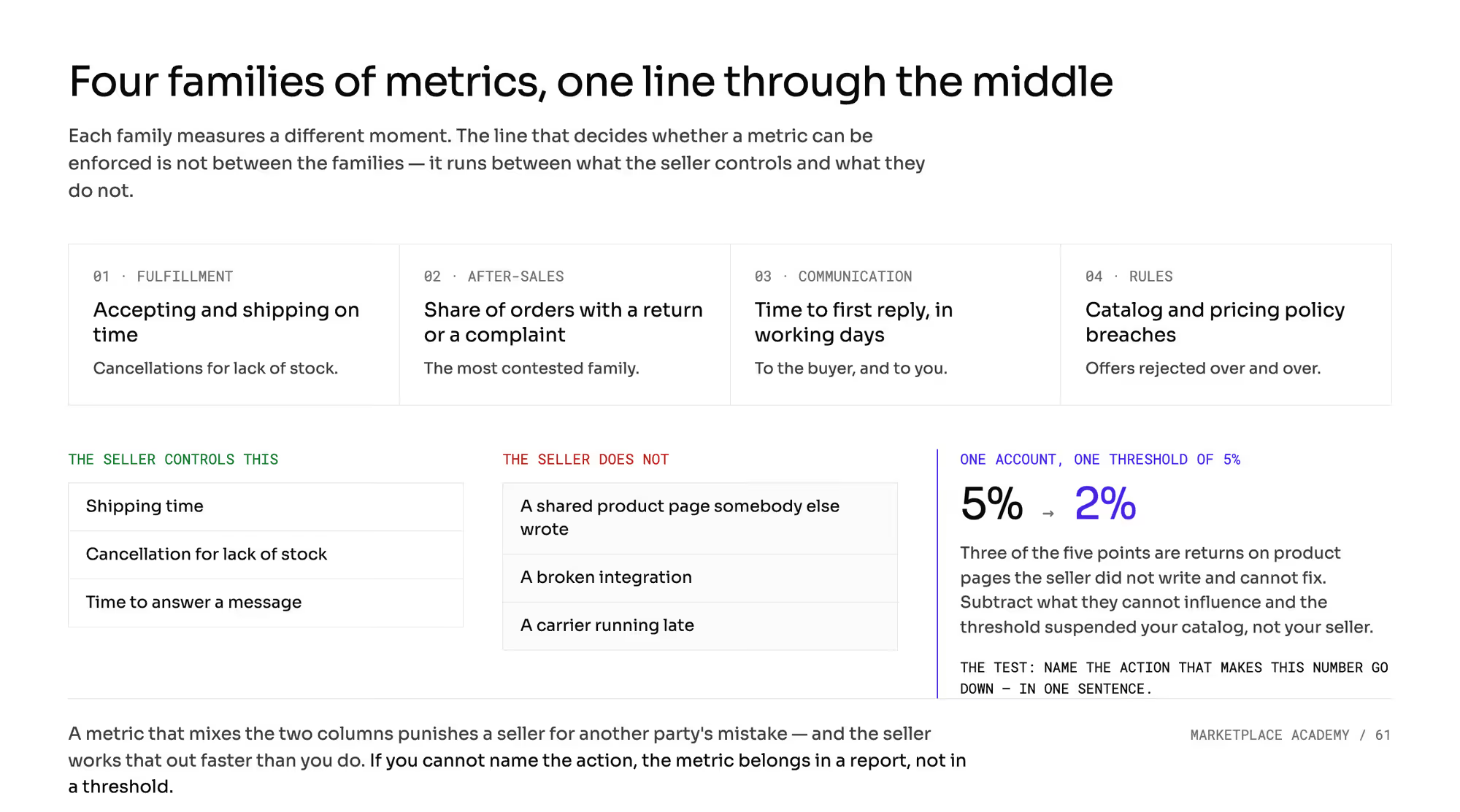
Seller quality metrics fall into four families, and each one measures a different moment:
- Order fulfillment: accepting on time, shipping within the promised time, cancellations for lack of stock.
- The after-sales effect: the share of orders with a return, the share of orders with a complaint.
- Communication: time to first reply to the buyer and to you, counted in working days.
- Compliance with the rules: breaches of catalog and pricing policy, offers rejected over and over.
The hard part is the line running through the middle of those families: what the seller genuinely influences, and what they do not control. Shipping time, a cancellation for lack of stock, and the time it takes them to answer a message are theirs.
The rest is not: a return caused by a description that somebody else wrote on the shared product page (the catalog model and field ownership), a broken integration, a carrier running late.
A metric that mixes those two things punishes a seller for another party's mistake, and the seller works that out faster than you do. A late-shipment counter that measures your integration rather than their warehouse is what the delivery date you promise describes.
The test for every metric: what specific action is the seller supposed to take for this number to go down? If you cannot name that action in one sentence, the metric belongs in a report rather than in a threshold.
One calculation shows it. A seller sits at 5% of orders with a return against a 5% threshold, but three of those five points are returns on three product pages whose content they did not write and cannot fix.
Subtract what they cannot influence, and 2% is left. The threshold suspended your catalog rather than your seller.
Why do you simulate a threshold on history before switching it on?
Before you switch a threshold on, calculate it on the last quarter of data. Answer three questions: how many sellers would have crossed it, what share of GMV they represent, and how many of them sit in your top ten.
Take a platform with 300 active sellers and 12,000 orders a month. This series runs on one example: a €1,000 cart at a 12% commission, so the seller receives €880.
Monthly GMV is €12 million and commission revenue is €1.44 million. The metric: the share of orders with a complaint in a 90-day window.
Simulating three thresholds on a closed quarter looks like this:
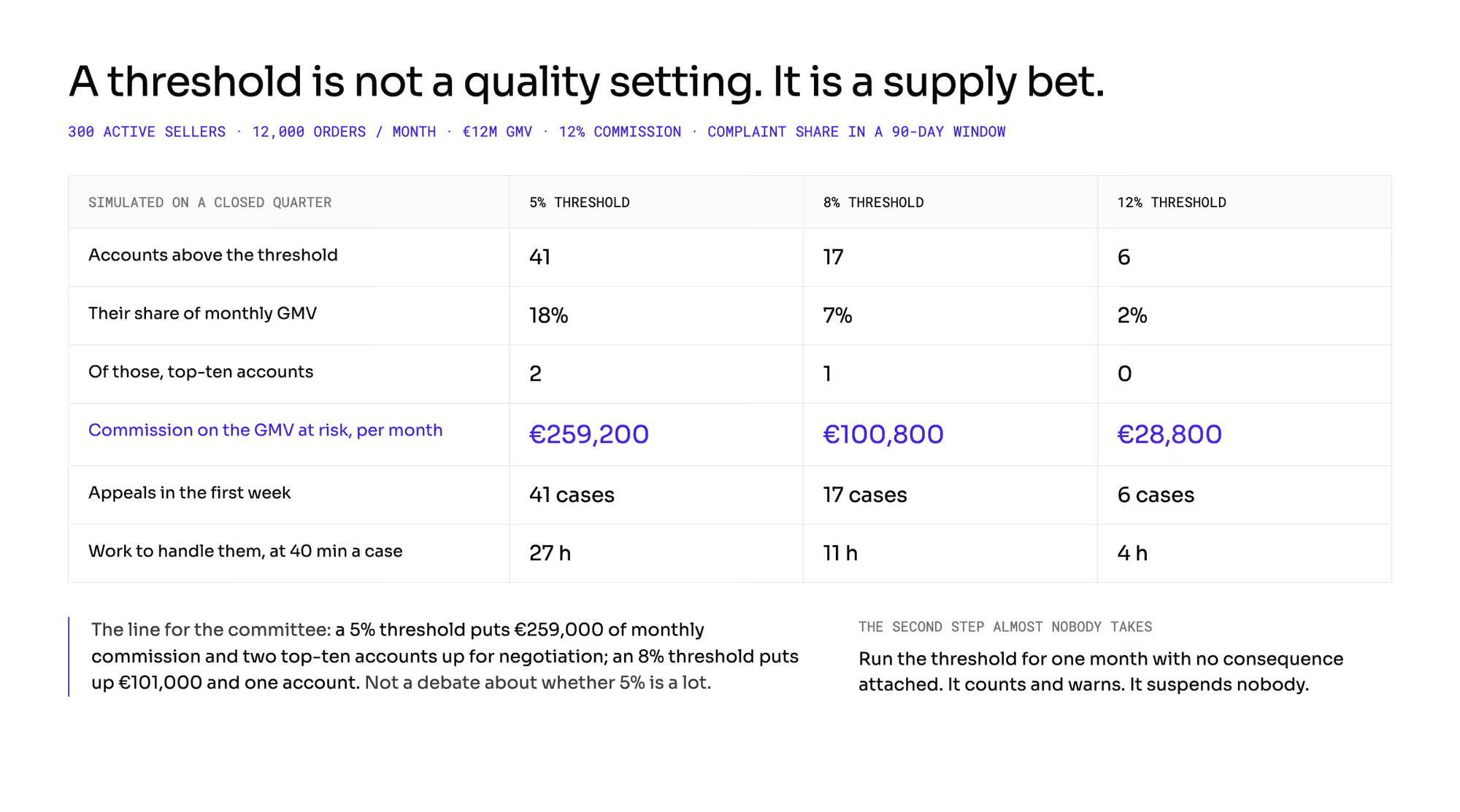
The arithmetic is out in the open. 18% of €12 million is €2.16 million of GMV, and a 12% commission on that amount is €259,200 a month.
At the 8% threshold, it is €840,000 of GMV and €100,800 of commission. Forty-one cases at 40 minutes each is 1,640 minutes, or 27 hours.
That is a full week of one person's time that nobody planned for.
The line for the committee: a 5% threshold puts €259,000 of monthly commission and two top-ten accounts up for negotiation; an 8% threshold puts up €101,000 and one account. That is a conversation about supply and money rather than about whether 5% is a lot.
The second step is cheap, and almost nobody takes it: run the threshold for a month with no consequence attached. It counts and sends warnings, and it suspends nobody.
Alarm design in technical systems hands you the vocabulary ready-made. A rule has two separate qualities: how many of its firings were a real problem and how many real problems it caught, and widening the window moves both at once.
What window and minimum volume does a seller metric need?
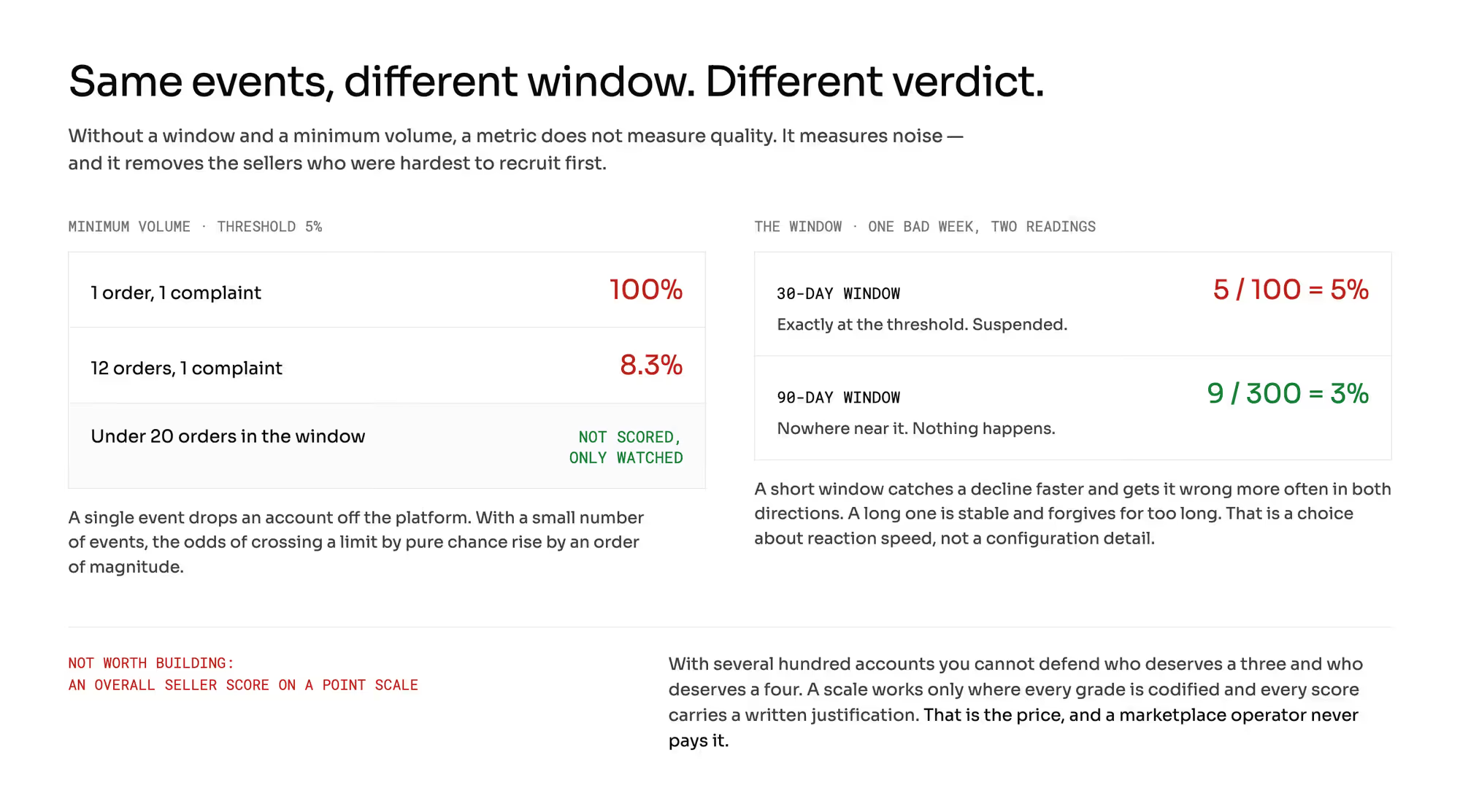
Without those two parameters, a metric does not measure quality. It measures noise.
Minimum volume. A seller with one order has a metric of 0% or 100%.
A seller with twelve orders and one complaint has 8.3%, and against a 5% threshold, they drop off the platform after a single event. Set a minimum order count for the window (say 20), and until an account reaches it, that account is not scored, only watched.
Control chart practice says the same thing from the statistical side. With a small number of events, the probability of crossing a limit by pure chance goes up by an order of magnitude and the alarm stops meaning anything.
The window. The same incident looks different in two windows.
A seller with a hundred orders in 30 days and two complaints sits at 2%; one bad week with three more gives 5 out of 100, which is exactly the threshold. In a 90-day window, the same events are 9 out of 300, which is 3%.
That is nowhere near the threshold. A short window catches a decline faster and gets it wrong more often in both directions; a long one is stable and forgives for too long.
This is a choice about how fast you want to react rather than a configuration detail.
The same mechanism works one floor up. A rule that picks the default offer on quality shuts out new sellers until they have a history (the rule that picks the winning offer).
And one thing not worth building: an overall seller score on a point scale. It exists in products on the market, and practitioners say plainly that nobody uses it, because with several hundred accounts you cannot defend an answer about who deserves a three and who deserves a four.
A scale works only where every grade has a codified definition and where issuing a score requires a written justification pointing to specific events. That is how public procurement regimes do it.
That is the price of a point scale, and a marketplace operator never pays it. Instead of one score: several metrics, each with a stated threshold and each tied to an action the seller can take.
Which 5 rungs belong on a ladder of sanctions?
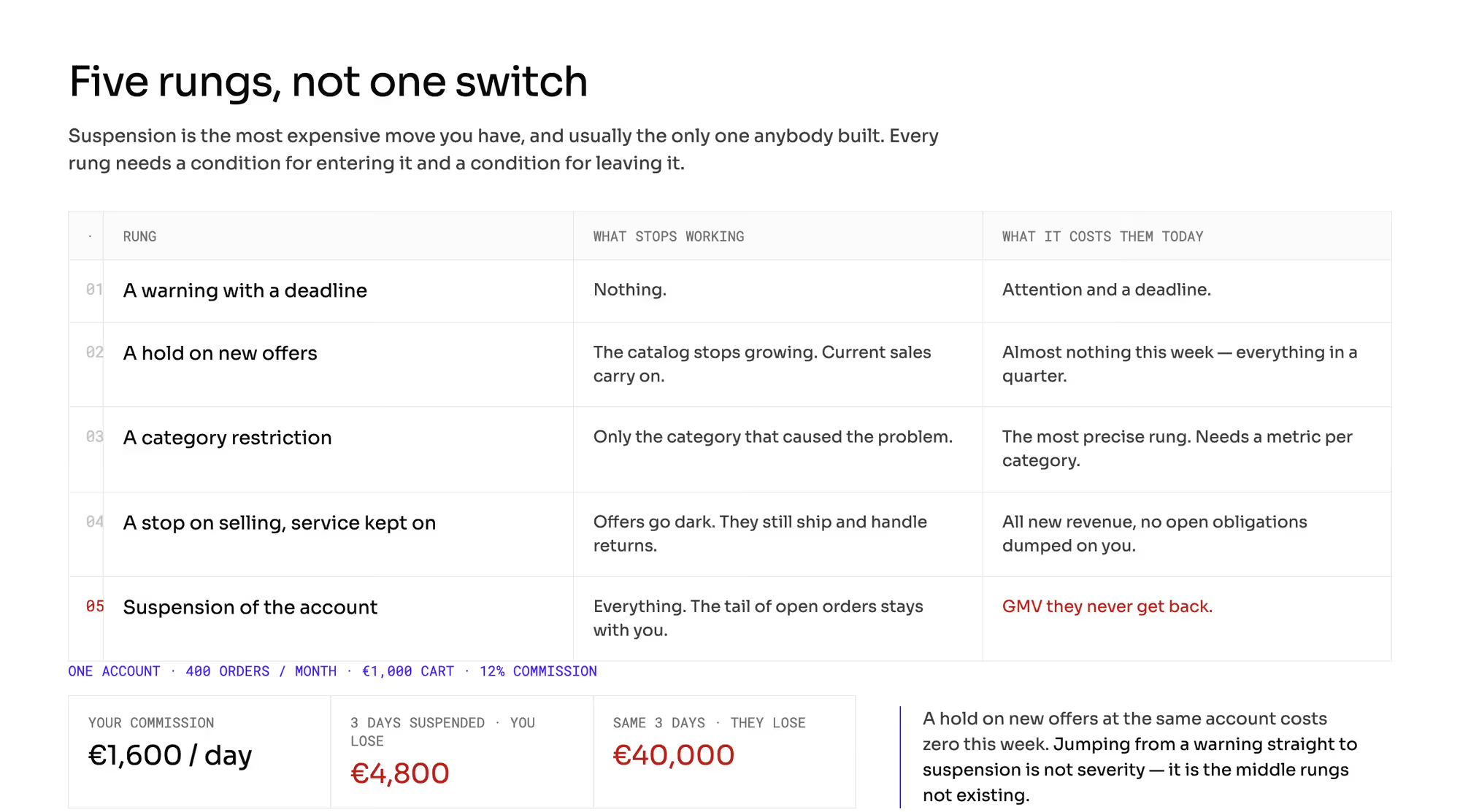
Suspending an account is the most expensive move you have, and usually the only one anybody built. Between a warning and a shutdown, there is room for three rungs with different costs for both sides:
A warning with a deadline. Nothing stops working.
It costs you nothing. It costs them attention and a deadline.
A hold on new offers. The catalog stops growing; current sales carry on.
Today it costs them almost nothing; in a quarter it costs them everything, which is why it works on a seller who is building a position.
A category restriction. You cut out the source of the problem and leave the rest alone.
The most precise rung, and it needs a metric per category.
A stop on selling with service kept on. The offers go dark, but the account still works: the seller keeps shipping what they sold and keeps handling returns.
Suspension of the account. Everything stops, and the tail of open orders stays with you.
A seller with 400 orders a month at a €1,000 cart brings in €400,000 of GMV and €48,000 of commission, which is €1,600 of commission a day. Three days of suspension is €4,800 of your revenue and €40,000 of their GMV that they never get back.
A hold on new offers at the same account costs zero this week.
Jumping straight from a warning to suspension is the most common design mistake in this layer. It does not come from severity.
It comes from the middle rungs not existing in the system. Every rung needs a condition for entering it and a condition for leaving it.
Which privileges can seller tiers grant, and which one is dangerous?
A ladder going down without a ladder going up reads like a system of punishments. Three privileges genuinely work: visibility (quality as a parameter in ranking), early access to campaigns and categories, and immunity from the automation, meaning the decision to suspend goes to a person instead of the system.
Immunity is the one dangerous privilege of the three: a tier with no expiry turns into protection for the biggest sellers and freezes the whole ladder. Come back to our 300 accounts.
If the top ten accounts account for 38% of GMV and hold permanent immunity, quality enforcement works on the remaining 62%. That is exactly where the stakes are smallest.
So a tier has to carry an expiry date and recalculate in the same window as the thresholds. Immunity does not mean "we stop measuring", it means "a person makes the decision".
Which number tells you your thresholds are wrong?
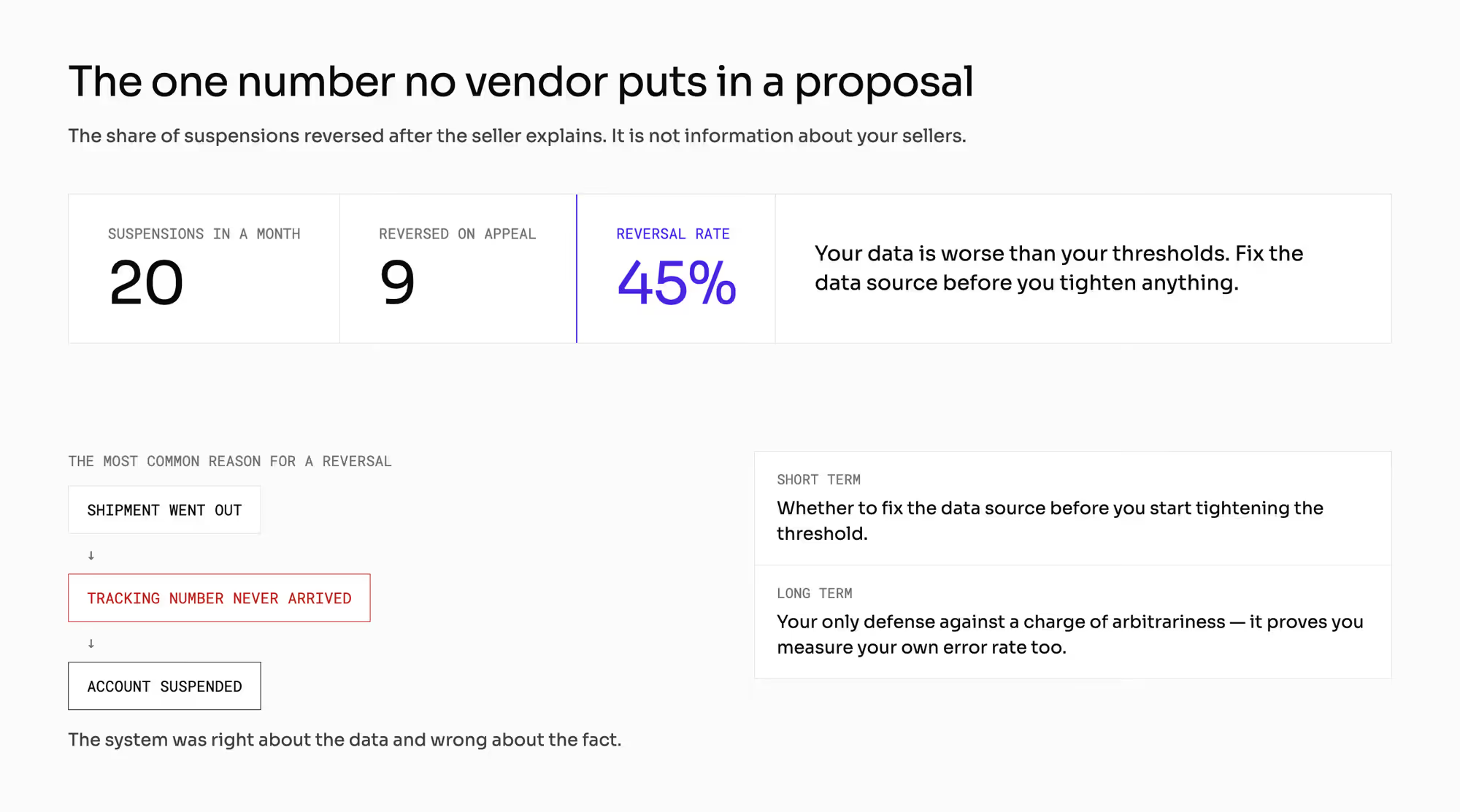
There is one number that no vendor puts in a proposal: the share of suspensions reversed after the seller explains.
Twenty suspensions in a month and nine of them reversed is 45%. That is not information about your sellers.
It is information that your data is worse than your thresholds. In the rollouts we know, the most common reason for a reversal is a suspension for a missing shipment that had in fact gone out, with only the tracking number failing to come through.
The system was right about the data and wrong about the fact.
In the short term, that number tells you whether to fix the data source before you start tightening the threshold.
In the long term, it is your only defense against a charge of arbitrariness, because it proves you measure your own error rate as well as somebody else's.
What do seller quality metrics change about the rest of your build?
1. Simulating a threshold is a product requirement rather than a job for an analyst
The platform has to run the proposed rule against a closed history and show the accounts it would have crossed, with their share of GMV.
2. Every metric needs an owner for its data source
If the number comes from an integration or a carrier, then before you punish a seller, you have to know whose mistake it was. Otherwise, you are measuring yourself.
3. Thresholds go into the supply plan alongside recruitment
You plan how many accounts you add in a quarter, and the threshold takes part of them away: the net is smaller than in the presentation (finding your first sellers).
4. Money enters here by two routes
One is commission lost while an account is suspended. The other is a payout hold, which is a separate risk tool and should never be mixed with quality (payout cycles, holds and reserves).
5. Visibility is a faster sanction than suspension
Quality as a parameter for choosing the default offer is the rule that picks the winning offer, and the duty to disclose those parameters is the rules on decisions about sellers.
How do you check seller quality metrics with a vendor?
Six questions, each one answered on screen rather than in words:
- Run the proposed threshold against our history and show the accounts it would have crossed, with their share of GMV. If that turns into an export and a spreadsheet, the feature does not exist.
- Does the threshold have a time window and a minimum volume, and can they be set differently for a category with different return dynamics?
- How many rungs of sanction are built in? Concretely: can I hold new offers without stopping sales?
- Can a metric be overridden for a single seller (an individually agreed shipping time), and does the override count toward their statistics?
- Can a suspension be automatic while reinstatement stays manual, and where does the reversal get recorded?
- Is the value of the metric stored at the moment of the decision, or can you only see today's?
When you buy, you usually get one of two halves. Some products have flexible quality requirements with a per-seller override, but enforcement in them is manual; others have thresholds with automatic suspension, but the requirements are rigid.
The question is which half you have and what you add yourself.
Which mistakes do operators make about seller quality metrics?
1. A threshold switched on without a simulation on history
The rule looks sensible on a slide and suspends several dozen accounts in the first week. You lose GMV and the credibility of the rule at the same time, because you reverse part of the decisions within a few days.
2. A metric with no window and no minimum volume
New sellers go first, because one event across a handful of orders produces a double-digit percentage. You lose exactly the sellers who were hardest to recruit.
3. A metric that punishes a seller for somebody else's mistake
Returns caused by a shared product page and integration failures land in a number the seller is told to improve. The corrective conversation loses its point: there is no action they could take.
4. A switch instead of a ladder
The only tool is suspension, so you either do nothing or you do the most. In practice, the team starts doing nothing, because the cost of the only available move is too high.
5. A tier with no expiry
A privilege granted once stays forever, and the biggest sellers stop being measured. After a year you do not have a quality system, you have a system for small sellers.
What do you still have to settle about your own thresholds?
This article does not settle what you have to deliver to a seller when you suspend them, in what form and how far in advance, nor what the appeal path should look like. The rules on decisions about sellers carry the mechanism, and you confirm the form and the deadlines with a lawyer.
What applies here is the family of regulations on transparency in the platform-to-seller relationship, known in the trade as P2B, and it is the lawyer who tells you whether it covers your scale.
This article does not settle when and on what terms to reinstate an account. The corrective plan and the probation period are reinstatement and the probation period.
This article does not touch three things that are easy to confuse with quality: payout holds and reserves as a risk tool, seller verification at the entrance (verifying a seller at the entrance), and support and education as a way to improve the metrics (seller support and education). The third is cheaper than any sanction.
All the numbers above are openly hypothetical. The arithmetic travels, the values do not: substitute your own number of accounts, your own volume, and your own distribution of complaints.
Whether the threshold is a decision or a bet depends on simulating it on your own history.
Summary: What does a quality threshold really cost?
Part of your supply, and you can price that part before you switch anything on. Four families of metrics are worth measuring, and the only line that decides whether a metric can be enforced is whether the seller can name the action that moves it.
Every threshold needs a window and a minimum order count, because a seller with a handful of orders produces double-digit percentages out of a single event. The simulation on a closed quarter is what turns the question from "is 5% a lot" into "this threshold puts €259,000 of monthly commission and two top-ten accounts up for negotiation".
And between a warning and a shutdown there are three rungs that most systems never built, which is why teams either do nothing or do the most expensive thing available.
Ask a vendor to run your proposed threshold against your own history and show the accounts it would have crossed. Building a marketplace where a threshold can be simulated, windowed, and stepped through a ladder instead of a switch?
Frequently asked questions on seller quality metrics
Which seller quality metrics should a marketplace measure?
A marketplace should measure four families: order fulfillment, the after-sales effect, communication, and compliance with its own rules. The list is the easy part.
The test that makes a metric usable is whether you can name, in one sentence, the action the seller takes to move it. A number that mixes their behaviour with your integration or a shared product page belongs in a report rather than in a threshold.
When should a marketplace suspend a seller?
A marketplace should suspend a seller only after the cheaper rungs have been used and recorded: a warning with a deadline, a hold on new offers, a category restriction, and a stop on selling with service kept on. Suspension is the most expensive move for both sides, and it leaves the tail of open orders with you.
What are vendor performance metrics on a marketplace?
Vendor performance metrics on a marketplace are the same four families applied to sellers rather than to suppliers you buy from. The difference is what happens when a number crosses a line.
In supplier management, the consequence is a conversation at the next review; on a marketplace, an automated rule can stop a seller from selling that afternoon, which is why the window, the minimum volume, and the ladder of sanctions matter more here than the choice of metric.
Ready to build?
We build marketplaces where a threshold is simulated on a closed quarter before it suspends anyone, with a window, a minimum volume, and a ladder of sanctions.