
Marketplace Chargebacks: Who Carries the Cost, and What if the Seller's Balance Is Empty?

A refund is something you agree to. A chargeback is something you are told about.
The money has already left your account and all you can do is try to get it back. It usually arrives long after the order closed and the seller was paid.
Companies plan a refund policy. Chargebacks they just find out about.
The result is always the same: a debit you have nothing to deduct from, and a debt tracked in a spreadsheet next to the system, because the system cannot show a balance below zero.
A marketplace chargeback is a payment reversal the buyer's bank forces through, and you find out about it after the money has already left your account. On a €1,000 order you have usually paid the seller their €880 weeks earlier, so the debit arrives with nothing behind it.
Card scheme rules give the buyer months to file the claim and give you weeks to answer it, and saying nothing counts as accepting it.
This article breaks down:
- How does a chargeback differ from a refund?
- Which 3 clocks run on a chargeback?
- Who carries the cost when the seller's balance is empty?
- When does the debt become a collection case?
Key insights
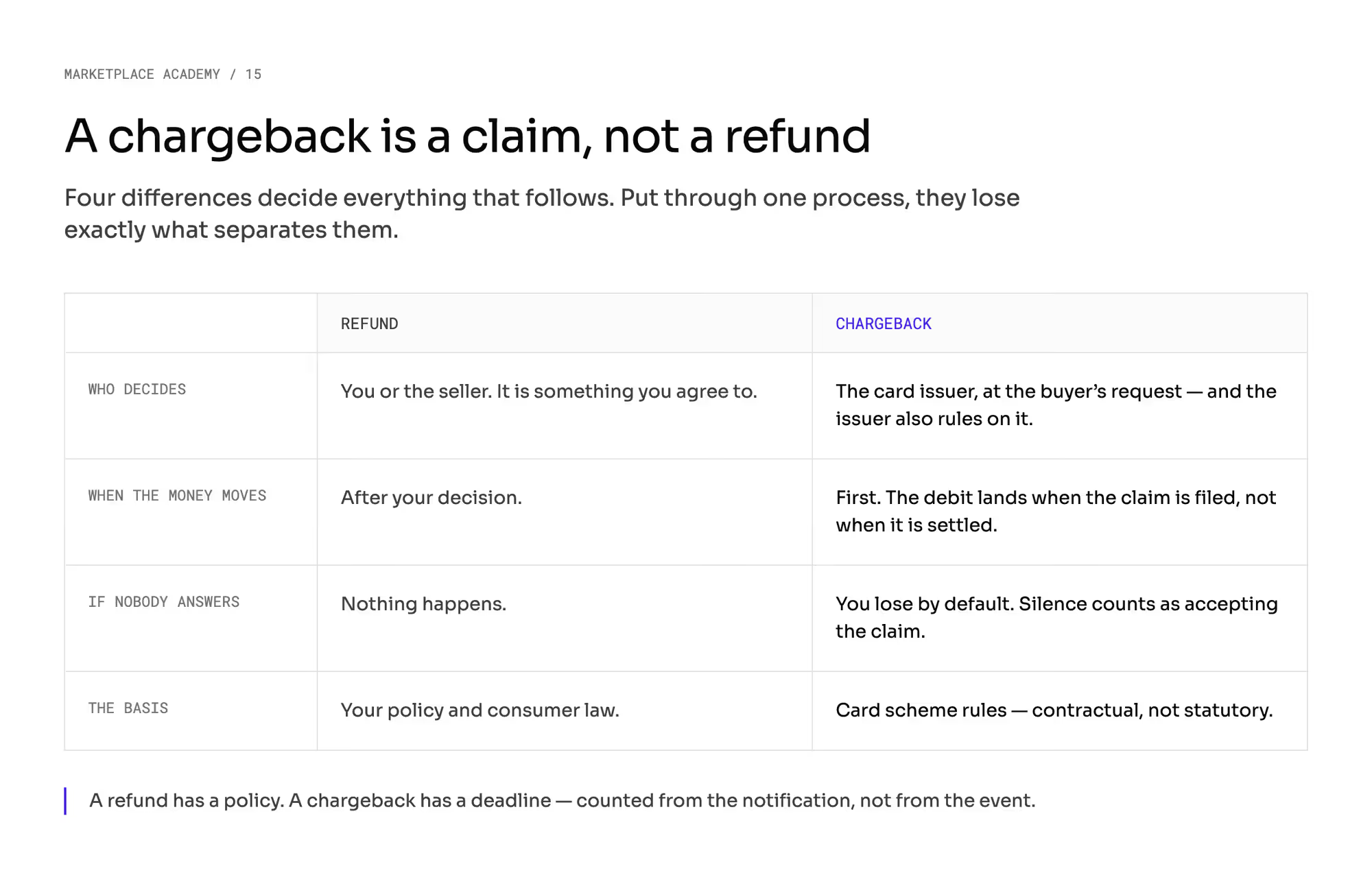
- A chargeback and a refund differ on four points, and the expensive one is that silence counts as accepting the claim.
- Whoever is the merchant of record carries the debit. A seller's formal liability rarely survives an empty balance, because the operator answers for the whole portfolio.
- A seller balance has to be able to go below zero. A debt held in a spreadsheet never ages, never deducts itself, and never reaches the seller.
- The dispute ratio is measured at account level, so one seller generating disputes can cost the whole platform its card acceptance.
What is a marketplace chargeback and how does it differ from a refund?
1. Somebody other than you decides
You or the seller start a refund. The card issuer starts a chargeback at the buyer's request, and the issuer also rules on it.
You present evidence. You do not hand down the verdict.
2. The money leaves first, and the dispute comes afterward
The amount comes off your account the moment the claim is filed, months before anybody rules on it. If you win, it comes back. Until then, you do not have it.
3. You lose by default if nobody answers
That is the most important sentence in this article. Failing to answer in time counts as accepting the claim. There is no grace period and no second chance.
4. The basis is contractual
A chargeback rests on card scheme rules. Unauthorized transactions run on a separate, statutory track, where the bank's duties toward the customer come from payment regulation.
Confirm with a lawyer how those two tracks look in your case.
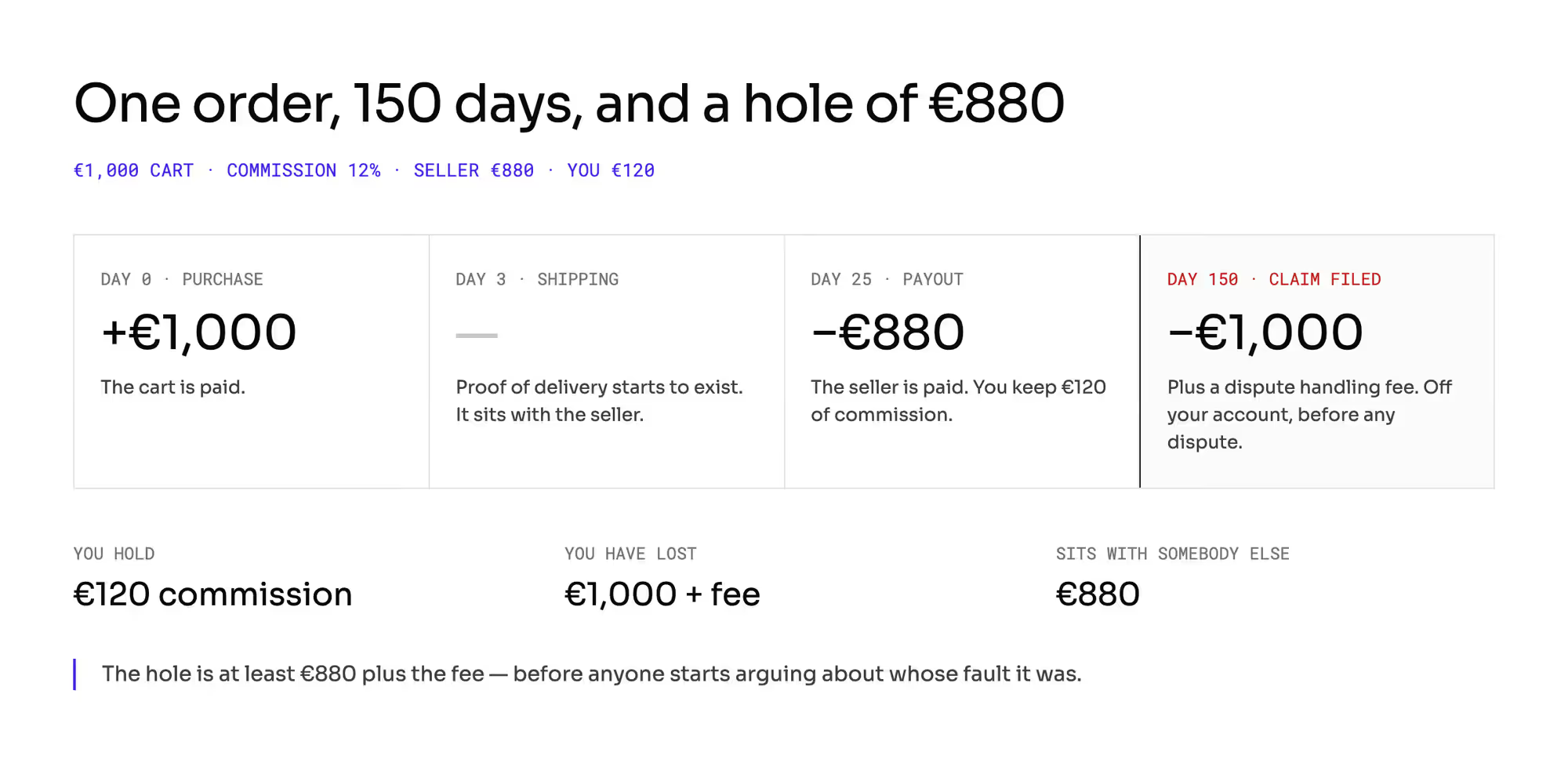
Take one order that runs through this whole article: a €1,000 cart at a 12% commission. The seller is owed €880 and you are owed €120.
Day 0: the purchase. Day 3: shipping.
Day 25: the €880 payout. Day 150: the buyer's bank files a claim, and €1,000 plus a dispute handling fee comes off your account.
Your position: you hold €120 of commission, you have lost €1,000, and €880 sits with somebody else. The hole is at least €880 plus the fee.
And that is before anyone starts arguing about whose fault it was.
Which 3 clocks run on a chargeback and who owns each one?
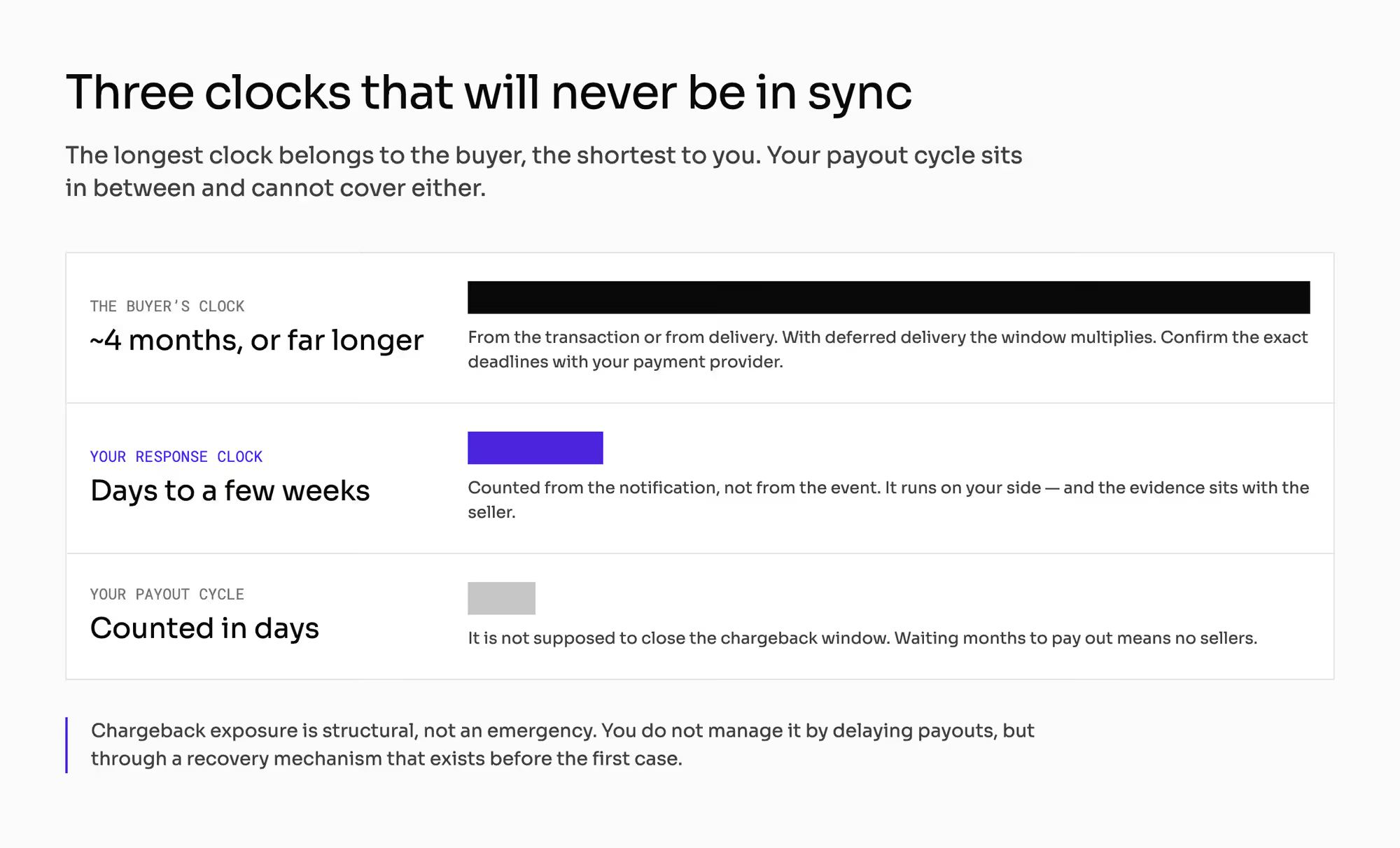
1. The buyer's clock is the longest
Card scheme rules give the cardholder something on the order of four months from the transaction or from delivery, and with deferred delivery (a presale, a long lead time) the window can be many times longer. Exact deadlines depend on the card scheme and the reason for the dispute; confirm them with your payment provider.
2. Your response clock is the shortest
It usually runs from a dozen or so days to a few weeks, counted from the notification, which can reach you months after the transaction. It runs on your side, and the evidence sits with the seller.
3. Your payout cycle is counted in days
It cannot be stretched to cover the chargeback window. Waiting several months to pay out means no sellers.
Hence the design rule: chargeback exposure is structural. You manage it through a recovery mechanism, which has to exist before the first case.
Who carries the cost of a chargeback?
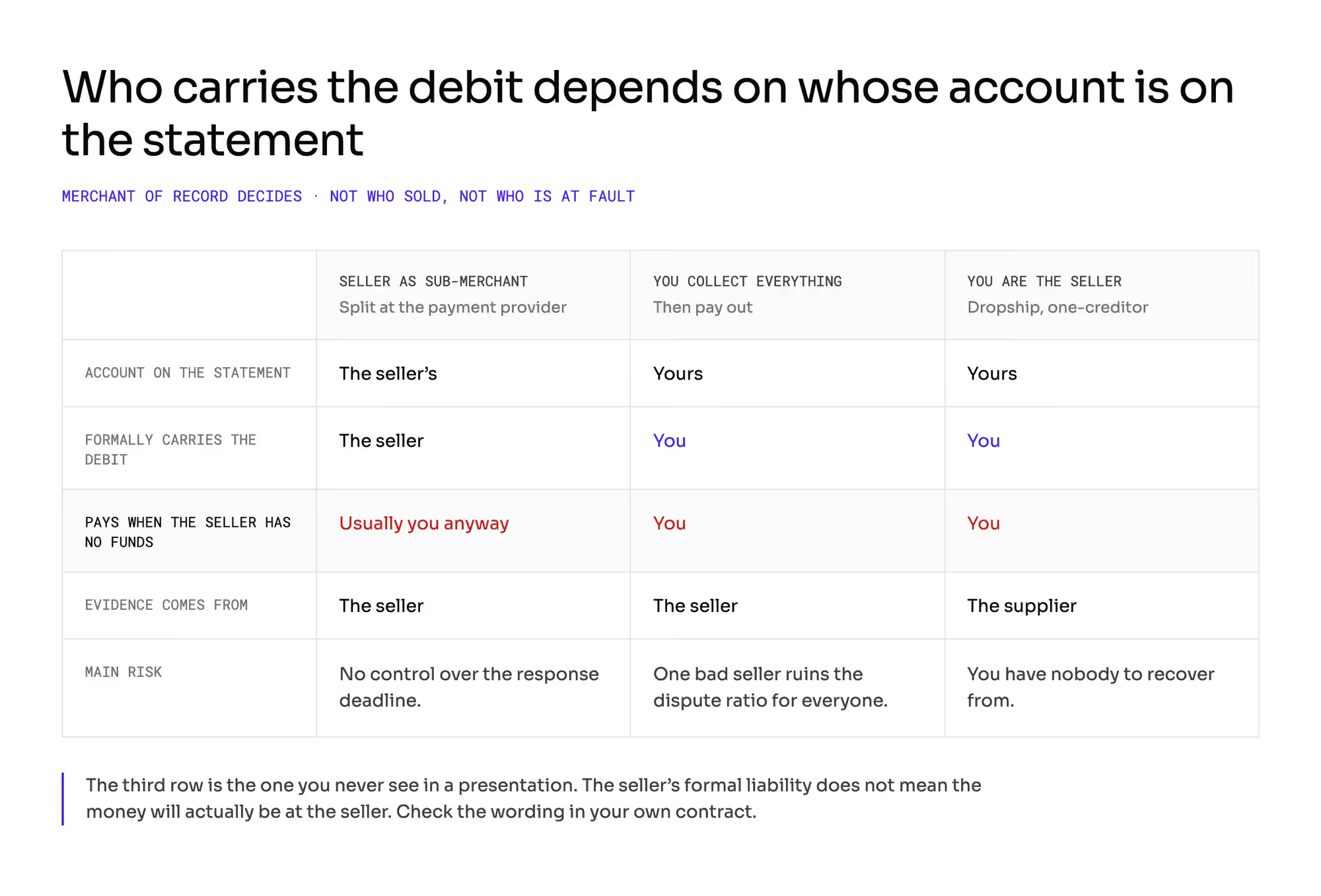
One thing settles it: who is the merchant of record for that transaction, meaning whose account at the payment provider took it in ("What Is the Merchant of Record in a Marketplace?"). The seller's role toward the customer and the question of fault both stay out of it.
The second dimension is the reason for the dispute: fraud (a transaction the cardholder did not authorize), goods not delivered, or goods not as described. The last two usually sit with the seller and can be defended with documents they hold.
The first is often outside the control of both sides. And here is the caveat companies trip over: authenticating the buyer shifts liability only on fraud claims.
If the transaction went through strong authentication, the risk of a fraud chargeback as a rule passes to the issuing bank. Disputes over non-delivery and goods not as described stay with you no matter how well the customer authenticated.
What does the setup decide? | The seller as sub-merchant (split at the payment provider) | You collect everything and pay out | You are the seller (dropship, one-creditor) |
|---|---|---|---|
Whose account on the card statement | the seller's | yours | yours |
Who formally carries the debit | the seller | you | you |
Who pays when the seller has no funds | usually you anyway | you | you |
Who can file the response | the seller, sometimes you on their behalf | you | you |
Where you get evidence from | from the seller | from the seller | from the supplier |
Whose dispute ratio goes up | the seller's, but your provider assesses the portfolio | yours, shared by the whole platform | yours |
Main risk | no control over the response deadline | one bad seller ruins the ratio for everyone | you have nobody to recover from |
The third row is the one you never see in a presentation. The seller's formal liability does not mean the money will actually be at the seller.
In typical platform agreements, the operator is ultimately answerable for negative balances on the accounts it holds with the payment provider, because it passed verification and answers for the whole portfolio. Check the wording in your own contract.
Who runs the defense and who holds the evidence?
The account holder at the payment provider files the response. The evidence sits with the seller: proof of delivery, the tracking number, correspondence with the buyer, the wording of the offer on the day of sale, the trace of an earlier refund.
The effect: this is a race for data. Three things have to be settled before the first claim arrives:
- How long the seller has for evidence, and what you do when they say nothing. The default action has to be written down: you accept the claim and debit their balance. Without that, the default action becomes missing the deadline.
- What the system assembles on its own. Everything you already hold goes into the package with no human involved: the transaction data, the delivery address, the status history, the trace of a refund. The seller only adds the rest.
- The amount above which you defend. On a €1,000 claim, with a dispute fee somewhere from tens to hundreds of euros depending on the provider and the market, a few hours of an analyst's time exceeds the value of the dispute. You set the threshold once.
Two things change the arithmetic of that threshold. The dispute handling fee is often non-refundable even when you win.
With some providers, only the extra fee for filing the response is returned. And the second: a buyer who already received a refund and filed a claim anyway costs you twice over.
That is €1,000 of refund plus €1,000 of debit. Proof that the refund was made is then your strongest argument, but you have to file it before the deadline.
What happens when the seller's balance is empty?
When the debit arrives after the payout, there is nothing to deduct from: the seller is owed €0 and owes you €880 plus the fee.
The first question for a platform vendor is whether a seller's balance can go negative. If it cannot, the debt does not disappear.
It moves into a spreadsheet next to the system, and there it will not deduct itself, will not show up for the seller, and will not reconcile with accounting ("Marketplace Ledger: Why Balances Must Match the Transfer" and "Marketplace Payment Reconciliation: How to Match Platform, Payment Provider, Bank, and Your Accounting").
Practitioners describe workarounds for exactly this gap: the system returns the money automatically, and the operator adds a debit document and pulls the amount from the current balance. It works, but it is manual. There are three recovery paths, in falling order of effectiveness.
1. Deduction from future payouts
This is the default and the cheapest. A seller doing €88,000 of sales a month covers €880 in the next cycle and barely notices it.
There is one condition, and it is not technical: they have to keep selling. The recovery mechanism dies together with their activity.
And a chargeback very often comes from the seller who has already stopped.
2. Debiting the seller's bank account
This works only if you collected the consent at registration, long before you need it. That is a clause in the contract and a setting on the account.
3. A demand for payment and debt collection
This is the last path and the most expensive. Up to that point, you have a mechanism; from that point on, you have a receivable.
The design rule: a negative balance is a normal state of an account. It has to be visible to the seller with a reason and an amount, to reduce the next payout automatically, and to have an age.
A debt with no age never reaches collection, because nobody notices it is sitting there.
When does a negative balance become a collection case?
1. The amount
Below the threshold where it pays off, collection costs more than it recovers. A write-off is then a decision.
It just has to be conscious and written down.
2. Time without cover
How many payout cycles a balance may stay negative before the case leaves settlements for collection. Two cycles is a signal, six is an arrears case.
3. The seller's status
An account that is inactive or closed with a negative balance is a collection case from day one, because the deduction mechanism no longer works.
Three things have to be ready in advance: the contractual basis for deduction in the seller terms, the information duties that apply when you restrict or suspend services (EU law on relations between platforms and sellers requires a justification), and the accounting treatment of a write-off and of the correction to the commission invoice. Confirm the last one with your accountants and a tax advisor.
What is the dispute ratio and why does it threaten card acceptance?
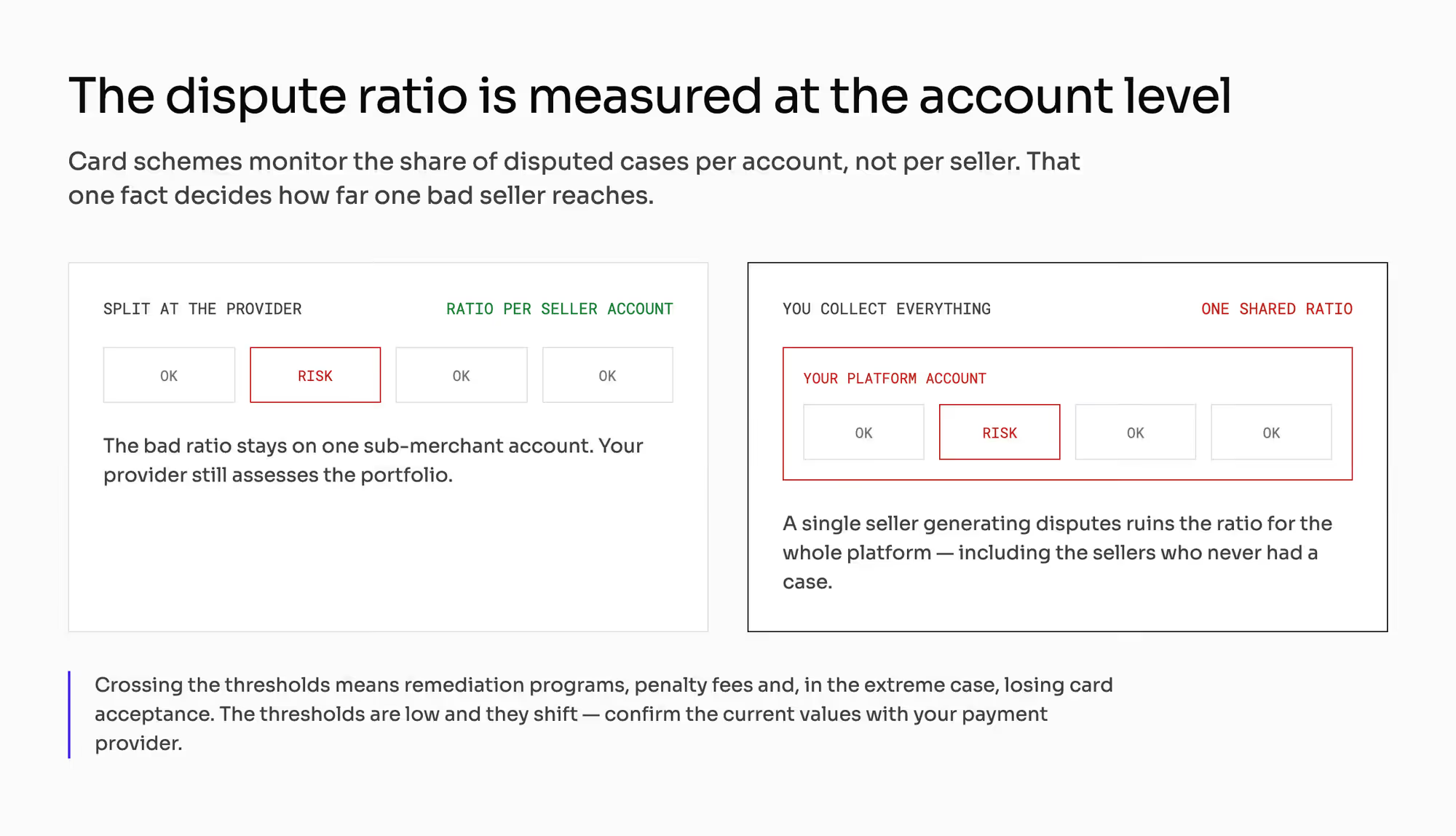
Card schemes monitor the share of disputed cases in transactions. Crossing the thresholds means remediation programs, penalty fees and, in the extreme case, losing the ability to accept cards.
The thresholds are low: on the order of single-digit percentages of transactions, with a minimum number of cases. They also shift as the scheme rules shift.
Confirm the current values with your payment provider.
For a marketplace, one consequence matters: the ratio is measured at the account level, which pools every seller you collect for. If you collect payments into your own account, a single seller generating disputes ruins the ratio for the whole platform.
That includes the ones who never had a single case. After-sales quality then stops being a reputation topic and becomes a condition for keeping card acceptance.
What do marketplace chargebacks change about your other decisions?
1. A chargeback tests your payout cycle
A rolling reserve covers risk proportional to turnover. A chargeback from a seller who has stopped selling is, by definition, disproportionate risk.
2. Choosing a payment model is choosing who carries card risk
A split at the payment provider moves formal liability to the seller, but it rarely moves it in practice. Collecting everything gives you control and a shared dispute ratio.
That is one of the costs you cannot see in the decision tree from "Which marketplace platform model should you choose".
3. The correction lands in the current period and concerns an order from six months ago
Without separating the posting date from the source period, you cannot answer why the seller received less. And every seller from whom you deduct a months-old debit asks it.
4. A chargeback is also a quality signal
The dispute ratio per seller belongs to the same set as the return rate and on-time shipping. The difference is that this one can cost you card acceptance.
How do you set up chargeback handling? 6 questions
- Who is the merchant of record for your transactions? The answer picks your row in the table above and all the rest. If it is "it depends on the seller", you need both processes.
- How long does the seller have for evidence, and what do you do when they say nothing? The default action has to be written down before the first case.
- Above what amount do you defend? Calculate the threshold once, including the non-refundable part of the dispute fee.
- Can a seller's balance go below zero, and does the seller see the reason and the amount?
- On what basis do you deduct, and is it in the terms accepted at registration?
- After how many cycles does a negative balance become a collection case, and who decides on a write-off?
To ask the platform vendor before you sign:
- Whether a seller's balance can be negative and whether deduction from the next payout happens automatically?
- Whether a chargeback is a separate entry type, distinguishable from an ordinary refund?
- Whether a dispute case has its own status, owner, and deadline, or is a note attached to the order?
- Whether the system will point to the source order behind a debit from six months ago?
- Whether payouts can be stopped automatically on a negative balance?
- Whether the evidence package is built from data the platform already holds?
Which mistakes do operators make about marketplace chargebacks?
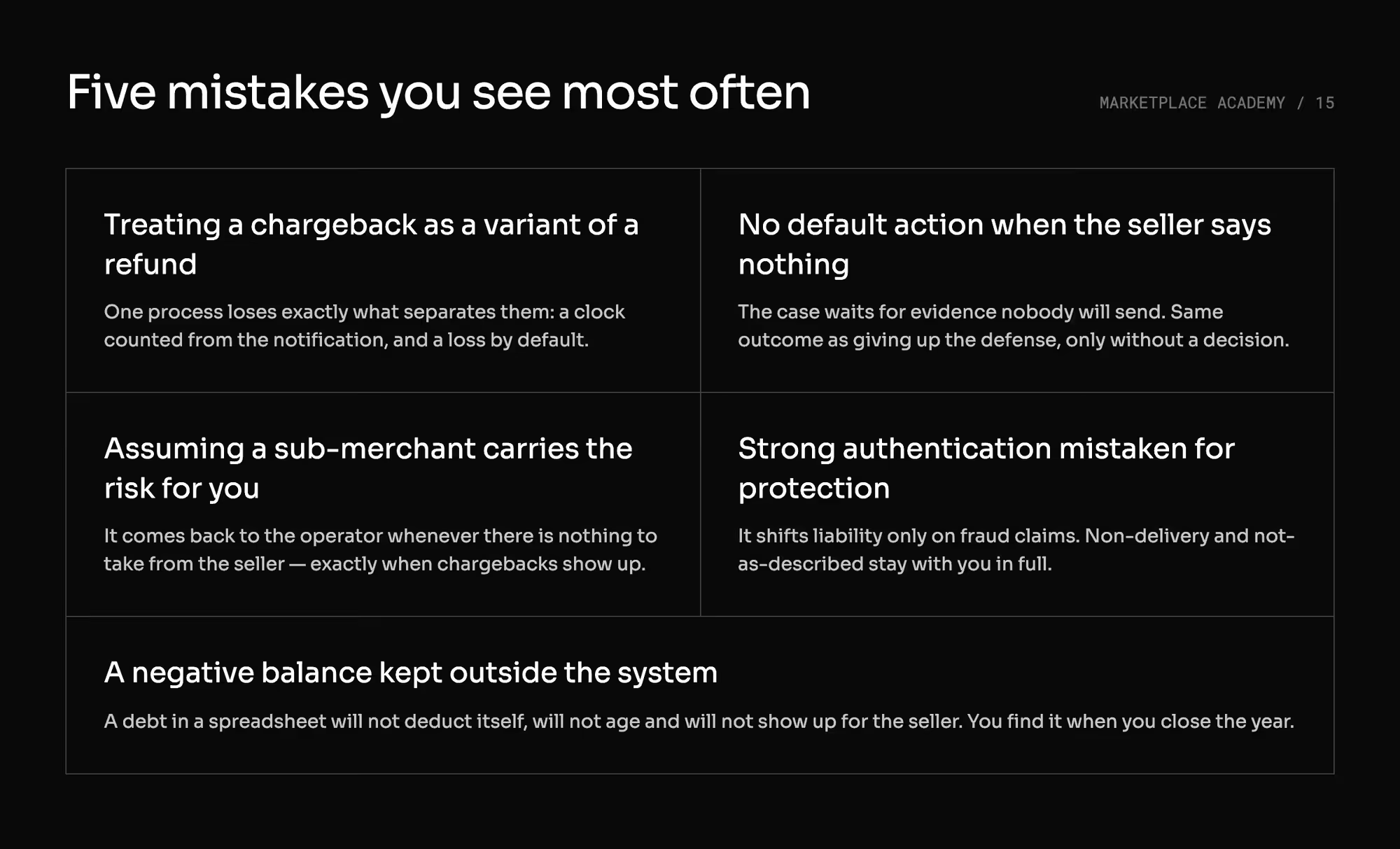
1. Treating a chargeback as a variant of a refund
A refund has a policy, a chargeback has a deadline. Put through one process, they lose exactly what separates them: a clock counted from the notification, and a loss by default.
2. No default action when the seller says nothing
The case waits for evidence nobody will send, the deadline passes, the claim is lost. The same outcome as giving up the defense, only without a decision.
3. Assuming that because the seller is a sub-merchant, the risk is not yours
It comes back to the operator whenever there is nothing to take from the seller. That is exactly the situation in which chargebacks show up most often.
4. Strong authentication mistaken for protection against chargebacks
It shifts liability only on fraud claims. Disputes over non-delivery and goods not as described stay with you in full.
5. A negative balance kept outside the system
A debt in a spreadsheet will not deduct itself, will not age, and will not show up for the seller. You find it when you close the year.
What do you still have to settle yourself about marketplace chargebacks?
This guide does not tell you how to prevent fraud on the buyer's side, on the seller's side, or in collusion between them. That is a separate subject, because it is about detection before the transaction rather than settlement after it ("Marketplace Fraud Prevention: How to Stop Buyer Fraud, Seller Fraud, and Collusion").
This guide also does not settle whether the commission comes back on a refund and what happens when the seller is at fault. A chargeback inherits that answer instead of creating its own.
This is not legal or tax advice. Confirm four things with a lawyer and a tax advisor for your country, your year, and your model: the contractual basis for deducting from future payouts, whether debiting the seller's bank account is permissible, the information duties that apply when you stop payouts and suspend an account, and the accounting treatment of a write-off and of the correction to the commission invoice.
Confirm card scheme deadlines, fees, and remediation program thresholds with your payment provider.
Our role is different: to show that a chargeback is a claim with a clock of its own, and that the recovery mechanism has to be built before the first case arrives, because after that all you have left is debt collection.
Summary: What has to exist before the first chargeback?
A written default action for when the seller sends no evidence, a defence threshold calculated once, a seller balance that can go below zero with a reason and an age on it, and a trigger that moves a debt into collection. Everything after that is recovery.
Ask a vendor to show you a debit from six months ago pointing back to its source order. Talk to a marketplace expert if you want the six questions sharpened before the demo.
Frequently asked questions on marketplace chargebacks
What is a chargeback on a marketplace?
A chargeback is a payment reversal started by the buyer's bank, ruled on by that bank, and debited from your account before the dispute is decided. It rests on card scheme rules, so the deadlines and fees come from the scheme and your payment provider rather than from consumer law.
Who pays for a chargeback: the marketplace or the seller?
Formally, whoever is the merchant of record, and in practice whoever still has money. Where the platform holds the account at the payment provider, the operator is answerable for negative balances across the portfolio.
A seller who has stopped selling has no balance to deduct from, and that is exactly where seller chargebacks tend to come from.
Can a seller's balance go negative on a marketplace?
It has to be able to, or the debt leaves your system entirely. A negative balance needs to be visible to the seller with a reason and an amount, to reduce the next payout automatically, and to carry an age, so a forgotten debt still reaches collection.
Ready to build?
If you are checking whether you have anything to recover from when a debit arrives after the payout, let's talk.