
How Marketplace Seller Payouts Work: Cycles, Holds, and Reserves

A payout is the one moment when a platform really hands money over and cannot pull it back with a single click. Three things you settle in advance decide how much you lose when an order turns out to be fiction and the seller stops answering the phone: when you pay, after which event, and how much you hold back.
Most companies treat this as a calendar entry: "we pay twice a month." It is in fact a decision about the distribution of risk, and you make it before you have met a single seller.
A marketplace seller payout is the transfer of money you have been holding on a seller's behalf, and the payout cycle decides when it leaves. Four settings decide what a seller actually receives: the condition a receivable has to meet to qualify, how often payouts run, what you hold back, and what you keep in reserve. Together they work as a risk instrument, and sellers read them as a promise about their cash flow.
This article breaks down:
- What lets a receivable enter the payout pool?
- Which 4 cadences can you run, and what does each cost?
- When should you hold funds that have already matured?
- What is the difference between a reserve and a hold?
Key insights
- A payout is the one moment a platform hands money over and cannot pull it back with a click, which is why the cycle is a risk instrument.
- What lets a receivable into the pool is an event. Maturing should start on delivery, and delivery has to come from somewhere you trust.
- A hold stops funds that have already matured. It needs a reason, an owner, and a review date, or it becomes a dispute with the seller.
- A rolling reserve is a one-off cost of entry rather than a permanent tax, and against a sudden spike of risk, the entry condition works better.
- The measure of risk is the gap between a payout and the moment refund and chargeback exposure expires, not the cadence itself.
Why is a payout cycle a risk management instrument?
The rule everything else follows from: the faster you pay, the less you have left to deduct from when something goes wrong.
Take one order we will keep coming back to: a €1,000 cart at a 12% commission. The seller is owed €880, and you are owed €120.
The moment those €880 leave your account, your ability to recover anything drops to zero. What remains is deducting from future sales that may never happen, or debt collection.
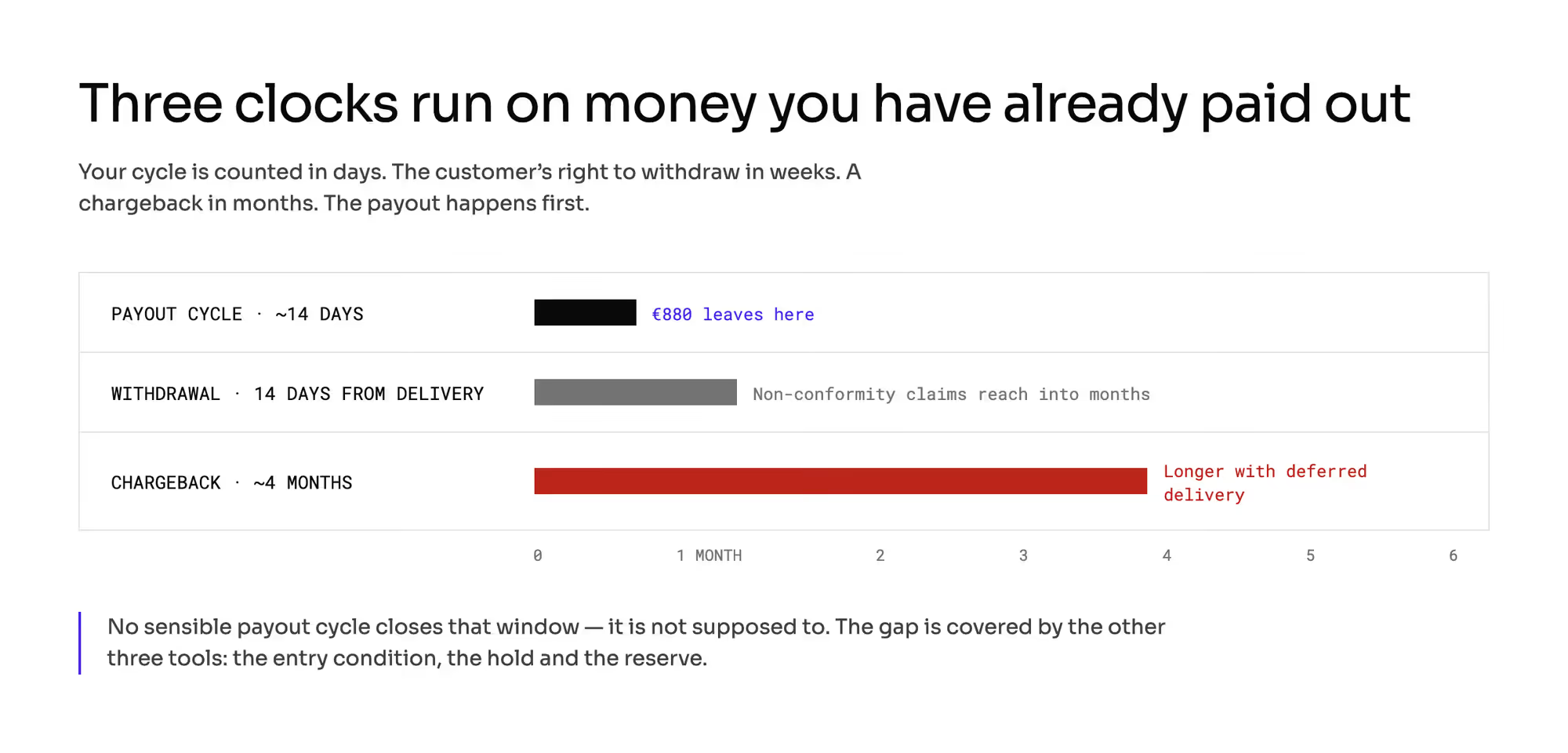
Money can come back to you along three paths, and each runs on a different clock:
- Your payout cycle is counted in days.
- Consumer withdrawal in the EU runs at least 14 days from delivery, and many operators voluntarily allow more; a complaint about goods not conforming to the contract reaches into months.
- A chargeback is the longest: card scheme rules give the cardholder something on the order of four months, and many times that with deferred delivery. Confirm the exact deadlines with your payment provider.
No sensible payout cycle closes that window. It is not supposed to.
If you waited for chargeback risk to expire, you would never recruit a single seller. That is why the cycle is one of four tools: the entry condition, the cadence, the hold, and the reserve.
Each handles a different kind of risk, and none replaces the others.
What lets a receivable enter the payout pool?
The most common misunderstanding goes like this: "the payout on the fifteenth covers sales from the first to the fifteenth." It does not. What enters the pool are the orders where the agreed event has happened.
Most often that event is confirmation that the customer received the goods. The cycle date decides only when you collect what has matured.
The seller, meanwhile, plans purchases against the value of orders placed rather than against what has matured, and that gap is the most common reason your settlement desk gets phone calls.
A question to settle at the start: where do you get the fact of delivery from? There are three answers, and they differ in cost.
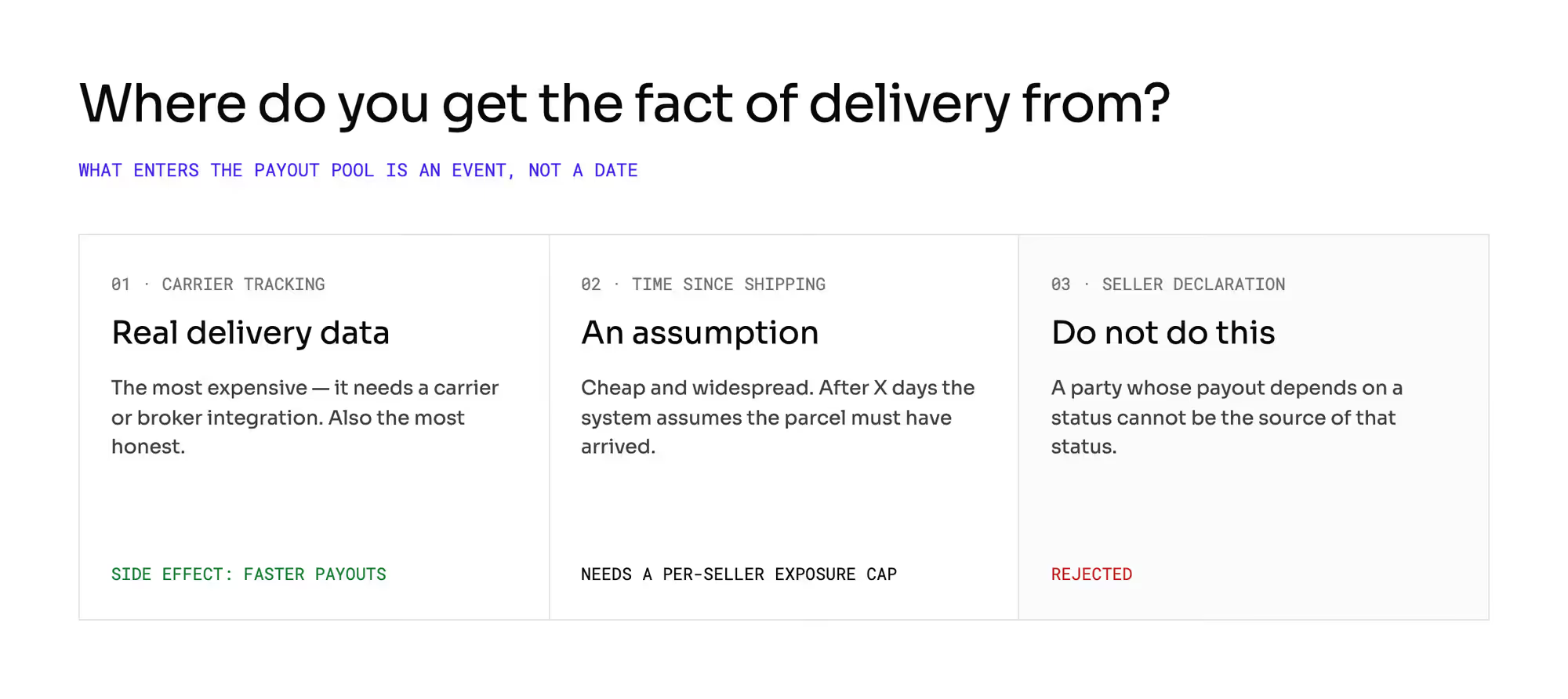
- From real shipment tracking. The most expensive, because it needs an integration with carriers or a broker, and the most honest. It has a side effect few people think about: it makes payouts faster, because maturing starts on the day of delivery rather than after an arbitrary deadline.
- From time elapsed since shipping. Cheap and widespread. The system assumes that after X days the parcel "must have" arrived. Practitioners observe that this works right up to the first seller who prints labels without parcels.
- From the seller's own declaration. Do not do this. A party whose payout depends on a status cannot be the source of that status.
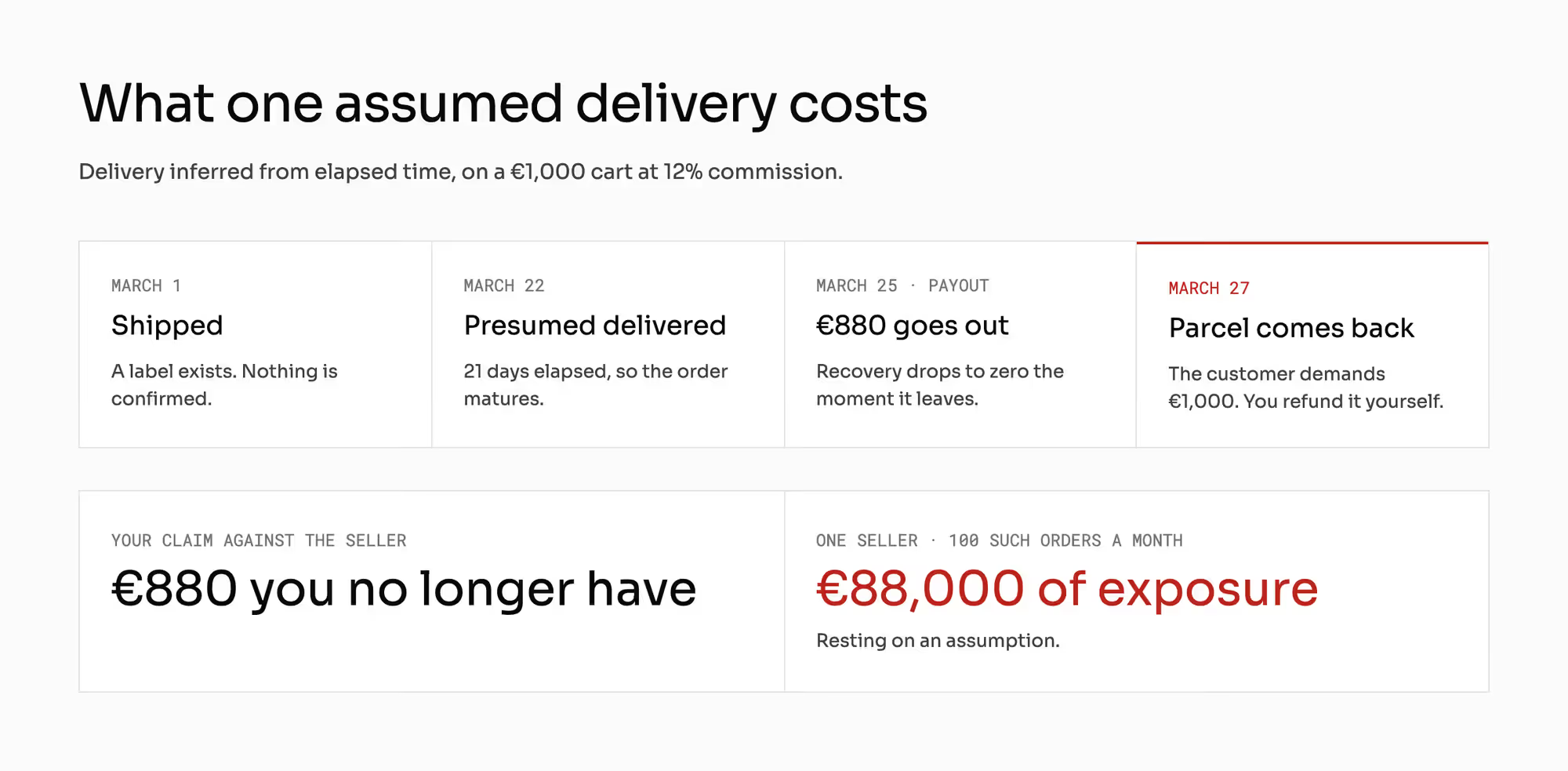
Let us count the second option. An order shipped on March 1, presumed delivered on March 22, paid out on March 25: €880 goes out.
On March 27, the parcel comes back as undeliverable, and the customer demands €1,000. You refund it from your own account, and your claim against the seller is the €880 you no longer have.
A seller doing 100 orders like that a month means €88,000 of exposure resting on an assumption.
Which 4 payout cadences can you run, and what does each cost?
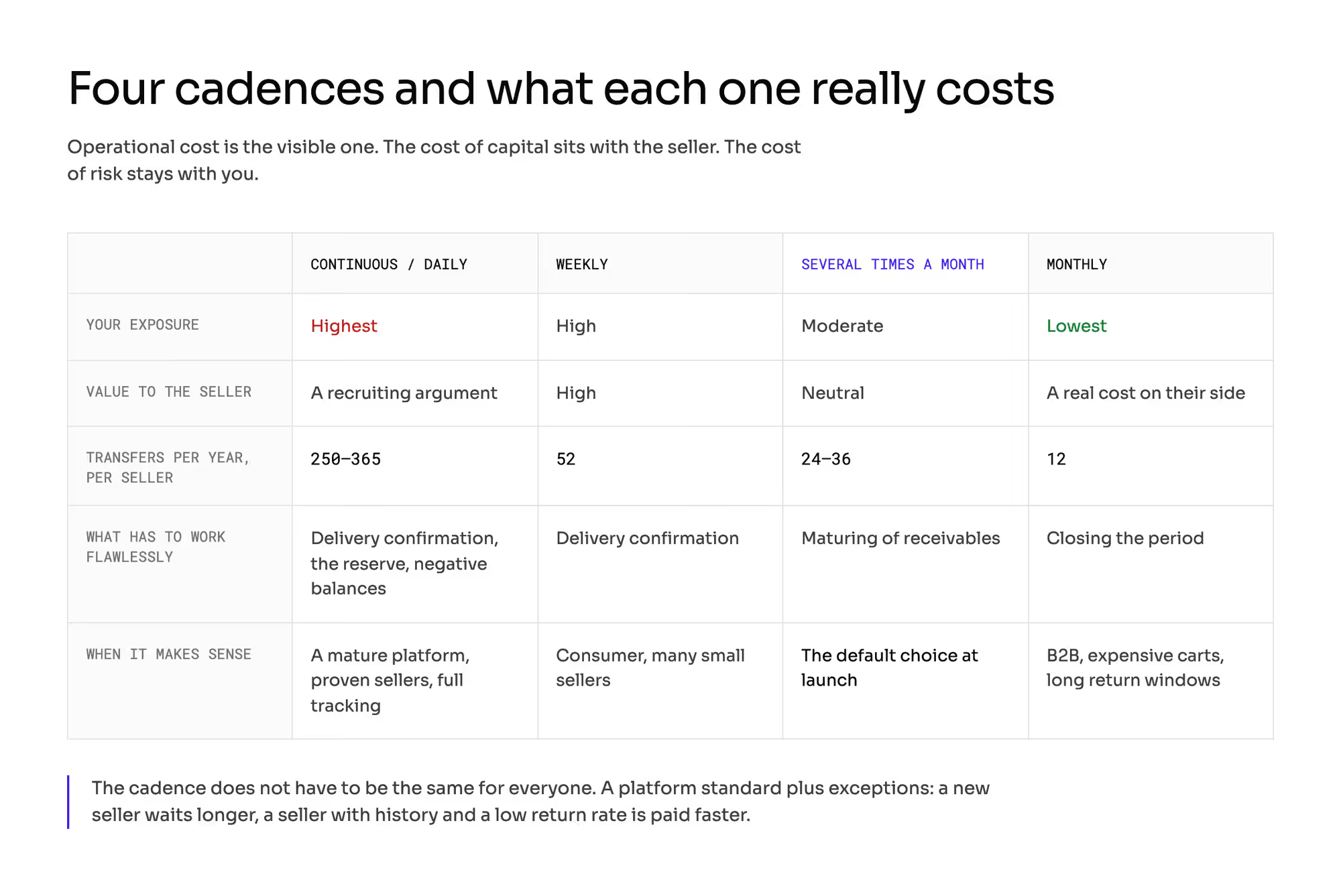
The cost of a cycle has three components, and companies usually count only the first. The operational cost is the most visible and the least important: with 200 sellers, a monthly payout is 2,400 transfers a year, a daily one is over 70,000.
The cost of capital is carried by the seller, who prices it precisely, because they bought the goods with their own money. Industry material puts typical market cycles at two weeks to a month, so a faster payout can be a real recruiting argument.
The cost of risk you carry yourself, and it grows with the pace; you cannot see this component until it materializes for the first time.
The cadence does not have to be the same for everyone. A platform standard plus exceptions: a new seller waits longer, and a seller with history and a low return rate is paid faster.
Payout speed as a reward for quality is cheap and does not force you to reopen commission negotiations.
When should you hold funds that have already matured?
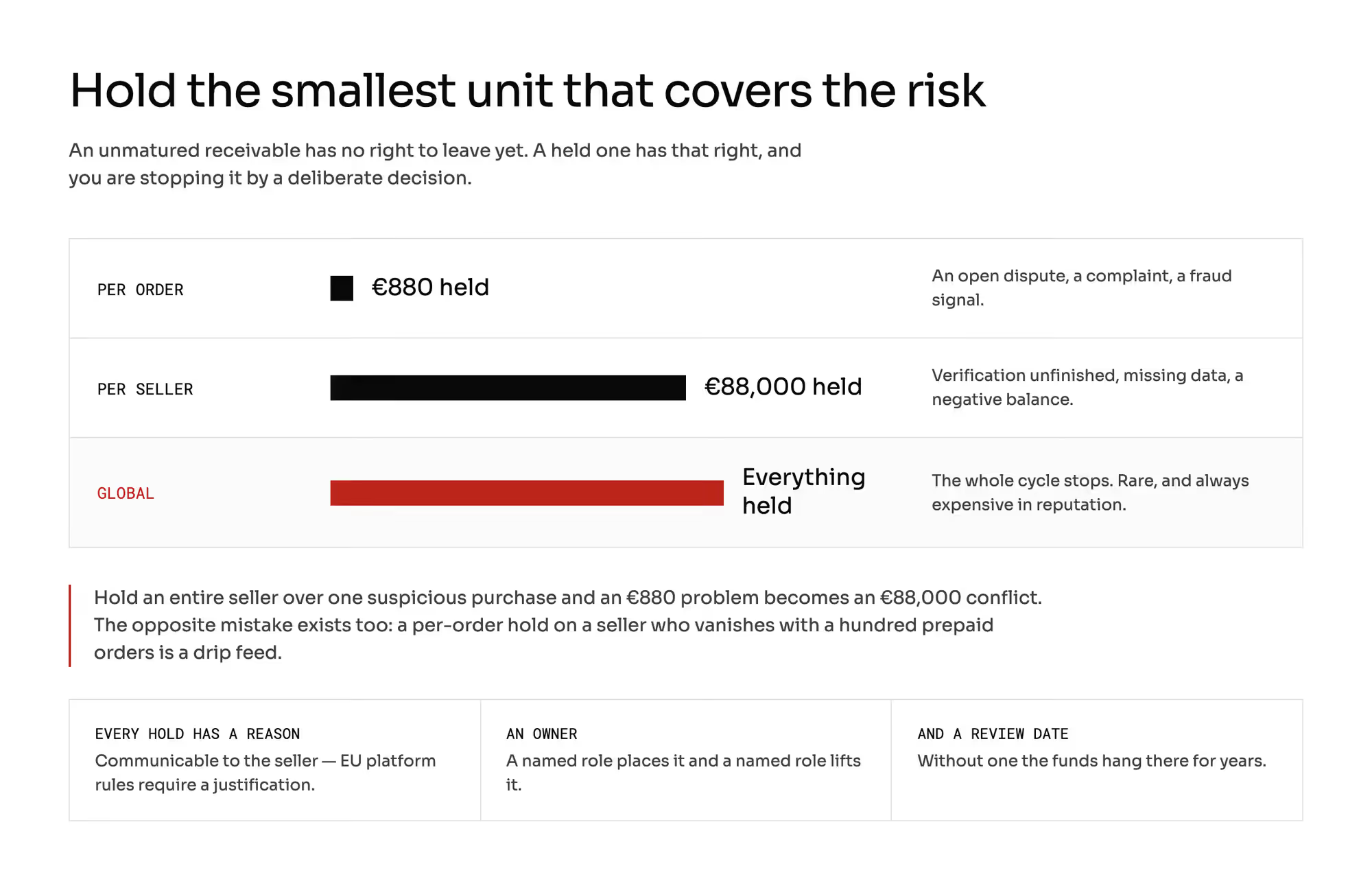
A hold is not the same as an unmatured receivable. An unmatured one has no right to leave yet.
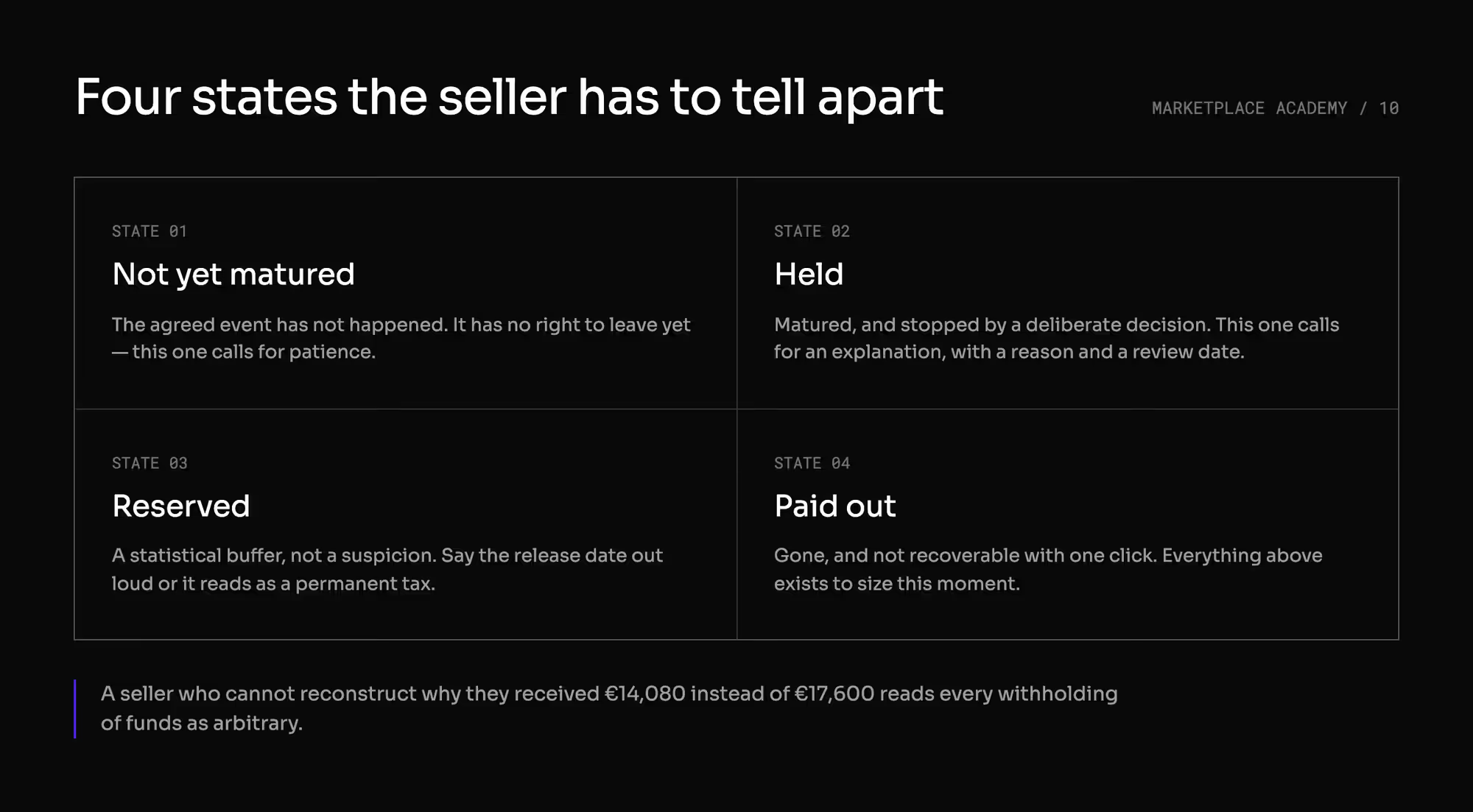
A held one has that right, and you are stopping it by a deliberate decision. The difference has to be visible in the seller panel, because the first calls for patience and the second for an explanation.
Holds work at three levels, and the governing principle is proportionality: hold the smallest unit that covers the risk.
- Per order. An open dispute, a complaint, a fraud signal. You are holding €880.
- Per seller. Verification never finished, missing reporting data, a suspension for quality, a negative balance after refunds. You are holding €88,000.
- Global. The reconciliation against the bank does not add up, so you stop the entire cycle. Rare, and always expensive in reputation.
Hold an entire seller because of one suspicious purchase, and you turn an €880 problem into an €88,000 conflict. The opposite mistake exists too: a per-order hold on a seller who vanishes with a hundred prepaid orders is a drip feed.
A hold has a reason, an owner, and a review date. Without a date, the funds hang there for years, because nobody feels entitled to release them.
The reason has to be communicable: EU law on relations between platforms and sellers requires a justification when you restrict or suspend services, and advance notice when you end the relationship. Confirm the wording for your own terms of service with a lawyer.
Some holds are an obligation rather than a choice. Platform reporting rules can require you to stop the payout of a seller who has not supplied the required data despite reminders.
Which means the stop has to be a system function triggered by missing data rather than a manual action by someone in accounting. Confirm the scope with a tax advisor.
What is the difference between a seller reserve and a rolling reserve?
A reserve is the part of a receivable that you do not pay out even though it has matured and is not held for any specific reason. You keep it because statistically you know that some of the sales will come back.
Three concepts get mixed up. Escrow is money frozen with a third party until a condition is met.
Segregated accounts are the separation of client funds from the operator's own assets, required under a payment regime. A reserve is a risk buffer on your side, and it is neither of those.
When a vendor says "escrow", ask where the money physically sits and whose it is if that vendor goes bankrupt.
1. A fixed reserve is an amount or a percentage of the balance held with no end date, until a condition is met. That condition might be a threshold of orders without incidents. Simple and harsh: the seller sees an amount that never releases.
2. A rolling reserve is a percentage of every payout, released after a set period. In payments practice, you see orders of magnitude from a few percent to the low teens, and periods from a month to six months, tuned to the risk profile.
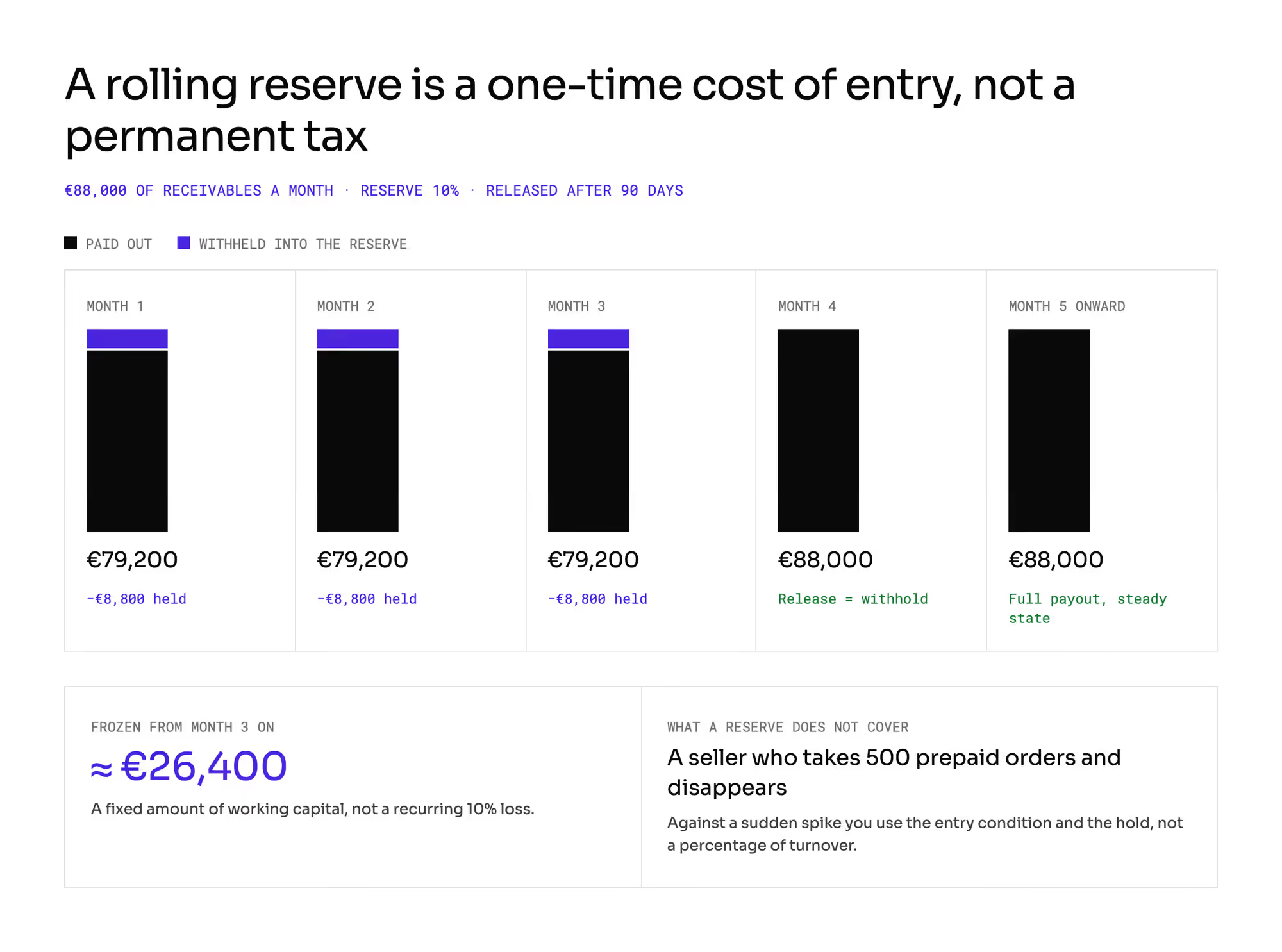
Let us count it, because that is the only way to understand it. A seller has €88,000 of receivables a month, and the rolling reserve is 10% for 90 days.
You hold back €8,800 in the first month, the same in the second, and the third. From the fourth month on, you release as much as you hold back, so the seller receives the full €88,000 and roughly €26,400 stays frozen.
Hence the sentence you have to be able to say to them: a rolling reserve is a one-time cost of entry rather than a permanent tax. Sellers who never had it explained to them read it as a permanent loss of 10% of revenue, and they leave.
And a limitation that is easy to forget: a reserve covers only the risk that is proportional to turnover. Returns, complaints, and chargebacks follow a normal distribution.
A seller who takes 500 prepaid orders and disappears will generate a loss many times larger than their reserve. Against a sudden spike of risk, you use the entry condition and the hold rather than a percentage of turnover.
What has to be true before a new seller's first payout?
This is the worst moment in the whole relationship: you have the least data about risk, and trust counts for the most. A seller who receives less than expected after a first successful month remembers it for the whole partnership.
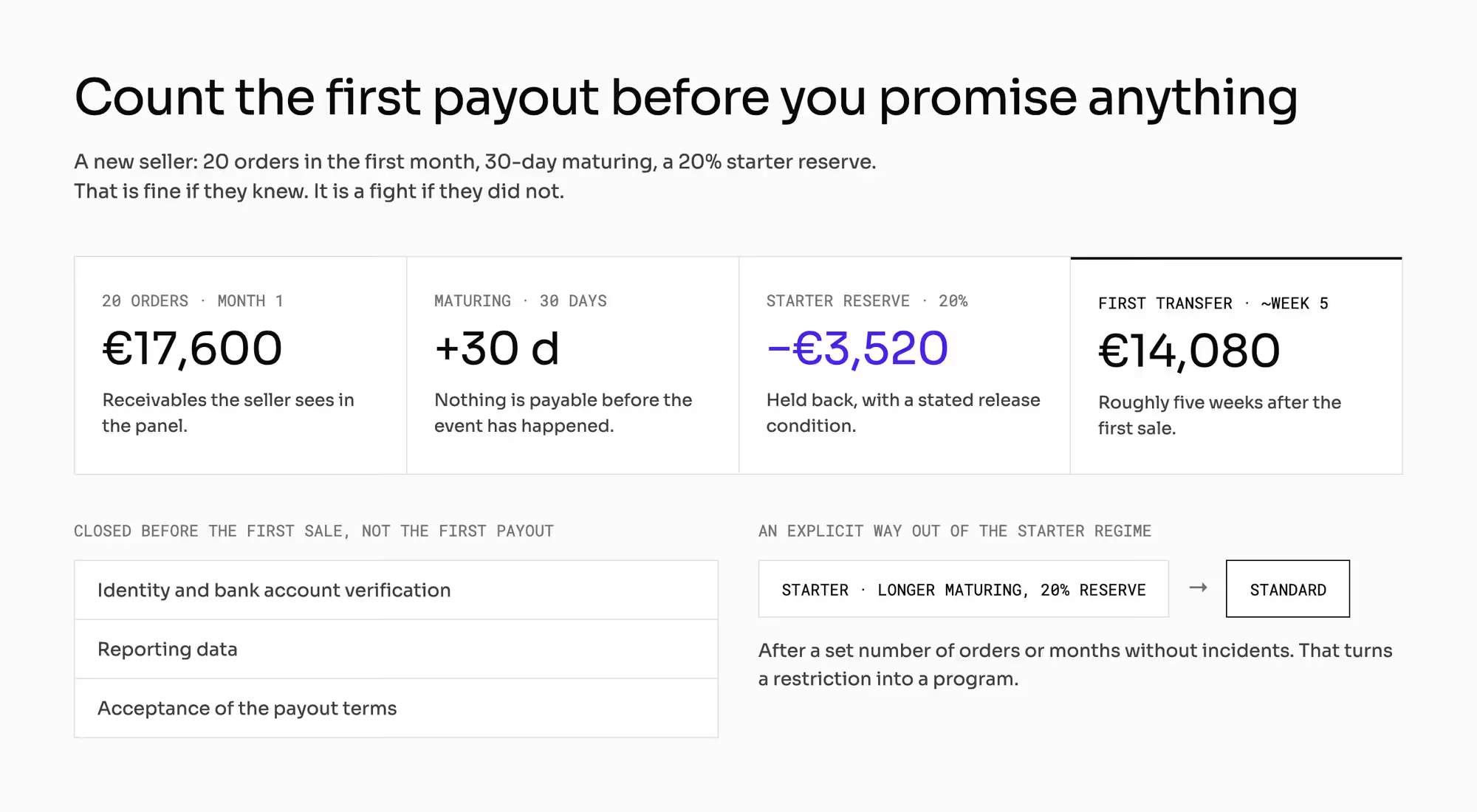
There is one rule: everything that can block the first payout has to be closed before the first sale rather than before the first payout. That covers identity and bank account verification, reporting data, and acceptance of the payout terms.
Discovering on payout day that verification never finished means the seller spent a month selling goods you cannot pay them for, and the customers already have them.
The second element is an explicit way out of the starter regime: a new seller gets a longer maturing period and a higher reserve, and after a set number of orders or months without incidents, they drop to the standard. That turns a restriction into a program.
Count it before you promise anything: 20 orders in the first month is €17,600 of receivables, and with 30-day maturing and a 20% reserve, the first transfer is €14,080 and arrives about five weeks after the first sale. That is fine if they knew.
That is a fight if they did not.
What does the payout policy decide?
1. Payout policy is a function of the platform model
If the payment provider splits the money on their side and pays sellers directly, your control over the cycle and the reserve ends at whatever their product can do. If you collect everything into your own account, you have full control and the full regulatory problem ("Which marketplace platform model should you choose?" and "When Do You Need a Payment License to Run a Marketplace?").
2. The entry condition is a logistics decision
The choice between shipment tracking and elapsed time is made in the delivery layer, and it is paid for in finance. That is the argument usually missing when someone budgets the carrier integrations.
3. Returns feed into the payout retroactively
A return accepted in May against a sale from March reduces the May payout. Whether the commission comes back with it, and what happens when the return is the seller's fault, is a separate question ("Marketplace Refunds: Who Pays for Them and Out of What?" and "Who Keeps the Marketplace Commission on a Refunded Order?").
It can move your real margin by percentage points.
4. A reserve and a hold are useless without a credible balance
A seller who cannot reconstruct why they received €14,080 instead of €17,600 reads every withholding of funds as arbitrary. That is the subject of "Marketplace Ledger: Why Balances Must Match the Transfer".
How do you design a payout policy? 6 questions
- After which event does an order enter the pool, and where do you get that event from? If the answer is "X days after shipping", calculate the exposure on your largest seller.
- How long is your exposure window, measured from the payout to the moment refund and chargeback risk expires? That number is the measure of risk, and the cadence is not.
- What do you cover it with: a reserve, deduction from future sales, a guarantee, or nothing? "Nothing" is an acceptable answer, as long as it is a conscious one.
- Can the cadence and the reserve differ per seller, who has the right to change them, and does it leave a trace?
- Who places a hold on a payout and who lifts it? Without a named role, holds either never get placed or never get removed.
- What does the seller see: can they tell an unmatured amount from a held one and a reserved one, and do they know the reason?
Questions for the platform vendor, worth asking before you sign:
- Whether the cadence and the reserve are configurable per seller or only globally?
- Whether stopping a payout can be triggered automatically by missing seller data?
- Whether a hold leaves a record with a reason and an author?
- Whether the rolling reserve releases itself or someone has to release it by hand?
- What happens when a transfer fails, and whether the system still counts the payout as executed?
Which mistakes do operators make about the payout policy?
1. The payout cycle treated as a calendar setting
It gets decided without anyone calculating the exposure, by analogy to payment terms in traditional trade. After that, it is untouchable, because the sellers received it in their terms of service.
2. Delivery inferred from elapsed time, with no plan B
It works right up to the first seller who prints labels without parcels. If you choose it deliberately, add a per-seller exposure cap.
3. Holding an entire seller in reaction to a single order
A disproportionate response turns a small matter into a commercial conflict, and often a legal one.
4. A reserve introduced without an explanation
It gets read as a permanent loss of a percentage of revenue instead of a one-time freeze of capital. The same mechanism, told with two more sentences, stops being a reason to leave.
5. Seller verification closed only at the first payout
The simplest way to open a relationship with the sentence "you have been selling for a month, but we cannot pay you."
What do you still have to settle yourself about marketplace seller payouts?
This article does not tell you how to reconcile payouts against the bank statement and the payment provider's report ("Marketplace Payment Reconciliation: How to Match Platform, Payment Provider, Bank, and Your Accounting"), nor what to do when a seller's balance falls below zero ("Marketplace Chargebacks: Who Carries the Cost, and What if the Seller's Balance Is Empty?").
This article is not legal or tax advice either. Three things need confirmation for your country, your year, and your model: whether withholding seller funds is permissible in your setup without a payment license, how to word the rules on holds and termination so they meet the transparency requirements toward sellers, and when stopping a payout is your reporting obligation.
Confirm all of it with a lawyer and a tax advisor. Deadlines and requirements change faster than documents like this one.
Our role is different: to show the point where payout policy stops being a setting and becomes financial exposure, and to name the number somebody has to calculate before anyone types "payouts twice a month" into a system.
Summary: How long should the gap be?
Measure the distance between a payout and the moment refund and chargeback risk expires, and design the entry condition, the cadence, holds, and the reserve against that distance rather than against a calendar.
Then count what your own reserve does to a new seller's first month, because that is the number they will feel. Talk to a marketplace expert if you want the policy pressure-tested.
Frequently asked questions on marketplace seller payouts
How do marketplace payouts work?
Receivables mature, enter a pool, and are paid out on a cadence, minus anything held back. Four decisions shape it: what lets a receivable in, how often you pay, when you stop funds that have matured, and how much you retain as a reserve.
How often should a marketplace pay its sellers?
Often enough to recruit, late enough to survive returns and disputes. A standard cadence with exceptions works better than one rule for everyone: a new seller waits longer, a seller with history and a low return rate is paid faster.
Shortening the cycle to attract sellers moves the risk onto you.
What is a rolling reserve on a marketplace?
A percentage of every payout held back for a set period, released as it ages. It is a one-off cost of entry for a seller rather than a permanent charge, but it has to be explained before the first payout.
Introducing one without an explanation is how sellers leave.
Ready to build?
If you are putting together a payout policy and want to check whether your exposure window is genuinely covered by the entry condition, the holds and the reserve, let's talk.