
Marketplace Order Documents: What You Produce and What You Keep

Marketplace order documents are the files one order leaves behind, and the question that decides their value is not what they contain but who will still be able to produce them five years from now.
Order documents are the one part of your system that somebody can demand to see five years from now. It usually happens once the seller who issued them has long since left your platform.
If you do not settle this before launch, you find out at the first such request that the only copy was sitting in an account you switched off yourself.
This article breaks down:
- Which 6 documents does one order leave behind?
- Who holds the original of each one?
- Why is delivering a document its own metric?
- How many documents do you keep for five years?
Key insights
- One order leaves behind six kinds of documents, each with a different producer and a different place of storage, and three of them cause the real failures: the delivery note, the return label, and the cross-border set.
- Who holds the original is rarely the platform: most solutions assemble the data and request the file, which is created in the seller's system or at their partner and comes back as an attachment, so the platform is a mailbox rather than a print shop.
- Delivering a document is its own metric because generating it and getting it to the buyer are different events: attachments above 25 MB bounce, and sending on somebody's behalf from your domain needs SPF, DKIM, and DMARC with complaints under 0.3%.
- The documents you keep for five years are the ones whose originals you control, which is why a return label held as a link into the carrier's system expires with that contract and cannot be recreated.
What makes an order document worth having?
The content of tax documents is not the subject of this article. Who issues which invoice is carried by who issues which invoice; e-invoicing is e-invoicing on a marketplace; corrections and the assignment of documents to periods are corrections and credit notes.
What matters here is the layer nobody talks about at a demo and that costs the most years later: whether the file exists at all, where the original sits, who has the right to receive it and for how long.
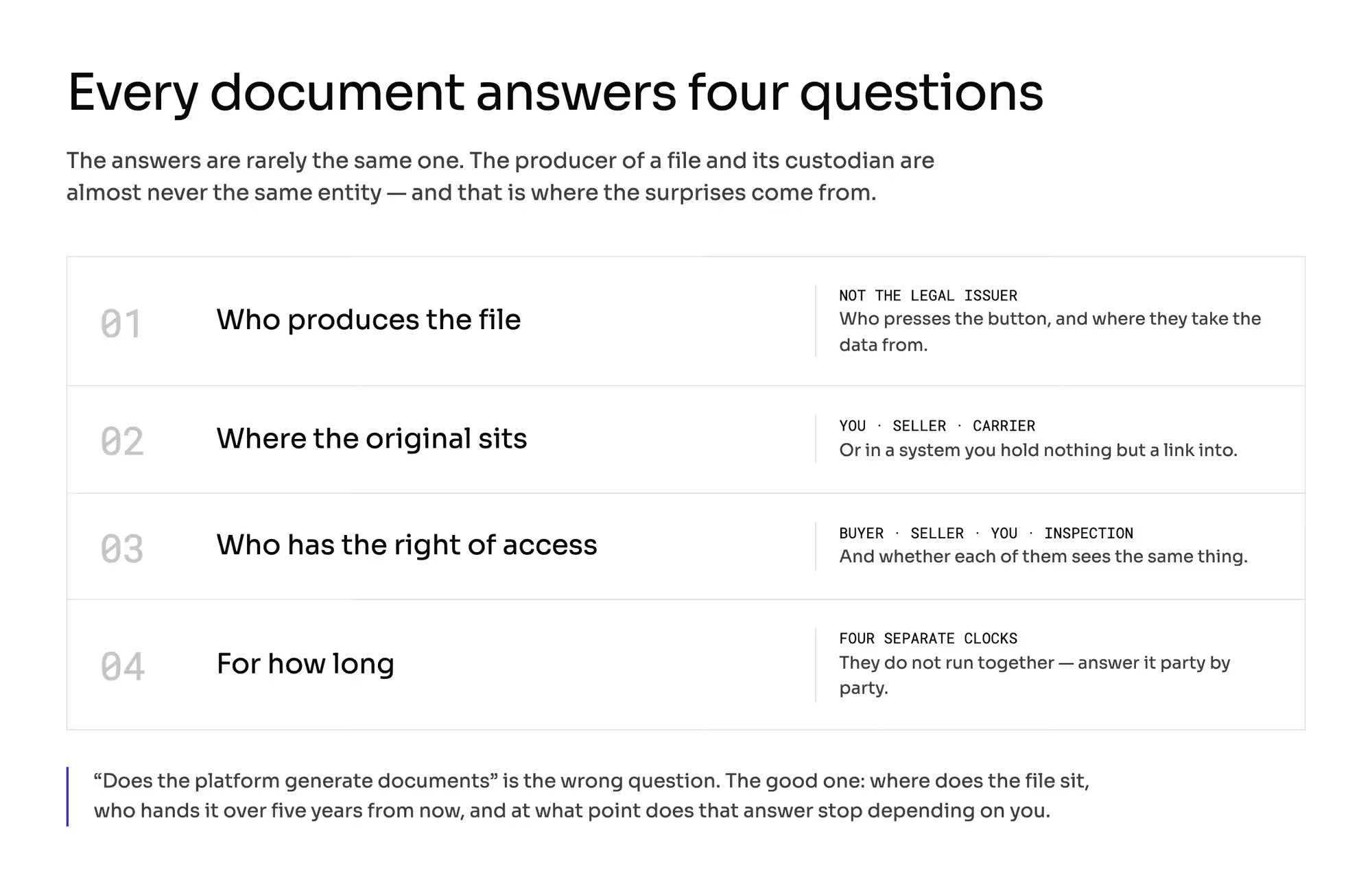
Four questions describe every document that comes out of an order, and it is worth asking them out loud, because the answers are rarely the same:
- Who produces the file. Not who is the issuer in the legal sense. Who presses the button, and where they get the data from.
- Where the original sits. With you, with the seller, with the carrier, or in a system you hold nothing but a link into.
- Who has the right of access. The buyer, the seller, your team, an inspection, and whether each of them sees the same thing.
- For how long. Separately for each of those four parties, because their clocks do not run together.
The producer and the custodian are almost never the same entity, and that is where most of the surprises come from. The typical market pattern looks like this: the platform does not produce the sales document at all.
It assembles the data and issues a request, the file is created in the seller's system, in yours or at their partner, and comes back as an attachment on the order. The platform is a mailbox rather than a print shop.
The conclusion for the buying stage: "does the platform generate documents" is the wrong question. The good one is this: where does the file sit, who will hand it over five years from now, and at what point does that answer stop depending on you.
Which 6 documents does one order leave behind?
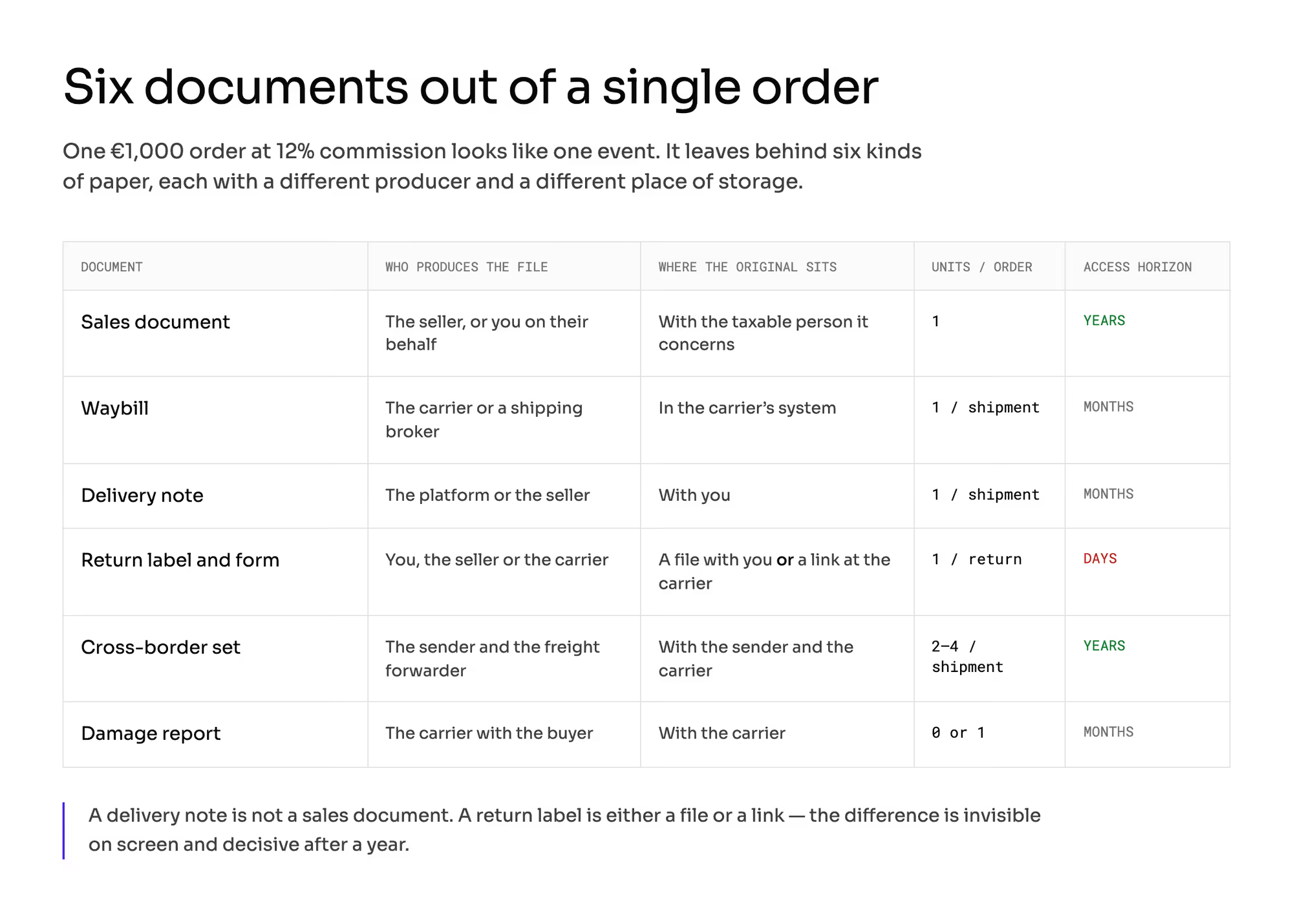
An order of €1,000 at a 12% commission, which leaves the seller €880, looks like one event. It leaves behind six kinds of paper, each with a different producer and a different place of storage.
Three rows in that table are the source of real failures.
A delivery note is not a sales document, and some solutions describe it outright as a simplified version of an invoice with a note that it is not a tax document. There is also a variant with the prices hidden: for gifts, and anywhere you would rather not show what things cost.
The return label comes in two technically different forms: as a file attached to the order, or as a link into the carrier's system. The difference is invisible on screen and decisive after a year.
A link expires together with your contract with the carrier and cannot be recreated. The return window and the wording of the form are carried by the chapter on the returns policy.
All that counts here is whether the file is yours.
A cross-border shipment adds a separate set in which the commercial invoice, the packing list, the certificate of origin and the transport document come round again, and the sender prepares them with the freight forwarder rather than your platform. Who answers for customs clearance and for the complete set of papers is settled by the trade rule agreed in the contract (incoterms, standard terms dividing costs and duties between the selling and buying side).
That is the boundary of this article. From a cross-border perspective, we take one question only: where those files sit and who will hand them over.
Why is delivering a document its own metric?
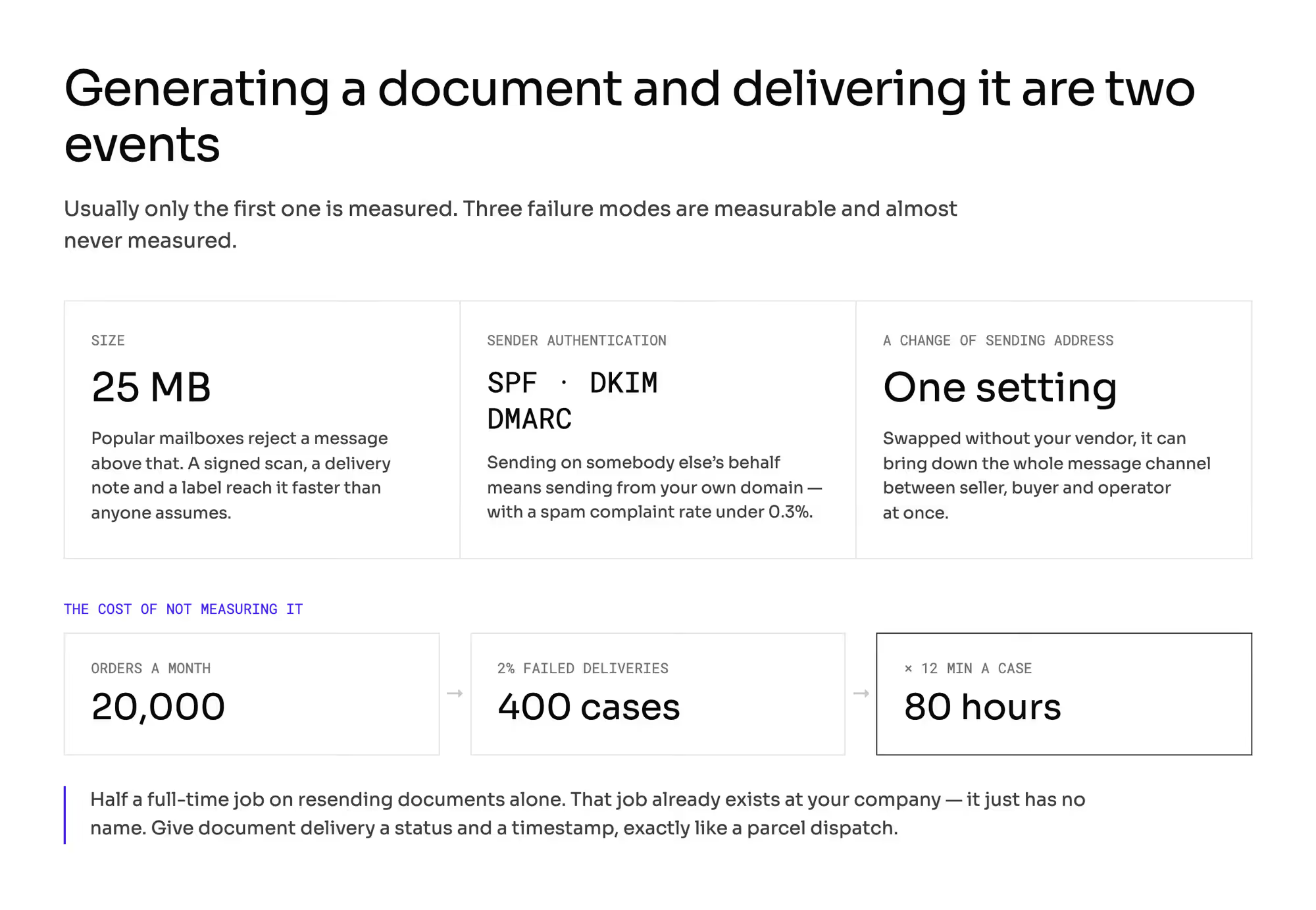
Generating a document and getting it to the buyer are two different things, and usually only the first one is measured.
In day-to-day operations, the sales document reaches the buyer by three routes: in the parcel, by email from the seller outside your system, or as an attachment uploaded to the order and sent out by the platform from a masked address. Practitioners describe implementations in which uploading the document to the order is not required at all.
The document then travels on a channel you cannot see, and you have neither a record of sending nor proof of delivery.
Three failure modes that are measurable and almost never measured:
- Size. Popular mailboxes reject a message with an attachment above 25 MB. A scan of a signed invoice, a delivery note, and a label hit that threshold faster than anyone assumes.
- Sender authentication. Sending a document on somebody else's behalf means sending it from your own domain. Large mail providers now require bulk senders to have SPF, DKIM, and DMARC set up correctly and to keep their spam complaint rate below 0.3%; messages outside those conditions are sometimes rejected and sometimes land in spam.
- A change of sending address. In day-to-day operations, swapping that address without agreeing it with your vendor sometimes brings down the entire message channel between seller, buyer, and operator at once. It is one configuration change, after which something stops working that nobody connects with the documents.
Put the numbers in. At 20,000 orders a month and an openly hypothetical 2% of failed deliveries, you have 400 cases a month.
At twelve minutes a case, that is 4,800 minutes, so 80 hours, half a full-time job on resending documents alone. That job already exists at your company today.
It simply has no name.
A rule to write down at the start: document delivery gets a status and a timestamp, exactly like a parcel dispatch. From the support desk's point of view, a document with no delivery trail is a document that does not exist.
What is wrong with regenerating a document?
This warning cancels out all the work you put into an archive, and it almost never comes up in a conversation about documents.
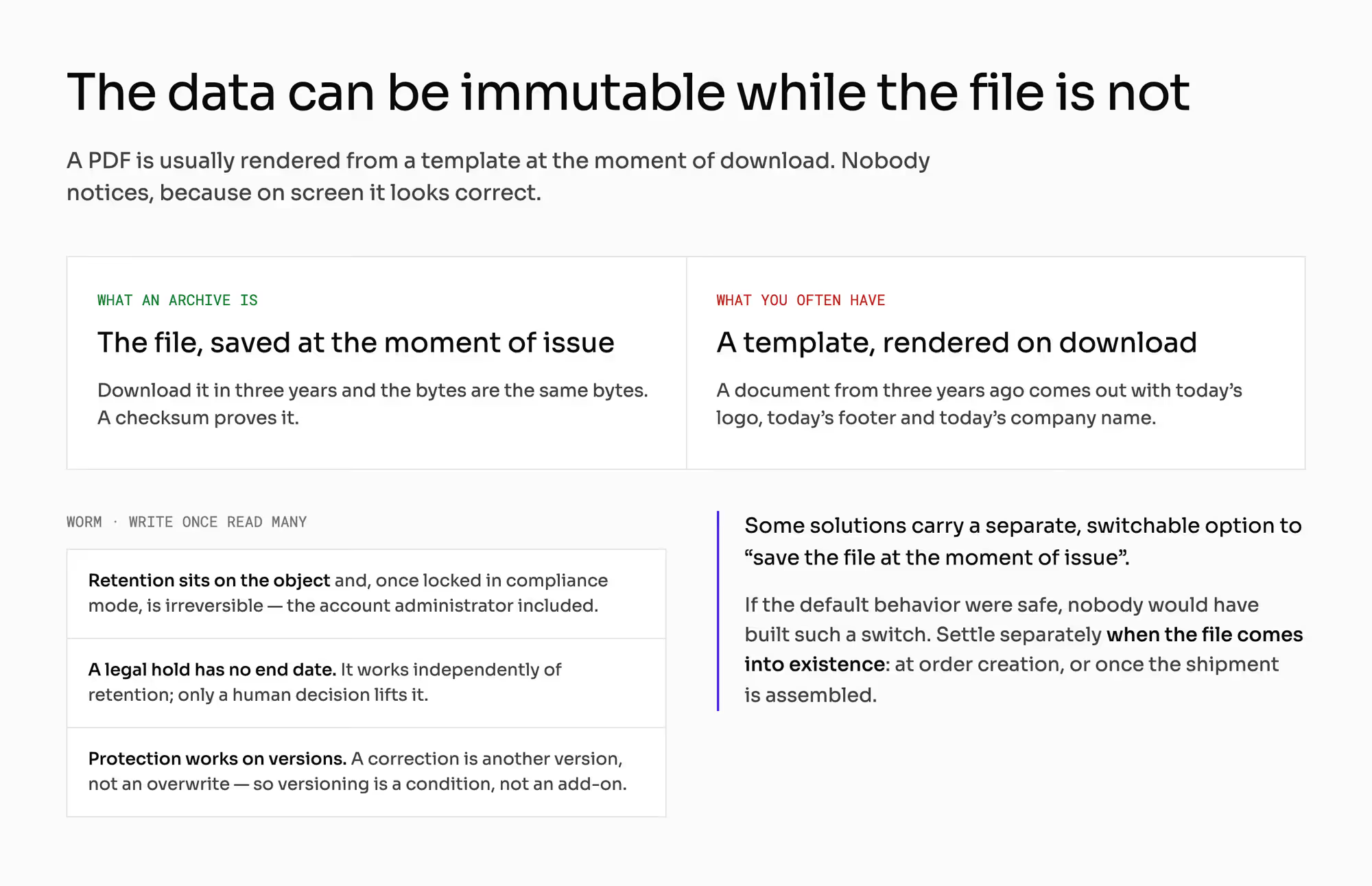
The data can be immutable while the file is not. A PDF is usually rendered from a template at the moment of download, so a document from three years ago, pulled today, can come out with today's logo, today's footer, and today's company name.
Nobody notices, because on screen it looks correct. That this is not theory shows in one detail: some solutions carry a separate, switchable option to "save the file at the moment of issue".
If the default behavior were safe, nobody would build such a switch.
The market standard for durability is called WORM (write once read many), and it is available in the storage services of both the largest cloud providers. Three of its properties are worth knowing, because they are ready-made questions for your IT team:
- Retention is set on the object and, once locked, can be irreversible. In compliance mode, nobody deletes the file, the account administrator included.
- A legal hold has no end date and works independently of retention; only a human decision lifts it.
- Protection works on versions. A new version of a file does not delete the old one, so a corrected document is another version rather than an overwrite (versioning is a condition here rather than an add-on).
Settle separately the moment the file comes into existence: at order creation, or once the shipment has been assembled. This is not a technical detail.
It decides what goes out by email and whether a document is created at all when a return happens before dispatch.
How many documents do you produce and keep?
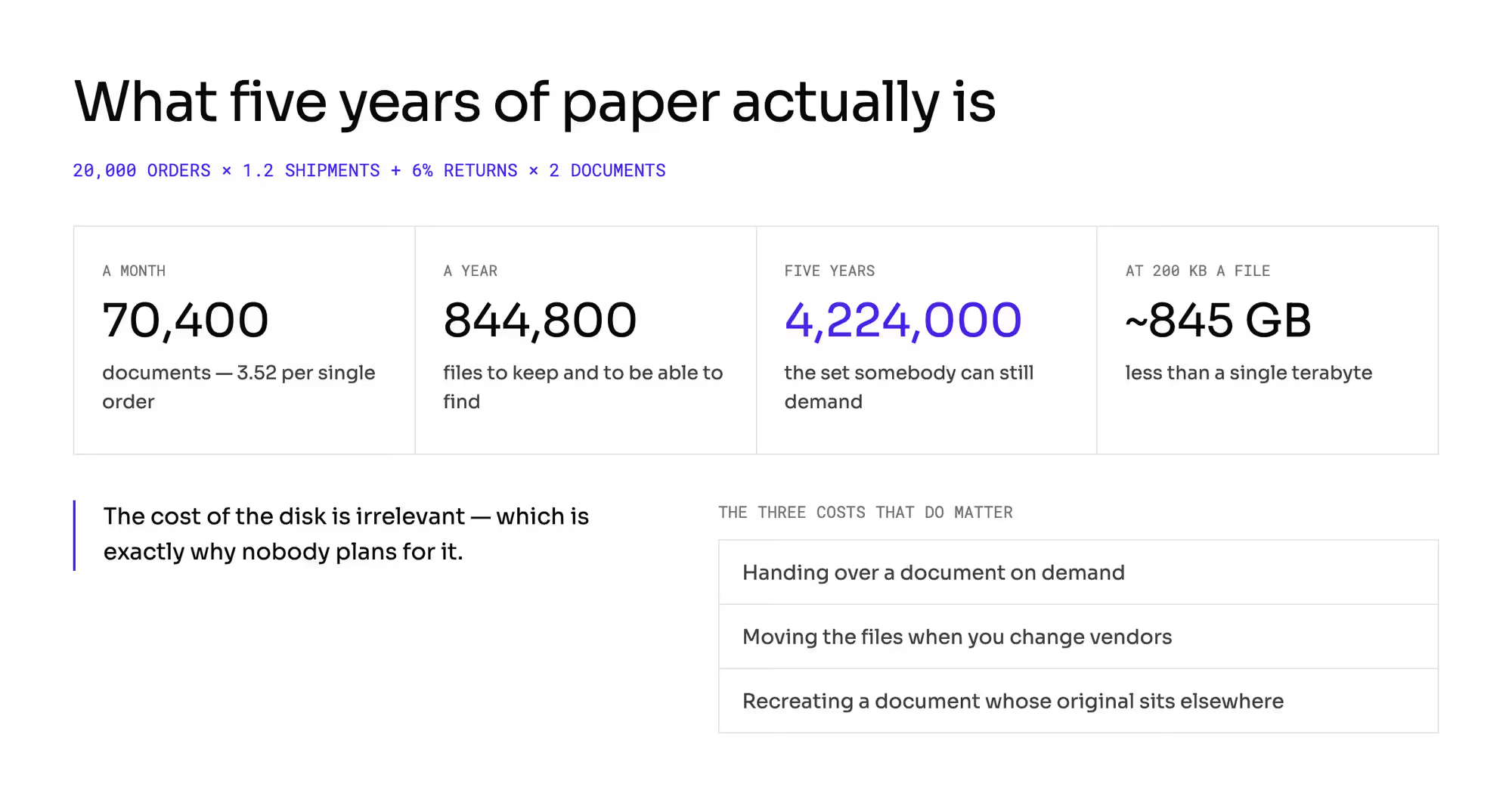
At 20,000 orders a month and 1.2 shipments per order (splits and partial shipments are how one order becomes several) you count like this: 20,000 sales documents, 24,000 waybills, 24,000 delivery notes, and at a 6% return rate, another 1,200 returns at two documents each, so 2,400. That comes to 70,400 documents a month, or 3.52 per single order.
A year of that is 844,800 files, and five years is 4,224,000. At an openly assumed 200 kB per file, that comes to 844,800 MB, so around 845 GB, which is less than a terabyte.
And here is the point: the cost of the disk itself is irrelevant, which is exactly why nobody plans for it. Three other costs matter: handing over a document on demand, moving those files when you change vendors, and recreating a document whose original sits with somebody else.
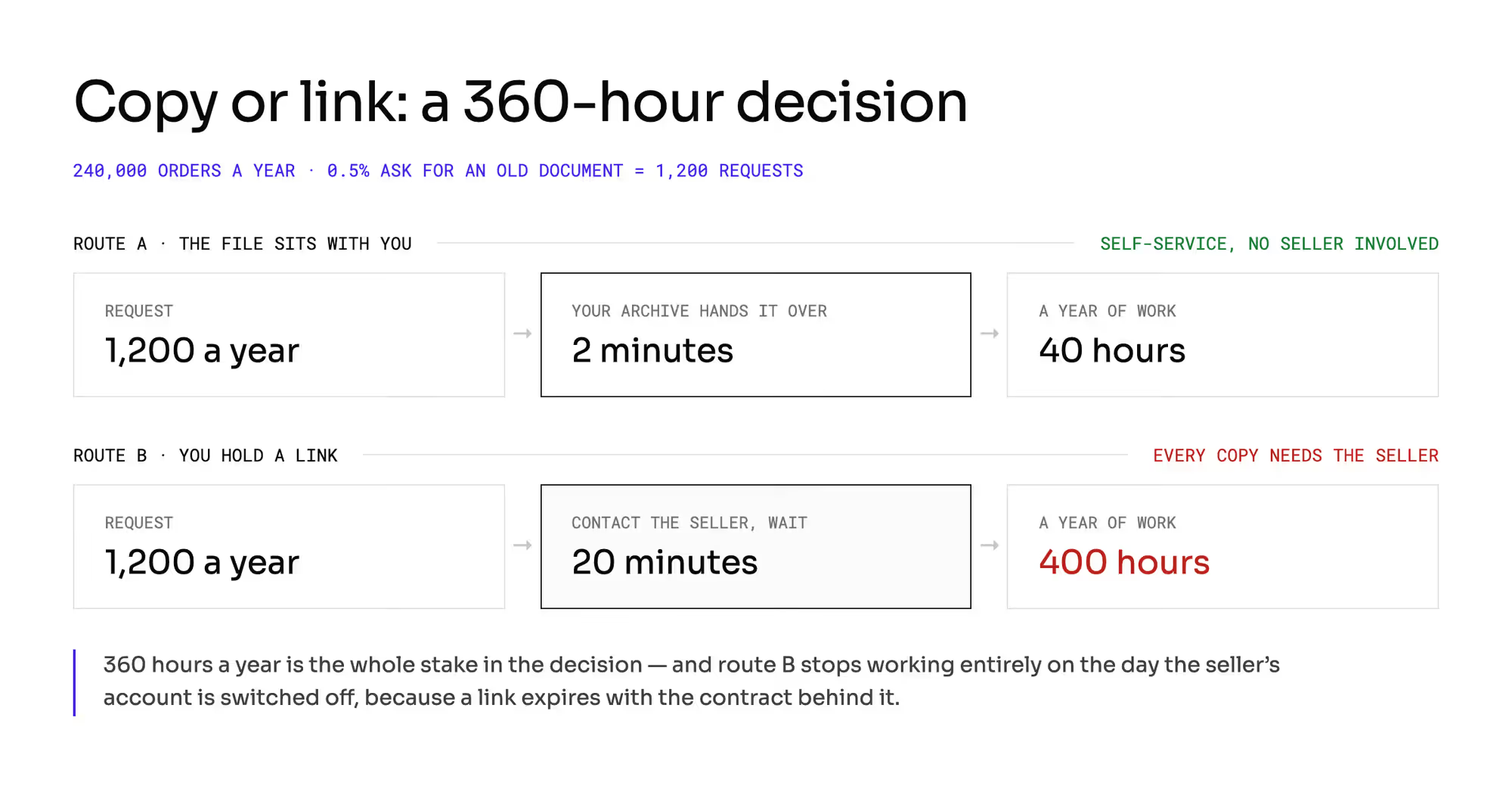
Now count the requests too. At 240,000 orders a year and a hypothetical 0.5% of requests for a document from the past, you have 1,200 requests a year.
If each one requires contacting the seller and takes 20 minutes, that is 24,000 minutes, so 400 hours a year, close to a quarter of a full-time job. If the document sits with you and self-service hands it over in two minutes, that is 2,400 minutes, so 40 hours.
The difference of 360 hours a year is the whole stake in the "copy or link" decision.
And one last calculation, the one that convinces finance. If 3% of orders have no sales document, then at 20,000 orders that is 600 a month.
One in five of those ending in a return for that reason is enough to lose 120 orders at €120 of commission each, so €14,400 a month. That is before you count the €880 an order the seller never sees.
Whether the commission comes back on a return is settled by the commission on a refunded order; the mechanics of giving the money back are carried by who pays for a refund.
What do order documents change about the rest of your build?
1. Access to documents runs on a different clock than the seller's account
When a seller leaves, your duty to hand over paper carries on, and their account does not. No document you might need after the parting can therefore exist only as a link into somebody else's system.
Narrowing access and closing the tail is the tail of obligations after a seller leaves, and a seller's access to their own settlements is the rules on decisions about sellers.
2. A document contains personal data, and durability and minimization stand against each other
One says keep, the other says delete. Do not settle that dispute in the file layer.
It is carried by who controls the personal data.
3. The number of documents grows with the number of shipments rather than of orders
Every additional split axis and every partial shipment adds a full set. The "shipped" event, which decides whether some of them come into existence at all, has a source of truth and queues of its own: who is the source of truth for a status and carriers, labels and tracking.
4. Closing an order does not close its documents
A correction can arrive after closing, and it needs somewhere to sit. That is closing an order.
How do you check document handling with a vendor?
- Take one order from a year ago and list the six documents from the table. Next to each one, write down the producer, the location of the original, and whether you hold a file or a link. The exercise takes an hour and usually ends with two discoveries.
- Run a byte-for-byte test. Download a document saved a year ago and compare its checksum with the copy saved back then. If they differ, what you have is rendering from a template rather than an archive.
- Run a departure test. Switch off a seller's account on a test environment and try to hand over the complete set of documents for one of their orders. That one attempt finds more than all the questions you could put to a vendor.
- Ask for the delivery trail on ten random orders: when the document went out, to whom, and whether it arrived.
- Order an export of a thousand documents in one request, together with the metadata tying them to the order. That is what a migration looks like, and that is what an inspection looks like.
Which mistakes do operators make about order documents?
1. A document that exists only as a link
In the panel, it looks the same as a file. The difference shows up on the day the carrier contract or the integration expires, and by then there is nothing left to recreate.
2. Confusing the data with the file
"We have all the invoices in the system" usually means "we have the data they could once be generated from". Those are not the same thing, and the difference surfaces at the first request for a copy.
3. Delivery with no trail
A document sent on a channel you do not measure is a document you hear about from the buyer. Usually in the week you close the month.
4. One attachment type called "other"
After a year, the archive is a landfill in which every request for a copy needs a human.
5. A delivery note used as a sales document
A business buyer gets the wrong paper and comes back with a ticket that nobody classifies as a problem with documents.
What do you still have to settle about your own documents?
This article does not explain the content or the circulation of tax documents. Who the issuer is and on whose behalf: who issues which invoice.
Sending invoices through national systems: e-invoicing on a marketplace. Corrections and periods are corrections and credit notes.
The retention period and the permitted form of an archive depend on the country and are a question for an advisor rather than for a platform vendor.
This article does not settle what belongs in a document from the personal data side, nor what the information for the buyer has to contain (who delivers the buyer's rights). It also does not describe the contractual provisions on supplying documents.
This article does not cover cross-border logistics. Beyond the document layer, there remain customs clearance, customs data, prohibited destinations, and international returns.
This article does not describe generating labels, integrating with carriers, or tracking shipments. That is carriers, labels and tracking.
Statuses and their source of truth are who is the source of truth for a status.
All the numbers here are openly hypothetical. Take the way of counting from here rather than the values: substitute your own order volume, your own return rate, and your own file size, because every conclusion above hangs on them.
Summary: Who will produce the document in five years?
Somebody will ask, and usually after the seller who issued it has left. That is why the useful question at the buying stage is about custody rather than content: who presses the button, where the original sits, who may receive it, and for how long, counted separately for the buyer, the seller, your team, and an inspection.
The six documents one order produces answer those four questions differently, and two of them are quietly fragile: a return label that is really a link into somebody else's system, and the cross-border set a freight forwarder prepares outside your platform entirely.
Ask a vendor to produce the sales document for an order from a seller whose account has been closed. Building a marketplace where the original of every document has a named custodian and a retention clock?
Frequently asked questions on marketplace order documents
Which documents does a marketplace order produce?
A marketplace order produces about six documents, and they differ in who makes them and who keeps them. The sales document, the delivery note, the shipping label, the return label, the commission statement, and, on a cross-border shipment, a customs set prepared by the freight forwarder rather than by your platform.
Who should store marketplace order documents?
Storing order documents belongs with whoever will still be reachable when somebody asks for them. Most platforms hold a copy attached to the order while the original lives in the seller's system.
The test is simple: close a seller account and try to produce their invoice from last year.
Is a delivery note a sales document?
A delivery note is not a sales document, and several solutions describe it as a simplified invoice with a note saying exactly that. It also comes in a variant with prices hidden, for gifts and for any shipment where the recipient should not see what the goods cost.
Ready to build?
We build marketplaces where every document has a named custodian and a retention clock, so a closed seller account does not take the invoice with it.