
Bundles, Sets, and Services on a Marketplace: One Purchase, Several Returns

Marketplace product bundles are bought as one thing and returned as several, so what a bundle is in your data decides how much money goes back when a buyer keeps two items out of three.
A bundle is bought as one thing and returned as several. If you do not settle what it is in your data beforehand, the first buyer to send back one of the three items settles it for you.
By then, you have an amount to pay out and no document that justifies it.
This article breaks down:
- When does a bundle show what it really is?
- Which 3 ways can you model a bundle?
- How much do you refund for part of one?
- Who answers for completeness?
Key insights
- A bundle shows what it really is in three moments and nowhere else: when the buyer sends part of it back, when one component runs out of stock, and when somebody argues about what was in it.
- The three ways to model a bundle are a separate offer with its own identifier and stock, a group of linked offers held together by a price rule, and a picture on the page with nothing behind it.
- How much you refund for part of a bundle depends on a price that never existed, so the split between components has to be recorded at the moment of sale rather than reconstructed afterwards from a discount.
- Completeness is answered by whoever wrote the contents as data: a list of items with quantities settles the argument, and a sentence in the description leaves it to whoever shouts louder.
When does a bundle show what it really is?
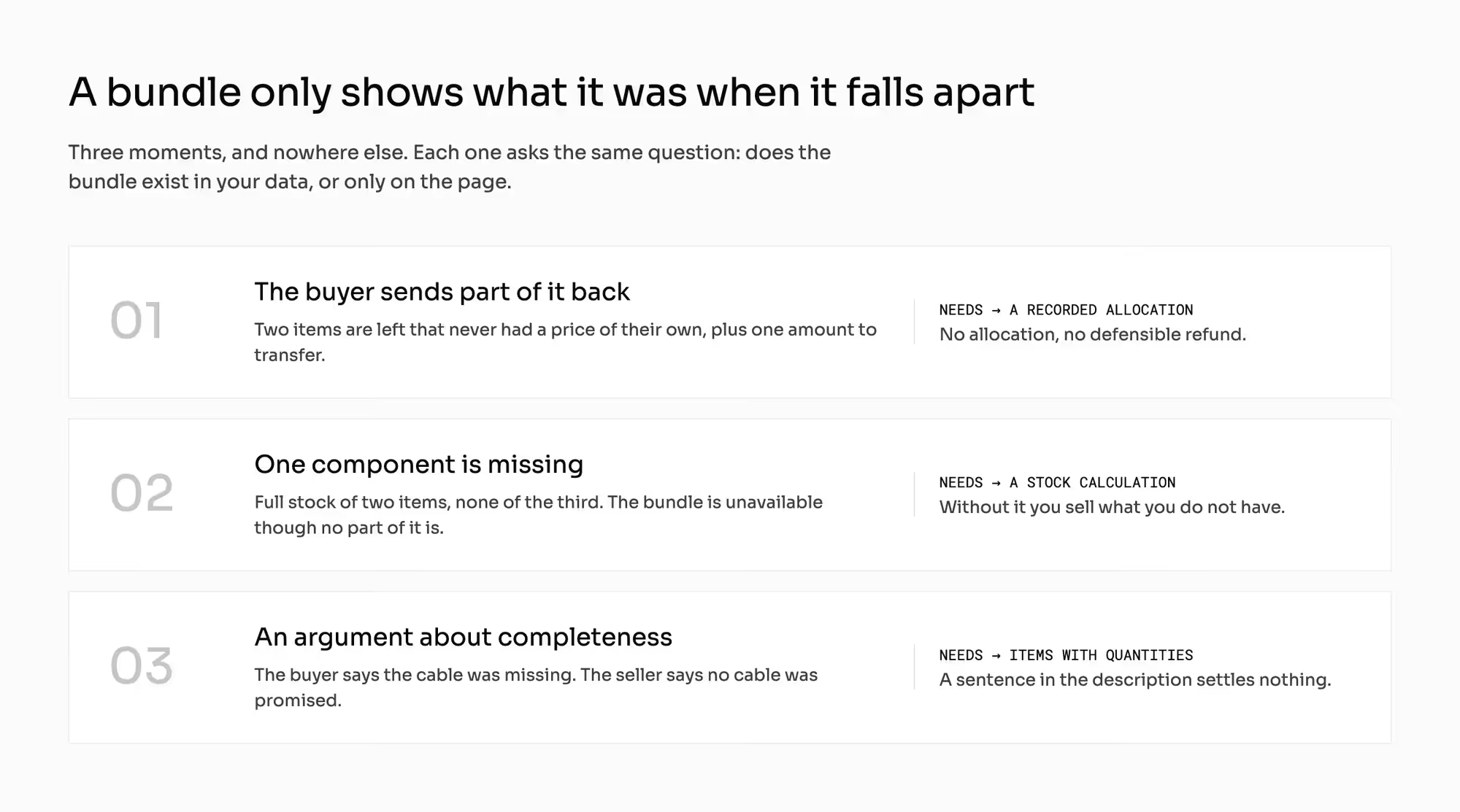
On the product page, every bundle looks the same: a photo, one price, a button. The difference shows up in three moments and nowhere else.
1. The buyer sends part of it back
Two things are left that never had a price of their own in that order, plus one amount to transfer.
The question "how much do we give back" has no answer if nobody recorded which share of the price belonged to which item.
2. One component is missing
The seller has full stock of two items and none of the third.
The bundle is unavailable even though none of its parts are. A system that does not run that calculation sells what it does not have.
3. An argument about completeness
The buyer writes in that the cable was missing.
The seller writes back that no cable was ever promised. Which way it goes depends on whether the contents exist as a list of items with quantities or as a sentence in the description.
Each of those moments asks the same question and gets one of three answers. On your platform, a bundle is either a separate offer, a group of linked offers, or just a picture on the page.
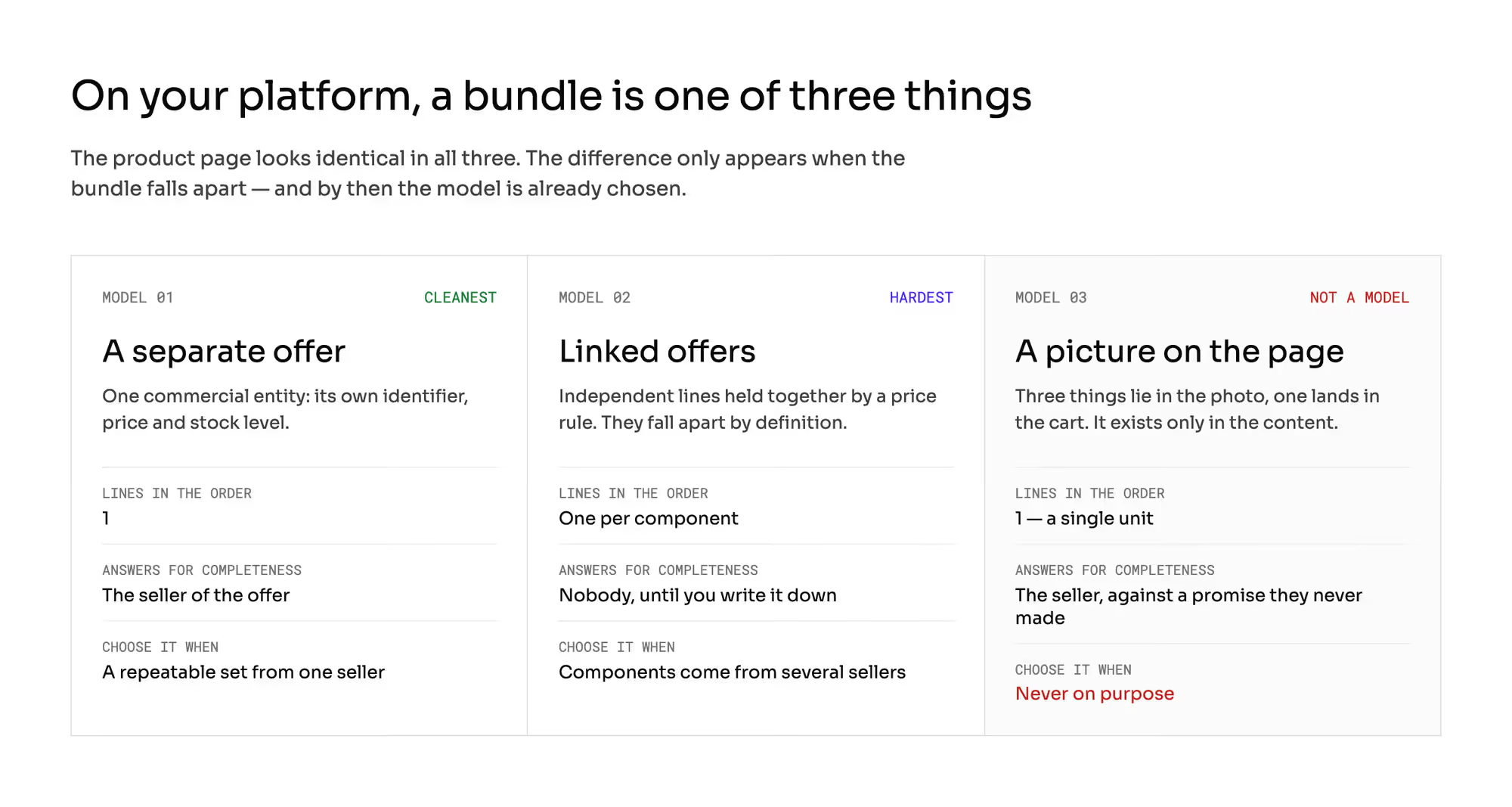
A separate offer is one commercial entity: its own identifier, price, and stock level, one line in the order. You buy a bundle, you receive a bundle, you complain about a bundle.
Linked offers are several independent lines held together by a price rule. They fall apart by definition, and that is the advantage: every part has its own seller and its own fate.
A picture on the page is a bundle that exists only in the content: three things lie in the photo, one lands in the cart. That is not a model.
It is a mistake waiting for a complaint, and the most common way bundles turn up on platforms that do not support them. Practitioners from large rollouts call that gap one of the most painful on the market, and the workaround is the same everywhere: a separate category, a separate page, a set assembled by hand.
What changes when a bundle spans several sellers?
A bundle from a single seller is a catalog problem. A new product comes into being with its own identifier.
Trade identification standards treat every packaging configuration as a separate item rather than a variant of the single unit. Where that number stops working is offer matching.
Whether a bundle should be its own page or a variant: the catalog model and the category tree. Everything after that is ordinary: one shipment, one date, one commission, one party to blame when something is missing.
A bundle built from several sellers' offers is an order problem, and a class harder. No single party has committed to delivering the whole thing.
The order is cut apart along seller lines (how one order becomes several), and every suborder gets its own acceptance (71), status (70), and moment of delivery (72). The promise that the set arrives complete stays on your side, and nobody can keep it.
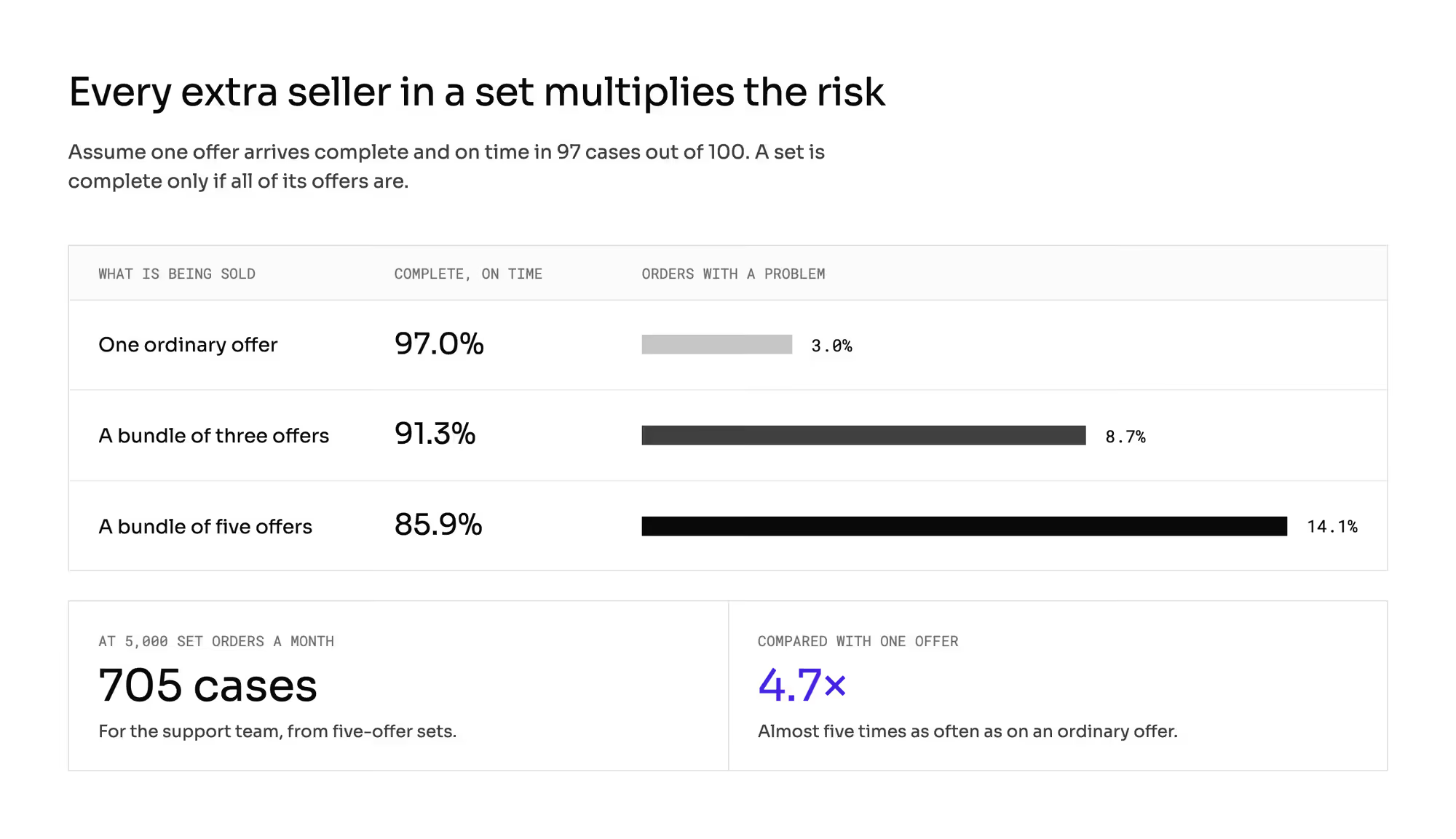
Count what that promise costs. Assume a single offer arrives on time in 97 cases out of 100.
A bundle of three offers is complete and on time in 91.3% of cases (0.97 × 0.97 × 0.97), and a bundle of five in 85.9% (0.97 to the fifth power). The share of orders with a problem climbs from 3% to 8.7% with three and 14.1% with five, which is almost five times as often as on an ordinary offer.
At 5,000 such orders a month, that is 705 cases for the support team.
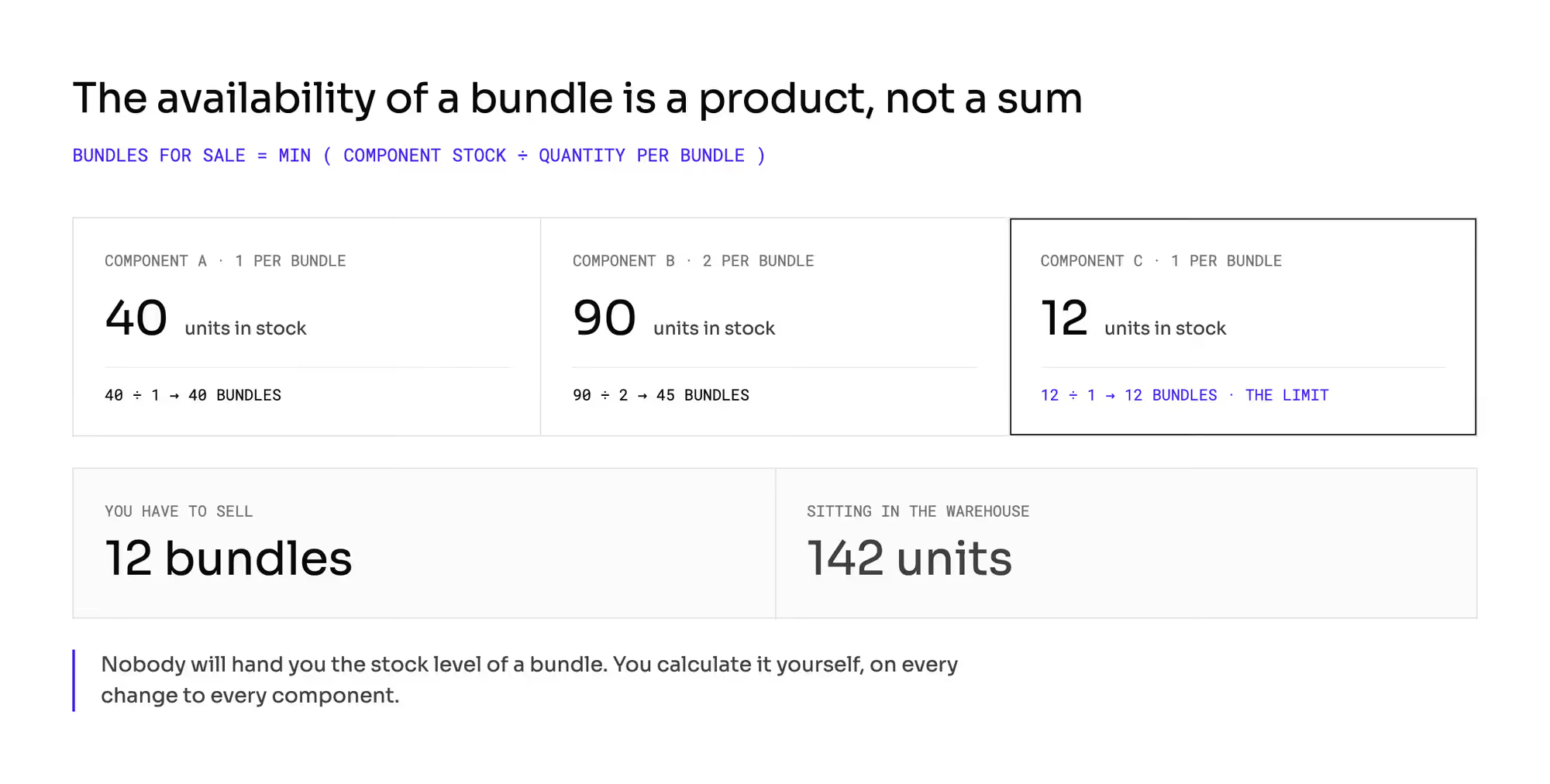
The availability of a bundle is a product rather than a sum. You calculate it as the smallest of the numbers: "component stock divided by its quantity in the bundle".
Three items: 40 units of the first (one per bundle), 90 of the second (two per bundle) and 12 of the third (one per bundle) give 40, 45 and 12. You have twelve bundles to sell, though 142 units are sitting in the warehouse.
A bill of materials in manufacturing works the same way: the parent item is defined by its components and their quantities, and its availability follows from reserving them.
The point here is narrower. Nobody will hand you the stock level of a bundle, so you calculate it yourself.
Which 4 questions does an attached service raise?
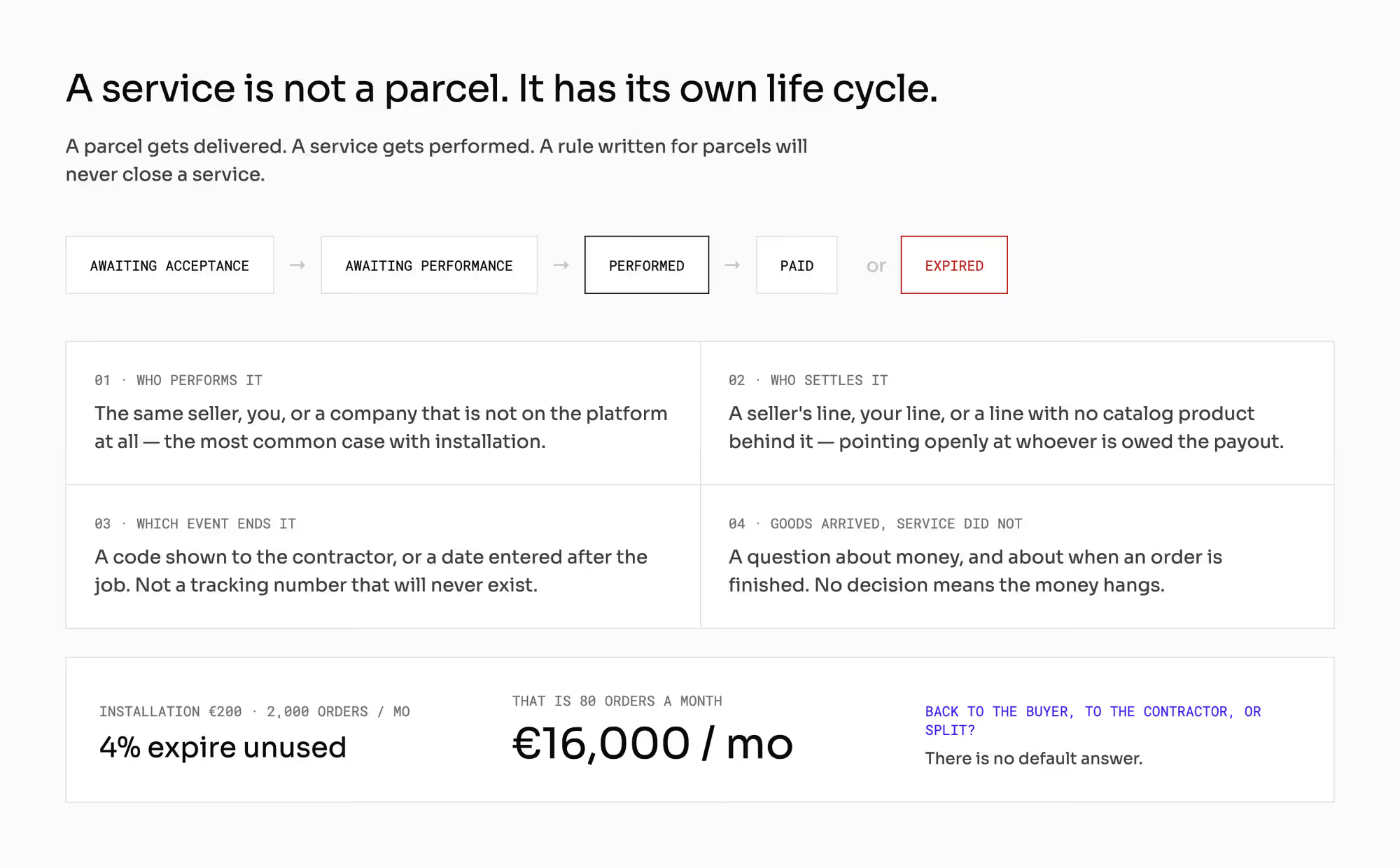
Installation, carrying the goods inside, hauling away the old appliance, extended protection. They look like an add-on in the cart. They are commitments with a life cycle of their own.
1. Who performs it
The same seller, you, or a company that is not on the platform at all (fulfillment models).
With installation, the last is the most common: you sell the service, somebody outside your data model performs it.
2. Who settles it
The service can be a seller's line, your line, or a line with no catalog product behind it.
That third mechanism does exist in products of this class: a line that points at no offer at all, but points openly at whoever is owed the payout. It is the right tool, as long as somebody assigned that payout deliberately.
3. Which event ends the service
A parcel gets delivered.
A service gets performed, and that is a different cycle. Where services are run separately, the order follows its own path: waiting for acceptance, waiting for performance, performed, paid.
There is a separate state, expired, for services nobody used inside the validity window. The confirmation is sometimes a code shown to the contractor, sometimes a date entered after the job.
The source of truth for delivery of the goods is when an order counts as delivered. A rule written for parcels will never close a service.
4. What happens when the goods arrive, and the service does not
That is a question about money and about when an order is finished (closing an order).
Take installation at €200 and 2,000 such orders a month. If 4% of services expire unused, that is 80 orders and €16,000 a month: does it go back to the buyer, stay with the contractor, or split between you?
There is no default answer, and no decision means the money hangs until the first escalation.
Two things are worth knowing in advance. The price of a service is sometimes set on the spot.
The contractor arrives to mount one television and mounts two, so you need options added on top of an existing order rather than a new base price. Extended protection is a separate product from a separate world: it is sometimes administered by a specialist firm and in some markets carries its own authorization requirements.
Treat it as a regulated category (restricted and prohibited products).
Which 3 bases can commission on a bundle use?
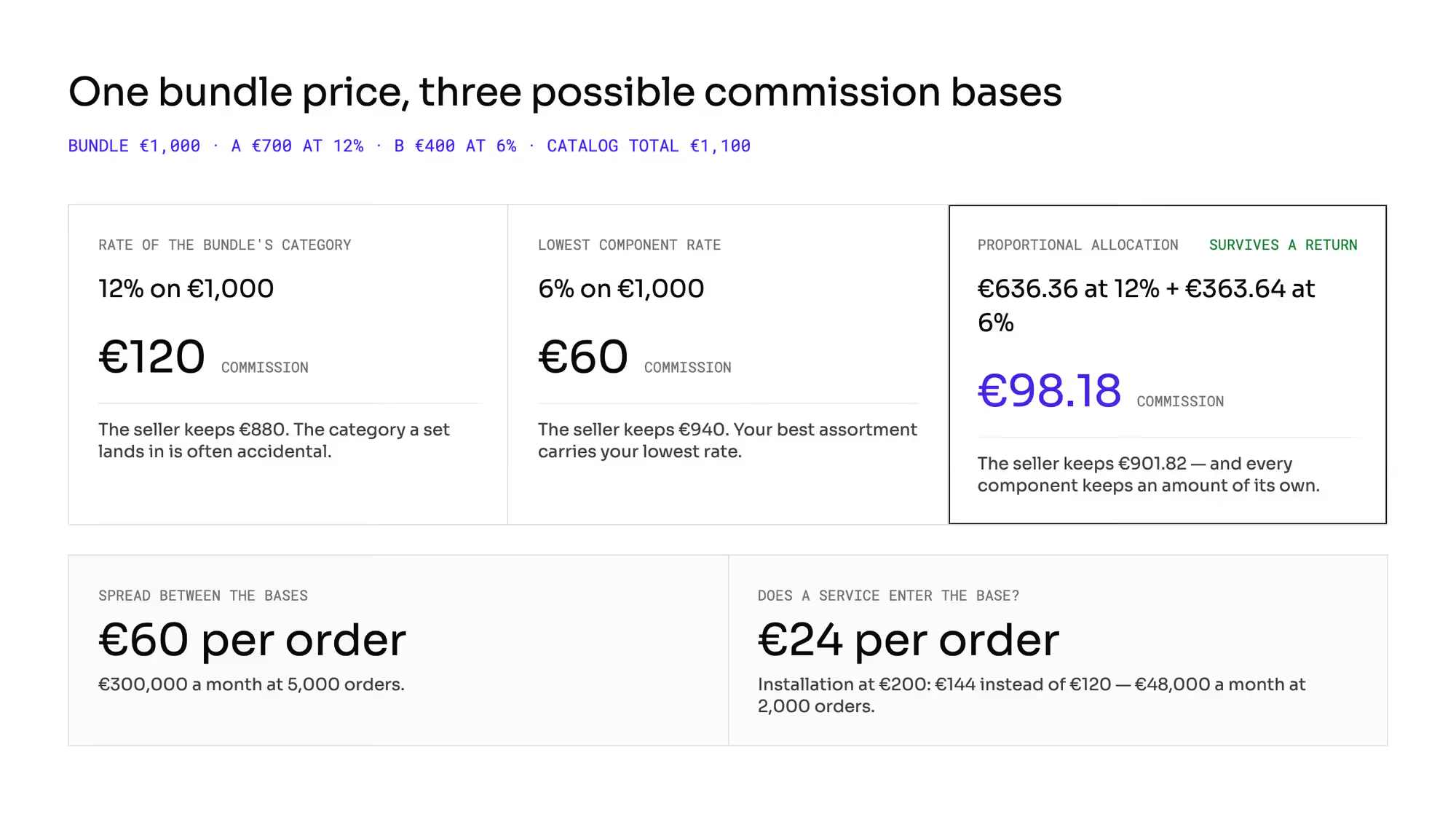
A bundle at €1,000. The components at catalog prices: the first at €700 in a category with a 12% commission, the second at €400 at 6%.
The catalog total is €1,100, so the bundle is €100 cheaper than the parts separately.
- The rate of the bundle's category (12%): €120 of commission, and the seller keeps €880.
- The lowest rate among the components (6%): €60 of commission, and the seller keeps €940.
- Proportional allocation: the first component gets 1,000 × 700 ÷ 1,100 = €636.36 and the second €363.64. The commission is 636.36 × 12% + 363.64 × 6% = 76.36 + 21.82 = €98.18, and the seller keeps €901.82.
The spread is €60 on a single order, which is €300,000 a month at 5,000 orders. Only the third option survives a partial return, because only it leaves behind an amount attached to a component.
A service brings its own question: does it enter the commission base? Installation at €200 with a 12% commission is €24 of difference on an order (€144 instead of €120), which is €48,000 a month at 2,000 orders with installation.
The answer is not obvious, because a service carries no cost of goods.
How much do you refund for part of a bundle?
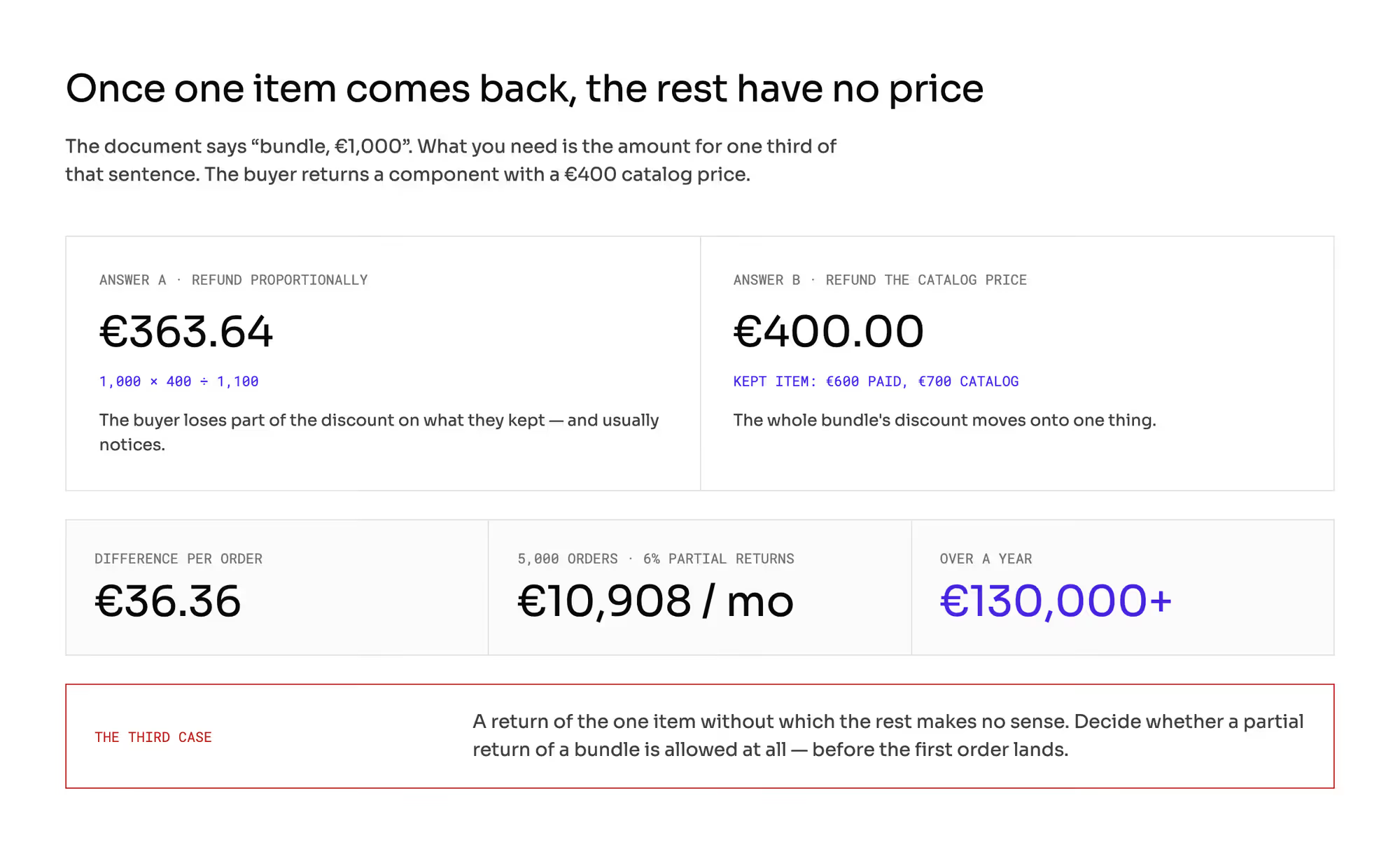
Once one item comes back, the rest have no price. They never had one.
What they had was a share in the bundle price, and nobody wrote it down. The document says "bundle, €1,000", and what you need is the amount for one third of that sentence.
There are two answers, and both cost something. The buyer sends back a component worth €400 at catalog price:
- You refund proportionally: €363.64. The buyer loses part of the discount on what they kept, and usually notices.
- You refund the component's catalog price: €400. The buyer is left holding the first item for €600, though its catalog price is €700. The discount on the whole bundle moves onto one thing. The difference is €36.36. At 5,000 orders a month and 6% partial returns, that is €10,908 a month, over €130,000 a year.
The third case is the ugliest: a return of the one item without which the rest makes no sense. The question then is whether you allow a partial return of a bundle at all.
You have to write that down before the first order lands. Buyer rights are who delivers the buyer's rights, the mechanics of a refund are 13, and whether the commission comes back is 14.
All we answer here is which base you calculate from: the one you recorded at purchase, because you will not reconstruct it later.
Who answers for the completeness of a bundle?
Three roles blur into one around a bundle, and they should not: who composed it, who assembles it, and who answers to the buyer. If you invented the contents and the seller does the packing, an argument about a missing cable is an argument about your definition.
There is one condition for settling it at all: the contents have to be a list of items with quantities rather than a sentence in the description. Public standards for describing offers draw that line openly.
An offer can point at the objects it includes together with the exact quantity, and separately there is an add-on offer, available only with the base one, for an extra charge. Two different entities, two different commitments.
Who may change the data on a page is field ownership, and a dispute over what that data says is 41.
Comparison
What does each way of modelling a bundle cost? | Bundle as a separate offer | Linked offers with a price rule | Bundle only in the description |
|---|---|---|---|
Lines in the order (count) | 1 | one per component | 1 |
Where availability comes from (bundles) | the offer's own stock level | the smallest value of "stock ÷ quantity per bundle" | the stock of a single unit |
Commission base (€) | the price of the bundle | each line on its own | the price of the unit |
Who answers for completeness | the seller of the offer | nobody, until you write it down | the seller, against a promise they never made |
What happens on a partial return | needs a recorded price allocation | the line disappears, the rest is unchanged | the concept does not exist |
Where the cost lands | a new page for every combination | price rules and handling shortages | complaints and returns |
When to choose it | a repeatable set from one seller | components from several sellers | never on purpose |
What do bundles change about the rest of your build?
1. A bundle multiplies the catalog
Every combination is a separate page, separate photos, and a separate approval (the approval queue), and seasonal sets then feed the catalog debt (47).
2. Bundles and services change shipping
Three items in one parcel is a different logistics class from three parcels, and an installation does not travel with a carrier at all (zones, methods and shipping rates and carriers, labels and tracking).
3. Dependent lines break partial acceptance
A seller who accepts two of the three items in a set produces an order that makes no sense. When to switch that option off is a seller accepting or rejecting an order.
4. There are more documents than orders
A partial return and a service added after the fact both multiply the paperwork.
How do you check bundle handling with a vendor?
1. On your own data
- Count the items whose title says "bundle", "set," or a number of units per pack. That is your real scale, usually larger than you think.
- Take ten of them and check whether the contents are a field or a sentence. If it is a sentence, you have nothing to settle a complaint with.
- Measure the share of partial returns in multi-item carts. The calculation in the allocation section rests on that number.
2. For your vendor
- Build a bundle from three offers, sell it, and return one item. Show the refund amount and where it came from.
- Set the stock level of one component to zero and show what happens to the bundle offer.
- Add a service with no catalog product to an order and show who the payout was assigned to.
- Show the state "service not performed in time" and what the system does with the money.
- Can the commission be calculated per component when the components sit in categories with different rates?
If the answer is "a bundle is just a product", you have the first of the three models and every limitation that comes with it. That can be a good answer.
It has to be an answer, though, rather than a discovery six months in.
Which mistakes do operators make about bundles?
1. A bundle promised in the description and sold as a single unit
The cheapest to build and the most expensive to run: the complaint is lost before it starts, because the promise is in writing.
2. A bundle built from several sellers' offers and called a "set"
The buyer hears one delivery, gets three shipments and three dates, and the worst of those is the one that counts.
3. A bundle price with no recorded allocation
It works until the first partial return, and after that a human calculates the amount and nobody can defend it.
4. A service listed as an ordinary product
It inherits the life cycle of a parcel: it waits for a tracking number that will never exist.
5. The commission on a bundle left at the default
The category a set lands in is often accidental, and the rate follows it. A year later, your best assortment carries your lowest rate.
What do you still have to settle about your own bundles?
This article does not design your catalog model. A shared page or your own listing is the catalog model. Here, a bundle is only ever a thing that falls apart.
This article does not say what the buyer is entitled to. The conditions for a return, including the return of part of a set, are who delivers the buyer's rights and a conversation with a lawyer rather than with a platform vendor.
This article does not tell you how many bundles you can maintain. The number of combinations grows faster than the catalog team, and the threshold depends on how many pages you can approve (the approval queue and catalog debt).
All the numbers above are openly hypothetical. The arithmetic travels, the result does not.
Substitute your own component prices, your own share of partial returns, and your own on-time rate for offers.
Summary: What is a bundle in your data?
Whatever it turns out to be the first time somebody keeps two items out of three. On the page, all three models look identical: a photo, one price, a button.
They diverge at the break-up, and each of them hands the problem to a different party. A separate offer is one commercial entity that cannot come apart, which is clean until a buyer wants to return half of it.
Linked offers fall apart by design, with a seller and a fate per part, and the price has to have been split in advance. A picture with nothing behind it settles nothing at all, and the argument about the missing cable is then a matter of whose account of the description wins.
Ask a vendor to return one item out of a three-item bundle and show the amount that goes back to the buyer. Building a marketplace where a bundle's contents and its price split are data rather than a sentence in a description?
Frequently asked questions on marketplace bundles
How should a marketplace model a product bundle?
A marketplace should model a bundle as a separate offer when it must stay whole, and as linked offers when its parts can live on their own. A separate offer has its own identifier, price, and stock level and produces one order line.
Linked offers are several lines held by a price rule, each with its own seller and its own fate.
What happens when a buyer returns part of a bundle?
Returning part of a bundle asks for a price that never existed, which is why the split has to be recorded when the sale happens. Without it you are left with two items that had no price of their own and an amount to transfer that no document justifies.
What happens when one item in a bundle is out of stock?
One component out of stock makes the whole bundle unavailable, even though none of its parts is. Availability for a bundle is a computed number rather than a stored one, and a system that skips that calculation sells what it does not have.
Ready to build?
We build marketplaces where a bundle's contents and its price split are data, so a partial return has an amount that a document can justify.