
Who Keeps the Marketplace Commission on a Refunded Order?

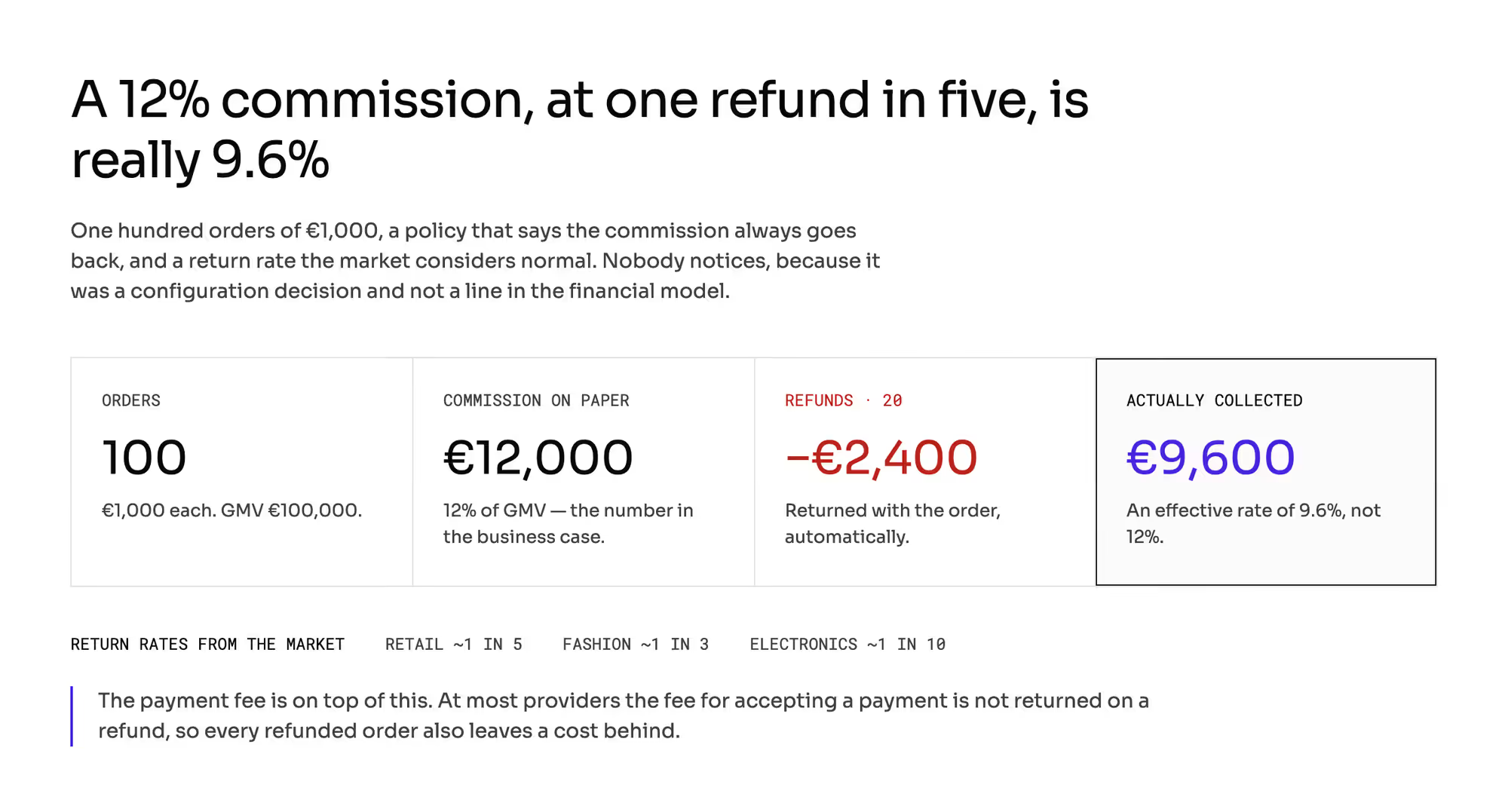
Orders of magnitude from the market: in online retail roughly one order in five comes back, closer to one in three in fashion, and closer to one in ten in electronics. Take a 12% commission and one refund in five.
Under a "the commission always goes back" policy, 100 orders of €1,000 each leave you with €9,600 instead of €12,000. Your 12% is in reality below 10%, and nobody noticed because it was a configuration decision that never reached the financial model.
The marketplace commission on a refunded order is either your share of a sale that no longer exists, or a fee for a service you already performed. Which of those two your platform assumes decides what happens to the €120 you charged on a €1,000 order when the buyer sends it back.
In most implementations, the answer is a single switch nobody deliberately chose, and it applies to every refund you will ever process.
This article breaks down:
- What are you actually charging a marketplace commission for?
- Which 4 refund situations do you have to handle?
- Who decides who is at fault, and how does a seller appeal?
- Which document does each variant produce?
Key insights
- Your effective commission is the rate minus the refunds you give back and the fees you never recover. A 12% rate with one refund in five is already below 10%.
- The fault rule moves about three hundredths of commission revenue, so it works as a behavior lever. A seller who pays for their own mistakes stops making them.
- Each variant produces a different document: nothing to correct, a downward correction to the commission invoice, or a correction followed by a debit note.
What are you charging a marketplace commission for?
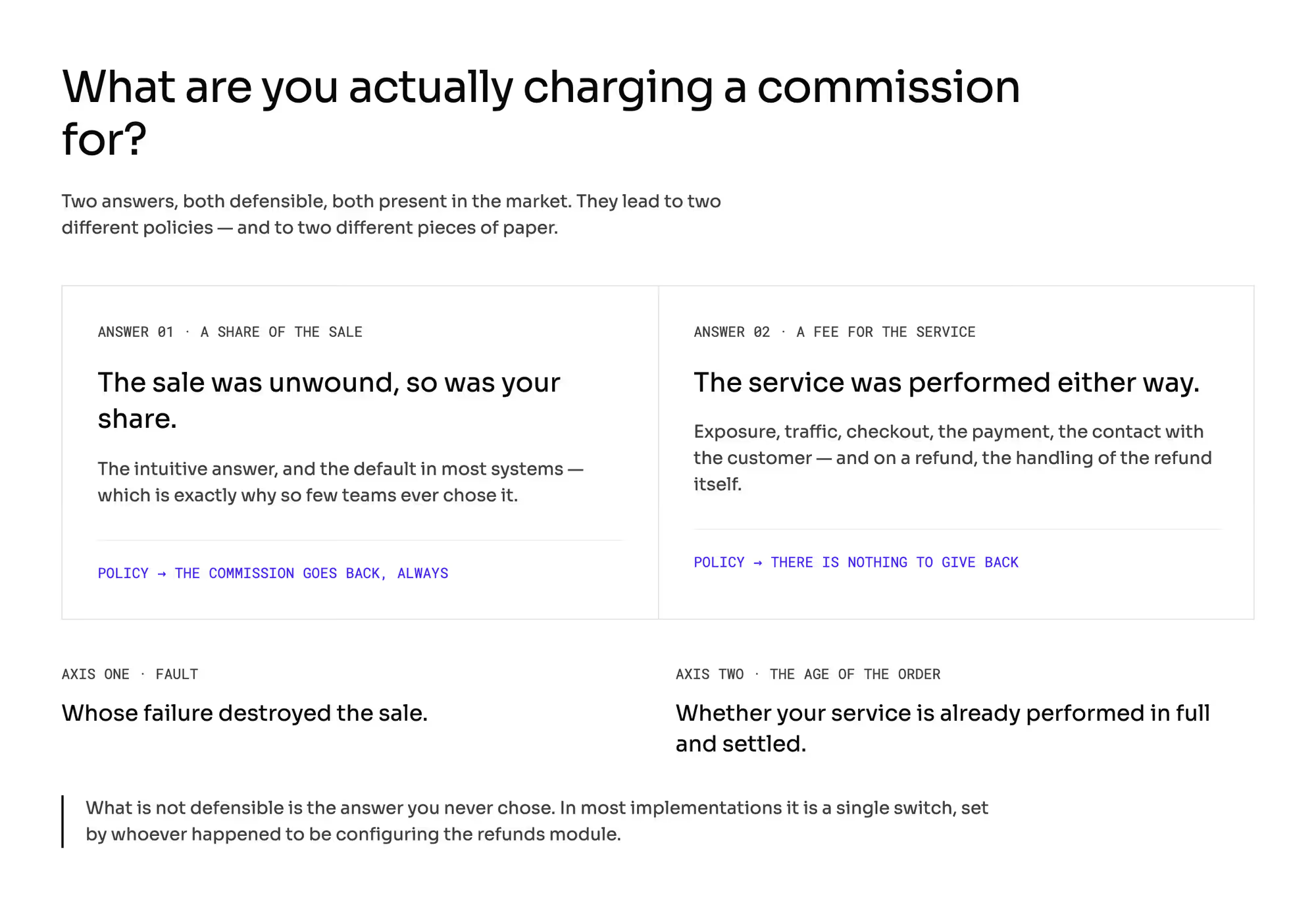
The whole subject comes down to one question that almost nobody asks out loud. There are two defensible answers to it, and they lead to two different policies.
1. The commission is your share of the sale
If the sale was unwound, so was your share. The commission goes back, always and automatically. This is the intuitive answer and the default in most systems.
2. The commission is a fee for the intermediation service
You are paid for the exposure, the traffic, the checkout, the handling of the payment, and the contact with the customer. On a refund, you are also paid for handling the refund itself.
That service was performed whether or not the goods stayed with the buyer. On this logic, the commission does not go back, because there is nothing to give back.
Both are defensible, and both exist in the market. What is not defensible is the one you never chose deliberately.
And that choice produces exactly two axes of decision:
Fault answers the question of whose failure destroyed the sale. The age of the order answers whether your service has already been performed in full and settled.
The rest of this article is those two axes and the document that records them.
One order, 4 refunds: the worked example
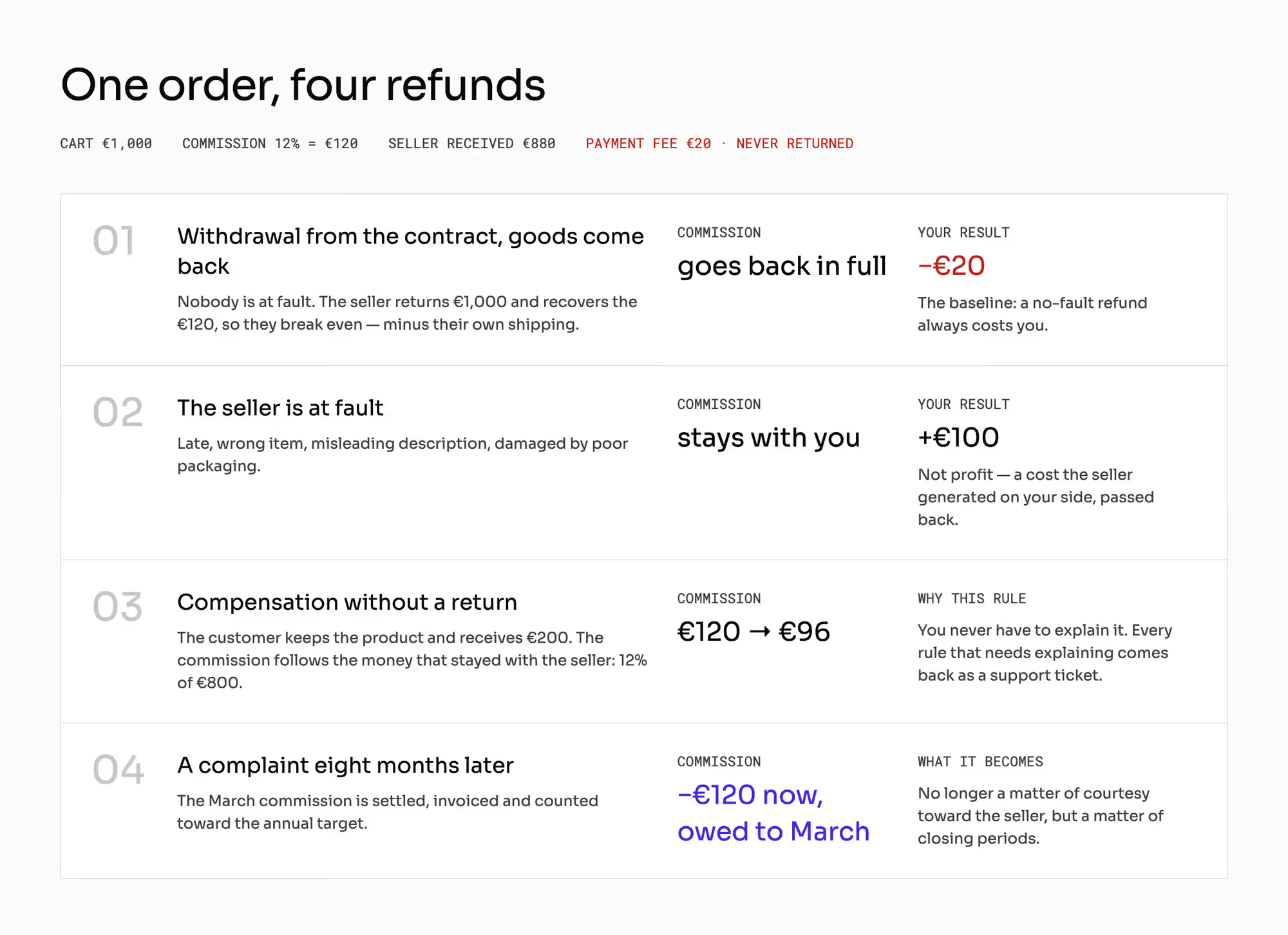
One order runs through this article: a €1,000 cart at a 12% commission, so €120. The seller received €880.
Accepting the payment cost you €20, and you will not get those €20 back. At most payment providers, the fee for accepting a payment is not returned on a refund (that is the subject of "How Marketplace Split Payments Work and Who Pays the Fees?").
1. Withdrawal with nobody at fault
The seller gives back €1,000 and recovers the €120 commission, so they break even. What they do not recover is their own cost of shipping and of taking the goods back.
You have €0 of revenue and €20 of cost. A refund with nobody at fault always costs you, even under the most generous policy toward the seller.
That is the baseline you count everything else from.
2. The seller is at fault
They shipped late, they shipped the wrong item, the description was misleading, the goods arrived damaged because the packaging was poor. You keep the €120.
The seller is €120 down, and you are €100 up on a sale that never happened. That is a cost you are passing back to the seller, one they generated on your side: customer service, working the case, and the reputational damage the customer attributes to you.
3. Compensation without a return
The customer keeps the product and receives €200 as a concession. The market knows both rules here: some platforms treat that transaction as final and do not touch the commission at all; others reduce it proportionally.
The recommendation: the commission follows the money that stayed with the seller. That means 12% of €800, so the commission drops from €120 to €96.
The reason is simple. You never have to explain that rule to a seller, and every settlement rule that has to be explained comes back to you as a support ticket.
4. A complaint eight months later
The goods come back. The March commission has already been settled, invoiced, and counted toward the annual target.
The minus €120 lands in the current settlement and belongs to March. That is exactly the moment when a commission refund policy stops being a matter of courtesy and becomes a matter of closing periods ("Marketplace Ledger: Why Balances Must Match the Transfer").
How do you decide who is at fault, and why is that a process?
Fault sounds like an obvious category until you have to assign it on the three hundredth refund of the week.
The reason a customer gives for a return is not a finding of fault. From the list, the customer picks whatever is fastest and least confrontational.
"Does not fit" gets chosen instead of "arrived damaged." Hence a question for your vendor that sounds technical and is financial: is the dictionary of return reasons yours, or is it fixed? A rule built on a cause you cannot define is a rented rule.
A decision about fault needs an author, a justification, and a route of appeal. Toward business sellers, EU law requires that the terms of cooperation be clear and that the grounds for restrictive decisions be described in them explicitly, and larger operators have to run an internal procedure for handling seller complaints.
The practical conclusion: if withholding a commission is a human decision, it has to leave a trace with a reason. Otherwise, the first dispute goes to the seller, no matter who was right.
And here is the most important thing to say to the board before somebody promises savings: the fault rule is a behavior lever. Back to the numbers.
One hundred orders, twenty refunds, three of them the seller's fault. The commission you keep is €360 against €12,000 of commission revenue.
That is three hundredths of the whole. This rule will not defend your P&L.
It will defend your service quality, because a seller who pays for their own mistakes stops making them.
Why does the age of the order change the answer?
The book has to be closed somewhere. If the commission can always come back, then your commission revenue for any given year is never final.
Your finance team will find that out at the first year close.
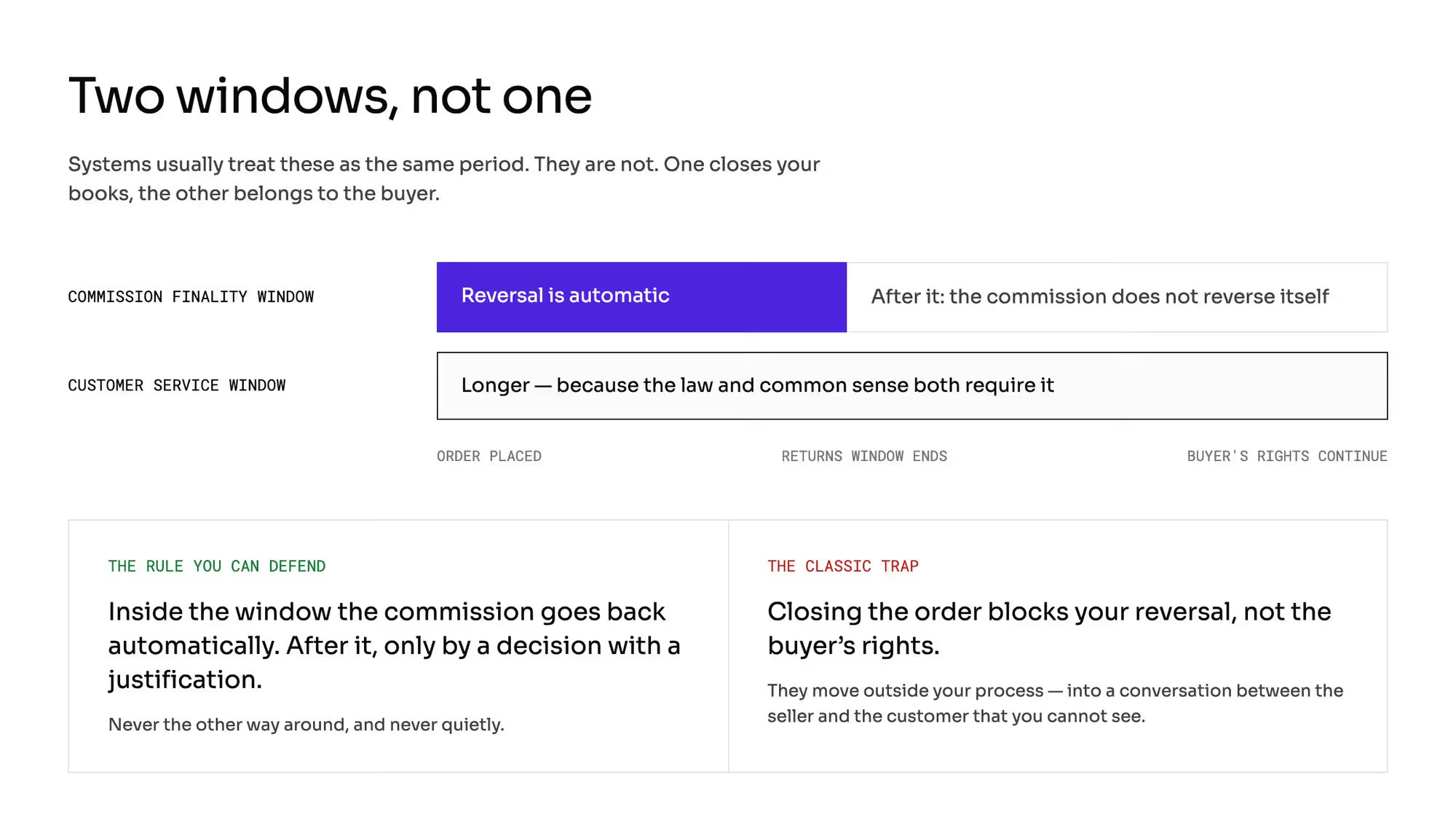
Practitioners solve this by closing the order after a set period: a closed order blocks a refund run through the platform, so it also blocks the reversal of the commission. That works in the books, and it is a classic trap in the relationship with the customer: the buyer's rights do not expire because your system closed a record.
They move outside your process. They end up in a conversation between the seller and the customer that you cannot see.
So separate two things that systems usually treat as one:
- The commission finality window. After it, the commission does not reverse itself.
- The customer service window. Longer, because that is what the law and common sense both require.
The rule you can defend and explain: inside the returns window the commission goes back automatically, and after that window it goes back only by a decision with a justification. Never the other way around and never quietly.
Which document does each of the 3 variants produce?
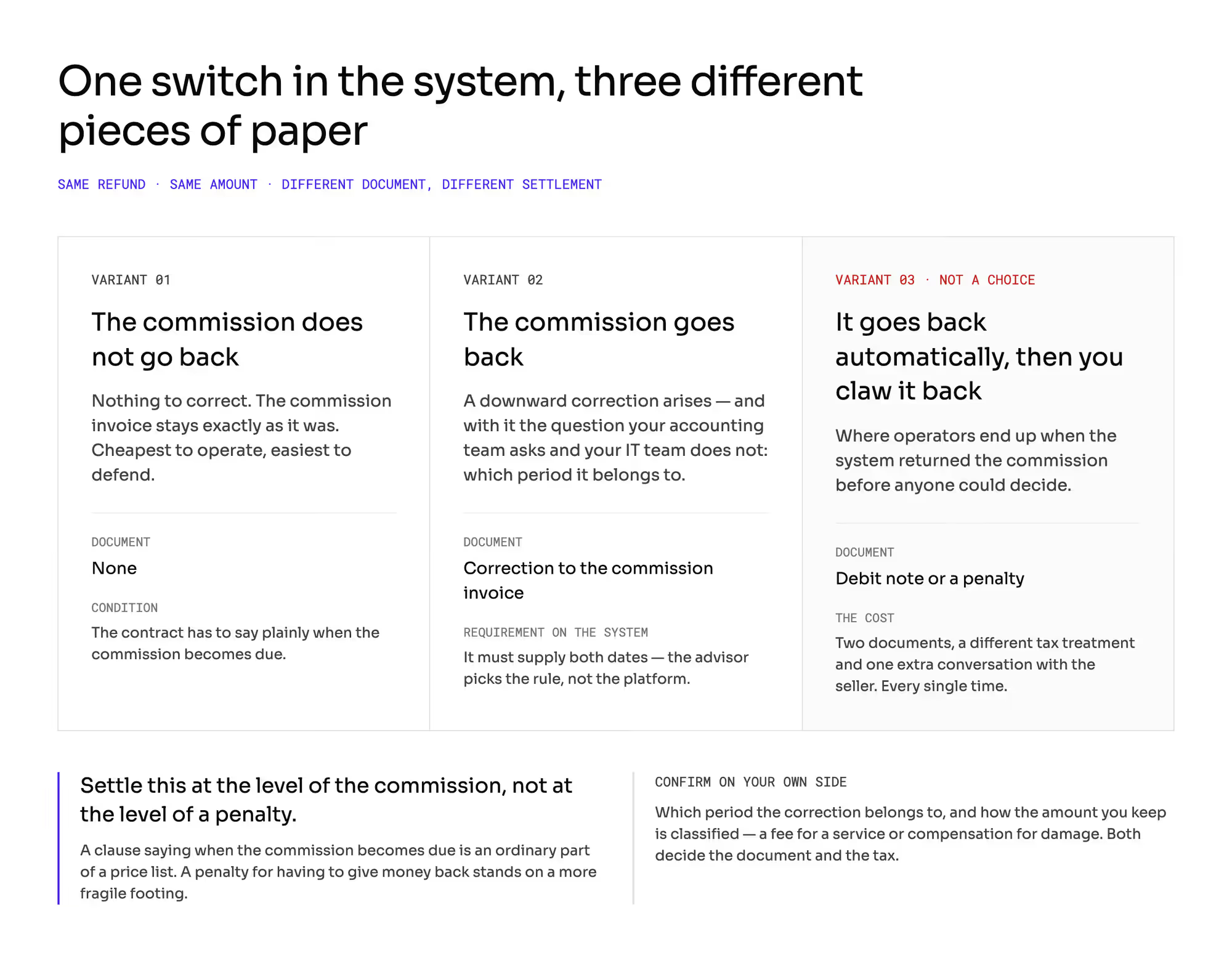
This is where the decision stops being configuration, because each of the three variants produces a different piece of paper and a different settlement.
1. The commission does not go back
There is nothing to correct. The commission invoice stays exactly as it was.
This is the cheapest to operate and the easiest to defend, on one condition: the contract has to say plainly when the commission becomes due.
2. The commission goes back
A downward correction to the commission invoice arises. Here is the nuance your accounting team asks about and your IT team does not: which period that correction belongs to.
The rule can differ depending on the cause. A correction that follows from a mistake on the original document is treated one way, and a correction that follows from a return of goods agreed later is treated another.
Documentation of the agreement on the terms of the reduction is sometimes required as well. Confirm this with a tax advisor for your own country.
Then put a requirement on the system that it can supply both dates, because your advisor picks the rule and the platform only has to be able to follow it.
3. The commission goes back automatically and you claw it back
Operators end up on this path because the system gave the commission back before anyone had time to decide. The recovery then goes through a debit note or a penalty, with a separate document and a different tax treatment than a correction.
The same amount, two different documents, and one extra conversation with the seller. Every single time.
It is also worth knowing that the penalty construction is sometimes legally weaker than it looks: under Polish law a contractual penalty is reserved for non-monetary obligations, so a "penalty" for a seller having to give money back stands on a fragile footing, while a clause saying when the commission becomes due is an ordinary part of a price list. Confirm that distinction with a lawyer.
Design the system so that it can represent the distinction either way.
The design principle that follows: settle this at the level of the commission.
How do the 5 situations compare?
Situation | Do the goods come back | Whose fault | The commission | What documents it | What to watch out for |
|---|---|---|---|---|---|
Withdrawal inside the returns window | yes | nobody | goes back in full | correction to the commission invoice | the payment fee stays your cost anyway |
A defect, non-conformity, a wrong shipment | yes | the seller | stays with you | no correction | needs evidence, a named decision maker and an appeal |
Cancellation for lack of stock | nothing was shipped | the seller | stays, or a cancellation fee | no correction, or a debit note | the most common case in the first months |
Compensation without a return | no | usually the seller | goes back proportionally | partial correction | the market knows both rules. Pick one and write it down |
A complaint after the returns window | yes | to be determined | a decision, not an automatic reversal | correction carrying its source period | touches a closed period |
What does the marketplace commission on a refund decide?
1. The financial model
Your effective commission is the rate reduced by the refunds you give back and by the fees you never recover. If your business case says "12% of GMV," it is overstated, and that is one of the two or three largest corrections that document will ever take.
2. Reserves and a negative balance
A "the commission always goes back" policy combined with splitting the money at the payment provider means that, at the moment of the refund, the money is already with the seller and the obligation is with you. Without a reserve or an offset against future payouts, what is left is debt collection.
3. Closing the order
The date after which an order closes stops being a technical parameter, because it marks the end of your exposure to a commission reversal.
4. Settlements and the ledger
Each of these decisions produces a line on a seller's statement. If the seller cannot read why they received €120 less, your policy is, to them, indistinguishable from a bug.
How do you settle the commission on a refund? 5 decisions and 5 questions
Five decisions that are yours to make:
- Is the commission a share of the sale or a fee for a service? Everything else follows from that.
- What is the default rule, and what is the closed list of reasons that justify an exception? Deciding case by case does not scale at three hundred refunds a week.
- How long the commission finality window lasts and how it differs from the customer service window.
- What happens on a partial refund without a return.
- Who decides fault and how a seller appeals.
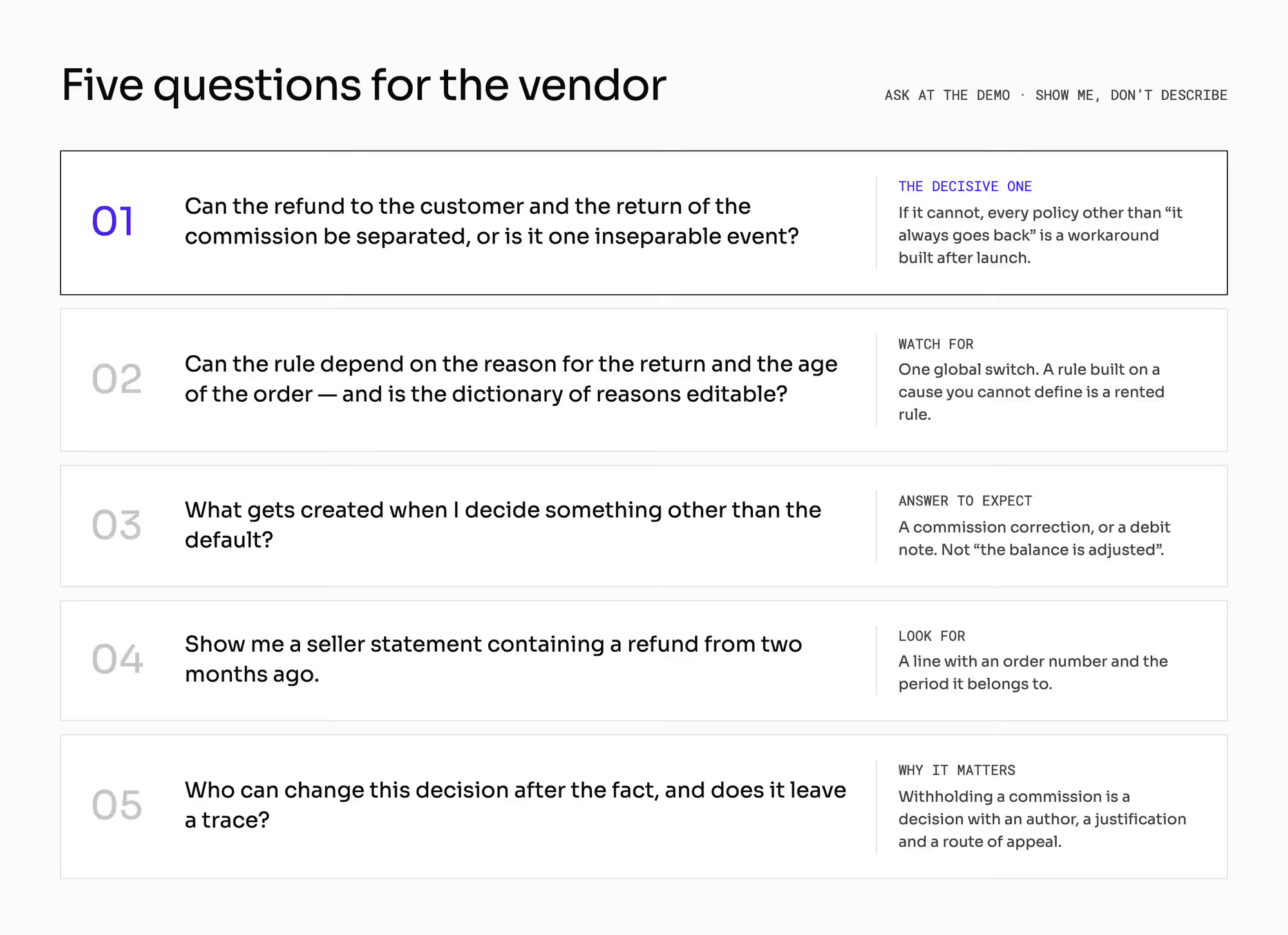
Five questions for the vendor, best asked at the demo, with a request to be shown on screen:
- Can the refund to the customer and the return of the commission be separated, or is it one inseparable event? This is the decisive question. In implementations we know of, it is sometimes a single event that cannot be interrupted, and then any policy other than "it always goes back" is a workaround built after launch.
- Can the rule depend on the reason for the return and on the age of the order, or is there one global switch? And is the dictionary of return reasons editable?
- What gets created when I decide something other than the default: a commission correction or a debit note?
- Show me a seller statement containing a refund from two months ago. You want to see a line with an order number and the period it belongs to.
- Who can change this decision after the fact, and does it leave a trace?
Which mistakes do operators make about the marketplace commission on a refund?
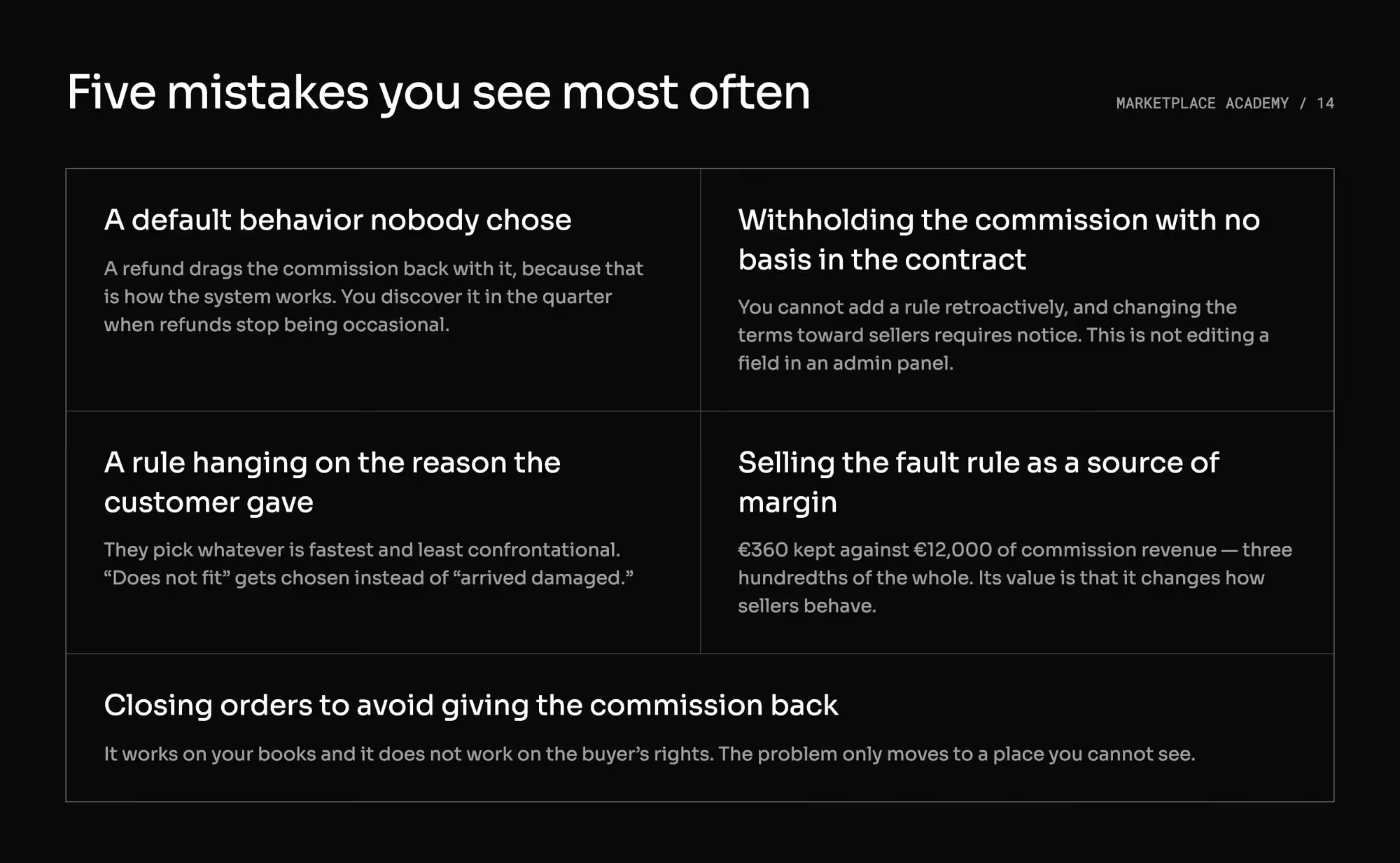
1. A default behavior nobody chose
A refund drags the commission back with it, because that is how the system works. You discover it in the quarter when refunds stop being occasional.
2. Withholding the commission with no basis in the contract
You cannot add a rule retroactively to orders that have already been placed, and changing the terms toward sellers requires notice and gives them the right to leave. This is not editing a field in an admin panel.
3. A rule hanging on the reason the customer gave
The customer is not filling in that form to establish who pays.
4. Selling the fault rule as a source of margin
The numbers do not back that up. Its value is that it changes how sellers behave.
5. Closing orders to avoid giving the commission back
It works on your books, and it does not work on the buyer's rights. The problem only moves to a place you cannot see.
What do you have to settle yourself about the commission on a refund?
This guide does not settle where the money for the refund itself comes from. It says nothing about whether that money leaves the seller's balance, a reserve, or your own pocket, or what happens when the balance is empty.
That is a separate mechanism and a separate article.
This guide is not legal or tax advice. Two things have to be confirmed on your own side: which period the commission correction belongs to and how to classify the amount you keep.
The choice there is between a fee for a service and compensation for damage, and it determines both the document and the tax. The third thing is whether the clause is admissible at all in your contract with sellers.
This article gives no thresholds, rates, or dates, because they change faster than the text does. It gives the mechanism and the consequence.
What remains is narrower, and it is enough to decide on: you can say at which moment your commission is earned, and point to the document that records it. Surprisingly few teams can do that in the week before launch.
Summary: How do you settle the commission on a refunded order?
Answer one question before anything else: is the commission a share of the sale, or a fee for the intermediation service? Then set a default rule, a closed list of reasons that justify an exception, and a commission finality window that is separate from the customer service window.
Ask a vendor to separate the refund to the buyer from the reversal of the commission, on screen. Talk to a marketplace expert if you want the ten questions sharpened before the demo.
Frequently asked questions on the marketplace commission on a refund
Does the marketplace commission go back on a refund?
Only if you decide that it does, and most platforms decide it by default. If the commission is your share of the sale, it goes back when the sale is unwound.
If it is a fee for the intermediation service, that service was performed whether or not the goods stayed with the buyer, so there is nothing to return. Both positions exist in the market.
Can a marketplace keep the commission when the seller is at fault?
Yes, provided the contract said so before the order was placed. You cannot add the rule retroactively, and changing your terms toward business sellers requires notice and gives them the right to leave.
The decision also needs an author, a justification, and a route of appeal, or the first dispute goes to the seller.
Which period does a commission correction belong to?
That depends on why the correction arose, and it is a question for a tax advisor. A correction following an error on the original document is treated differently from one following a return agreed later.
Build the system so it can supply both dates, because your advisor picks the rule and the platform only has to follow it.
Ready to build?
If you want to establish when your commission is earned and record it so that the contract, the seller terms and the system all agree, let's talk.