
Marketplace Refunds: Who Pays for Them and Out of What?

A refund looks like a purchase run backwards, which is why almost nobody designs it separately. It is the exact moment a marketplace discovers that the money it owes the buyer is not physically there.
The clock on giving it back is already running.
This article is about one thing: where the money for a refund comes from and which way you send it. What happens to the commission is settled by the next chapter.
A card dispute is a different story, with a chapter of its own.
A marketplace refund is a payment in the other direction, and the money for it often has to come from somewhere other than the seller who owes it. Your obligation to the buyer starts the moment they are entitled to their money back, while the seller's share may already have left in a payout. Four sources can cover that gap, and which one you end up using was settled when you set your payout cycle.
This article breaks down:
- Why can a marketplace refund fail?
- Which 4 sources fund a refund after the seller was paid?
- How do you calculate a partial refund?
- Which shipping costs do you refund?
Key insights
- A refund is a payment in the other direction. The obligation arises first, and the transfer comes later, so a failed refund leaves a debt toward the buyer.
- Four sources fund a refund. They differ in who carries the risk if the seller never pays it back.
- The refund window belongs to the payment method, and your obligation to refund outlives it. That gap is what makes a backup rail necessary.
- A cart discount recorded as one line makes partial refunds impossible to calculate, and there is no repairing it afterwards.
- "Refund of shipping" hides two different costs: delivery to the buyer and the return to the seller. Each needs its own rule, written into your terms.
Why can a marketplace refund fail?
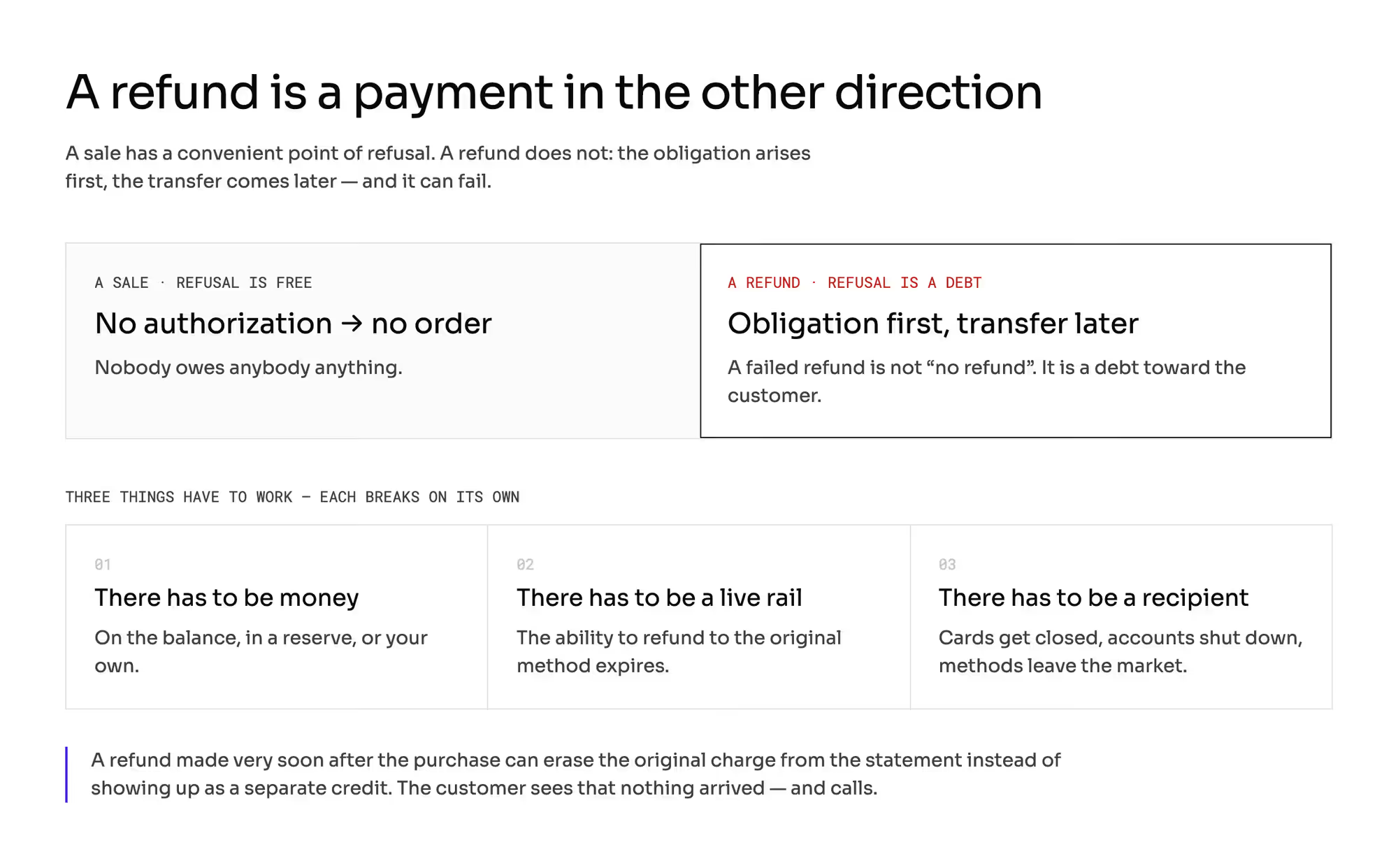
A sale has a convenient point of refusal: the bank does not authorize, there is no money, no order, and nobody owes anybody anything. A refund works the other way around.
The obligation arises first, the transfer comes later. A failed refund does not mean "there was no refund." It means a debt toward the customer.
For a refund to land, three independent things have to work, and each breaks on its own:
- There has to be money. On the balance, in a reserve, or your own.
- There has to be a live rail. The ability to refund to the original payment method expires.
- There has to be a recipient on the other side. Cards get closed, accounts shut down, payment methods pulled from the market.
A refund to a card that no longer exists comes back to you. That can take a few weeks, and then you have to arrange another route.
There is a surprise in the other direction too: a refund made very soon after the purchase can erase the original charge from the statement instead of showing up as a separate credit. The customer sees that nothing arrived, and calls.
One order, one refund: the worked example
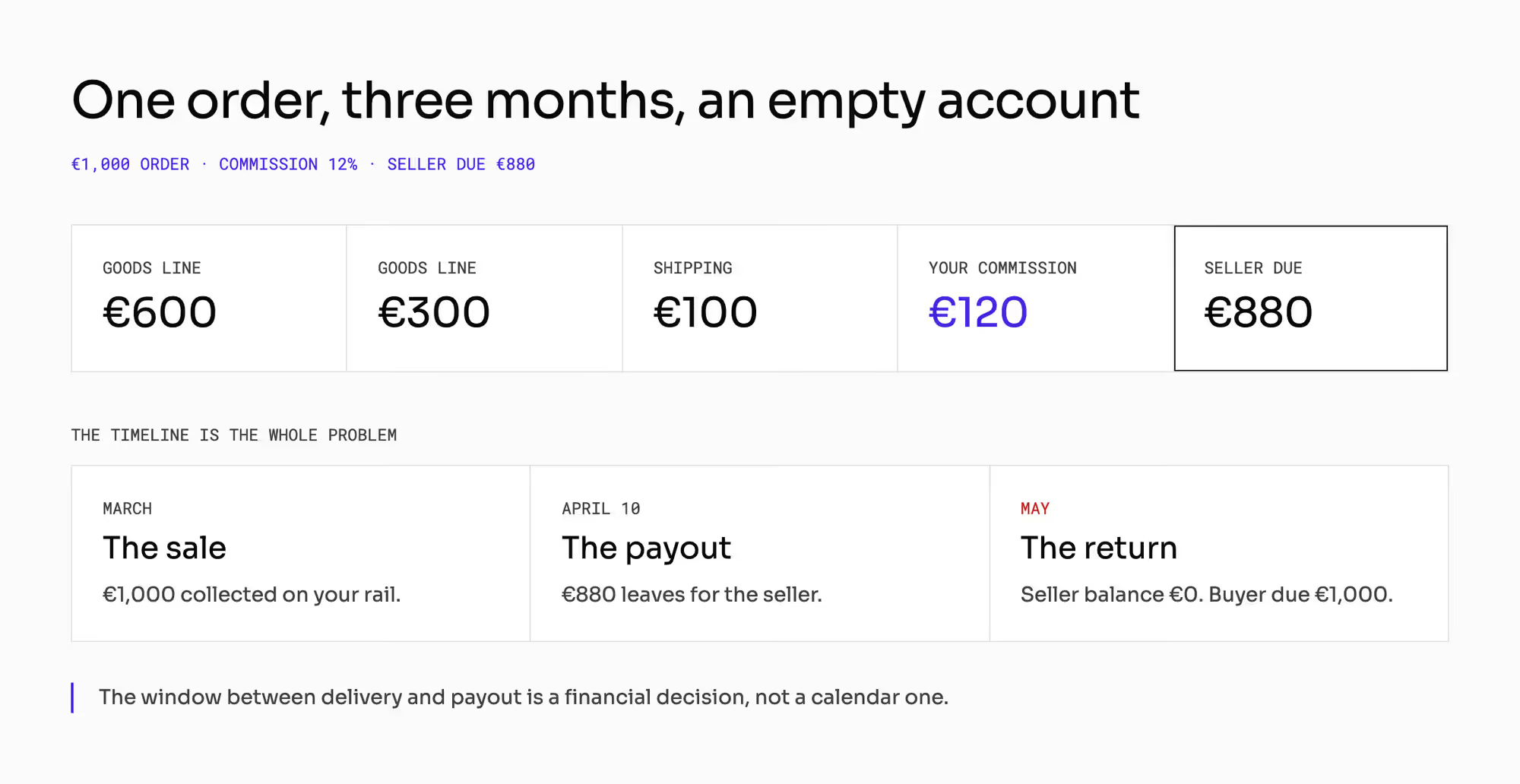
An order worth €1,000: two goods lines, one at €600 and one at €300, plus €100 for shipping. The commission is 12%, so €120.
The seller is due €880.
The sale is in March. The payout of €880 went out on April 10.
The customer files a return in May.
That seller's account with you is empty. The buyer is due €1,000.
Which 4 sources fund a refund after the seller was paid?
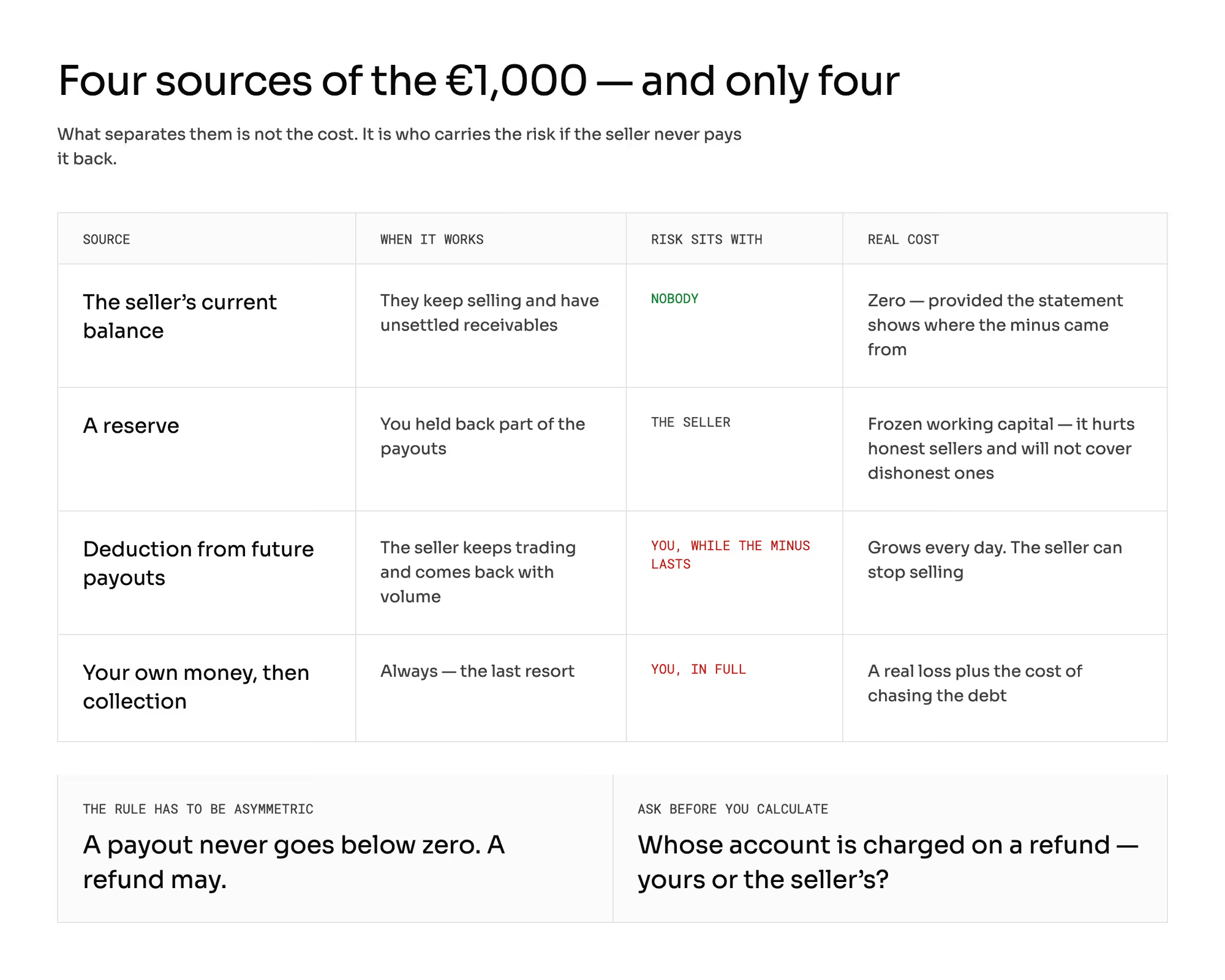
There are four sources. They differ less in cost than in who carries the risk if the seller never pays it back.
You do not choose the source at the moment of the refund. You chose it earlier, when you set the payout cycle, the maturing condition for receivables, and the size of the reserve.
The refund only reveals what you picked. That is why the window between delivery and payout is a financial decision rather than a calendar one.
The rule in the system has to be asymmetric: a payout never goes below zero, a refund may. You cannot pay out money that is not there; you can take it away when it has to go back to the customer.
If the system will not hold a minus, somebody eventually makes a manual correction outside the books. That is worse than the minus.
The routes for recovering what you are owed get more room in "Marketplace Chargebacks: Who Carries the Cost, and What if the Seller's Balance Is Empty?" on card disputes, where the same mechanism is stretched to its limit.
And the surprise to clear with your payment provider before you calculate anything: in arrangements where the provider splits the payment, a refund is sometimes charged to the platform's account by default rather than the seller's. Recovering it from the seller is then a separate operation you have to instruct deliberately.
Anyone who does not check this spends the first months funding other people's refunds out of their own account.
Why does the buyer's refund deadline not wait for the seller?
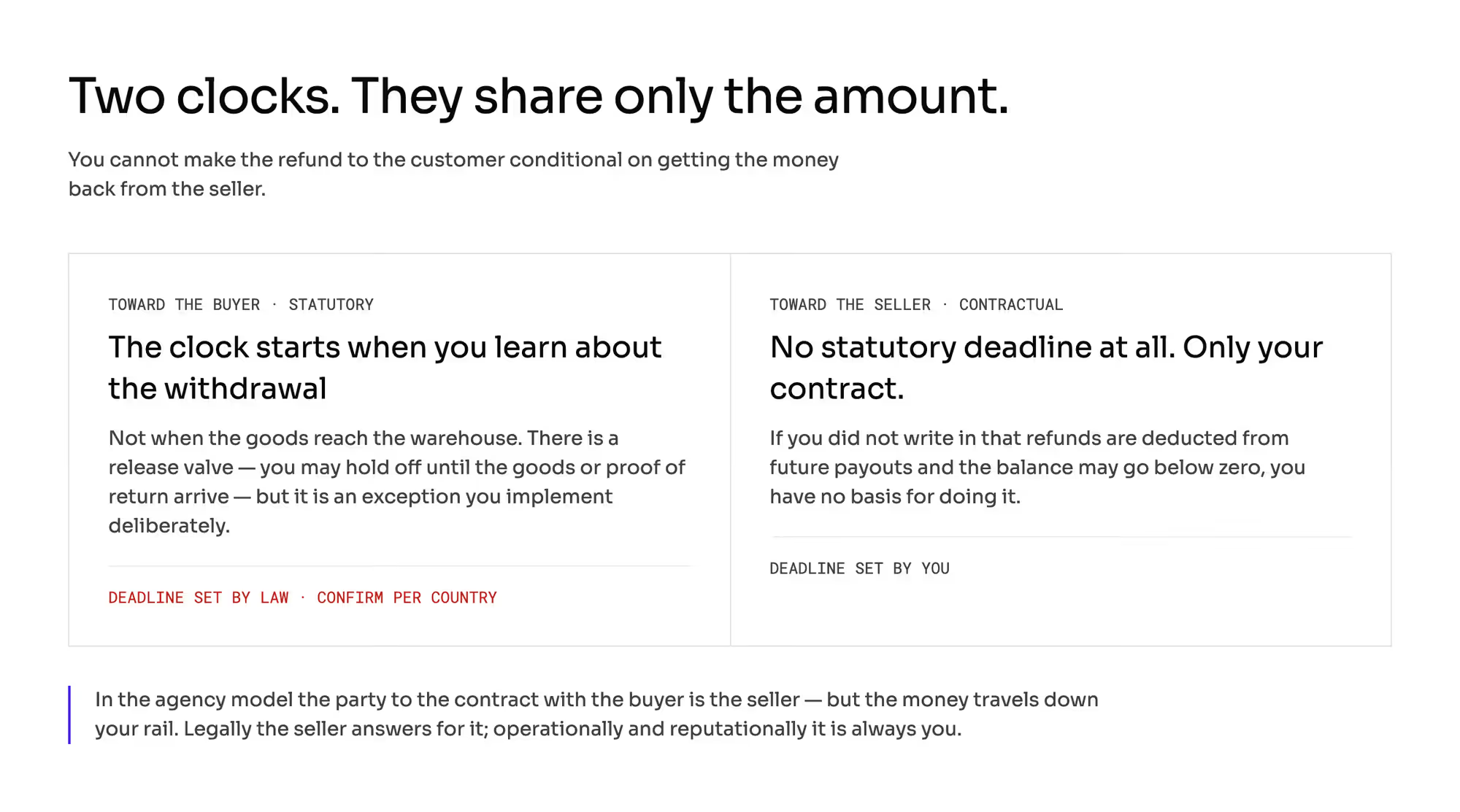
You cannot make the refund to the customer conditional on getting the money back from the seller. These are two processes on two different clocks. The only thing they share is the amount.
On the buyer's side, EU consumer law is unforgiving. When the customer withdraws from the contract, the clock on giving the money back starts at the moment you found out about the withdrawal rather than when the goods came back into the warehouse.
There is a release valve: you may hold off until you receive the goods or proof that they were sent back. It is an exception, though, and has to be implemented deliberately. Confirm the deadlines and exceptions for your country with a lawyer.
On the seller's side, there is no statutory deadline at all. There is your contract. If you did not write into it that you deduct refunds from future payouts and that the balance can go below zero, you have no basis for it.
And what surprises operators of the agency model: the party to the contract with the buyer is the seller, but the money travels down your rail. The buyer does not know that difference and does not have to.
Legally, the seller answers for it; operationally and reputationally, it is always you.
What is a refund window, and who sets it?
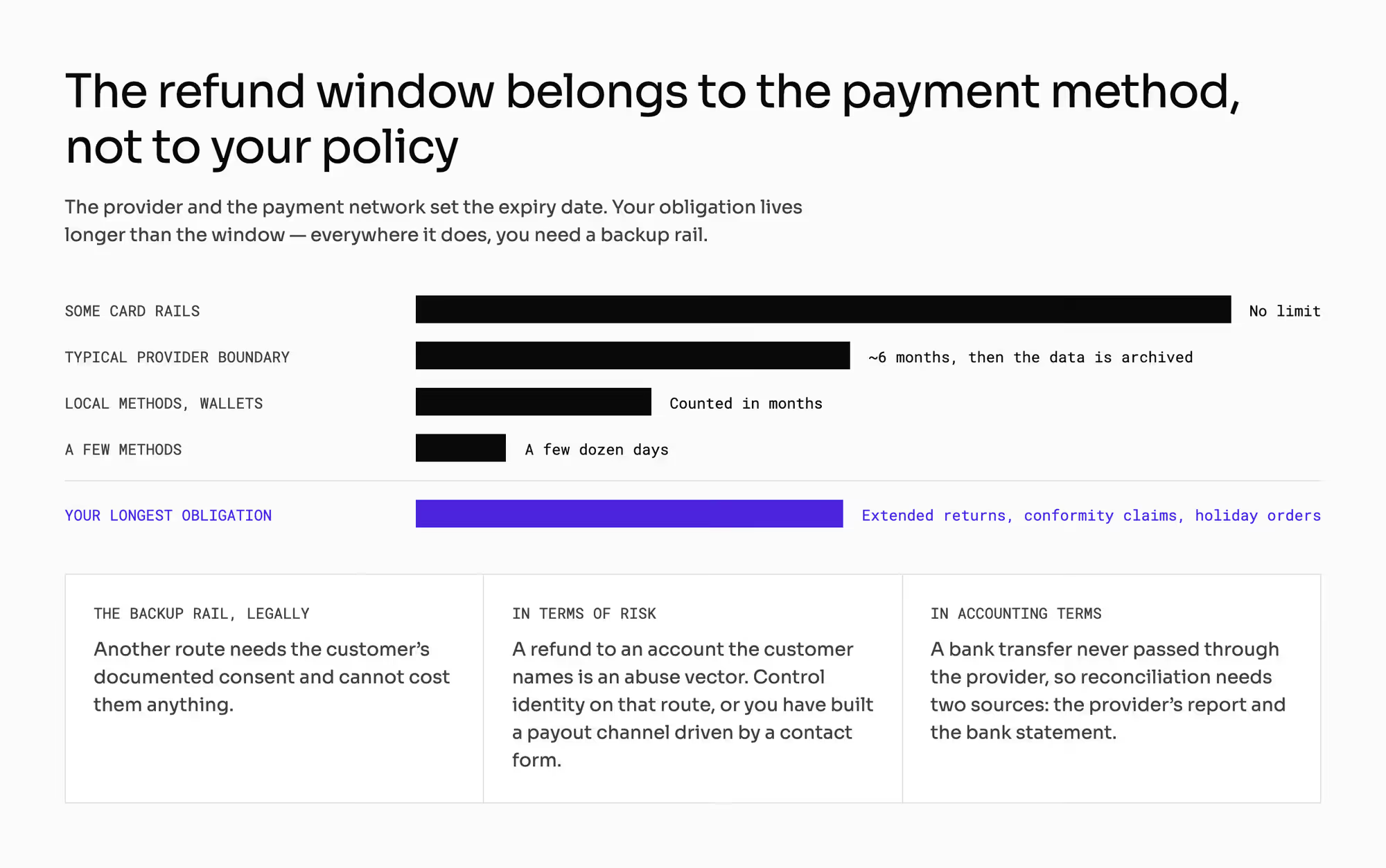
This is where the whole arrangement breaks most often. The ability to refund to the original payment method has an expiry date.
That date is set by the provider and the payment network rather than by you. The spread is enormous: some card rails have no limit at all; with some local methods and wallets it is counted in months, and with a few it comes down to a few dozen days.
At many providers, the practical boundary is roughly half a year: after that the transaction data is archived, and there is nothing to attach the refund to.
Your obligation lives longer than the window. An extended returns policy, claims that the goods are not in conformity, a complaint that drags on, a return of an order placed before the holidays and settled in the spring: that is the normal spread of events rather than a set of edge cases.
Hence a one-page exercise: set the longest realistic time in which you can be forced to give money back against the window of every payment method you accept. Everywhere the first number is larger, you need a backup rail.
Not "it would be nice to have." You need one.
When do you need a backup refund rail?
The backup rail is usually a bank transfer. It looks trivial and costs you in three places at once.
1. Legally: the same method the customer paid with
The refund is supposed to travel by the same method the customer paid with. Any other route requires their express consent and cannot cost them anything. That consent has to be documented rather than assumed because they gave you an account number.
2. In terms of risk: a payout channel you did not design
A refund to an account the customer names is a known vector for abuse and a subject of scrutiny under anti-money-laundering rules; that is why the default rule in payments is a refund to the source only. If you open a second route, you have to control the recipient's identity on it. Otherwise, you have built a payout channel driven by a contact form.
3. In accounting terms: a refund your provider never sees
This is the cost nobody thinks about. A refund by bank transfer will not appear in the settlement report from your payment provider, because it never passed through them.
Reconciliation therefore has to accept two independent sources of refunds: the provider's report and the bank statement.
Then there is the entry itself. A refund is a new entry rather than a fix to the previous one, and it needs two dates: when it was posted and which period it belongs to.
Our €1,000 leaves the account in May and relates to a sale from March. Without that second date, March stays in the books at €1,000 forever.
How do you calculate a partial refund? 3 questions
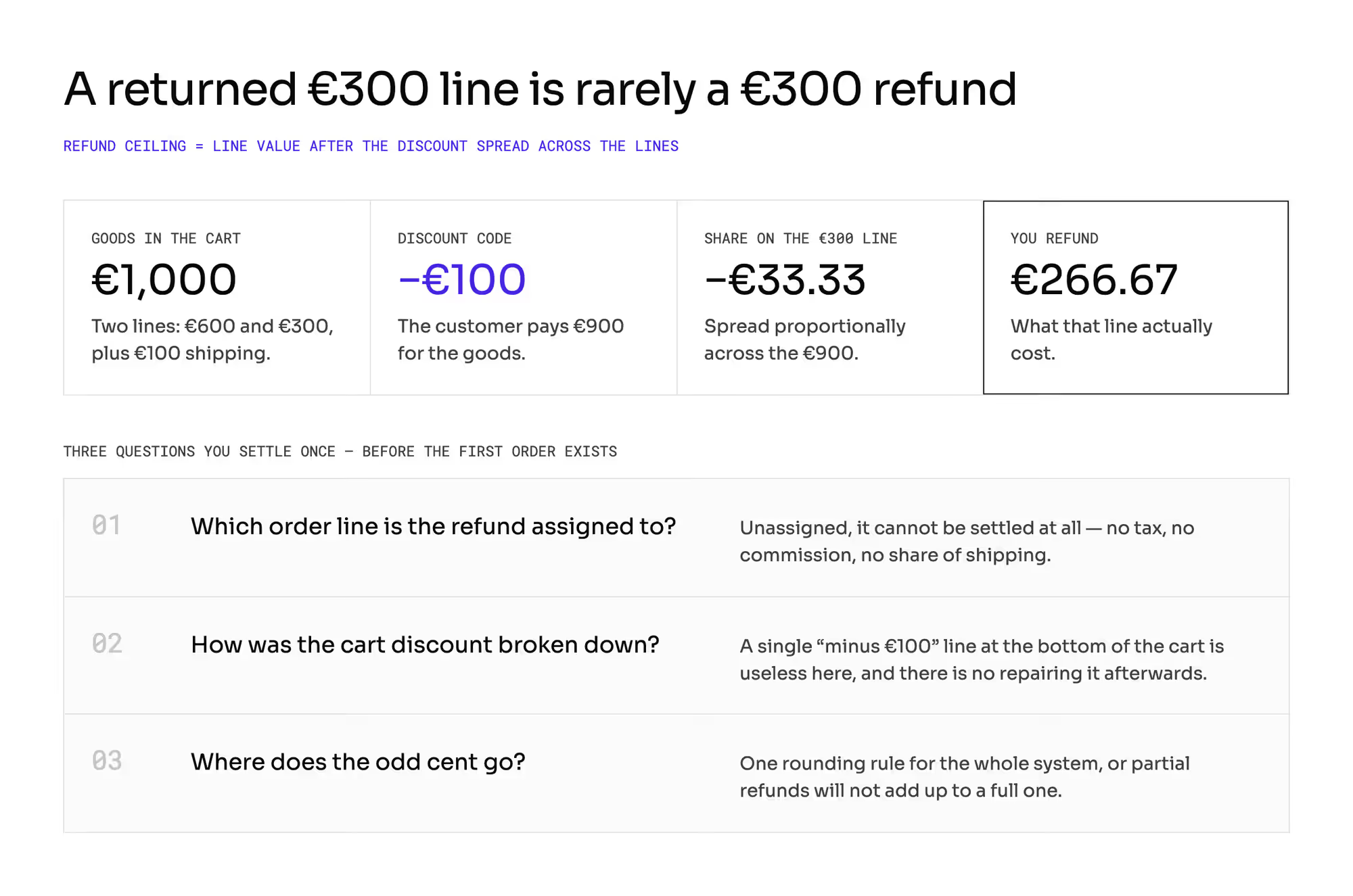
The customer sends back one line worth €300. It looks like you refund €300. That is rarely the case.
1. Which line do you assign the refund to?
A refund not assigned to an order line cannot be settled at all. You will not calculate tax on it, commission, or a share of the shipping. The ceiling is the value of the line after discounts.
2. How did the cart discount spread out?
Add a discount code worth €100 on the goods to the example: the customer pays €900 instead of €1,000. They send back the line worth €300.
Do you refund €300? No.
You refund what that line actually cost: the discount spread proportionally across the €900 of goods takes €33.33 off it, so the refund is €266.67. You can only calculate that if the discount was broken down onto the lines when the order was placed.
A discount recorded as a single line reading "minus €100" at the bottom of the cart is useless on a partial refund, and there is no way to repair it afterwards.
3. Where does the odd cent go?
Splitting an amount and its tax across lines almost never comes out even. There has to be one rounding rule for the whole system.
Otherwise, the partial refunds will not add up to the amount of a full refund.
A separate case: a refund with no return of the goods. On cheap or damaged lines, the cost of collection is sometimes higher than the value of the thing, so the market increasingly refunds and leaves the goods with the customer.
The consequence for the system: the money goes back, the goods do not return to stock, and the settlement with the seller has to show this was deliberate.
Which shipping costs do you refund, and who pays the return?
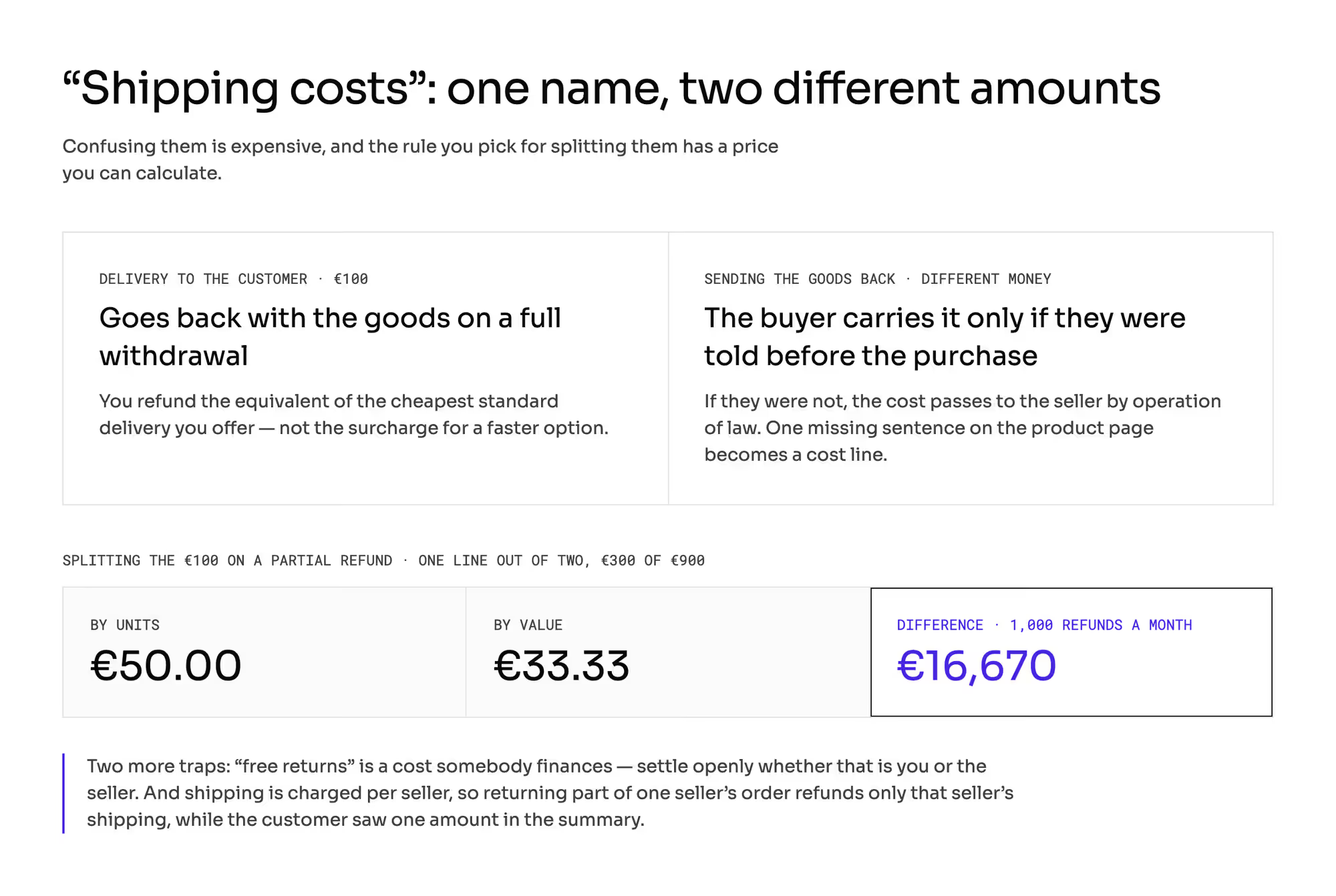
Two completely different amounts hide behind the phrase "refund of shipping costs," and confusing them is expensive.
1. Delivery to the customer
On withdrawal of the whole order, it goes back together with the price of the goods, with one limitation: you refund the equivalent of the cheapest standard delivery you offer, and not the surcharge for a more expensive option.
On a partial refund, the settlement is proportional, and this is where the choice of rule starts to cost money. Our €100 can be split by units (one line out of two, so €50) or by value (€300 out of the €900 of goods, so €33.33).
The difference on a single refund is €16.67. At a thousand refunds like that a month it is €16,670.
There has to be one rule, written into your terms and identical in the system, and confirm its shape with a lawyer, because national practice varies.
2. The return to the seller
By default, the buyer carries it, but only if they were told before the purchase. If they were not, the cost passes to the seller by operation of law.
One missing sentence on the product page turns into a cost line here.
And if you promise "free returns," then somebody is paying for them, and you have to settle openly who that is: you, or the seller whose offer came back. In practice, systems rarely have a separate settlement line for this cost, so it lands in a spreadsheet next to the platform, and afterwards nobody can say what that promise cost.
Something easy to miss with a cart from several sellers: shipping is charged per seller, so returning part of one seller's order refunds only that seller's shipping. The customer saw one amount in the summary and will expect all of it.
What do marketplace refunds change about your other decisions?
1. The returns policy stops being a customer service decision
The length of the returns window translates directly into how many times a year you give money back outside the payment rail, and how long you hold seller money.
2. The payout cycle and the reserve are instruments for financing refunds
The mechanics are in ("How Marketplace Seller Payouts Work: Cycles, Holds, and Reserves"). A shorter cycle means happier sellers and a larger share of refunds covered from your own pocket.
The same decision, seen from the other side.
3. A refund generates a document as well as a transfer
There is a credit note and an assignment to the right period ("Marketplace Ledger: Why Balances Must Match the Transfer" and "Marketplace Payment Reconciliation: How to Match Platform, Payment Provider, Bank, and Your Accounting"). On cross-border sales there is also the tax accounting for a transaction that never took place.
And the most contentious question is still ahead: what happens to your commission when the sale is reversed. That is the subject of the next chapter.
How do you check marketplace refunds? 6 questions
Three for the payment provider and three for the platform vendor. All of them have hard answers rather than "of course we support refunds."
- What is the refund window for each payment method I will accept? Ask for a table rather than an assurance.
- Whose account gets charged on a refund? Mine or the seller's? And what happens when there are no funds on it?
- On a refund, does your fee from the original transaction come back? At most providers, it does not, and that is your real cost on every refund.
- Will the platform hold a negative seller balance and deduct it automatically from the next payouts? If not, somebody makes a manual correction after every refund that follows a payout.
- Can a refund be assigned to an order line, with the cart discount broken down and a share of the shipping cost included?
- Can a refund by bank transfer, outside the payment provider, be recorded as a full refund with a reference back to the order? If not, your reconciliation drifts apart by exactly that amount.
Which mistakes do operators make about marketplace refunds?
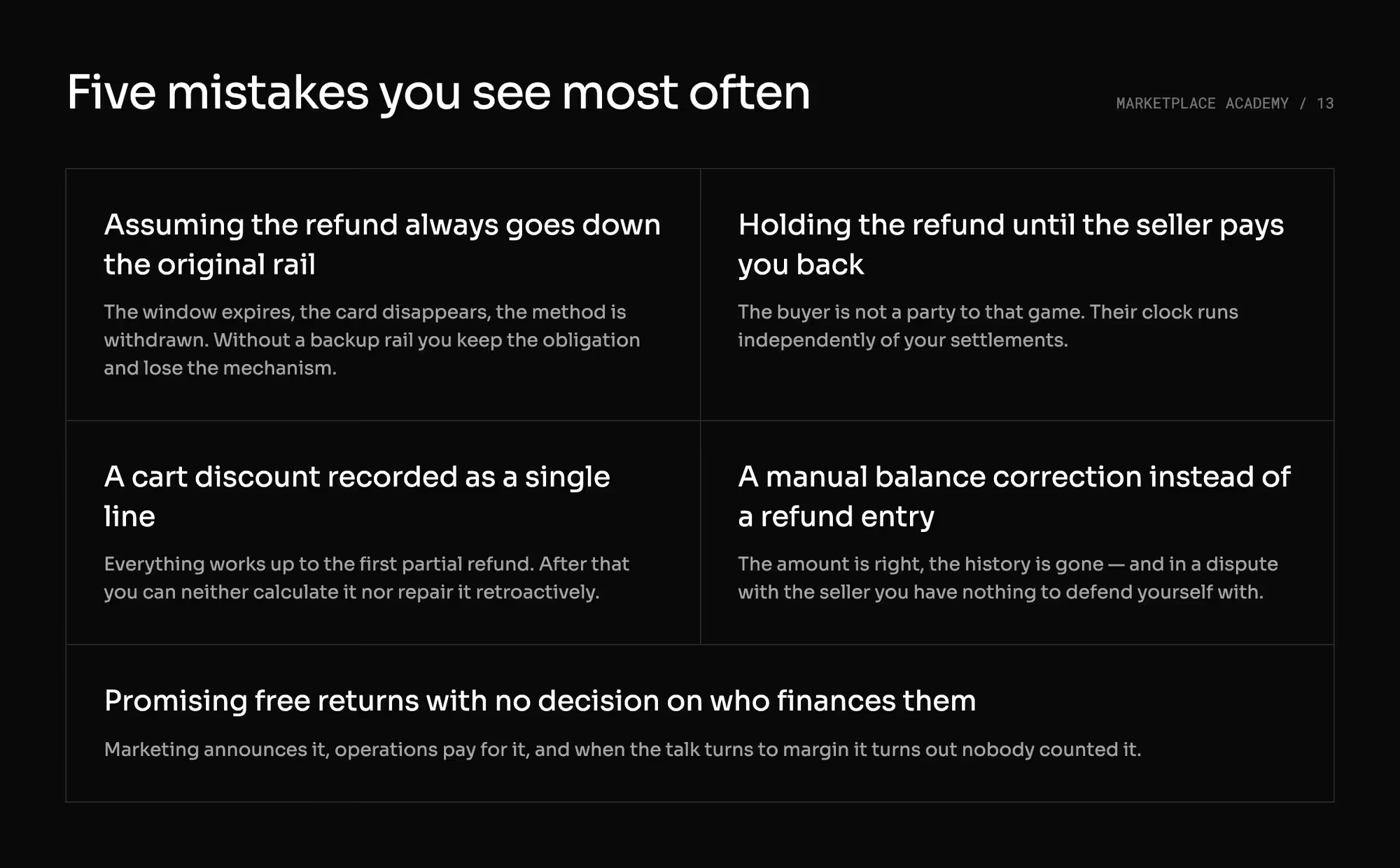
1. Assuming the refund will always go down the original rail
The window expires, the card disappears, the payment method is withdrawn. Without a backup rail, you are left with the obligation and no mechanism.
2. Holding the refund until you get the money back from the seller
The buyer is not a party to that game, and the clock runs independently of your settlements.
3. A cart discount recorded as a single line
Everything works right up to the first partial refund. After that, you can neither calculate it nor repair it retroactively.
4. A manual balance correction instead of a refund entry
The amount is right, the history is gone, and in a dispute with the seller you have nothing to defend yourself with.
5. A promise of free returns with no decision on who finances them
Marketing announces it, operations pay for it, and when the talk turns to margin, it turns out nobody counted it.
What do you still have to settle yourself about marketplace refunds?
This is a map of financial mechanisms rather than a legal opinion. Confirm with a lawyer, for your country and model: refund deadlines, the range of costs subject to refund, the rules for settling delivery on a partial refund, and the requirements for refunding by a method other than the original.
The tax consequences, in particular assigning the correction to the right period, are a conversation with a tax advisor.
We also do not settle two things that follow a logic of their own: the fate of the commission on a refund and the card dispute, where the money leaves without any decision of yours. Both have a chapter of their own.
And the thing we do not know: what percentage of your refunds will fall outside the payment provider's window. That depends on your returns policy, seasonality, and how long complaints take.
Calculate it on your own data from the first quarter. One number, and it decides whether the backup rail is a process at your company or an exception.
Summary: What makes a marketplace refund work?
Money still available when the refund lands, a rail that is still open, a recipient who still exists, and an entry carrying two dates. Any one of those missing turns a refund into a manual correction outside the books.
Ask a payment provider for the refund window of every method as a table. Talk to a marketplace expert if you want the six questions sharpened before you sign.
Frequently asked questions on marketplace refunds
Who pays for a refund on a marketplace?
The seller carries the cost, and the platform usually carries the timing. If the payout already went out, the money comes from the seller's next payout, from a reserve, from a receivable you have to collect, or from your own account. Which one it is was decided when you set the payout cycle rather than when the refund arrived.
What happens if the seller has no money for a refund?
You refund the buyer anyway and recover it from the seller separately. That needs two things in place beforehand: a system that lets a seller balance go below zero, and a clause in your seller contract saying you deduct refunds from future payouts. Without the clause, you have no basis for the deduction.
How long does a marketplace have to refund a buyer?
The clock starts when you learn of the withdrawal rather than when the goods reach the warehouse. You may hold off until the goods come back or the buyer proves they were sent, but that is an exception you have to implement deliberately. Confirm the deadline for your country with a lawyer.
Ready to build?
If you want to check whether your longest refund window is covered by the windows of the payment methods you accept, let's talk.