
Product Catalog Management on a Marketplace: One Shared Page or Seller Listings?

Product catalog management on a marketplace is the decision about whether one description of a thing exists once and sellers attach offers to it, or whether every seller publishes a listing of their own.
This one decision settles three things at once: what your product page looks like, what a year of your team's work costs, and whether your sellers compete with one another at all. It usually gets made by accident, through the platform's default configuration, and you notice it only when the same pair of shoes turns out to have eight pages on your site.
This article breaks down:
- What are the 2 catalog models on a marketplace?
- Who pays for the catalog work: you, the seller, or the buyer?
- Why can some shared product pages never be bought from?
- Which 5 questions decide your catalog model?
Key insights
- One decision settles three things at once: what your product page looks like, what a year of your team's time costs, and whether your sellers compete with each other at all.
- Five sellers of one hair dryer is either a single page with five offers on it, or five pages that know nothing about each other.
- Nobody does this work for free. A shared page moves it to your team. A listing moves it to the buyer, who opens eight tabs to compare one washing machine.
- Take 80,000 offers where 15% will never match automatically. That is 12,000 items by hand, two minutes each, ten weeks of one person's time.
- Ask a vendor one question: does one product sold by four sellers have one address on your site, or four? A page you cannot buy from is the third answer.
What are the 2 catalog models on a marketplace?
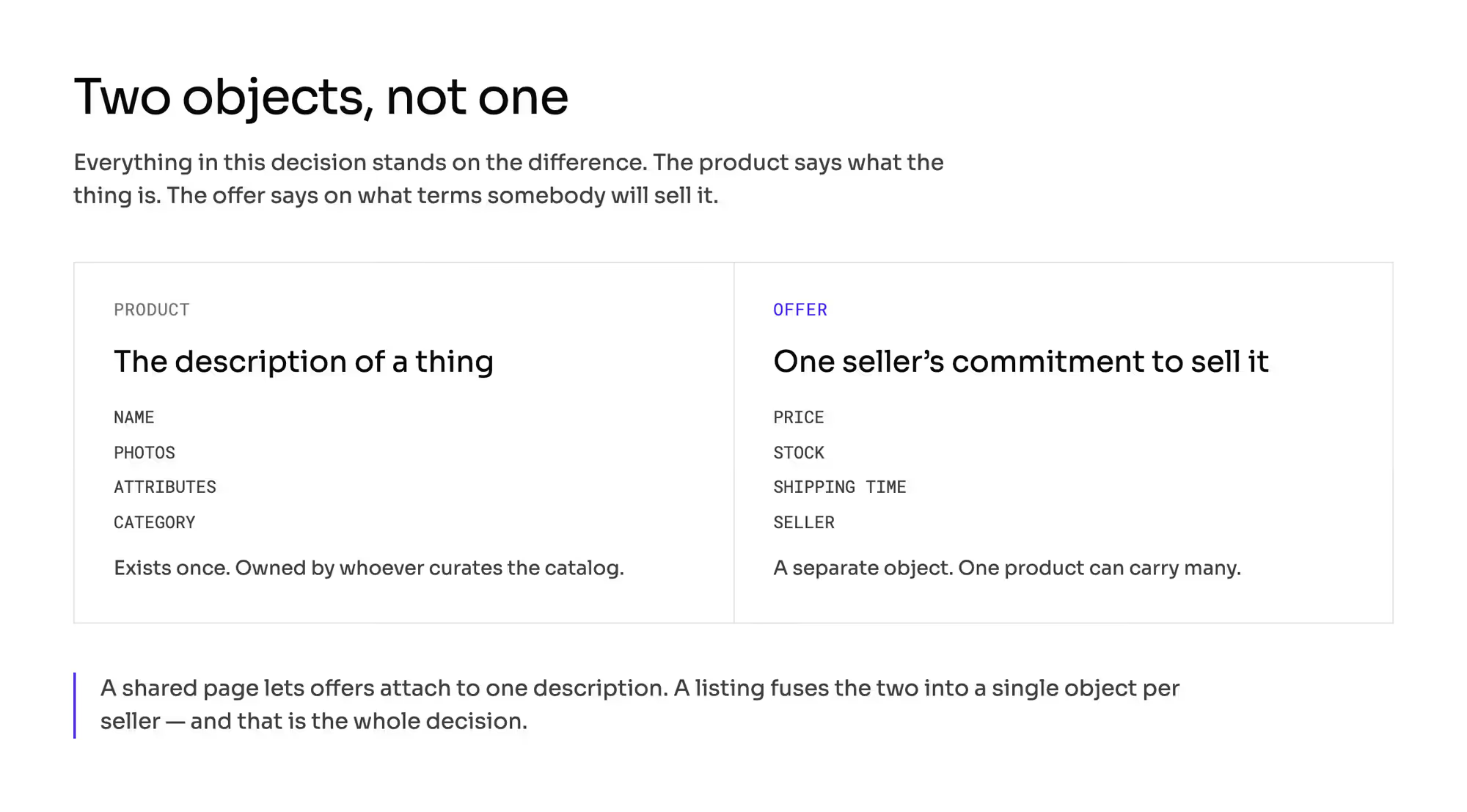
Start with two words, because everything below stands on them. A product is the description of a thing: its name, its photos, its attributes, its category.
An offer is a separate object. It is one seller's commitment to sell that thing at a specific price, with a specific stock level and a specific shipping time.
The product says what the thing is. The offer says on what terms somebody will sell it.
A shared product page is an arrangement in which the description exists once and offers attach themselves to it. The page then sells the product.
Five sellers of the same hair dryer land on one page and compete on price, delivery time, and service quality. One of them gets the default exposure, and the rest are visible next to it.
A seller listing is an arrangement in which every seller has an independent listing of their own: their own title, their own photos, their own description. The page then sells the seller.
Five sellers of the same hair dryer means five pages that know nothing about each other.
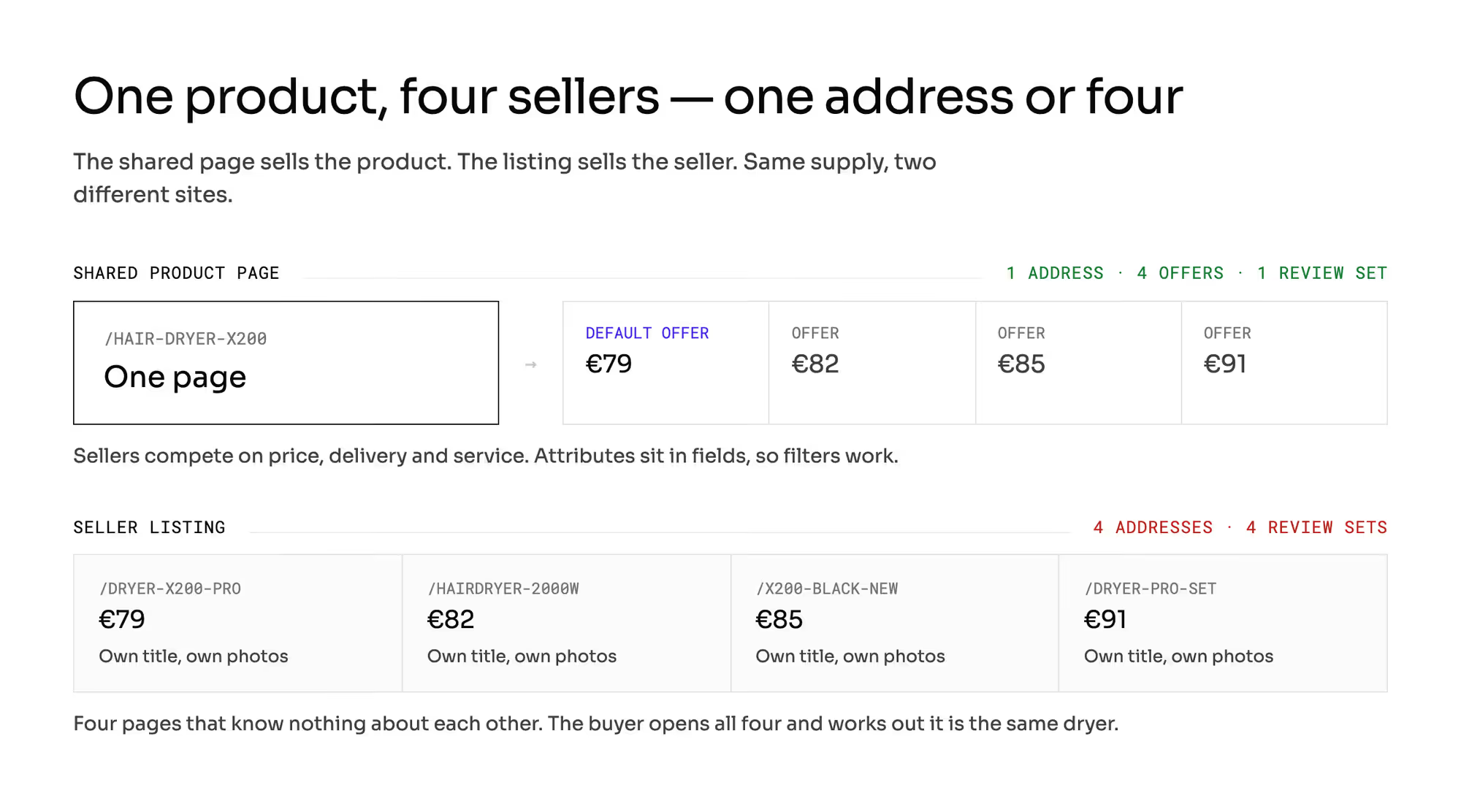
This decision goes beyond how a page looks and past tidiness in the catalog. It settles what sellers compete on for the buyer on your site.
It is also one of the most expensive decisions to reverse in the whole project. The first model is so widespread that it has its own place in the structured data standards search engines read: there is a type for "one product with many offers from different sellers," carrying the number of offers and the lowest and highest price.
What does each marketplace catalog model make possible?
The shared page gives you five things that do not exist at all without it. Comparison of offers in one place.
The choice of a default offer, meaning the one that goes into the cart in a single click. One page per product instead of five.
Reviews aggregated around the thing rather than around an advertisement. And filtering that works, because the attributes live in the fields of the page instead of inside somebody else's prose.
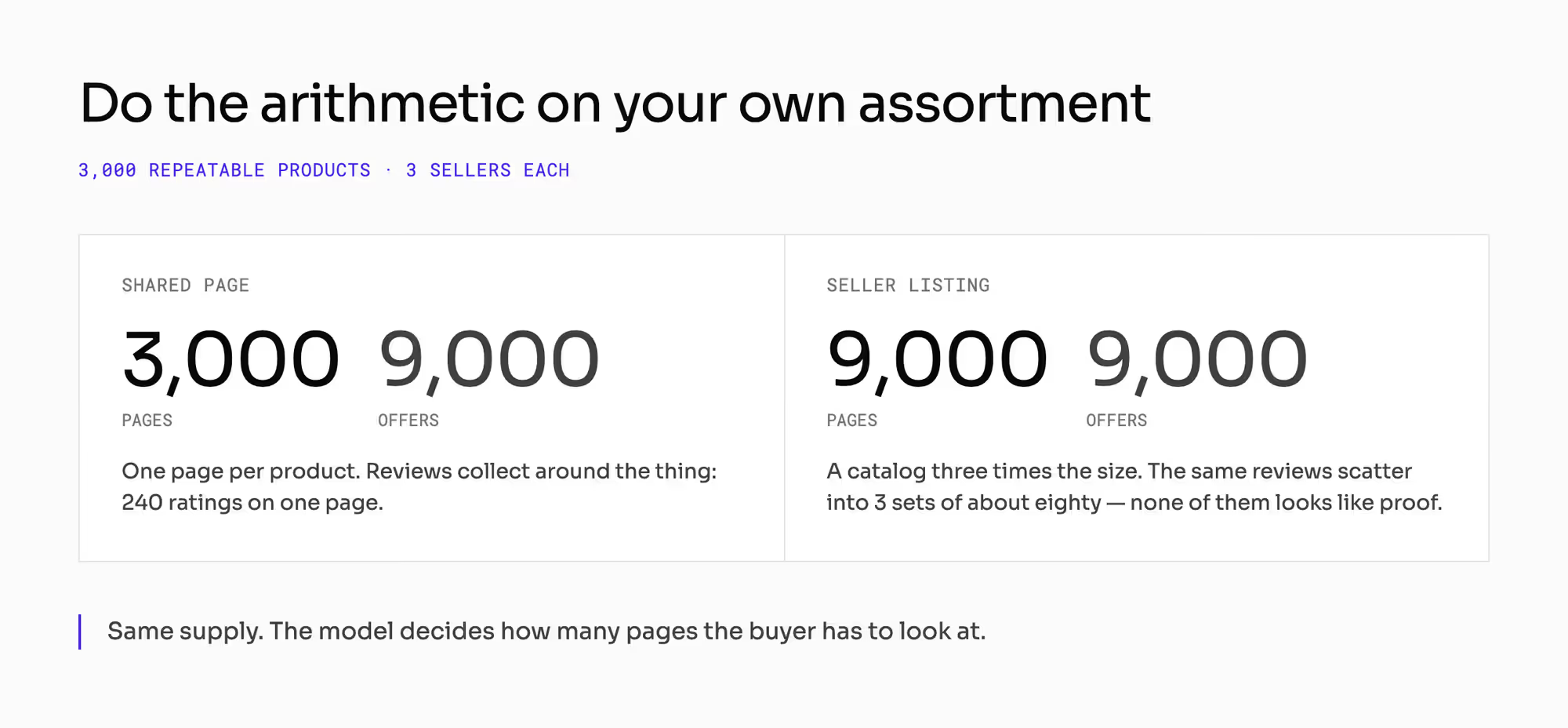
Do the arithmetic on your own assortment. Assume 3,000 repeatable products and an average of three sellers per product.
The shared page gives you 3,000 pages and 9,000 offers. The listing gives you 9,000 pages.
The same supply, a catalog three times the size.
The listing gives you three things, and they are not small ones. A seller comes in without matching anything to anything.
They post what they have, in the format they have it in. They tell their own version of the product, which is worth something wherever the sale is made, by a story rather than by a parameter.
And there are no disputes over data, because there is no shared field.
The price of that convenience sits with the buyer. To put eight offers of the same washing machine side by side, they have to open eight pages and work out for themselves that it is the same washing machine.
A "60 cm wide" filter works only where somebody typed that value into a field instead of into a sentence. The reviews scatter as well.
A product that would have 240 ratings on a shared page has, under listings, eight sets of about thirty. None of them looks like proof.
Who pays for the catalog work: you, the seller, or the buyer?
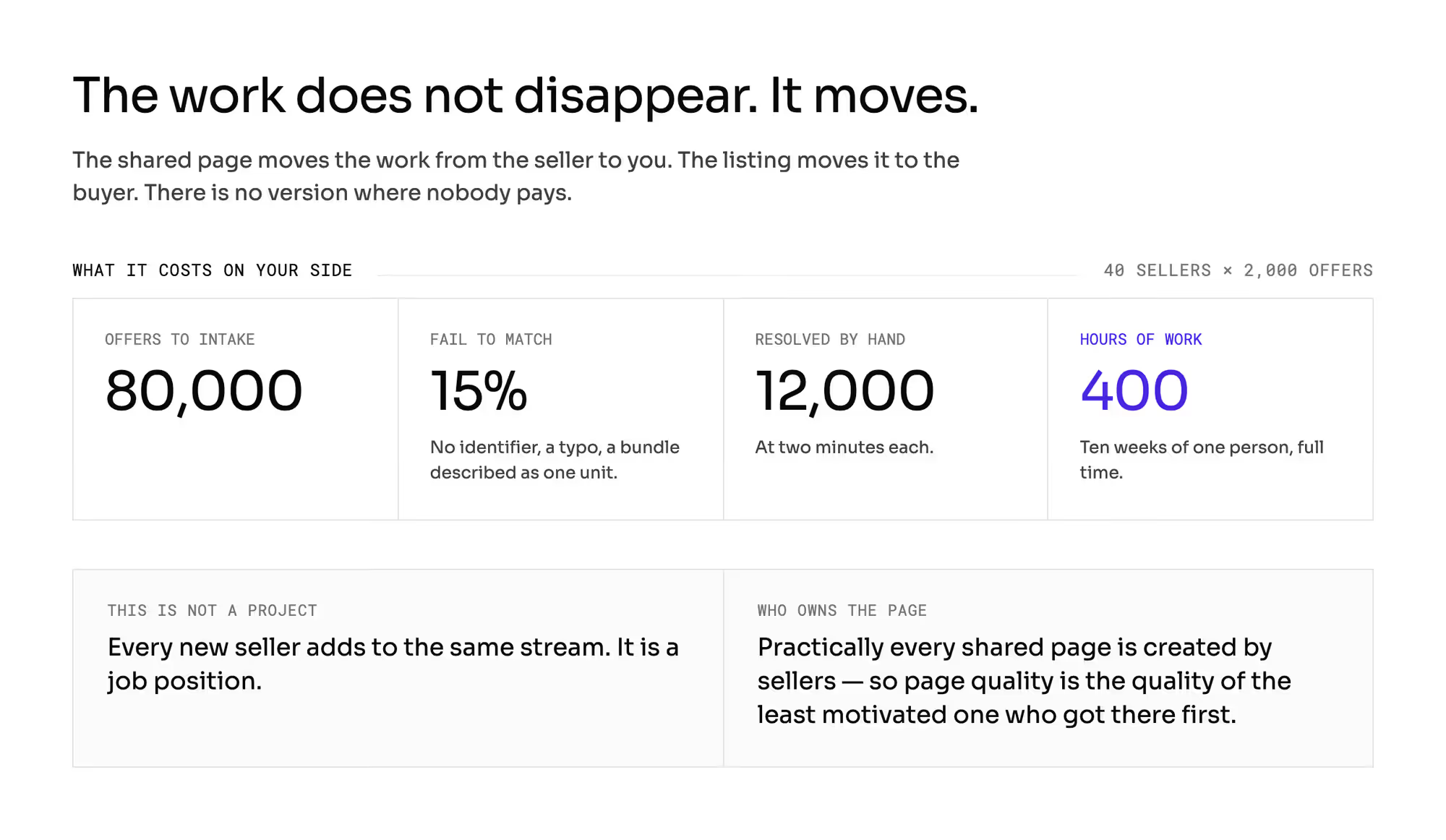
This is the heart of the decision and the part you do not see in a demo. The shared page does not remove work.
It moves the work from the seller to you, and the listing moves it to the buyer.
The work on your side can be measured. Take 40 sellers with 2,000 offers each, so 80,000 offers.
If 15% of them fail to match automatically to an existing page (no identifier, a typo, a bundle described as a single unit), you are left with 12,000 items to resolve by hand. At two minutes each, that is 400 hours, which is ten weeks of one person working full time.
That share depends on how many matching methods you implement: with the identifier alone, it often runs into double digits, while the full cascade from "Product Matching on a Marketplace: GTIN, EAN, and Where Identifiers Stop" brings it clearly lower. And that is only the intake.
Every new seller adds to the same stream, so this is not a project, it is a job position.
Then comes the question of who owns the page itself. In the implementations we know, practically every shared page is created by sellers rather than by the operator.
No operator has a team big enough to describe tens of thousands of products it does not buy. The consequence is predictable: the quality of a shared page is the quality of the least motivated seller who got there first.
The debt that grows out of that is the subject of "Catalog Debt on a Marketplace: Where It Comes From and Who Pays".
The work on the buyer's side is just as real. It simply does not sit in your budget.
You see it in conversion and in returns. Choosing the listing does not save work. It buys that work with somebody else's attention.
Why can some shared product pages never be bought from?
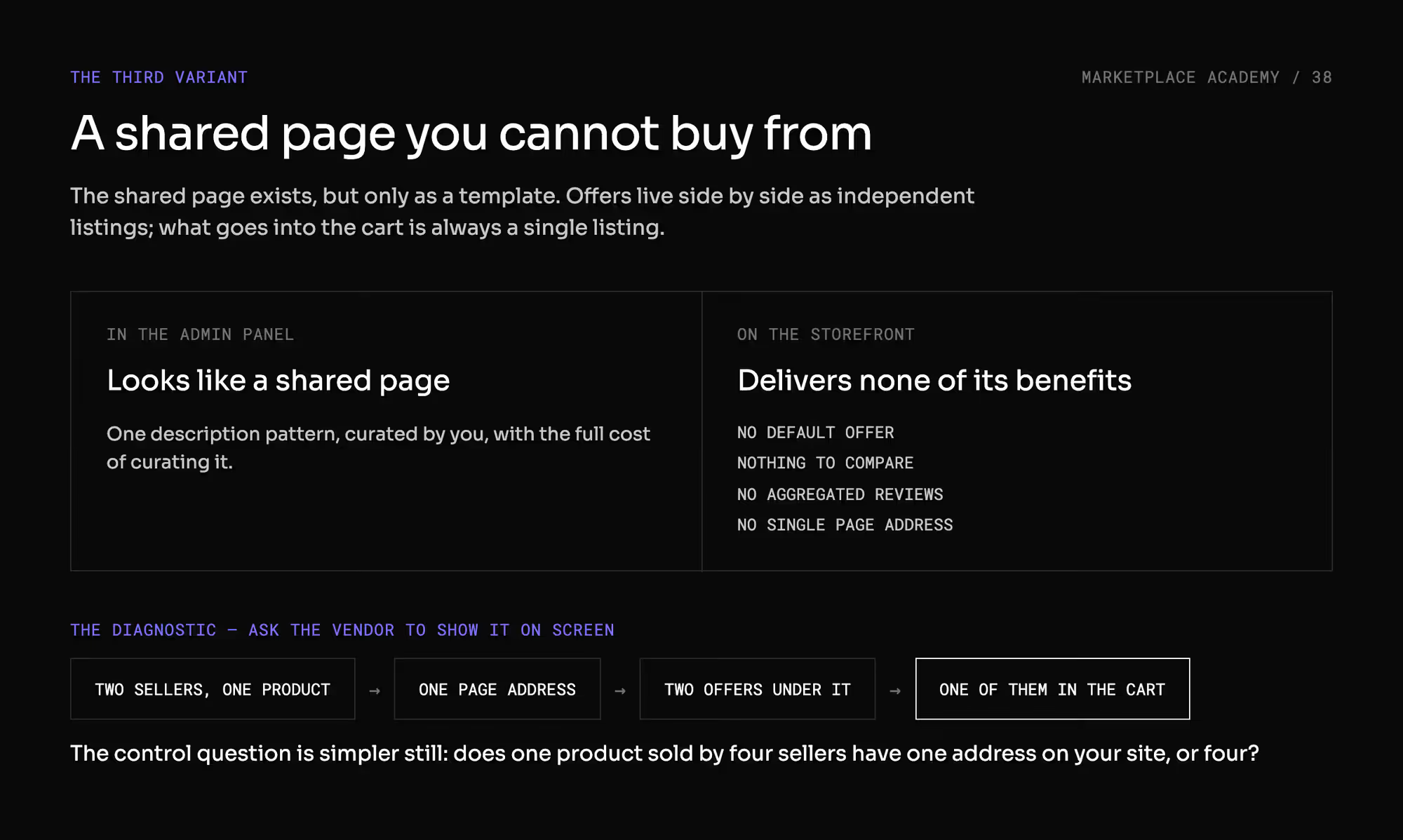
We know of systems in which the shared page exists but is nothing more than a template. The seller offers live side by side as independent listings, each with an identifier of its own.
The page stands above them as a description pattern and cannot be bought: what goes into the cart is always a single listing.
In the admin panel, this looks like a shared page. On the storefront, it delivers none of its benefits.
There is no default offer to choose, because the offers are not structural siblings. There is nothing to compare within a single entity.
There are no aggregated reviews and no single page address. What there is, in full, is the cost of curating the template.
This is the most important diagnostic question in the whole subject. Ask the vendor to show you on screen: two sellers of the same product, one page address, two offers under that address, and one of them going into the cart.
If you see two pages and a template in the panel, you have the third variant. The control question is simpler still: does one product sold by four sellers have one address on your site, or four?
Take that as a warning about the business case. Do not count the benefits of a shared page in your business case if what you are buying is a catalog of listings with a nice template.
Why does a hybrid catalog model have to run per category?
The mature arrangement is usually mixed, and that is a good answer. The shared page where products are identifiable and repeatable: electronics, books, spare parts, building materials, anything that has an identifier from the brand owner and looks the same at every seller.
The listing where every item is different: used goods, crafts, made-to-measure products, antiques.
In numbers: 12,000 electronics products with an average of four offers each give 12,000 pages and 48,000 offers. Next to that, 4,000 unique craft items give 4,000 listings with one offer each.
Together, 16,000 pages, two rules, one boundary.
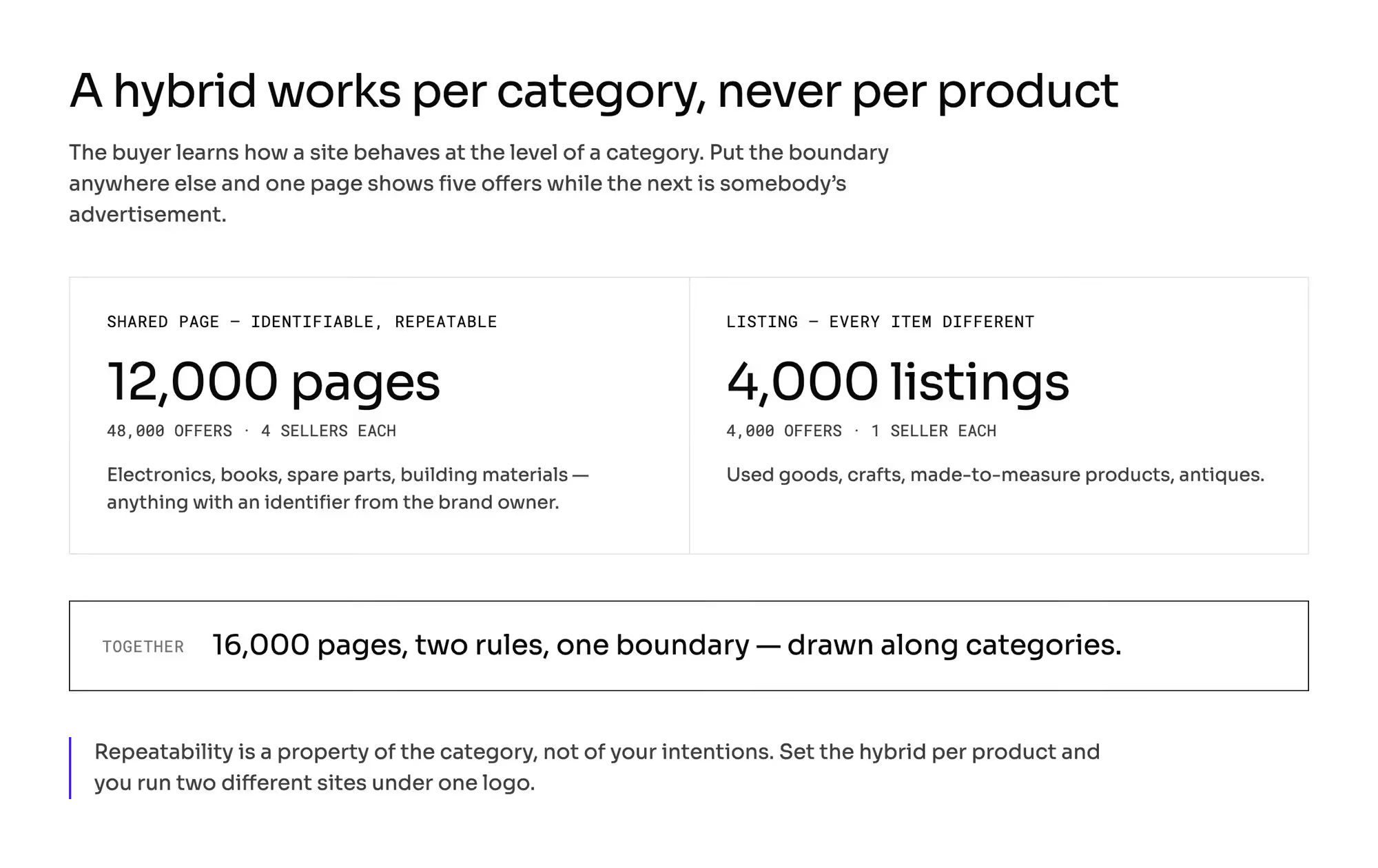
That boundary has to run along categories. The reason sits with the buyer, who learns how a site behaves one category at a time.
If one page in the same branch shows five offers to choose from and the next one is somebody's advertisement with nothing to compare, the buyer does not know where they are, and your support team does not know which rule to explain. Reporting catches the same thing from the other end: "number of products" then means two different things in one report.
Repeatability, by the way, is a property of the category. What to match an offer to a product on is the subject of "Product Matching on a Marketplace: GTIN, EAN, and Where Identifiers Stop".
Here, it is enough to know that the matching has to be done and somebody pays for it in hours.
Differences between shared page, seller listing, and template
What does the catalog model decide? | Shared page | Seller listing | Page as template |
|---|---|---|---|
What the page sells | the product | the seller | the seller |
Pages for 1 product at 4 sellers (count) | 1 | 4 | 4 |
Who matches the offer to the product | you together with the seller | nobody, there is nothing to match to | the seller, with no effect on the storefront |
Who compares the offers | the product page | the buyer, by hand | the buyer, by hand |
Reviews of one thing (sets, at 4 offers) | 1 | 4 | 4 |
Where the cost lands | hours of your team | the buyer's attention | hours of your team and the buyer's attention |
Cost of changing the model later | catalog and address migration | migration plus merging listings | migration plus merging listings |
What does the catalog model change about the rest of your marketplace?
1. Without a shared page there is no winning offer
The algorithm that decides who gets the default exposure belongs to the chapter on the BuyBox, but its precondition is here: the offers have to be siblings within one product. That also brings a duty to explain to sellers which parameters you pick.
That is "P2B Regulation on a Marketplace: Ranking, Terms Changes, and Suspension".
2. The 4 processes a shared page creates
Who has the right to change which field, what happens when two sellers supply conflicting data, how you merge duplicate pages, and who approves a new page.
3. What changing your mind later costs
At 80,000 offers, migrating from listings to shared pages means that 9,000 page addresses become 3,000, and the old ones have to be redirected. Past orders and reviews point to entities that mean something else after the migration: a review concerned one seller's listing, and after the merge it hangs on a product sold by five.
In practice, sellers post everything again from scratch. That is a separate project.
That is why the decision belongs at the gate before the contract.
4. Two consequences outside the catalog
When a product is withdrawn from the market, what counts is whether you can find every offer of the same thing in a single query. The listing model makes that structurally harder.
With several languages, one shared page is one set of translations, while four listings are four ("Multilingual eCommerce on a Marketplace: Translations, Search, and Missing Locales").
And the money: on a €1,000 cart at a 12% commission, you earn €120, and the seller receives €880, whatever the catalog model.
So you do not pick the model for the margin on a single transaction. You pick it for how many sellers stay and how many pages the buyer has to look at.
Which 5 questions decide your marketplace catalog model?
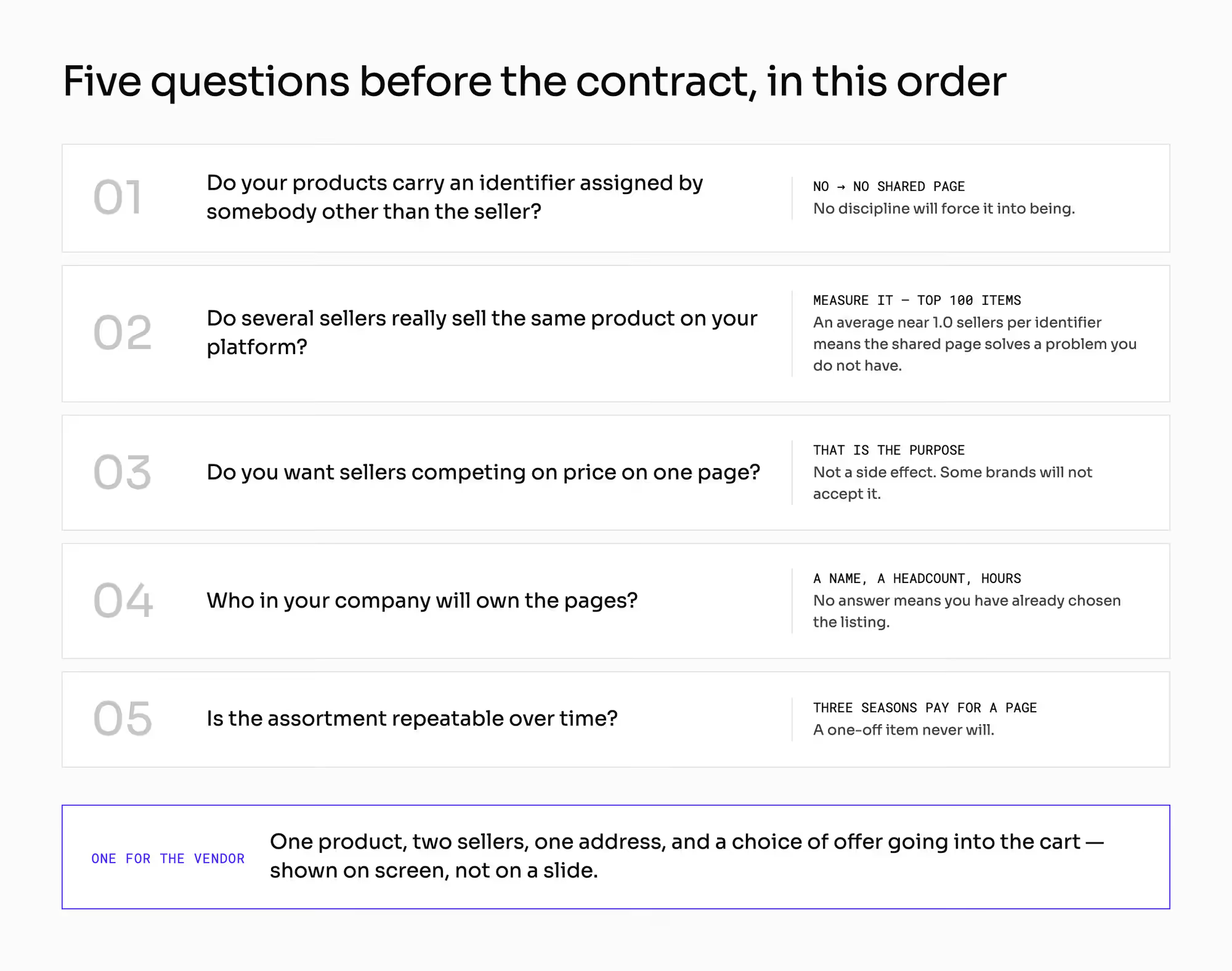
- Do your products carry an identifier assigned by somebody other than the seller? Trade identifiers come from pools of numbers licensed by a global standards organization, and the brand owner assigns them. If they exist in most of your categories, the shared page is feasible. If they do not, no amount of discipline will force it into being.
- Do several sellers really sell the same product on your platform? Settle it by measuring. Take the 100 best-selling items and count how many sellers there are per identifier. An average close to 1.0 means the shared page solves a problem you do not have.
- Do you want sellers competing on price on one page? The shared page is a machine for exactly that, and that is its purpose. Some brands will not accept it. If price control matters more to you than comparability, go back to "Which marketplace platform model should you choose" and check whether you are building the right platform model.
- Who in your company will own the pages? The answer has to have a name, a headcount, and a budget in hours, as in the calculation above. If you do not have one, you have in fact chosen the listing, and it is better to choose it deliberately than to discover it a year later.
- Is the assortment repeatable over time? A product that comes back on the shelf for three seasons justifies the investment in a page. A one-off item will never repay it.
On top of that, one question for the vendor, shown on screen rather than on a slide: one product, two sellers, one address, and a choice of offer going into the cart.
Which mistakes do operators make about the catalog model?
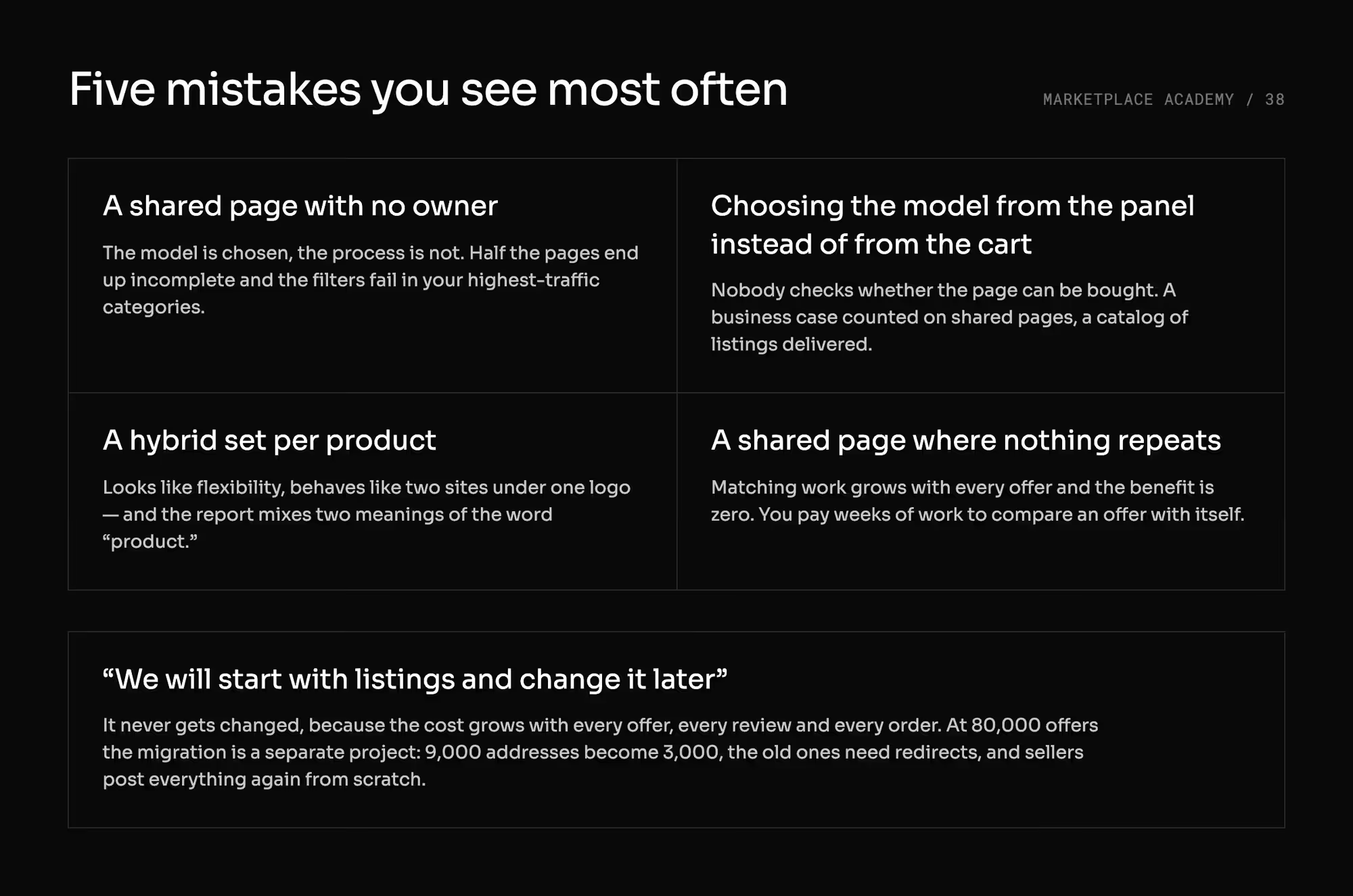
- A shared page with no owner. The model is chosen, the process is not.
Sellers create pages at whatever pace suits them, and for the first year nobody measures it. Consequence: half the pages are incomplete, and the filters do not work in your highest-traffic categories.
- Choosing the model from the panel instead of from the cart. The demo shows a shared page, and that is enough to decide.
Nobody checks whether it can be bought. Consequence: a business case counted on the benefits of a shared page, and a catalog of listings delivered.
- A hybrid set per product. It looks like flexibility and behaves like two different sites under one logo.
Consequence: the buyer does not know whether they are looking at a product or at an advertisement, and the report mixes two meanings of the word "product."
- A shared page in a category where nothing repeats. The matching work grows with the number of offers, and the benefit is zero, because every product has one offer.
Consequence: you pay weeks of work to compare an offer with itself.
- "We will start with listings and change it later." Usually it never gets changed, because the cost grows with every offer, every review, and every order. Consequence: the model chosen for a pilot stays for the life of the platform.
What do you still have to settle before you choose a catalog model?
This is a data architecture decision, so the boundaries here are about competence rather than law. We do not settle what exactly to match an offer to a product on and where that key stops working.
Nor do we settle the most important number in this decision: how many sellers you have per product. It cannot be derived from any documentation, because it is a measurement on your own assortment.
Without it, the choice of model is a bet. The question from point two takes one analyst one day and is the cheapest thing you can do before you sign a contract.
Our role is narrower: to show that this is one decision with two different businesses at the end of it, and that it has no version in which nobody pays for the work. Your team or your vendor will design the architecture.
The question of whether the page can be bought is one you have to ask yourself.
Summary: What decides your marketplace catalog model?
Your own assortment, measured rather than assumed. How many sellers you have per product, whether the products carry an identifier somebody other than the seller assigned, whether the same items come back season after season, and who in your company has the hours to own the pages.
The shared page buys comparison and pays for it in your team's time. The listing buys an easy intake and pays for it with the buyer's attention.
The one arrangement that charges you for both is a shared page the buyer cannot buy from.
Take your hundred best-selling items and count the sellers per identifier. Building a marketplace where one product has to hold four sellers' offers at one address?
Frequently asked questions on marketplace catalog management
What is product catalog management on a marketplace?
It is the decision about whether one description exists once and sellers attach offers to it, or whether every seller publishes a listing of their own. Everything else in a catalog follows from that: who may edit a field, what a filter can search, where reviews collect, and how many pages one product occupies.
Should a marketplace use a shared product page or seller listings?
A shared page where products repeat and carry an identifier the brand owner assigned; a listing where every item is one of a kind. Used goods, crafts, and made-to-measure work fit listings.
Electronics, books, and spare parts fit shared pages. Draw the boundary along categories so that a buyer meets one rule per part of the site.
How much work is it to match offers to shared product pages?
Count the offers that will never match automatically and multiply by two minutes. On 80,000 offers with a 15% miss rate, that is 12,000 items and about 400 hours.
The share depends on how many matching methods you implement, and every new seller adds to the same stream, so this is a job position rather than a project.
Ready to build?
If you want to count how many pages one product has on your platform before that number becomes a data schema, let's talk.