
Extended Producer Responsibility (EPR) for Marketplaces: Who Pays the Environmental Fee?
Extended producer responsibility, or EPR, is the duty to register, report, and pay for the waste a product becomes, and in a marketplace it attaches to whoever first placed the goods on that country's market.
This is the one duty in the legal layer that can attach itself to you, with no decision of yours involved. Admit a seller from abroad, skip one check, and it is yours.
The duty is not looking for the seller. It is looking for somebody present in the country, and the one present is you.
This article breaks down:
- Who counts as the producer under EPR?
- Which 3 streams ask different things about one product?
- Which data must you freeze at the moment of sale?
- What happens to the environmental fee on a refund?
Key insights
- The environmental fee looks for somebody present in the country. Let in a foreign seller with no registration and it finds you.
- You carry the duty on exactly those sales where you did not check that somebody else carries it.
- Registration is per country and per stream. Three markets across three streams is nine numbers, and one text field will not hold them.
- Three reports ask three different things about one vacuum cleaner: the box it came in, the weight of the machine, and whether there is a battery inside.
- Freeze the number and the packaging weight on the order. An offer can be edited later, and a report is always about the past.
Who counts as the producer under EPR?
In this family of regulation, "producer" means something other than it does in ordinary speech. The producer is whoever first places the thing on a given market.
That settles who registers, who reports, and who pays.
The role falls on at least four kinds of entity: a manufacturer selling under its own brand, anyone who sells someone else's goods under their own brand or resells them onward, an importer who first puts goods from abroad on the market, and, the one that surprises people most often, a distance seller shipping to buyers in a country where they have no establishment.
So the role is pinned to the country the goods are sold into. The rules handle distance selling head-on: whoever sells into a country where they are not established either registers there or appoints somebody there to answer for their obligations.
Take one order: a cordless vacuum cleaner at €1,200, 3.4 kg of equipment, 0.8 kg of packaging, 0.45 kg of battery. In two configurations, it has two different parties on the hook.
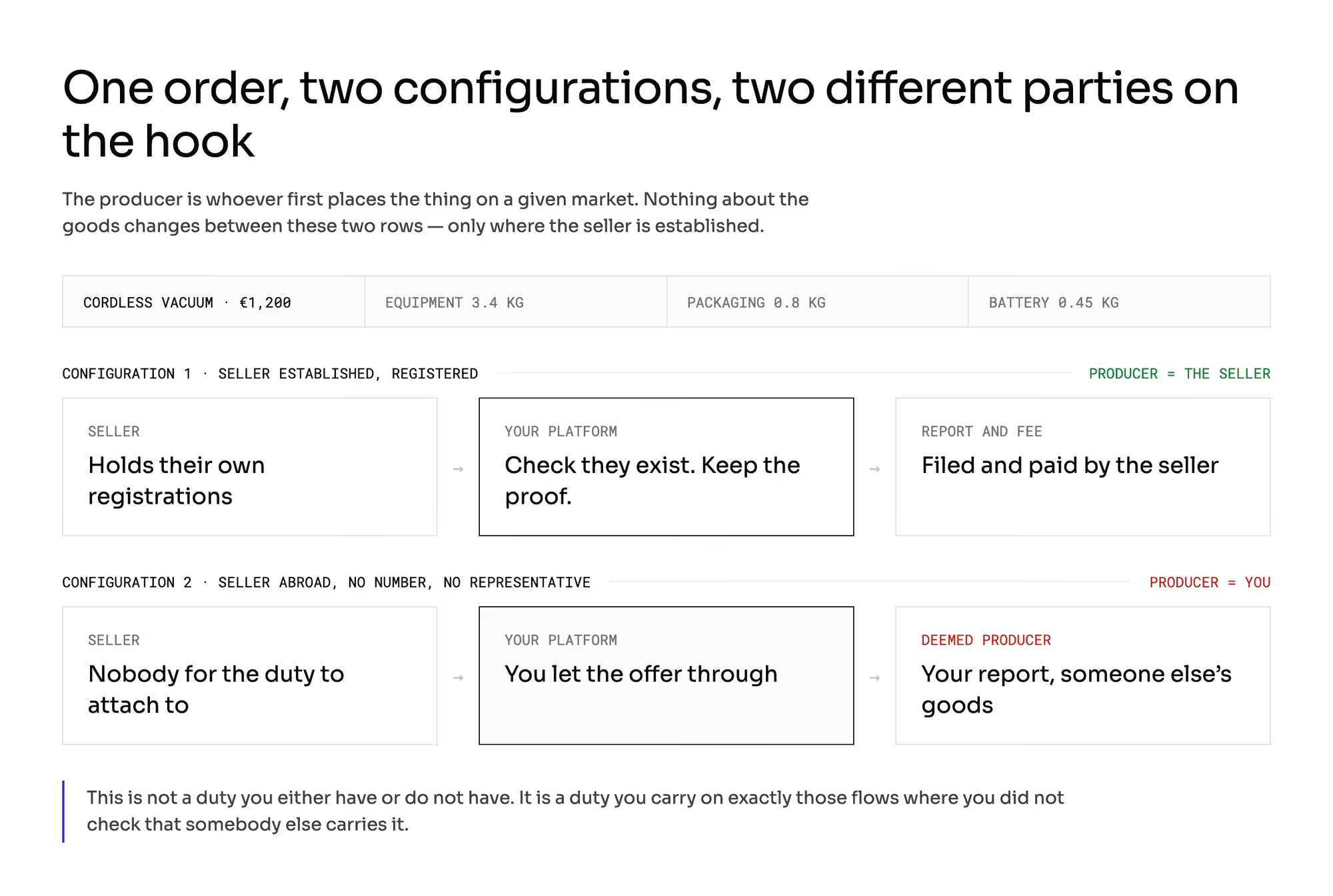
1. The seller is established in the buyer's country
The producer is the seller. Your role is narrow: check that the registrations exist, and be able to show that you checked.
2. The seller sits abroad with no registration
The duty has nobody to attach itself to, so it starts looking for somebody present. The rules require the platform to obtain the register the seller is entered in and its registration number, to check it, and to keep the offer off the market if the seller has not met the obligation.
Practitioners point out that some national systems go further. Let the sale go through anyway, and the platform is treated as the producer, a mechanism the market calls the deemed producer.
Hence the axis of the whole article: this is not a duty you either have or do not have. It is a duty you carry on exactly those flows where you did not check that somebody else carries it.
How do you verify a seller's EPR registration number?
The default implementation looks like this: a text field in the seller's profile, labeled "registration number," and nobody checks it.
A registration number can be verified, and that is the good news. It has a fixed format that differs between countries (a different length, a different set of permitted characters).
Syntax validation therefore catches typos and entries like "in progress." More importantly, some countries publish a machine-readable copy of their register of entities that place goods on the market, built precisely so platforms can check against it. Verification stops being a conversation with the seller's lawyer and becomes a call in onboarding.
You collect three things here: a registration number separately for every country and every stream, the seller's statement that they have joined the right collection scheme, and, for a seller with no establishment on the target market, the details of their representative. A seller entering three markets across three streams hands you nine numbers.
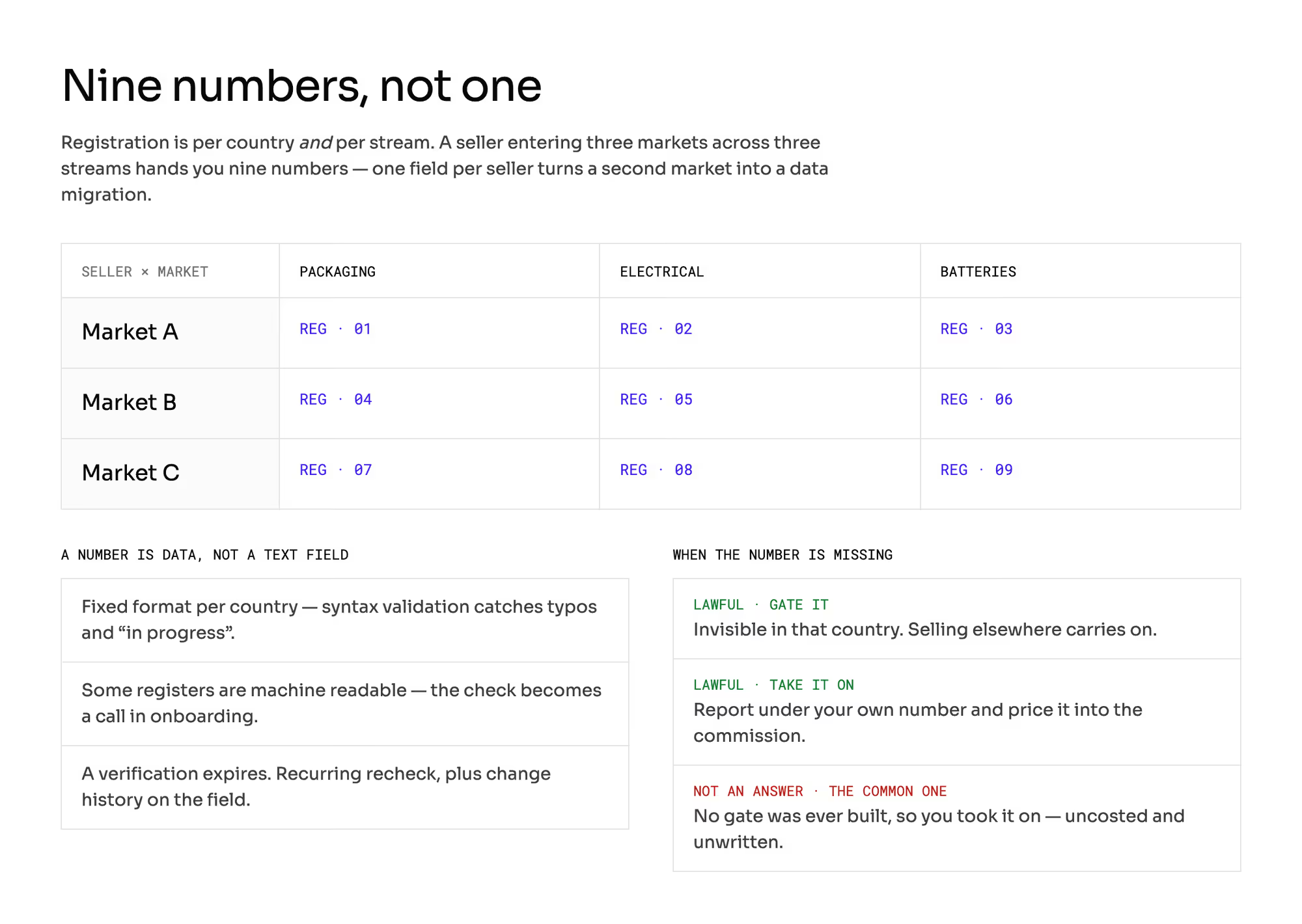
A verification has an expiry date. A registration can be suspended or allowed to lapse, and the seller will not tell you.
You need a recurring recheck and a change history on the field. In an inspection, the question is not "do you hold a number," it is "how do you know it was valid on the day of that sale."
When the number is missing, you have two answers, and both are lawful. The first is a geographic gate.
An offer without a number is not visible in that country, and selling in the others carries on as normal. The second is to take the obligation on knowingly, report under your own number, and price the cost into your commission.
There is a third, the most common, and it is not an answer: you never built the gate, so you picked the second option, except nobody wrote it down or costed it.
Which 3 EPR streams ask different things about one product?
Back to the vacuum cleaner. One offer, one order, and three independent reports, each about a different property of the same thing.
1. The packaging stream asks about the packaging
It wants weight broken out by material: how much cardboard, how much film, how much polystyrene. That is a property of the shipment, so it changes underneath an offer that never changed.
Ship from a different warehouse, get a different box, and the data stops being true.
2. The electrical stream asks about the equipment category and its weight
Registration here is sometimes issued per type of equipment rather than per product, so a seller moving into a new assortment group needs a new registration of its own. On top of that come the terms for taking back and recycling old equipment on delivery of new.
Some platforms keep those as a descriptive field on the seller's account, because they are not a product attribute.
3. The battery stream asks whether there is a battery inside
The duties cover batteries built into devices too, so they reach a toy, a power tool, and a remote control. None of those sit anywhere near "batteries" in your category tree.
A catalog category is not a sufficient trigger here.
What does each stream ask for? | Packaging | Electrical equipment | Batteries |
|---|---|---|---|
What the report needs | weight per material | equipment category and weight | battery type and weight |
Whose property it is | the shipment's | the product's | a component inside the product |
Where the data naturally lives | the offer and the shipment | the product page | the product page |
What triggers the duty | every shipment | the assortment | the contents, not the category |
How it breaks | the packaging changes without the offer changing | registration per type, offer per SKU | a "non-electrical" product with a battery inside |
Who knows the truth | the seller or the warehouse | the manufacturer | the manufacturer |
The product conclusion is one: a single product page has to serve three different questions, switched on separately in every country. That is why the market does not keep this in the description or an attachment, but as operational fields on the offer model, next to price and stock.
The stream code and the producer identifier each get their own field.
Which EPR data must you freeze at the moment of sale?
A report is a sum: weight times quantity sold, split by country, stream, and producer. A missing weight does not give you an empty cell in the report: it gives you a report that cannot be calculated.
Three things are lost for good if you do not record them at the moment of sale.
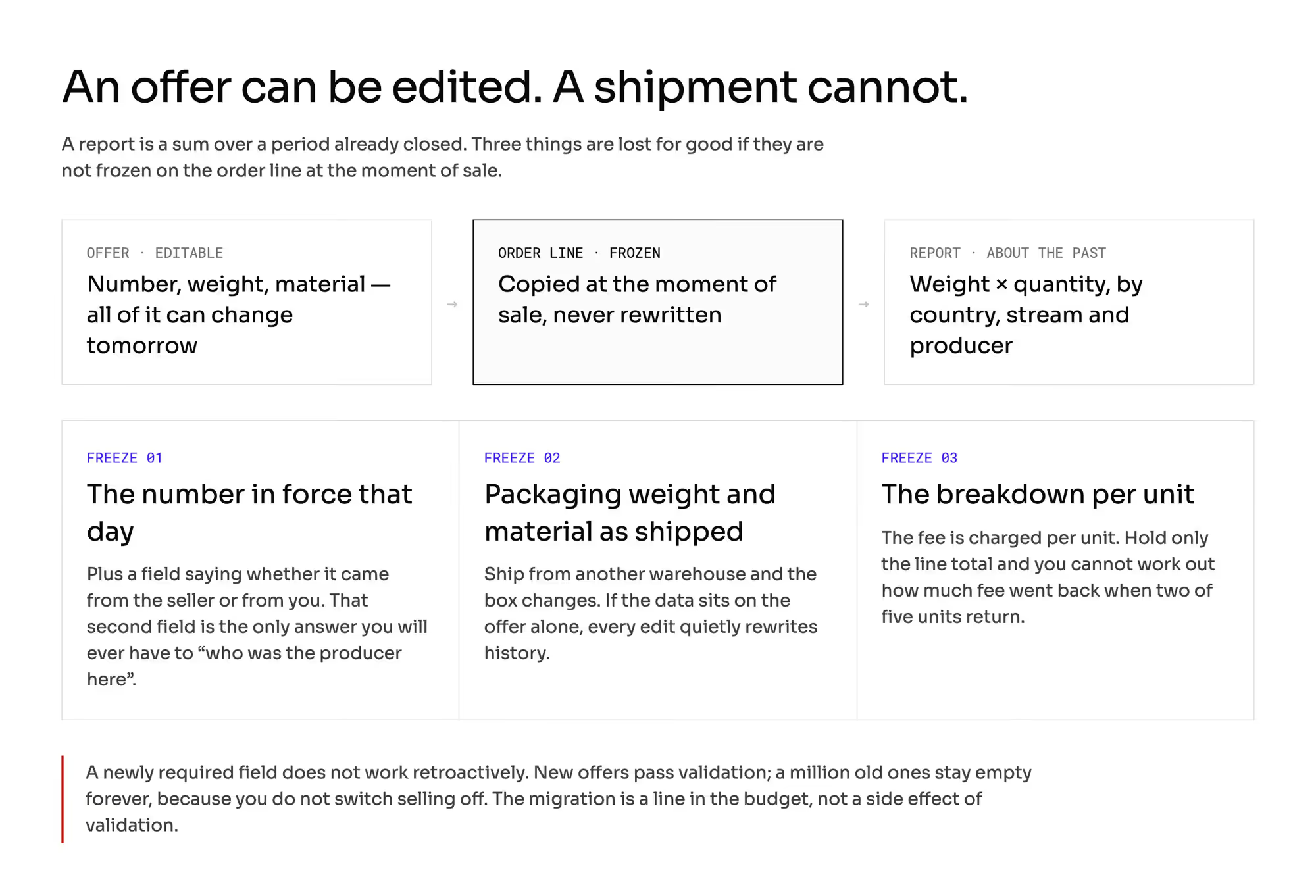
1. The registration number in force on the day of the order
The seller will change it in their profile, and a report is about the past. The number has to be copied onto the order line and frozen there.
It carries a note saying whether it came from the seller or from you. That second field looks like a detail.
It is the only answer you will ever have to "who was the producer here."
2. The weight and material of the packaging at the moment of shipping
An offer can be edited. A shipment cannot.
If the data sits on the offer alone, every edit quietly rewrites history.
3. The breakdown per unit
The fee is charged per unit and multiplied by quantity. If you hold only the total on the line, then when two units of five come back you cannot work out how much fee went back.
On top of that sits a bigger problem: a newly required field does not work retroactively. Practitioners from large implementations describe the same pattern at every change in the law.
New offers have the field, because validation forces it. A million old ones do not have it and never will, because you do not switch selling off.
Sellers fill in exactly what is required, so an optional field stays empty forever, and empty compliance fields turn up years later on actively selling offers. "Marketplace Compliance: Adding a Required Attribute to a Million Offers" covers the method for adding such data to a live catalog.
Here, it is enough to know that the migration plan is a separate line in the budget.
What happens to the environmental fee on a refund?
The buyer pays the fee inside the price, and in some countries it is shown to them openly. It lands with you with the rest of the cart, and from that moment it is money that belongs neither to you nor to the seller.
It goes to the organization that settles that stream, the one the producer of that line is registered with.
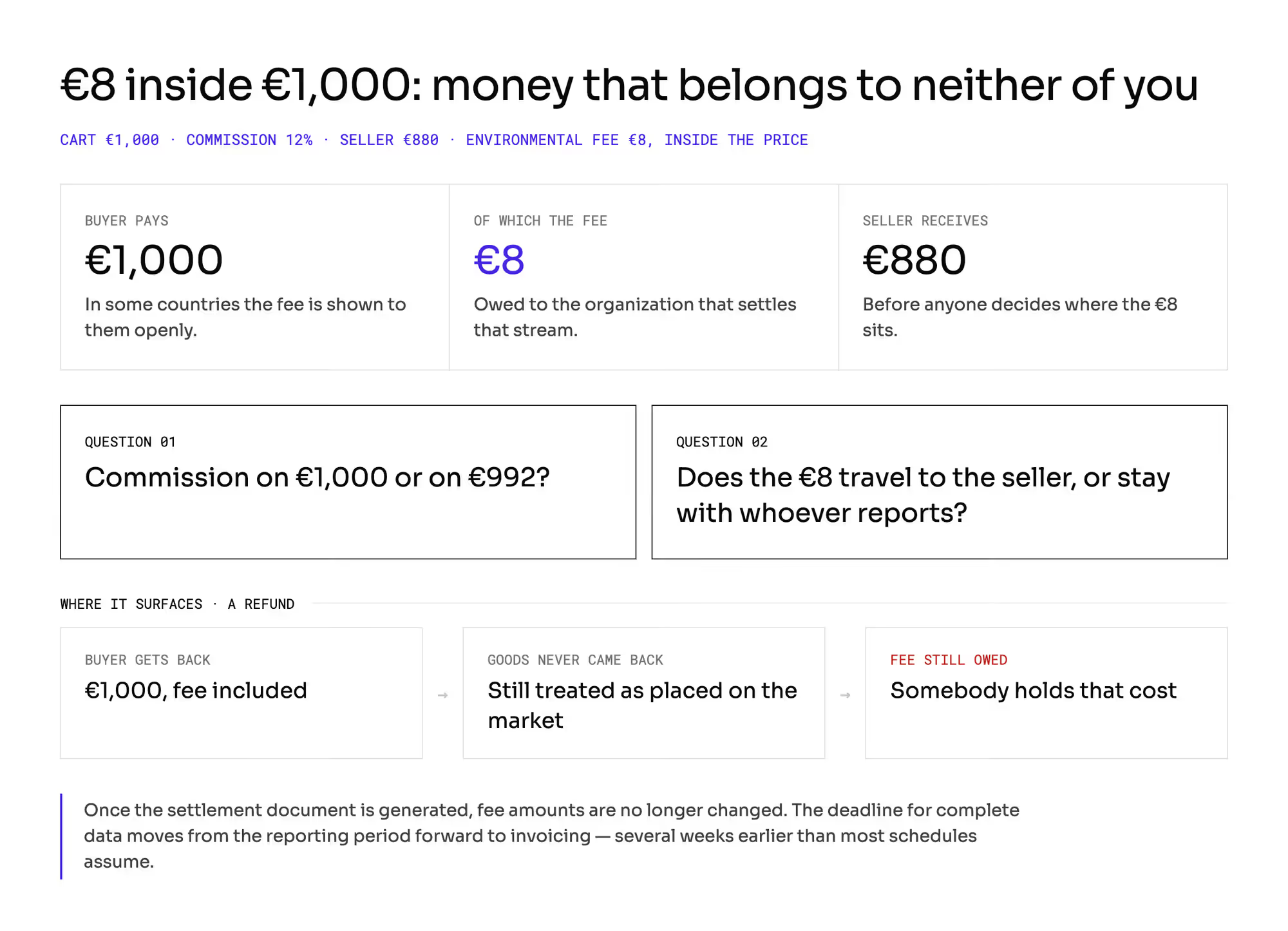
The series standard: a €1,000 cart, a 12% commission, and €880 landing with the seller. Assume that €8 of environmental fee sits inside that €1,000.
Two questions come out of it, and somebody has to answer them before the first payout rather than after the first inspection. Do you calculate the commission on €1,000 or on €992?
And does the €8 travel to the seller because they report, or stay with you because you report? Both answers are defensible.
What is not defensible is the version where nobody asked the question and the fee dissolved into the price. "How Marketplace Split Payments Work and Who Pays the Fees?" covers the mechanics of a line inside the split.
"Marketplace Ledger: Why Balances Must Match the Transfer" covers its accounting trail.
A refund exposes this immediately. You give the buyer back the full €1,000, including the fee, because they paid it inside the price.
Market practice, though, treats goods that never physically came back as still placed on the market, so the fee on them remains owed to the organization. Somebody is left holding that cost.
If your settlement model does not say who, that does not mean the cost is not there: it means it will surface in reconciliation and look like an error.
And one boundary in time: once the settlement document has been generated, the fee amounts are no longer changed. That moves the deadline for complete data from the reporting period forward to invoicing.
That is several weeks earlier than most schedules assume.
What does EPR change about the rest of your marketplace?
1. Seller onboarding gains one more piece of blocking data
A registration number per country and stream works the way payout details do in "Marketplace Seller Verification: KYC, Beneficial Owners, and Sanctions" and tax data in "Marketplace VAT: Are You the Agent or the Principal?". Without them, a seller can exist, but should not sell in that country.
2. Entering a new market stops being a translation job
A new country means new streams, new registrations, new required fields, and a notice to sellers about the change in terms. That last one runs on its own regime of notice periods, described in "P2B Regulation on a Marketplace: Ranking, Terms Changes, and Suspension".
3. Settlement gains a line that is neither goods nor commission
Plan for it in the payment split and in the ledger from the start ("How Marketplace Split Payments Work and Who Pays the Fees?" and "Marketplace Ledger: Why Balances Must Match the Transfer"). Adding it to historical settlements costs more than carrying it from day one.
4. EPR and product safety are different duties
The responsible person, traceability, and recalls run on their own logic and have their own chapter, "GPSR for Marketplaces: Product Safety, Traceability, and Recalls". Categories that need a permit are in "Restricted and Prohibited Products on a Marketplace: The 3 Gates".
Imports and import tax are in "Cross-Border VAT on a Marketplace: Foreign Sellers, Imports, and Customs", and tax reporting on sellers in "DAC7 Reporting: What a Marketplace Must Collect About Its Sellers".
How do you check EPR with a vendor and a foreign seller?
Five questions for the platform vendor. Ask to be shown on screen.
- Where in the data model does the registration number sit per country and per stream? Is it format-validated, and does it have a change history?
- Show me an offer that is visible in one country and invisible in another because the number is missing. If that gate does not exist, who carries the duty?
- Do the number and the weight copy onto the order line, and do they stay there after the offer is edited?
- Show me a return of two units out of five and the fee amount inside that return.
- Can you export a statement for a closed period by country, stream, and producer? Without a spreadsheet in the path.
Four questions for a seller from abroad:
- The registration number in every country they want to sell into. Who their representative is where they have no establishment.
- Whether they sell under their own brand, because that changes who they are in this role. And who reports the packaging when they ship from a warehouse in a third country.
- What you have to be able to show in an inspection. Sales for the period broken down by country, stream, and producer.
- The number in force on the day of each sale. Proof that the number was checked: when, against what, and with what result.
Which mistakes do operators make about EPR on a marketplace?
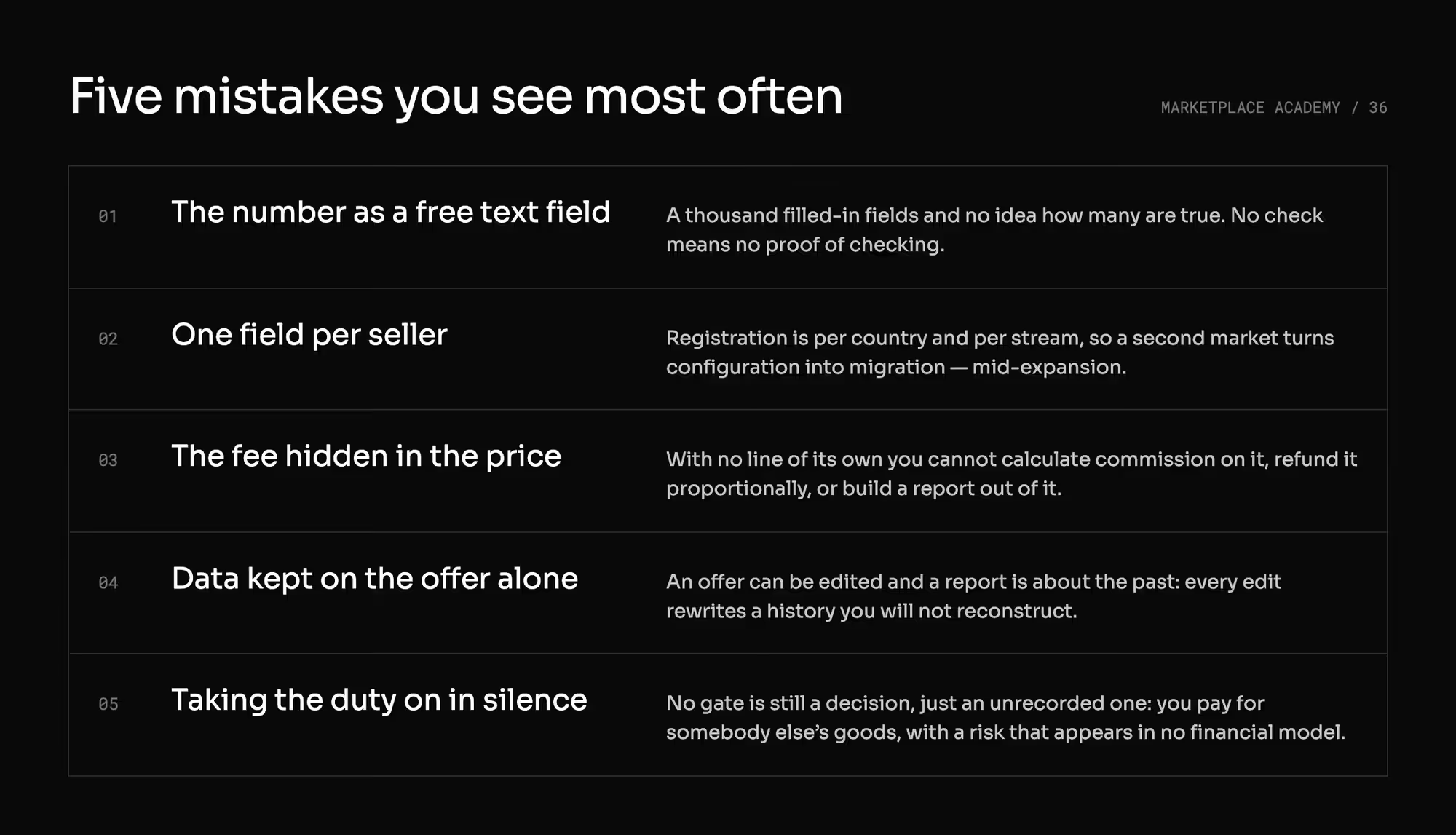
1. The registration number as a free text field
After a year, you have a thousand filled-in fields and no idea how many are true. In an inspection, you will not produce proof of checking, because there was no check.
2. One field per seller
Registration is per country and per stream, so entering a second market turns configuration into data migration. It lands at the worst possible moment, in the middle of an expansion.
3. The fee hidden in the price, with no line of its own
You cannot calculate commission on it, refund it proportionally or build a report out of it. Three losses from one simplification.
4. Data kept on the offer alone
An offer can be edited, and a report is about the past: every edit quietly rewrites a history you will not reconstruct.
5. Taking the duty on yourself in silence
No gate is still a decision, just an unrecorded one: you pay for somebody else's goods and carry a risk that appears in no financial model.
What do you still have to settle yourself about EPR on a marketplace?
This guide is a map of mechanisms and data. It deliberately carries no thresholds, no rates, and no deadlines.
Those differ by country and by stream, and they change faster than any document. Before you fix your data model, walk this list through with a lawyer.
The families of regulation worth naming outright: extended producer responsibility (in the market: EPR) as the overarching principle; the rules on packaging and packaging waste; the rules on waste electrical and electronic equipment (in the market: WEEE); the rules on batteries; national registers of entities that place goods on the market, with the duty to appoint a representative. And separately, because they get confused with everything above: the rules on product safety and on the tax reporting obligations of platforms.
Five things to confirm by name: whether on any flow you are the producer; which streams touch your assortment in each country; whether you may report on a seller's behalf; how to calculate packaging weight when the seller ships; and what happens to the fee on goods that never came back after you refunded the money.
Our claim is narrower than any of those answers and independent of them: the data has to let you answer every one of them after the fact. A report always covers a period already closed.
You cannot add a registration number or a packaging weight to a sale that already happened.
Summary: When does the environmental fee become yours?
On every flow where you did not establish that somebody else carries it. That makes three things product requirements rather than legal ones: a registration number per country and per stream with a change history, the number and the packaging weight frozen onto the order line, and a recorded decision about offers that have no number at all.
Ask whether your platform can export a closed period by country, stream, and producer without a spreadsheet in the path. Building a marketplace that has to freeze a registration number onto every order line? Talk to us about the build.
Frequently asked questions on EPR for marketplaces
Who is the producer under EPR on a marketplace?
Whoever first places the goods on that country's market, which is often the seller and sometimes you. It covers a manufacturer selling under its own brand, anyone reselling under theirs, an importer, and a distance seller with no establishment in the country.
Confirm the definitions for your own markets with a lawyer.
Does a marketplace have to check seller EPR registration numbers?
Where the rules require the platform to obtain and verify them, yes, and the verification has an expiry date. A registration can be suspended or allowed to lapse and the seller will not tell you, so you need a recurring recheck and a change history.
In an inspection, the question is how you know the number is still valid.
What happens to the environmental fee when a buyer returns the goods?
The buyer gets the full price back, including the fee they paid inside it. Whether the fee itself comes back to you depends on the stream and the country: goods that never physically returned are commonly still treated as placed on the market.
Settle it before the first payout rather than after the first return.
Ready to build?
We build marketplaces that freeze the registration number and the packaging weight onto the order line, per country and per stream.