
Marketplace Liability: Are You an Intermediary or a Seller?

Marketplace liability is the question of whether the law treats you as the intermediary who merely hosts other people's offers, or as the seller standing behind them.
Intermediary status gives you a protection you cannot write into your terms: you do not answer for someone else's goods or content. You lose it through things your team does every day for conversion.
Not one of them is ever raised as a legal decision.
This article breaks down:
- Why is the intermediary exemption conditional on your behavior?
- Which 3 liabilities does a marketplace glue into one?
- Which 5 front-end decisions cost you the exemption?
- Which seller data must you collect and verify?
Key insights
- The law does not read your terms. It looks at what the buyer sees: the product page, the emails, and who answers when they complain.
- "Am I liable for my sellers" is three separate questions. Only one of them, the content of an offer, comes with a protection you can lose.
- Five ordinary things take that protection away: your logo on someone else's offer, one buy button, emails written as "we", handling complaints yourself, and storing the goods.
- A complaint sitting in a shared inbox is the worst place for it. It proves you knew, and proves nothing about what you did.
- A seller who changes legal form becomes a different company. Keep one current record and you cannot say who sold the goods two years ago.
Why is the intermediary exemption conditional on your behavior?
You will write in your terms that you are only a platform. That is a declaration.
When someone brings a claim, whether a buyer, a brand owner, or a supervisory authority, they do not start with the terms. They start with what the buyer sees on the product page, what arrives by email, and who talks to them.
The intermediary exemption is built as an exception, and an exception has conditions. Whoever merely stores someone else's content does not answer for what is in it.
That holds only as long as they stay neutral and act once they learn of an infringement. It is not a privilege of the model.
It is a reward for restraint.
Restraint is exactly what you give up for conversion. European case law points to two ways of losing the exemption, both behavioral rather than documentary.
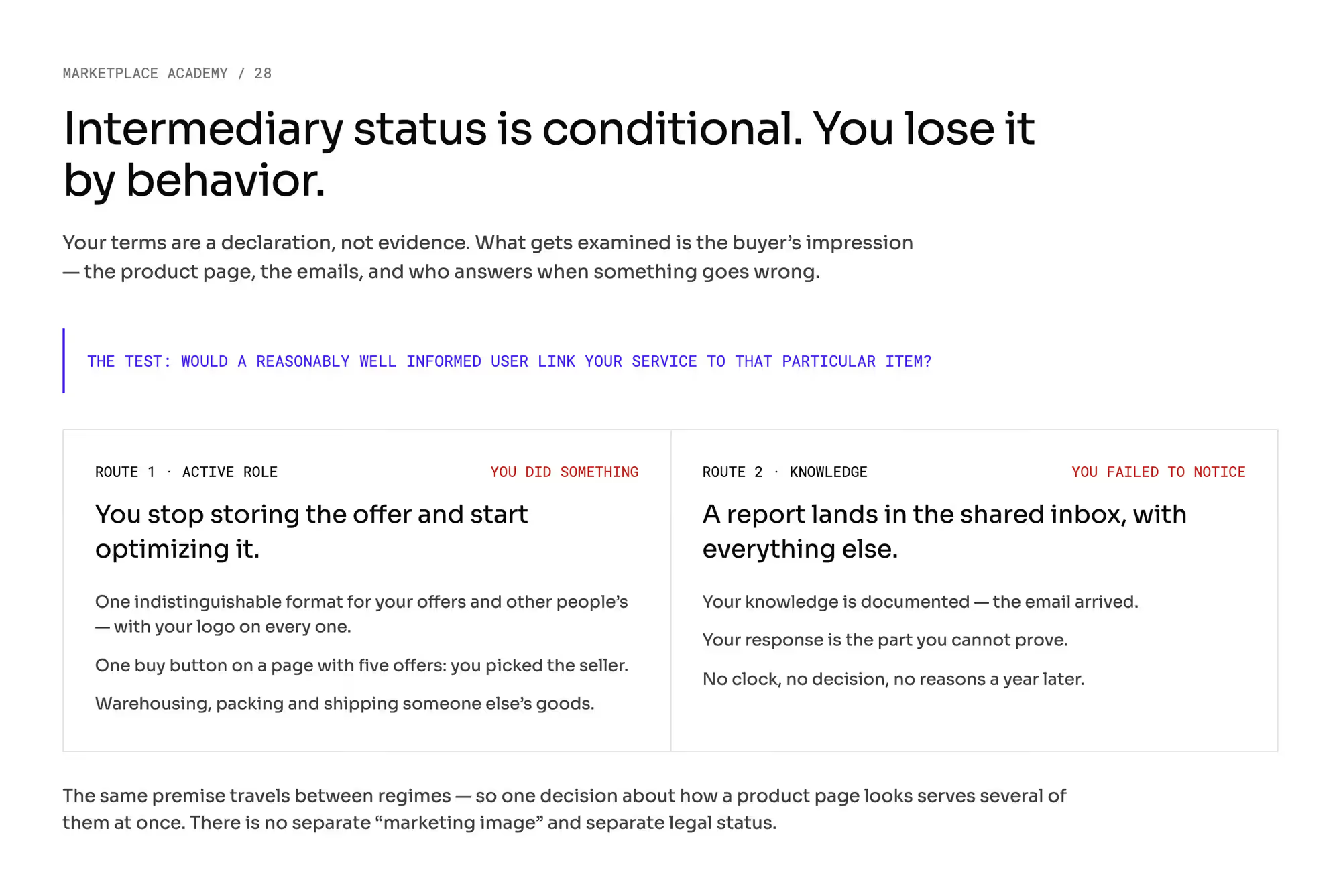
The first is an active role: not storing offers, but optimizing their presentation and promoting them. The second is knowledge: if you knew facts from which a diligent business would have inferred illegality, and you did not act, the exemption stops covering you.
The test the courts apply is one of the buyer's impression. Would a reasonably well-informed and observant user link your service to that particular item?
What counts: you present your own offers and other people's in one indistinguishable format, your logo as a well-known seller sits on every one, and you add warehousing and shipping. None of those three looks like a legal decision.
Each one is.
And the most important part: the same premise travels between regimes. Regulations on the obligations of platforms say a marketplace cannot hide behind the exemption if it presents the transaction so that the average consumer believes the goods come from the platform or someone under its control.
European rules on liability for damage caused by a product reach for the same premise, and where it is met they treat the platform as a distributor. So one decision about how a product page looks serves several regimes at once.
There is no separate "marketing image" and separate "legal status."
This is a different question from the split of roles in "Which marketplace platform model should you choose" and "What Is the Merchant of Record in a Marketplace?". There you divide roles deliberately.
Here, someone outside judges whether your behavior agrees with them.
Which 3 liabilities does a marketplace glue into one?
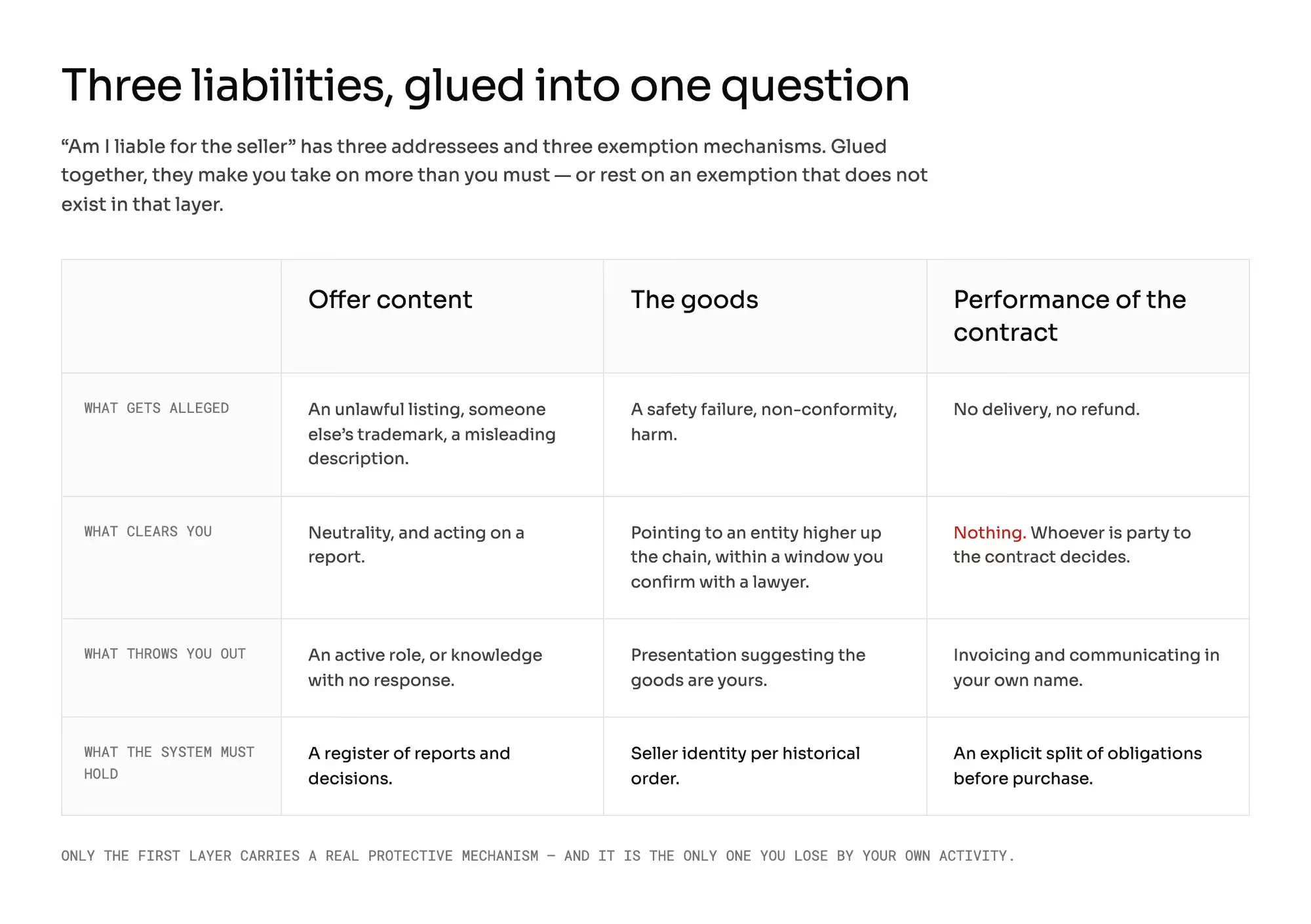
"Am I liable for the seller" is three questions, with three addressees and three exemption mechanisms. Glued together, they produce one of two errors: you take on more than you must, or you rest on an exemption that does not exist in that layer.
1. Liability for the content of an offer
You answer as the host of the place: description, photo, someone else's trademark, a listing for prohibited goods. You clear yourself through neutrality and by acting on a report.
This is the only layer with a real protective mechanism. It is also the only one you lose by your own activity.
2. Liability for the goods themselves
Liability runs through a chain of economic operators: the manufacturer, the importer, the authorized representative, and those after them. You join that list conditionally: when the presentation suggests the goods come from you, or when nobody higher up the chain can be identified in the Union.
Your defense is to point at the entity above you, within a window whose length you confirm with a lawyer. The information comes from the order placed years ago, as the record stood then.
3. Liability for performance of the contract
This means delivery, withdrawal, and refunds. The liable party is the party to the contract, and there is no exemption.
Instead, there is an obligation operators learn about late: you have to disclose to the buyer how the obligations are divided between you and the seller. Who performs them is a separate question.
"Marketplace Consumer Rights: Who Delivers Them?" takes it up.
What separates the three? | Offer content | The goods | Performance of the contract |
|---|---|---|---|
What gets alleged | an unlawful listing, someone else's trademark, a misleading description | a safety failure, non-conformity, harm | no delivery, no refund |
What clears you | neutrality and acting on a report | pointing to an entity higher up the chain | nothing. Who is party to the contract decides |
What throws you out | an active role, or knowledge with no response | presentation suggesting the goods are yours | invoicing and communicating in your own name |
What it demands of the system | a register of reports and decisions | seller identity per historical order | an explicit split of obligations before purchase |
Which 5 front-end decisions cost a marketplace its exemption?
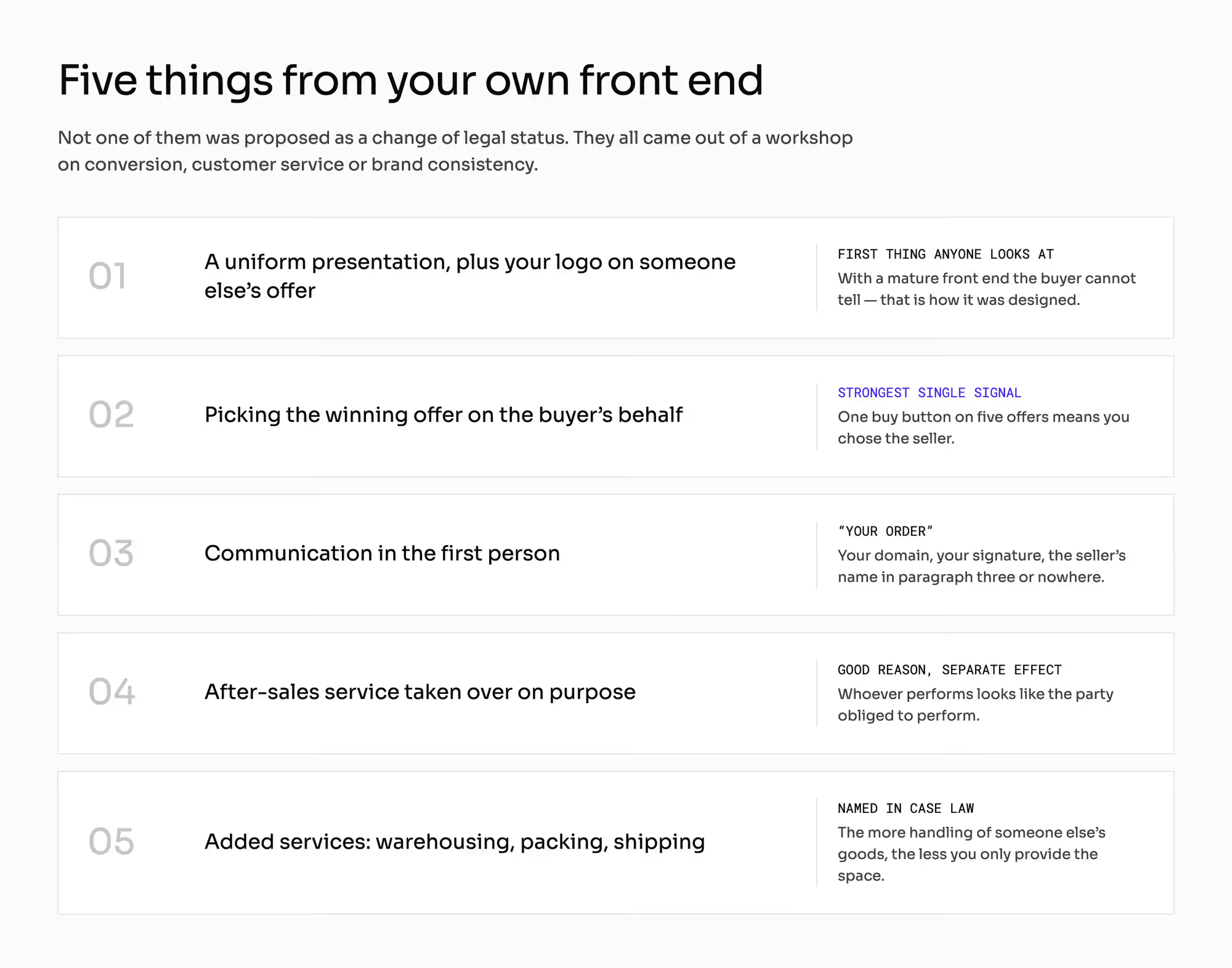
Not one of them was proposed as a change of legal status. They all came out of a workshop on conversion, customer service, or brand consistency.
1. A uniform presentation with your logo on someone else's offer
If the buyer cannot tell a seller's offer from your own, this is the first thing anyone looks at. With a mature frontend, they usually cannot, because that is how it was designed.
2. Picking the winning offer on the buyer's behalf
One "add to cart" button on a page with five offers means you chose the seller. That is the strongest single signal of an active role in a typical marketplace.
It is also a layer some platforms do not ship at all, so selection rules live only in the operator's code. Disclosing them to sellers is "P2B Regulation on a Marketplace: Ranking, Terms Changes, and Suspension".
Here what counts is that the choice itself is seller behavior.
3. Communication in the first person
"Your order," your sending domain, your signature, the seller's name in the third paragraph or nowhere at all. Nothing in that email tells the buyer they contracted with somebody else.
That is exactly what the impression test examines.
4. After-sales service taken over on purpose
Practitioners describe it bluntly: the operator's complaints team accepts claims the seller refuses, and orders are held open longer than settlement requires, so the buyer goes through the platform instead of settling with the seller on the side. The reason is a good one: quality and measurability.
The legal effect is separate: whoever performs looks like the party obliged to perform.
5. Added services: warehousing, packing, and shipping
The more physical handling of someone else's goods you take on, the harder it is to claim you only provide the space. Case law names this explicitly.
The second route to losing it takes no activity at all. It is enough that you fail to notice.
A report about counterfeit goods arrives where everything else does: in the shared support inbox. Practitioners point out that order questions and problem reports land in one pile, with no way to separate them.
The effect is the worst available: your knowledge is documented because the email came in, and your response is what you cannot prove.
What must a notice-and-action process record?
The mechanism that keeps your exemption alive has four steps, and each has to leave a trace. A report has to be easy to file and specific: where the content is, and why the reporter considers it unlawful.
You confirm receipt, you decide, you give reasons, and you point to a route of appeal. No single deadline covers every kind of case.
Confirm the length of the window with a lawyer. Every step still has to carry a date.
That is why an email inbox does not meet the obligation, however well run. It has no clock, the decision is not an object in it, and a year later nobody can reconstruct the reasons.
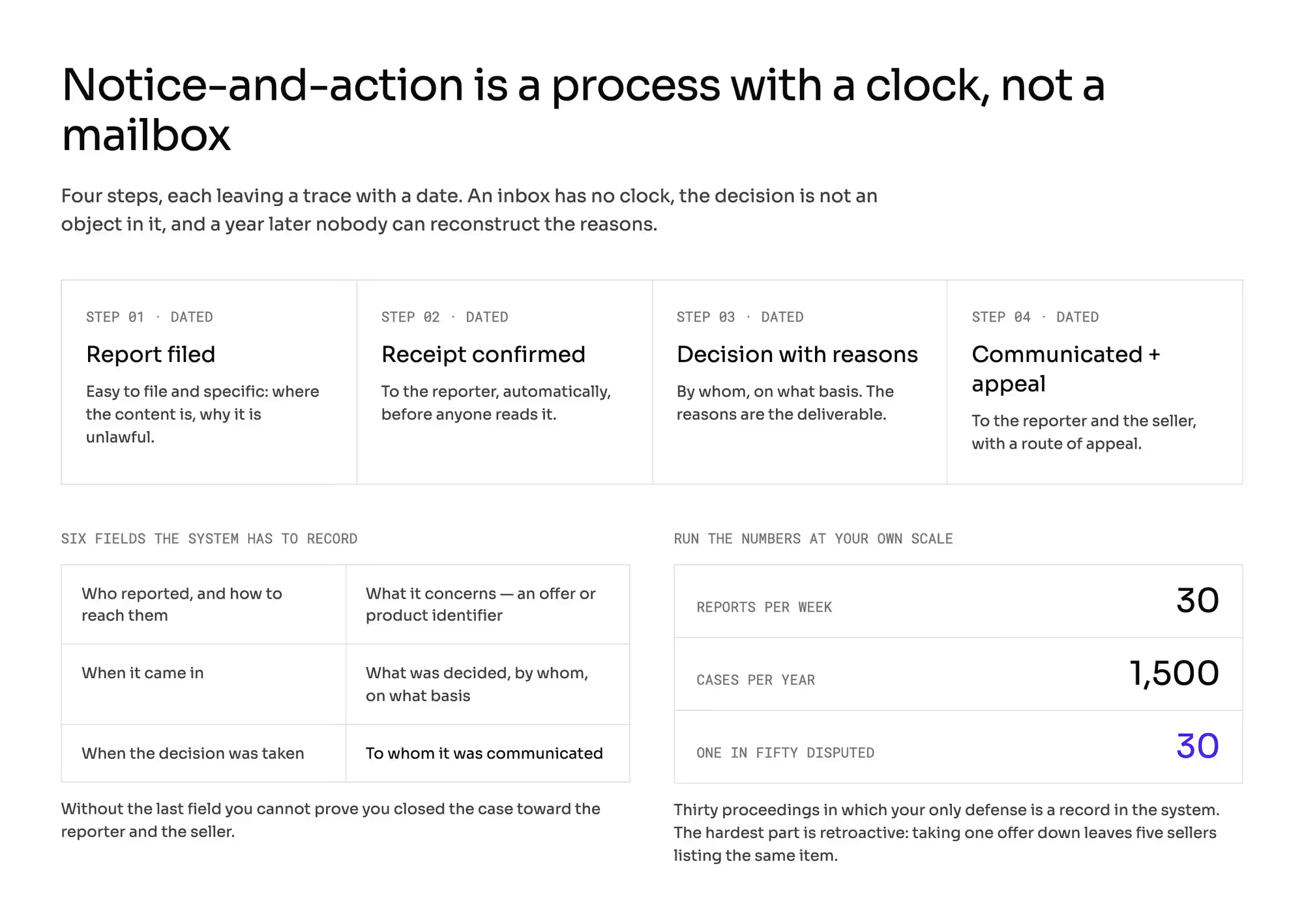
Six things the system has to record: who reported and how to reach them · what it concerns, identified by an offer or product identifier · when it came in · what decision was taken, by whom and on what basis · when · and to whom it was communicated. Without that last field you cannot prove you closed the case toward the reporter and the seller.
Run the numbers at your own scale. Thirty reports a week is fifteen hundred cases a year.
If one in fifty comes back as a dispute, you have thirty proceedings in which your only defense is a record in the system.
The hardest part is retroactive. Taking one offer down does not remove the problem when five other sellers list the same item, and repeat infringements require a counter per seller.
One market limitation is worth knowing: some platforms cannot re-check a product page once approved, or apply a new rule to a catalog already live.
Which seller data must a marketplace collect and verify?
The trader traceability obligation is the most product-shaped duty in this category: it comes down to fields, gates, and the moment of collection.
You collect the full set before the seller starts selling: name, postal address, phone, email, registration identifier, and a declaration of whether they act as a business. That declaration is a field of its own, because the message about the scope of the buyer's rights depends on it.
Separately, you have to make an effort to verify the data against public registers and run spot checks. The obligation is a process.
Verifying identity and beneficial owners for payouts is a deeper layer, from "Marketplace Seller Verification: KYC, Beneficial Owners, and Sanctions".
Some of that data goes in front of the buyer before the purchase. The seller's name, address, phone, and email on the offer page are the minimum.
The split of obligations comes on top. This is where your copy has to agree with your behavior.
If you write that the seller handles complaints while your team settles them instead, that line works against you.
Missing data is not something you may soften. An incomplete set before launch means no publication.
A live seller who does not fill the gap gets suspended. The harder case is sellers onboarded before the obligation existed.
With a hundred and twenty sellers and nine thousand offers, count how many have an empty phone field. Practitioners find such gaps on actively selling accounts long after go-live.
This is a migration with a gate.
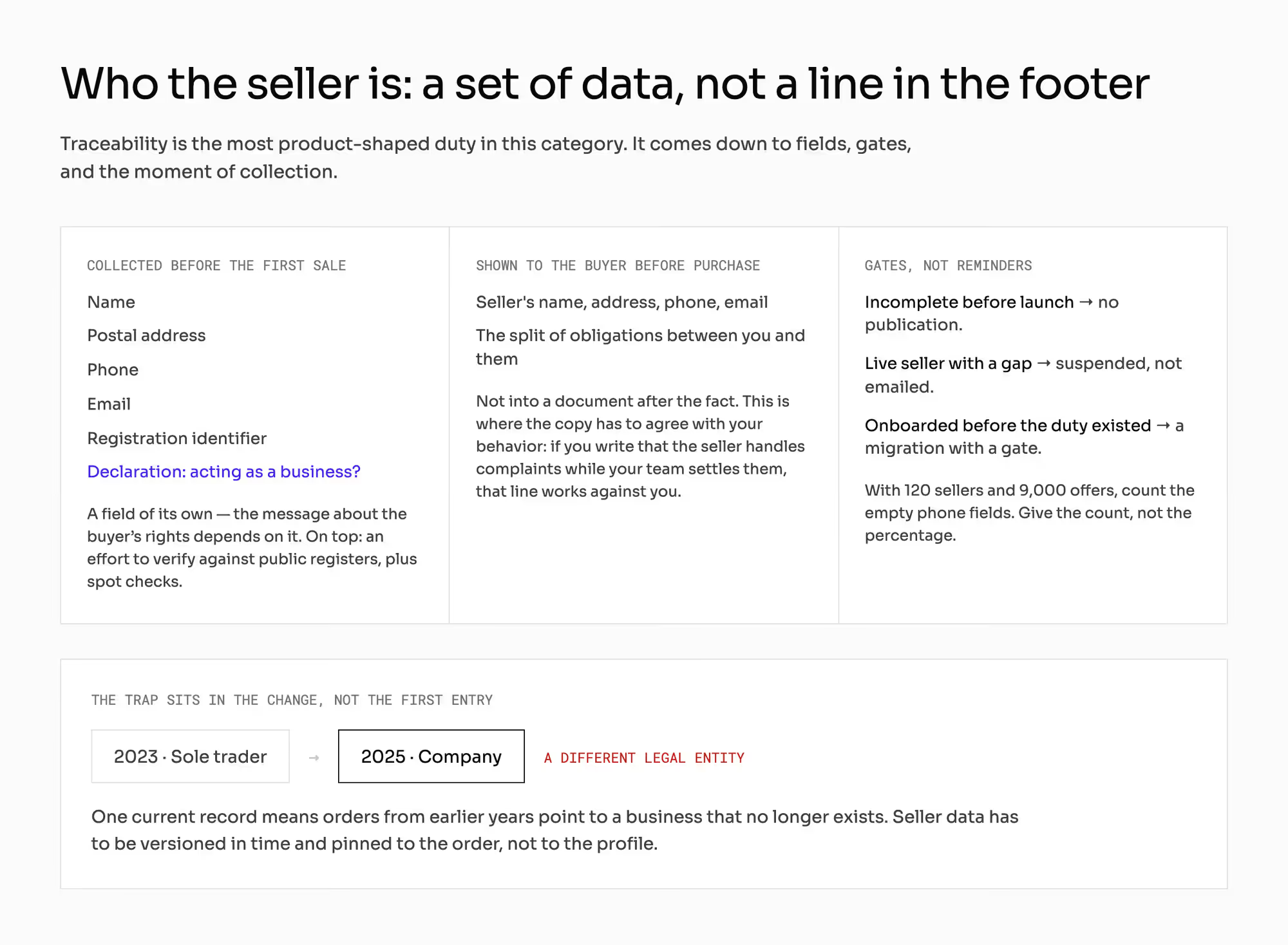
The last trap sits in the change. A seller moves from sole trader to company, and that is a different legal entity.
If the system keeps one current record, orders from earlier years point to a business that no longer exists. Seller data has to be versioned in time, and every order pins the version that was true when it was placed.
What does marketplace liability decide?
1. The front end stops being a marketing decision
The product page, the emails, and the checkout are where your legal status is created, so someone from compliance needs a voice in the mockup review.
2. The data model has to record who the seller was
Who the seller on that line was, in what legal form, who stood higher up the chain, who decided on a report. Same class of requirement as the tax data in "Marketplace VAT: Are You the Agent or the Principal?" and "Online Marketplace VAT: When Does the Platform Become the Deemed Supplier?". You collect the facts from the first order, because history cannot be written backward.
3. A gap between your terms and your behavior is a cost
Either you roll the behavior back, or you change the wording and take on the liability deliberately. That path comes with insurance and a right of recourse, from "Marketplace Seller Agreement and Terms: Which Documents Do You Need?".
How do you audit your own front end for marketplace liability?
You need the lawyer afterward, with the list in hand. Walk the purchase path and count the places where you behave like a seller.
- The product page. Is the seller's name visible without a click? Does your logo sit closer to the price than their name?
- Offer selection. How many offers stand behind the buy button, and who picked that one? If you did, can you describe the rule in one sentence?
- Checkout. How many times does the seller's name appear before confirmation? With two sellers in the cart, does the buyer know they are signing two contracts?
- Transactional emails. In how many post-purchase templates does the first sentence feature you, and in how many the seller? This is usually the worst score in the audit.
- The complaint path. Who does the button lead to, and who decided the last few dozen cases? A divergence means you are describing a process you do not have.
- The register of reports. Ask for a quarter's export of reports about unlawful content: date received, decision, date of reply. If the answer is a folder in a mailbox, you have a concrete gap.
- Completeness of seller data. How many active sellers hold the full set, and how many were verified against a public register? Give the count. A percentage is reassuring.
The total from points 1 to 5 is your counter of seller behavior. Zero is not the goal.
With a good buying experience, you will never reach it. The point is that the number is known and counted before somebody else counts it for you.
Three questions for the vendor come out of this: where seller identity sits per historical order; whether a report is an object with a decision and reasons, or a message; whether a new catalog rule reaches offers already published.
Which mistakes do operators make about marketplace liability?
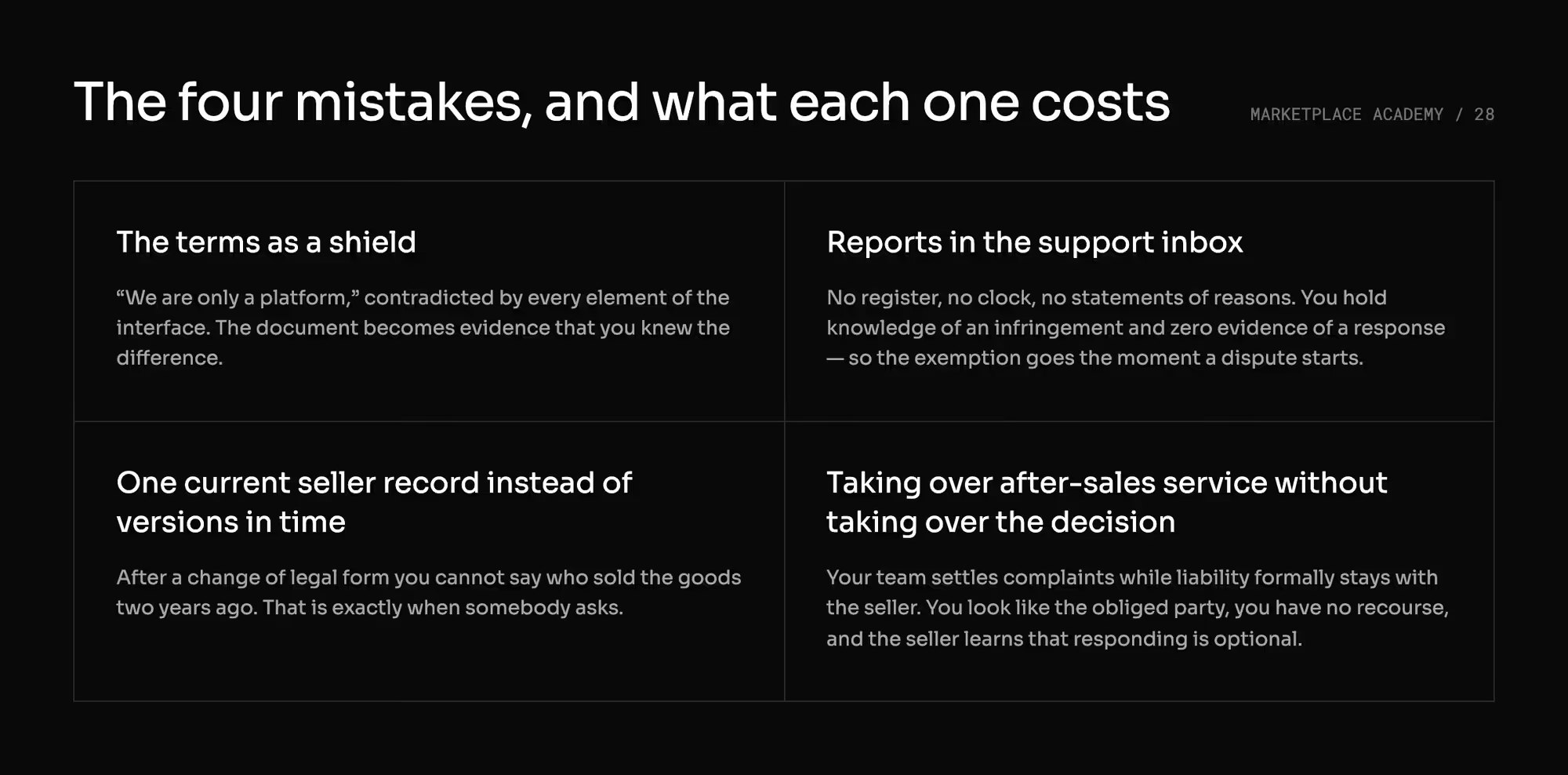
1. The terms as a shield
"We are only a platform," contradicted by every element of the interface. The consequence: the document becomes evidence you knew the difference.
2. Reports in the support inbox
With no register, clock, or statements of reasons, you hold knowledge of an infringement and zero evidence of a response. The consequence: you lose the exemption the moment a dispute starts.
3. One current seller record instead of versions in time
The consequence: after a change of legal form, you cannot say who sold the goods two years ago, and that is exactly when somebody asks.
4. Taking over after-sales service without taking over the decision
Your team settles complaints while liability formally stays with the seller. The consequence: you look like the obliged party, you have no recourse, and the seller learns that responding is optional.
What do you still have to settle yourself about marketplace liability?
This guide is a map of mechanisms, and it deliberately carries no provision numbers, no deadlines, and no thresholds. Confirm how your role is classified with a lawyer who has platform experience, working from the audit results above.
The families of regulation worth asking about by name:
- regulations on the liability of intermediary services and the obligations of platforms, known as the DSA: the source of the conditional exemption, notice-and-action, and seller traceability,
- consumer law on the information duties of platforms, associated with the Omnibus Directive: the source of disclosing seller status and the split of obligations,
- rules on liability for damage caused by a product: the source of the platform's conditional entry into the chain of economic operators,
- product safety law, with the EU responsible person: "GPSR for Marketplaces: Product Safety, Traceability, and Recalls",
- regulations on transparency in platform-to-seller relations, known as P2B: the source of statements of reasons toward sellers, "P2B Regulation on a Marketplace: Ranking, Terms Changes, and Suspension",
- trademark law: the source of brand owners' reports and your policy on repeat infringements.
Whether they apply to your business, and how far, is for a lawyer to settle. Our claim is narrower: intermediary status is a result of behavior, so it has to be designed in the interface and maintained in the data.
A platform that cannot show who sold, who reported, and what you did about it takes your defense away. The quality of the legal opinion in the binder changes nothing.
Summary: What decides whether you are an intermediary?
What the buyer sees, and what you can show afterwards. The product page, the emails, and who settles a complaint decide how your role is classified; the register of reports and the versioned seller record decide whether you can prove it.
Both are product decisions, made long before anyone asks.
Walk your own purchase path and count the places where you behave like a seller. Building a marketplace that has to record who sold, who reported, and what you did about it? Talk to us about the build.
Frequently asked questions on marketplace liability
Is a marketplace liable for what its sellers sell?
It depends on the layer, and there are three of them. For the content of an offer you answer as a host, and neutrality plus acting on reports clears you.
For the goods, you can be pulled into the chain of economic operators. For performance of the contract, the liable party is the party to the contract, with no exemption at all.
How does a marketplace lose the intermediary exemption?
By behaving like a seller, usually for reasons that had nothing to do with law. An indistinguishable presentation with your logo, one buy button that picks the offer for the buyer, transactional email written in the first person, after-sales taken over, warehousing and shipping.
Each is an ordinary conversion decision, and each moves you closer to being treated as the seller.
What data does a marketplace have to collect about a seller?
A full set before the first sale, verified against public registers and kept as versions in time. Name, postal address, phone, email, registration identifier, and a declaration of whether they act as a business.
An incomplete set means no publication; a live seller who leaves a gap gets suspended.
Ready to build?
We build marketplaces that keep a dated record of every report, every seller, and every response — the evidence intermediary status rests on.