
Should Your Marketplace Support Cash on Delivery?

Cash on delivery looks like one entry in the list of payment methods. A checkbox next to the card and the instant transfer. It is not. This is the only flow in which the buyer's money never touches any rail you control, so the machinery you built around the movement of money has nothing to handle.
The decision that "we support cash on delivery" does not cost one sprint. It costs a second, parallel settlement process that runs for the life of the platform.
So say one sentence to the board straight away. Ruling cash on delivery out deliberately is a full answer, on one condition: somebody has to actually make that decision.
Cash on delivery on a marketplace means the buyer's money never passes through any rail you control: the courier collects it and hands it to whoever is named as the sender. On a €1,000 order, your €120 commission stops being a deduction and becomes a debt the seller owes you.
Supporting it is a second settlement process that runs for the life of the platform, so it deserves a deliberate decision either way.
This article breaks down:
- What does cash on delivery change in your system?
- Who actually collects the money?
- How do you collect a commission with nothing to deduct it from?
- When does cash on delivery still make sense?
Key insights
- The buyer's money never touches a rail you control, so authorization, capture, split payments, and card disputes all stop applying.
- Whoever is named as the sender on the waybill receives the cash. That one line decides whether you touch other people's money at all.
- Your commission turns into a receivable. A seller who sells only on delivery never has a positive balance to net it off against.
- A refund is reported to you by the seller, the one party who gains from reporting it.
- An uncollected parcel needs its own category of event from day one, or it corrupts the seller quality metrics you issue suspensions on.
What does cash on delivery change in your system?
One example runs through this whole article: a €1,000 cart, your commission is 12%, which is €120.
On a card, that cart travels a familiar route: authorization, capture, settlement at the payment provider, a credit to somebody's account, the seller's balance, the payout, the reconciliation. Seven stops.
At each one, somebody controls the money, and each can be shown in a report. With cash on delivery, nothing survives from that route except the last stop. And the last stop is done by hand.
No authorization, because there is nothing to reserve. No capture, so no moment of capture to choose either.
No payment split and no card dispute. Not even a refund to the original payment method, because the original payment method was the courier.
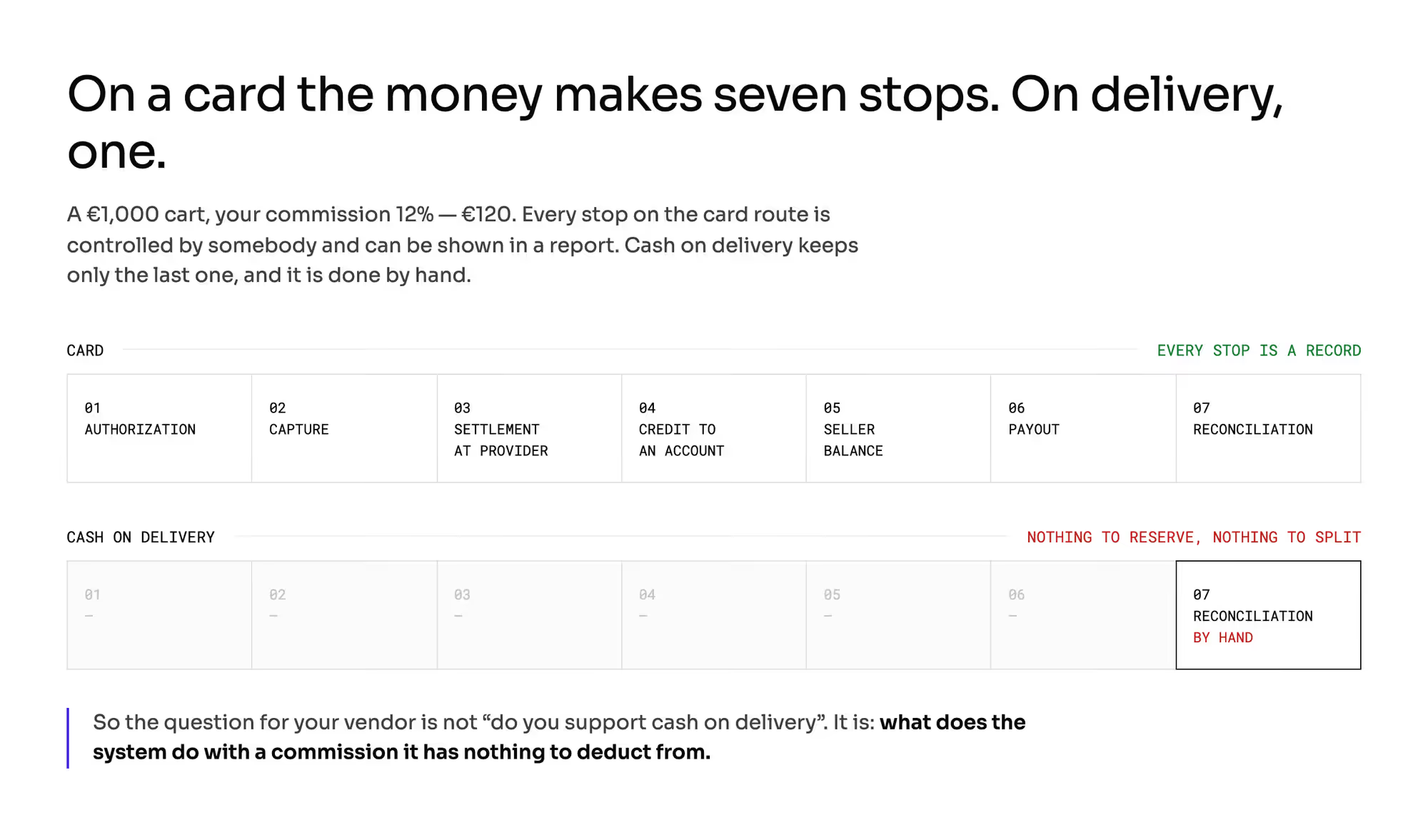
Hence, a conclusion for the conversation with your software vendor: the question "does your platform support cash on delivery" is the wrong question. Almost every platform supports it in one narrow sense.
It lets you place an order flagged as cash on delivery and does not wait for payment confirmation. That is the easy part.
The real question is this: what does the system do with a commission it has nothing to deduct from?
Who collects the money on a cash on delivery order?
The carrier collects the cash and hands it to the sender named on the waybill. A card tapped on the courier's terminal changes nothing.
That one sentence settles more than the rest of the configuration: the money goes to whoever is named as the sender on the waybill. Three situations follow, with completely different consequences.
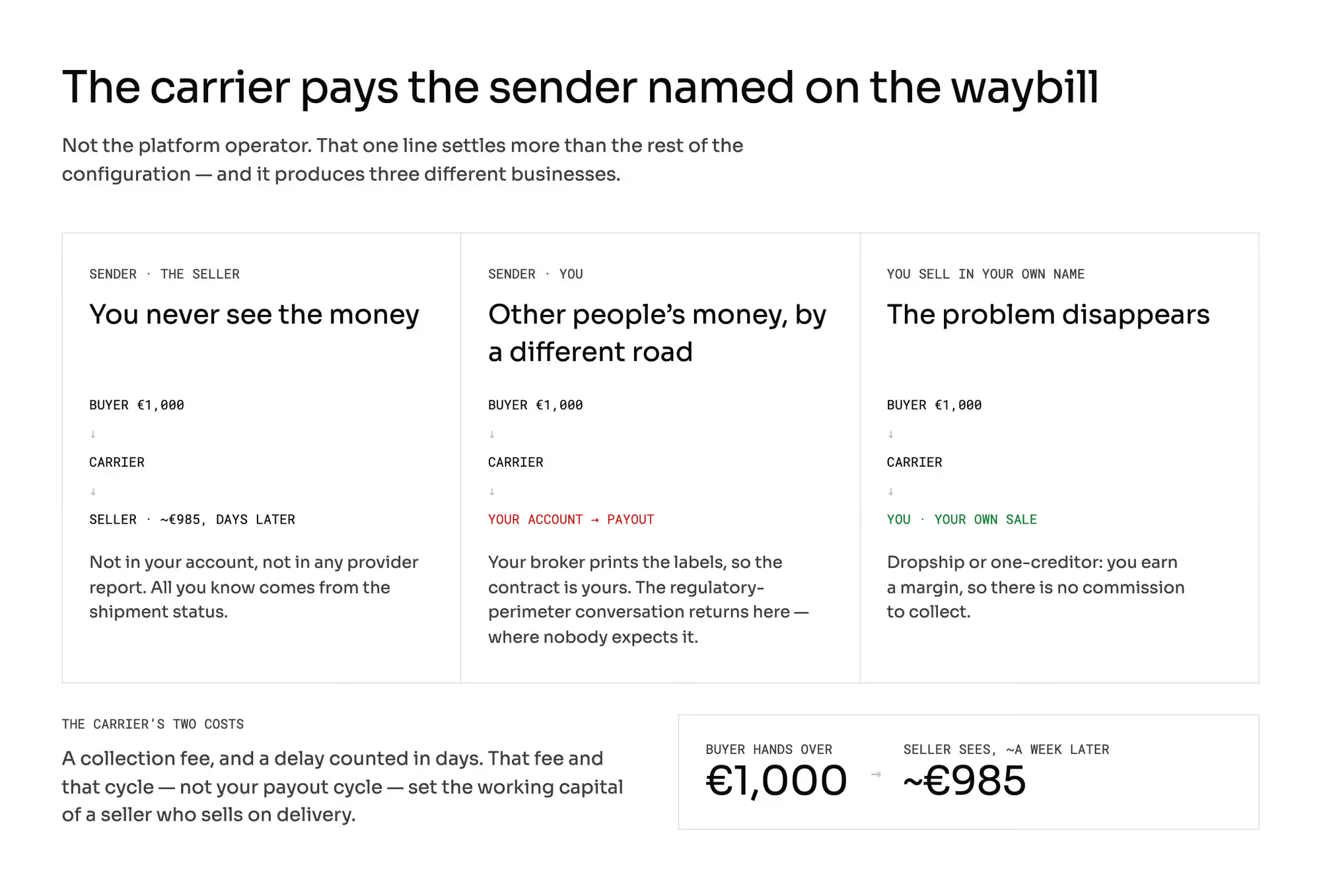
1. The seller is the sender
The courier hands them the €1,000 less the collection fee, a few to a dozen or so business days after delivery. You never see that money.
Not in your account, and not in any payment provider report. All you know about the transaction having happened comes from the shipment status.
2. You are the sender
This is the case when your shipping broker generates the labels, and the contract with the carrier is yours. The money collected comes back into your own account, and it is other people's money that arrived by a different road.
The whole conversation about the regulatory perimeter, the one you have when you collect card payments into your own account, returns here in the same shape. Nobody expects it in this place.
3. You sell in your own name
In dropship, or the one-creditor model, this is your own sale: you earn a margin, so there is nothing to collect and the problem disappears.
On top of that comes the cost. Carriers charge a collection fee, and they pass the money on with a delay counted in days.
The buyer hands the courier €1,000, and the seller sees about €985 roughly a week after delivery. That fee and that cycle set the real working capital of a seller who sells on delivery.
Why does your commission become a debt on cash on delivery?
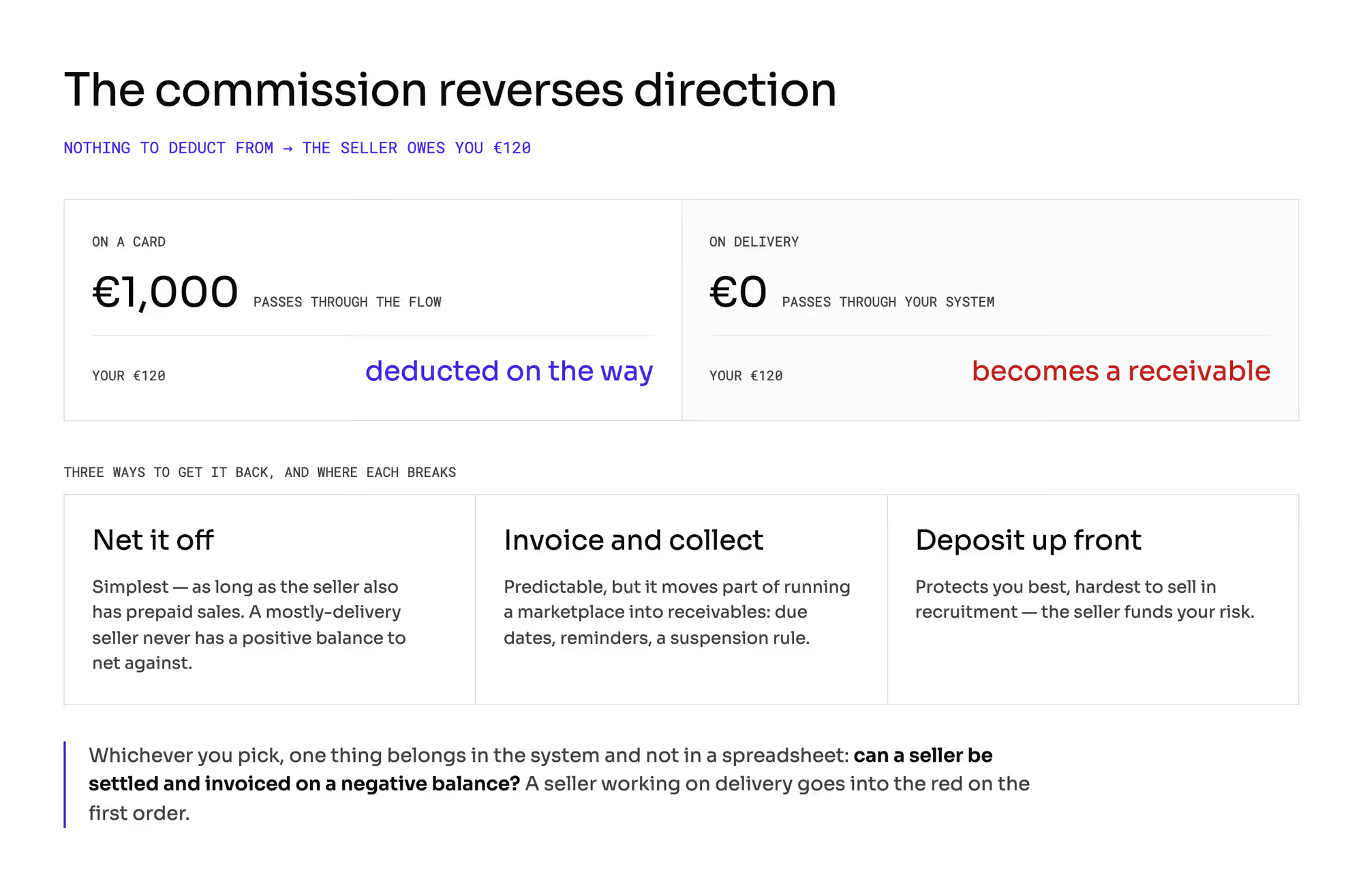
On a card, the €120 is deducted along the way from the €1,000 that passes through somebody's hands anyway.
With cash on delivery, there is nothing to deduct it from, so the commission turns into a receivable: the seller owes you €120.
There are three ways to get it back. Netting it off against other orders is the simplest, as long as the seller also has prepaid sales.
It stops working with a mostly cash-on-delivery seller, because that seller never has a positive balance to net anything off against. An invoice and ordinary debt collection are predictable, but they move part of running a marketplace into your receivables department, with due dates, reminders, and a decision on how many days of delay trigger a suspension.
A deposit, or commission paid up front, protects you best and is the hardest to sell in recruitment, because it makes the seller fund your risk.
Whichever you pick, one thing has to be settled in the system: whether you allow a seller to be settled and invoiced on a negative balance. Many settlement models quietly assume a positive balance.
A seller working on delivery goes into the red on the first order.
How do you learn about a refund you never processed?
The customer sends the goods back. On a card, you refund the €1,000 down the rail it came in on, and your system knows, because your system did it.
With cash on delivery, the seller refunds the money directly, because the seller received it. Your platform learns about the refund only when the seller reports it. And the seller has to, because the commission correction depends on it.
What you get is an arrangement found nowhere else in settlement: the financial event is reported to you by the party that gains from reporting it. The rest of the platform is built the other way round.
The operator or the carrier sets the "delivered" status precisely because the seller has an interest here. In a cash on delivery return, there is no independent witness.
Decide up front whether you take the declaration on trust or require evidence, and what you do when one seller's return rate drifts away from everybody else's.
How should you record a parcel nobody collects?
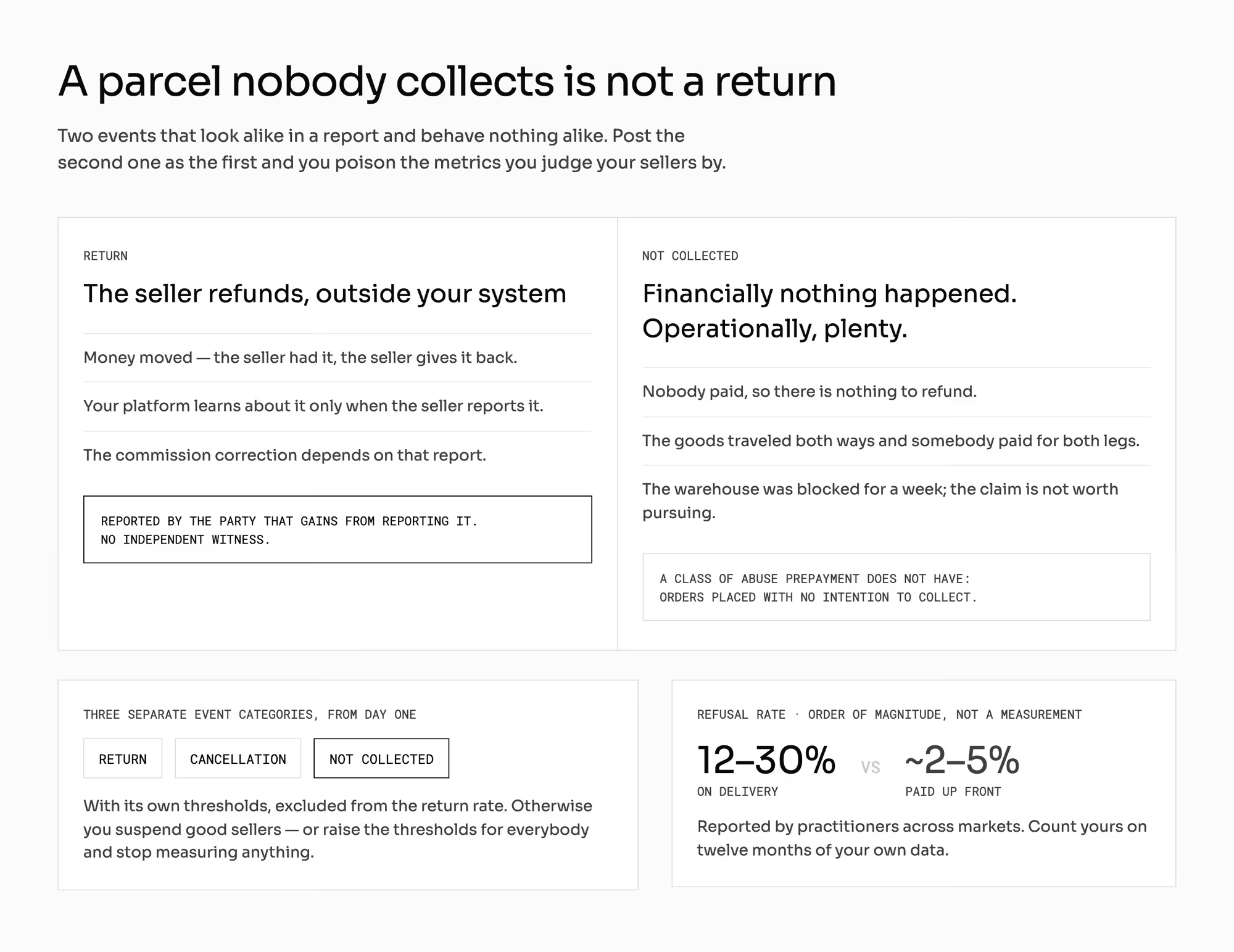
The second mechanism that does not exist with prepayment: the parcel nobody collects. The buyer does not open the door, does not pick it up from the locker, or tells the courier "I am not taking it." Financially, nothing happened.
Nobody paid, so there is nothing to refund. Operationally, plenty happened: the goods traveled in both directions, somebody paid for both legs of the transport, and the seller's warehouse was blocked for a week.
You usually have a claim against the buyer, but on a €1,000 cart nobody pursues it.
The surprise sits in the data. Post an uncollected parcel as a return, and you poison the metrics you judge your sellers by.
Platforms routinely measure the rate of returns, complaints, and cancellations, and crossing a threshold triggers a warning or a suspension. A seller with a high share of cash on delivery then scores badly through no fault of their own.
You either suspend a good seller or raise the thresholds for everybody, which means you stop measuring anything. "Not collected" has to be a separate category of event from day one.
The scale is consistent across markets. Practitioners in countries with a high share of cash on delivery report refusal rates on the order of a dozen to thirty percent, against a few percent on orders paid up front.
Those are orders of magnitude, so measure your own case. The direction, though, is confirmed independently across markets and categories: cash on delivery is refused several times more often.
Then comes a class of abuse that does not exist with prepayment: orders placed with no intention of collecting them, on somebody else's details or invented ones. They cost the person ordering nothing, which is exactly why they happen.
What do you reconcile against when there is no payment provider?
The last stop is still there: checking that everything adds up. Except that the classic three-way reconciliation is missing its middle element.
Your book, the payment provider report, the bank statement: here the second one does not exist. Instead of a report from a system that knows your order identifiers, you get a remittance statement from the carrier in its own logic: per waybill, per period, net of the collection fee.
And if the seller is the sender, you have nothing to reconcile against. What you have is shipment statuses and declarations.
And one thing on the edge of tax that you should at least know exists. The moment a tax obligation arises on a cash-on-delivery sale is sometimes counted from the release of the goods to the carrier.
If that is how your jurisdiction works, the seller pays tax on a sale whose money arrives a week or two later, and an uncollected parcel calls for a correction. Confirm this with a tax advisor for the specific country before you write anything into your terms.
How do the 3 settlement variants compare?
What does the setup decide? | No cash on delivery | Cash on delivery, seller collects | Cash on delivery, you collect |
|---|---|---|---|
Who receives the buyer's €1,000 | not applicable | the seller (less the carrier's fee) | you (less the carrier's fee) |
Your €120 of commission | deducted from the flow | a receivable from the seller | deducted at payout |
Other people's money in your hands | no | no | yes, so the regulatory perimeter question comes back |
Refund to the customer | down your own rail | by the seller, outside the system | by you, but outside the original rail |
Seller balance | positive | can be permanently negative | positive |
Reconciliation | three-way, can be automated | rests on the seller's declarations | two-way with the carrier, manual |
Main cost | losing part of your demand | chasing the commission | regulatory exposure and cash handling |
When does cash on delivery still make sense?
None of the above is an argument against doing cash on delivery. It is an argument for knowing what it costs, and comparing that against what its absence costs.
Because in some markets the absence of cash on delivery is a decision to give up demand. In Poland, the cash on delivery share of online payments has fallen into single digits and keeps falling, as it has in Scandinavia and the United Kingdom.
But in several countries of Central and Southern Europe (Romania, Czechia, Slovakia, Hungary, Bulgaria, Greece) it is still anywhere from a dozen to several dozen percent of online orders, and in some of them closer to half. Outside Europe, the picture is similar: in Southeast Asia and North Africa the share is falling fast, but still counts in tens of percent.
Take these as orders of magnitude, because the data differs between studies. The gap between "a few percent" and "half" is too wide to be an artifact of methodology.
Geography aside, cash on delivery genuinely earns its keep in categories where trust in the seller is low and on a new platform with no recognizable brand, where it buys the first transaction from a wary customer.
There is also a middle road, and it is usually the right answer: conditional cash on delivery. Only in selected categories, only up to a set cart value, only for sellers who have paid a deposit, only for buyers with a history, with a separate fee covering the cost of collection, with order confirmation before dispatch.
Each of those limits lowers the share of uncollected parcels, and each can be switched on separately.
What does cash on delivery decide?
1. This is a decision about the settlement model
The question is whether your platform can run a seller with a permanently negative balance and collect commissions from them like ordinary receivables. If it cannot, cash on delivery is not workable, whatever the storefront shows.
2. The seller agreement needs a separate chapter on cash on delivery
It has to cover the payment term for the commission, how refunds get reported, what counts as evidence, the consequences of delay, and who carries the cost of an uncollected parcel. Here you have no balance to quietly satisfy yourself from.
Whatever is not in the agreement you will not enforce.
3. Seller quality metrics need a separate category of event
They also need separate thresholds for sales made on delivery.
If the money collected comes back into your account, you are back in the conversation about the regulatory perimeter. Cash from a courier is no different here from a transfer from a payment provider.
How do you decide on cash on delivery? 4 questions for you and 5 for the vendor
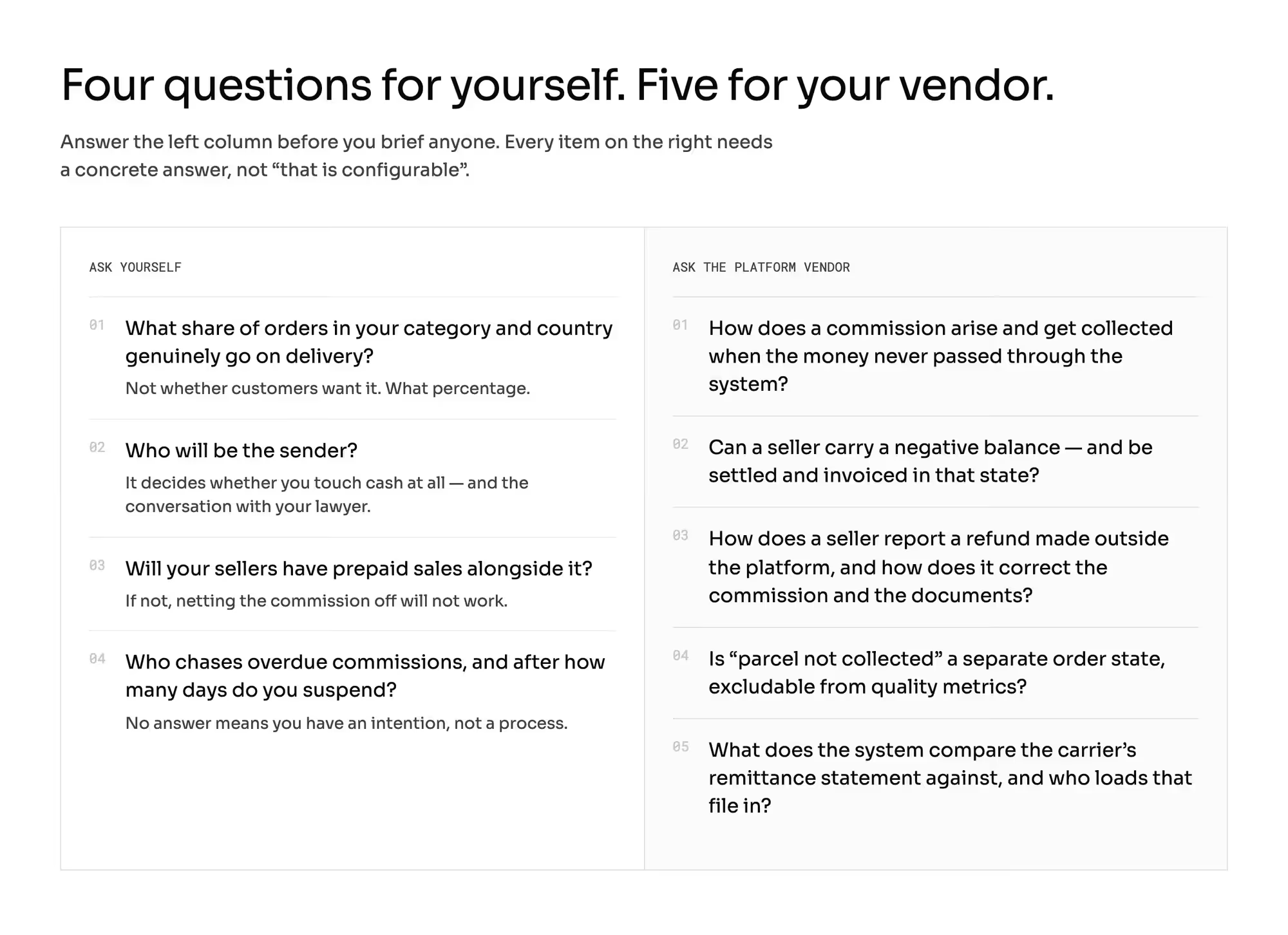
- What percentage of orders in your category and your country genuinely go on cash on delivery? Not whether customers want it. What percentage. If the answer is "a few," ruling it out deliberately is cheaper than supporting it.
- Who will be the sender? That settles whether you touch cash at all, and it decides the conversation with your lawyer.
- Will your sellers have prepaid sales alongside cash on delivery? If not, netting the commission off will not work.
- Who chases overdue commissions, and after how many days do you suspend the seller? No answer means you do not have a process. You have an intention.
And five questions for the platform vendor, each of which needs a concrete answer:
- How does a commission arise and get collected on an order where the money never passed through the system?
- Can a seller carry a negative balance, and can the system settle and invoice them in that state?
- How does a seller report a refund made outside the platform, and how does that correct the commission and the documents?
- Is "parcel not collected" a separate order state, and can it be excluded from seller quality metrics?
- What does the system compare the carrier's remittance statement against, and who loads that file in?
Which mistakes do operators make about cash on delivery?
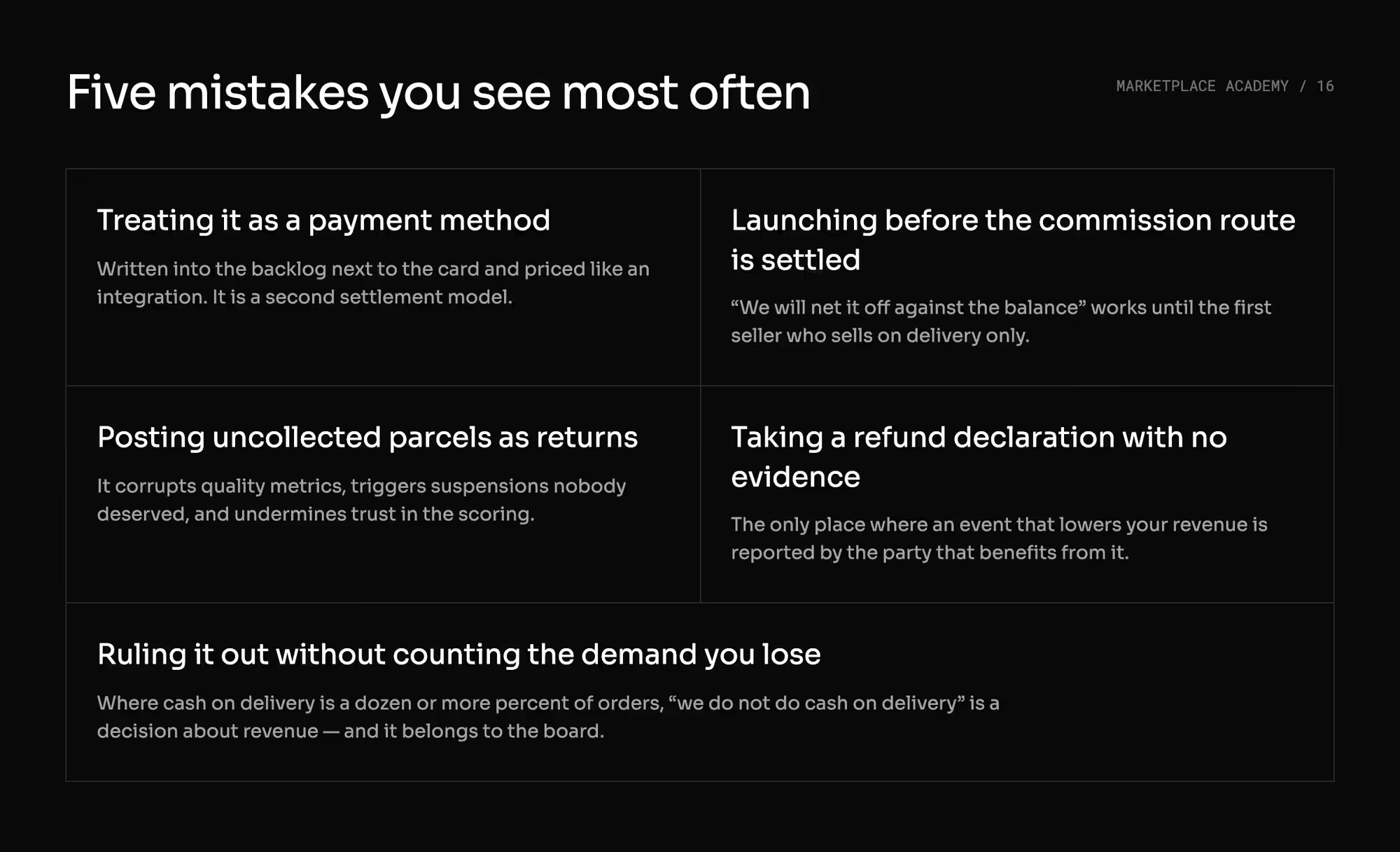
1. Treating cash on delivery as a payment method
Written into the backlog next to the card, priced like an integration. It is a second settlement model.
2. Launching cash on delivery without settling how the commission comes back
The most common version: "we will net it off against the balance." That works until the first seller who sells on delivery only.
3. Posting uncollected parcels as returns
It corrupts your quality metrics, triggers suspensions nobody deserved, and undermines seller trust in the scoring system.
4. Accepting a seller's declaration of a refund with no evidence and no monitoring
This is the only place where an event that lowers your revenue is reported by the party that benefits from it.
5. Ruling cash on delivery out without counting the demand you lose
Where it is a dozen or more percent of orders, "we do not do cash on delivery" is a decision about revenue, and it belongs to the board.
What do you still have to settle yourself about cash on delivery?
This is a map of mechanisms, not legal or tax advice. Confirm three things with a lawyer and a tax advisor, for the specific jurisdiction and year: whether money collected on delivery landing in your account puts you inside the payments regulatory perimeter, how the moment a tax obligation arises is counted on a cash on delivery sale, and whether your country caps cash payments.
This guide deliberately gives no thresholds, rates, or deadlines, because they change faster than this text does.
This guide also does not settle whether cash on delivery pays off for you. That depends on its share in your category and your country, on the mix of your sellers, and on what an hour of work in your settlement team costs.
Every market share and every refusal rate here is an order of magnitude. Calculate them on your own data from the last twelve months before you decide.
Summary: What does supporting cash on delivery require?
A system that can run a seller on a permanently negative balance and invoice them there, a separate order state for an uncollected parcel, a chapter in the seller agreement covering commission terms and refund reporting, and somebody whose job is chasing overdue commissions.
The middle road is usually the right one: cash on delivery in selected categories, up to a cart value, for sellers who paid a deposit. Talk to a marketplace expert if you want the nine questions sharpened before the demo.
Frequently asked questions on cash on delivery
What is cash on delivery on a marketplace?
Cash on delivery is an order the buyer pays for at the door, so the money reaches the sender named on the waybill and never enters your platform. Everything your settlement machinery does with a moving payment has nothing to act on, and the only stop that survives from a card journey is the last one, done by hand.
How does a marketplace collect commission on a cash on delivery order?
Three ways, in falling order of reliability: net it off against the seller's prepaid sales, invoice it as an ordinary receivable, or take a deposit up front. Netting is simplest and breaks down entirely with a seller who sells only on delivery, because that seller never carries a positive balance.
Should a marketplace offer cash on delivery?
It depends on the share of orders it actually accounts for in your country and category. In Poland, Scandinavia, and the UK, that share has fallen into single digits, while in parts of Central and Southern Europe it still runs from a dozen to several dozen percent of online orders. Where it is that high, refusing it is a decision about revenue.
Ready to build?
If you operate in a market where cash on delivery genuinely carries weight and you want to count what supporting it costs against what its absence costs, let's talk.