
Which Marketplace Platform Model Should You Choose?
This is the first decision and the hardest one to reverse. It settles who sells, who issues the invoice, who accounts for VAT, how you make money, and whose money passes through your hands. Everything you read in the later chapters follows from it.
The good news: there are four models, and after an hour of conversation you know which one is yours. The bad news: companies make this decision by accident, because nobody ever put it on the table as a question, and they find out two years later, at the first tax inspection or the first large refund.
This article breaks down:
- Who is the seller on a marketplace platform?
- Which 4 models can you choose from?
- How do the models differ in price, liability, and VAT?
- Which 4 questions settle the choice?
For the four types of marketplace business models - B2B, B2C, C2C and C2B - see our guide to marketplace business models. This article answers a different question: who is legally the seller, and what follows from that.
Key insights
- The marketplace platform model settles five things at once: who sells, who invoices, who accounts for VAT, how you earn, and whose money you hold.
- Merchant of record, seller of record and taxable person are three different roles, and a single order can put them in three different places.
- A deemed supplier rule can make the platform the taxable person even where the seller sells under civil law.
- If the buyer's money lands in your account, the EBA has said that settling the buyer's debt is not on its own enough to put you outside PSD2.
- Design the data model for a hybrid, but launch one model.
Who is the seller on a marketplace platform?
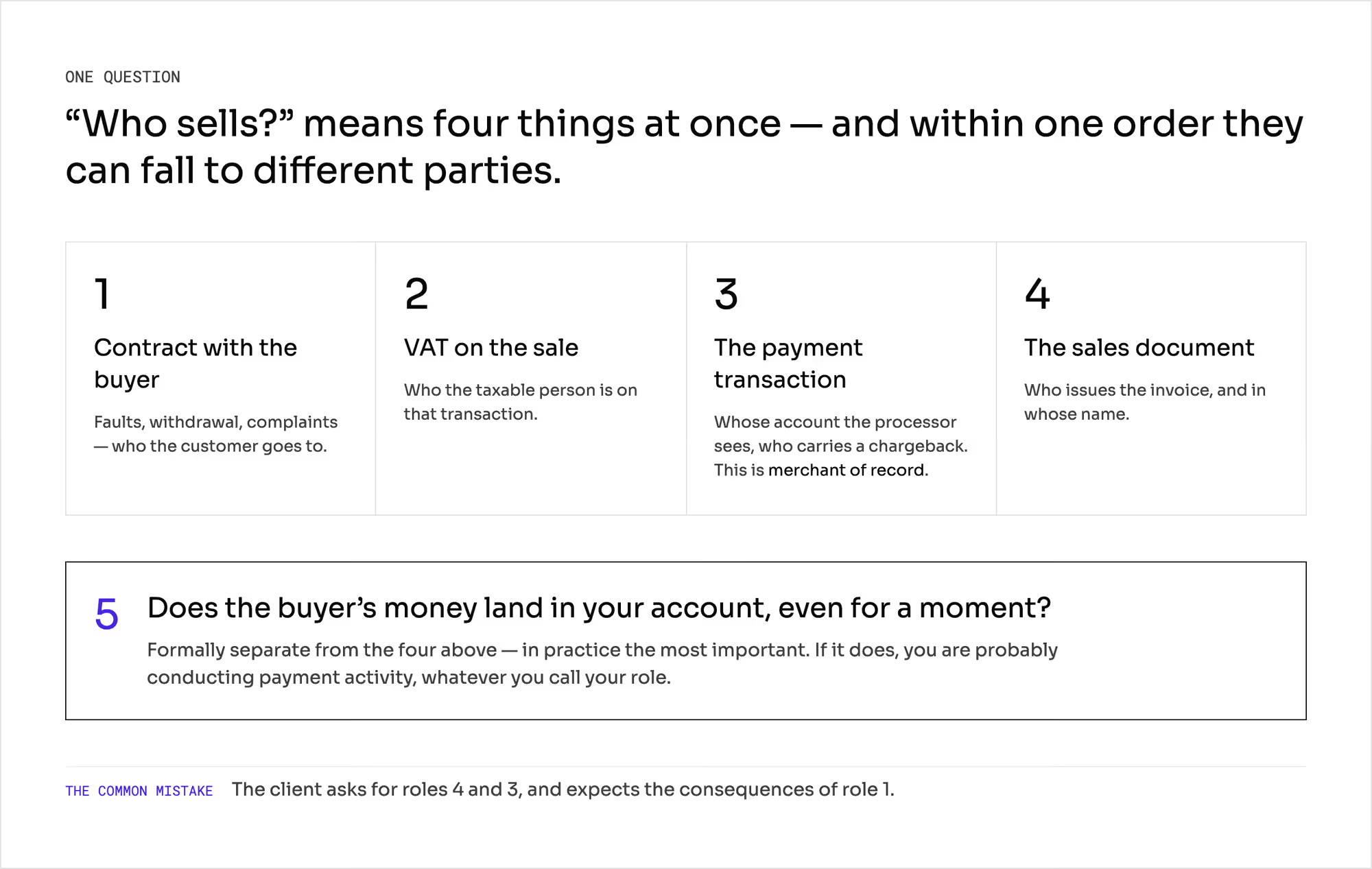
Who sells? It looks obvious. It is not, because "sells" means four different things at once, and within a single order they can fall to different parties:
- Who is a party to the contract with the buyer. Who answers if the goods are faulty, who handles withdrawal from the contract, who the customer goes to with a complaint.
- Who accounts for VAT on that sale.
- Who is responsible for the payment transaction. Whose account the card processor sees, who carries the cost of a chargeback. That is what merchant of record means when your payment provider uses the term.
- Who issues the sales document.
The most common misunderstanding in the room goes like this: the client says "we want to be the merchant of record", means roles four and three, and expects the consequences of role one. These are not the same thing, and confusing these roles is the most expensive mistake in this layer.
There is also a fifth question, formally separate from all four but in practice the most important: does the buyer's money land in your account, even for a moment? If it does, you are probably conducting payment activity, and you have to clear that with a lawyer, whatever you call your role.
The models differ in exactly one way: how they split these five things.
Which 4 marketplace platform models can you choose from?
1. Marketplace (3P)
The seller sells, you give them the space, the traffic, and the infrastructure. You earn a commission on what they sell. You will hear this called the agency model, mostly from lawyers and tax advisors: you act on the seller's behalf rather than selling yourself.
The seller sets the price and is responsible for the goods and for after-sales service. In the cart and on the invoice, the customer sees that they are buying from the seller and not from you. That is an information duty, not a matter of taste. The invoice for the customer is issued by the seller, though technically you can do it for them, in their name. You issue the seller a commission invoice.
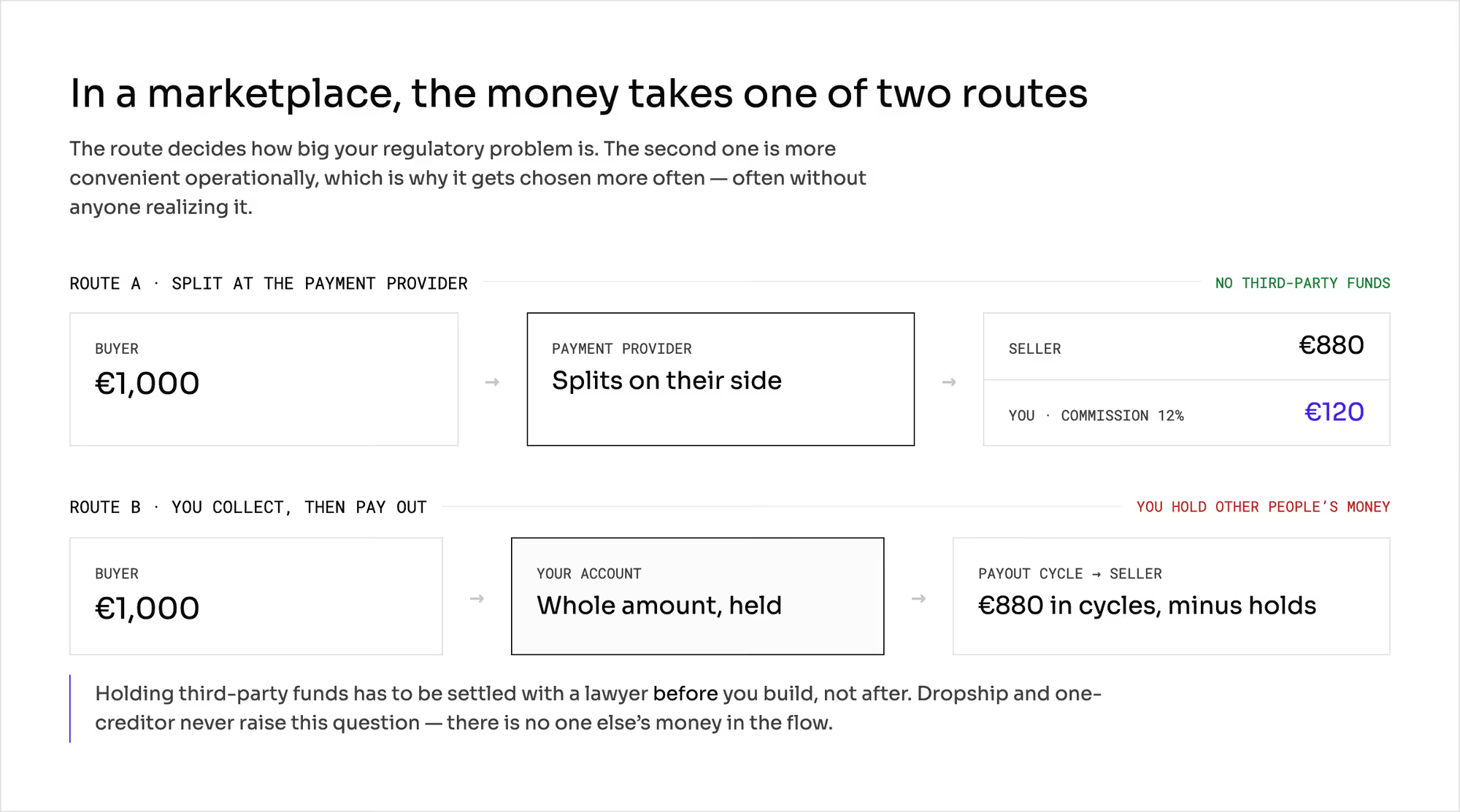
In your books, you have the commission only. A €1,000 cart at a 12% commission is €120 of your revenue, not €1,000.
The money flows one of two ways. Either your payment provider (for example, Stripe Connect, Adyen for Platforms, or Mangopay) splits it on their side and pays the seller directly, so you never touch anyone else's funds and your regulatory problem stays as small as it can be. Or you collect the whole amount into your own account and pay out in cycles, which means you are holding third-party funds, and that has to be settled separately with a lawyer. The second option is more convenient operationally, which is why it gets chosen more often, often without anyone realizing it.
Choose this if you want to expand the assortment fast on someone else's working capital, you accept that you control neither the price nor the quality of service, and what matters to you is scale.
2. Dropship
The reverse of the above. You are the one selling, and the supplier is invisible to the customer. The product page, the emails, the packaging, and the invoice are all yours.
The supplier gives you a purchase price, you set the selling price, and you earn a margin. There is no commission at all. The supplier invoices you, you invoice the customer. In your books, you have the whole GMV as revenue.
On the payments side, this is the simplest model, because there are no third-party funds here. This is your ordinary sale. You need neither supplier KYC in the payments sense nor escrow accounts.
The price of that simplicity sits elsewhere. You take on full consumer liability for goods you have never laid eyes on: conformity, statutory warranty, withdrawal, product safety.
And there is one more cost, which surprises almost everyone. Since you set the price, you have to hold the product on your side: in the PIM and in the ERP. Connecting a single brand therefore means loading the data, auditing quality, negotiating a contract, sometimes running your own photo shoot. All of it happens before you sell a single unit.
In a marketplace, that path is shorter for a structural reason, not an organizational one: the seller sets the price themselves, so their product does not have to pass through your systems to reach the page. That is why dropship intuitively looks simpler. The reason people give is that it is closer to what we already do. In practice, it scales more slowly. If you want to weigh this on your own numbers, one question to the product team is enough: how long does it take us to bring a new brand into the PIM and the ERP, counting from the day the contract is signed.
Choose this if control over the brand and the assortment matters more to you than speed, you already have supplier relationships, or you sell something where you want to be the face of the transaction anyway.
3. One-creditor (commissionaire)
A rarer model, because it solves one specific problem: a large buyer does not want five invoices from five sellers. They want one counterparty, one invoice and one payment. In public procurement and in large B2B, this is sometimes a condition of entry.
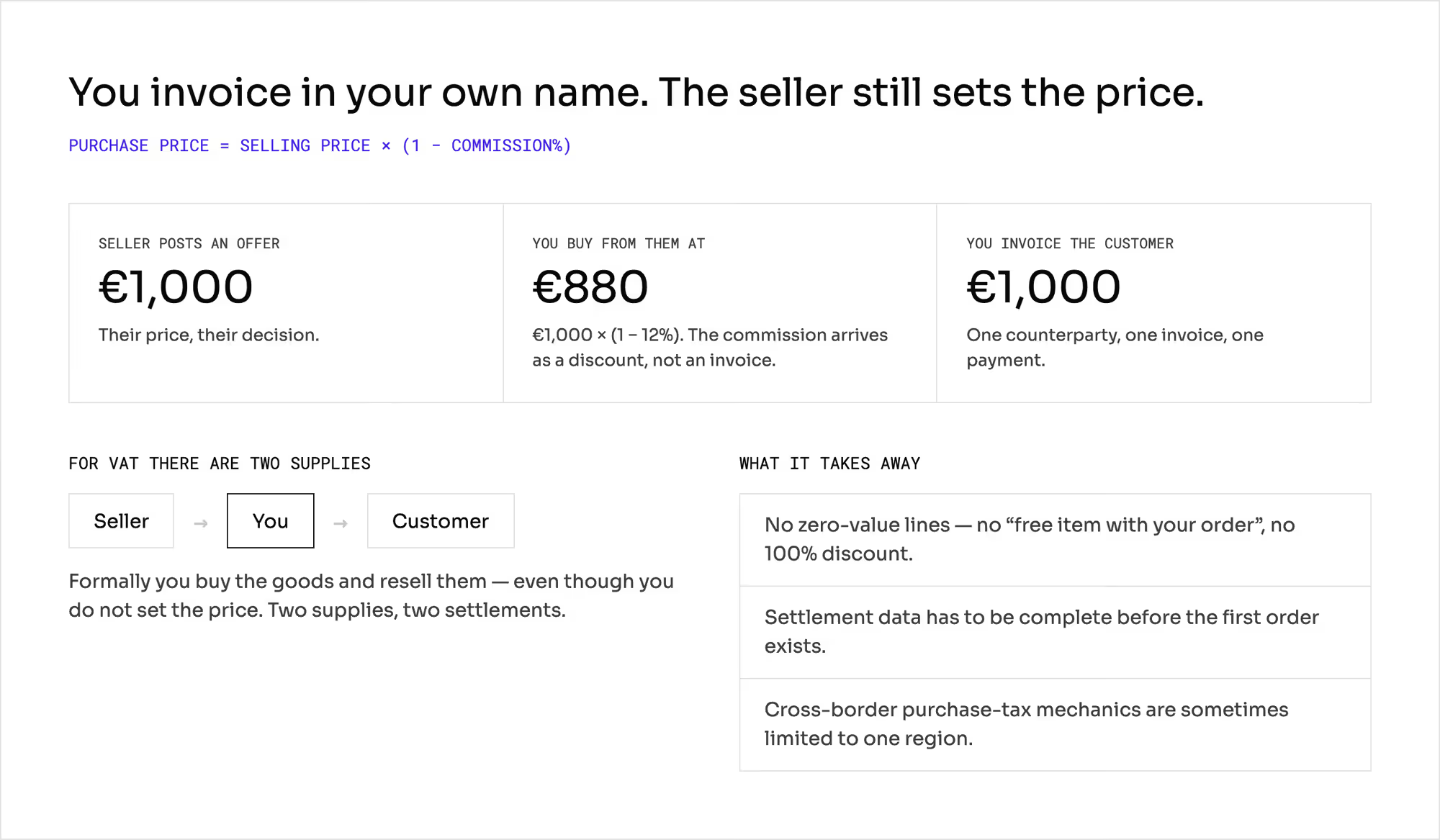
The solution looks like this: you invoice the customer in your own name, but the selling price is still set by the seller. The purchase price is then derived from the commission:
purchase price = selling price × (1 − commission%)
The seller posts an offer at €1,000, the commission is 12%, so you buy from them at €880 and invoice the customer for €1,000. In the books, it looks like dropship: you have the whole GMV. The difference is fundamental. You are not the one setting the price.
To the customer, you are the seller, so you carry liability for the product even though you do not decide its price. For VAT, there are two supplies here: the seller to you, and you to the customer. Formally, you buy the goods and resell them, even though you do not set the price. In procurement literature, this arrangement is called the one-creditor model or the commissionaire model, and it is best known in German B2B, where the purchasing department requires a single supplier in the vendor master regardless of how many sellers stand behind the order.
One consequence catches commercial teams off guard. The purchase price is derived from the selling price, so cutting what the customer pays cuts what the seller receives in the same proportion, and you have no way to fund a discount yourself on that line. In a marketplace, you have one: you settle with the seller at the full price and absorb the difference. Here, a free item or a 100% code means a line sold at €0, which is a line the seller hands over for nothing. If your commercial calendar runs on promotions the operator pays for, check whether the model survives it before you commit.
Choose this if your buyer requires consolidated invoicing and common payment terms. Otherwise, it is not worth it. The complexity is real, and if you sell in more than one country, ask the vendor whether their tax handling covers the purchase leg everywhere you sell and not only in your home market.
4. Hybrid
Several models running side by side on one platform, assigned per seller or per type of flow.
The typical case: a retailer runs a marketplace for the long tail and dropship for the premium brands that will not give up control of the price. This makes business sense, and most mature platforms end up here.
The cost comes in three parts. Business data does not mix between models, so you design reporting and finance as a sum, not as a whole. Assigning a seller to a model is sometimes irreversible, and even where it can be changed technically, the document history cannot. And most importantly: the customer sees one cart, and behind it stand two or three different arrangements of liability, so the message at checkout and the handling of complaints stop being trivial.
A practical recommendation: design the data model for a hybrid, but launch one model. Triple complexity before the first transaction is the simplest way to miss your date.
How do the 4 marketplace platform models compare?
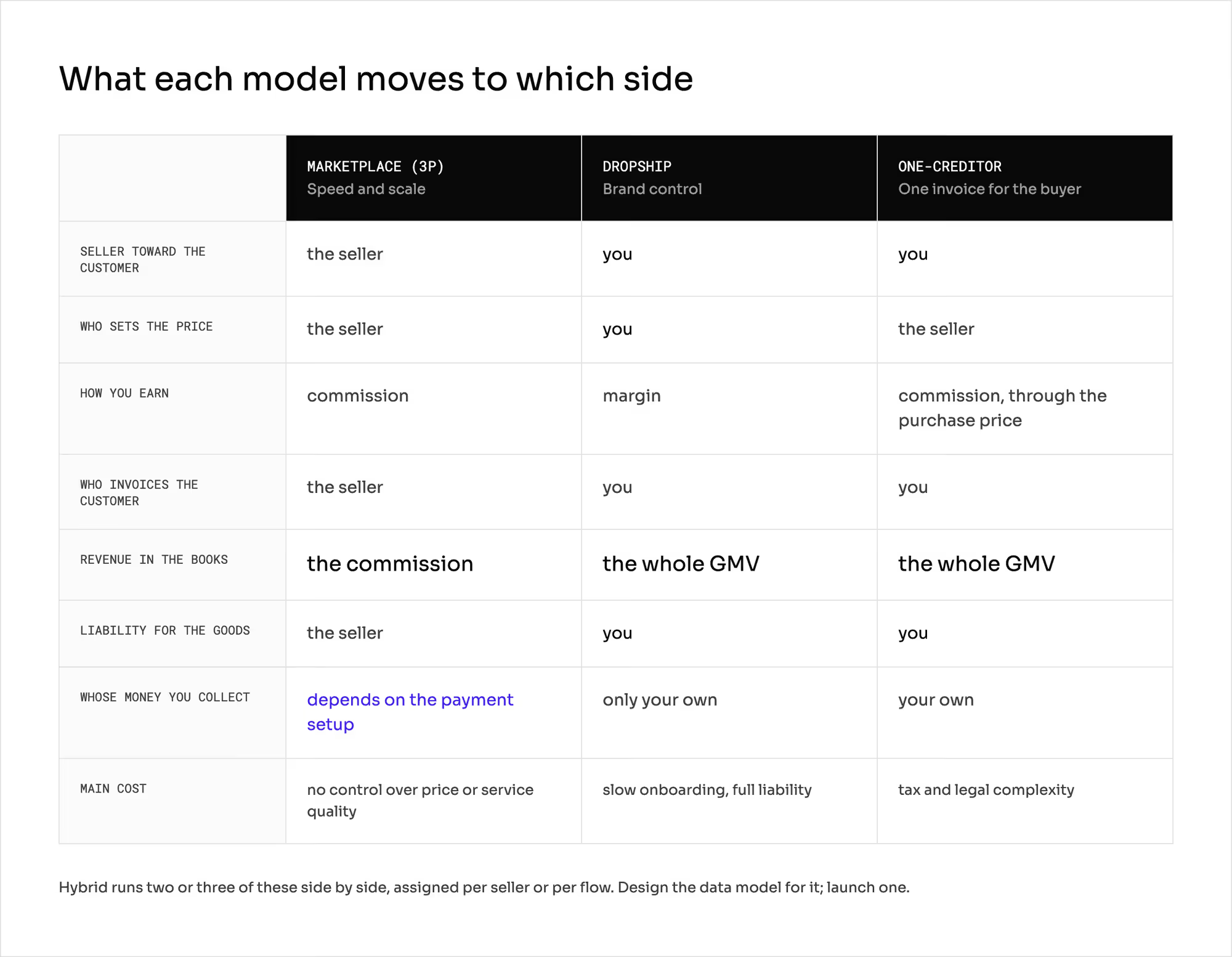
Which 5 things does your platform model decide?
This one decision settles five things. That is why it comes back to you in every chapter that follows.
1. Merchant of record
In a marketplace, you may not be one at all if the payment provider settles sellers as sub-merchants. In dropship and one-creditor, you always are, along with the chargeback risk. That shapes which payment provider you can even choose.
2. VAT
In a marketplace, the taxable person is the seller. In dropship, it is you. In one-creditor, there are two supplies, so two settlements.
And there is one more catch: on sales to consumers in the EU through sellers based outside it, or on imported goods, the rules can treat the platform as the supplier for VAT purposes, even when you are not one under civil law.
So you can be an agent and, at the same time, the taxable person on part of the flows. Check this with an advisor before you settle the data model, because from then on every order has to tell you where the seller is established and whether the goods came from an import.
3. Invoicing
Who issues it, in whose name, in which language, with what numbering, and where you archive it.
If you issue in the seller's name and you operate in a country with mandatory e-invoicing, then you become the technical issuer in the national system, and you carry the whole compliance burden that comes with it. That can blow up a project schedule, so the question gets asked in the first meeting, not the last.
4. Commissions
In a marketplace and in one-creditor, this is your revenue engine, so you need grids per category and per seller, thresholds, caps, and time-based rules. In dropship, that entire layer is useless.
You earn a margin, and you calculate it in your own system anyway.
5. The flow of money
This is where the model turns into legal risk. Dropship and one-creditor are your own sale, so on the payments side they are simple. A marketplace forces you to settle whether you touch seller funds, and if you do, on what basis. The market defaults to "collect everything and pay out", because it is the most convenient, and that is exactly the option that needs legal analysis before you build, not after.
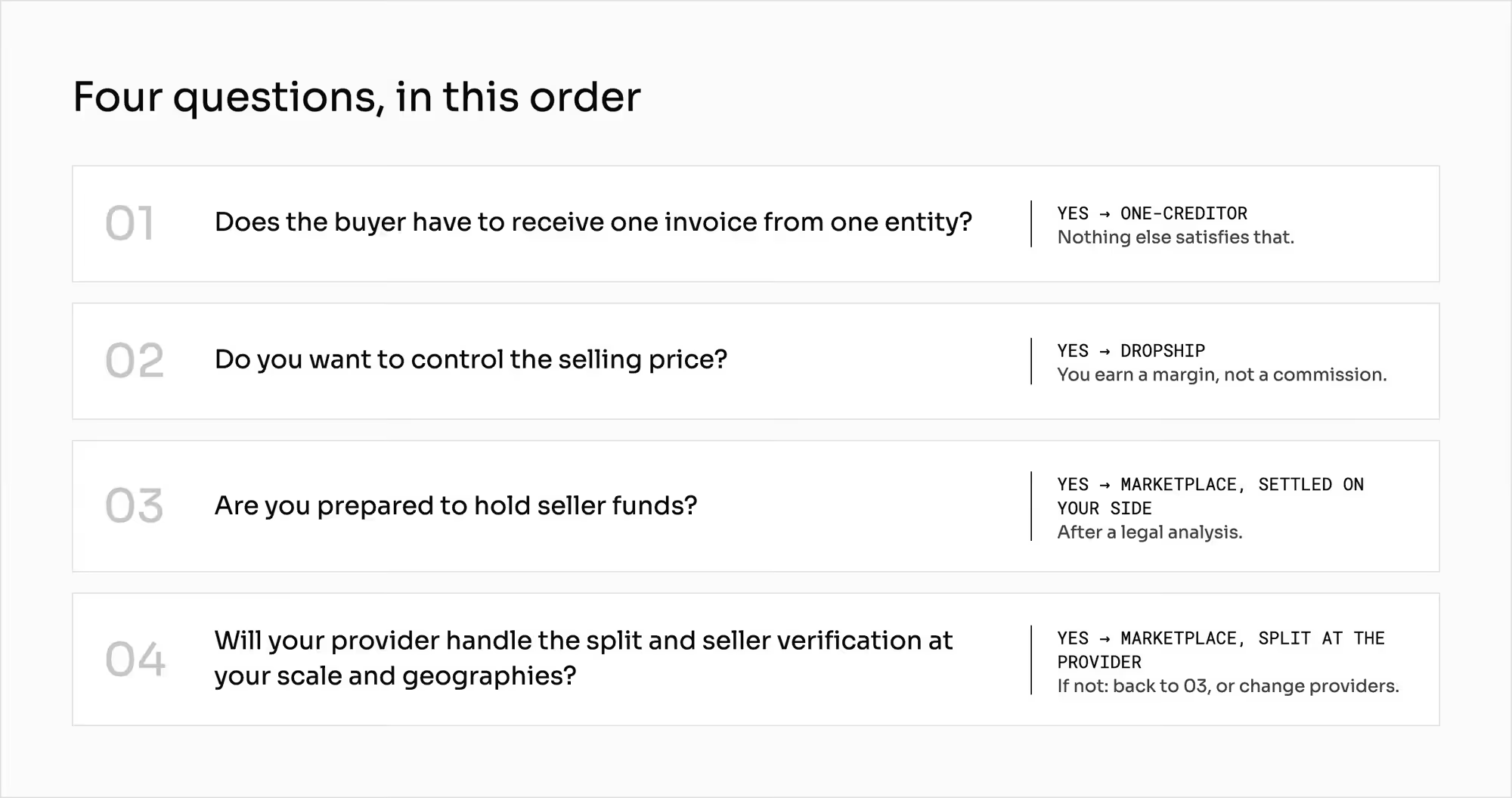
How do you choose a marketplace platform model? 4 questions to answer
- Does the buyer have to receive one invoice from one entity? If so, it is one-creditor. Nothing else satisfies that.
- Do you want to control the selling price? If so, it is dropship. You earn a margin, not a commission.
- Are you prepared to hold seller funds? If so, a marketplace with settlement on your side, after a legal analysis.
- If not, will your payment provider handle the split and seller verification at the scale and in the geographies you need? If so, a marketplace with the split at the payment provider. If not, go back to question three or change providers.
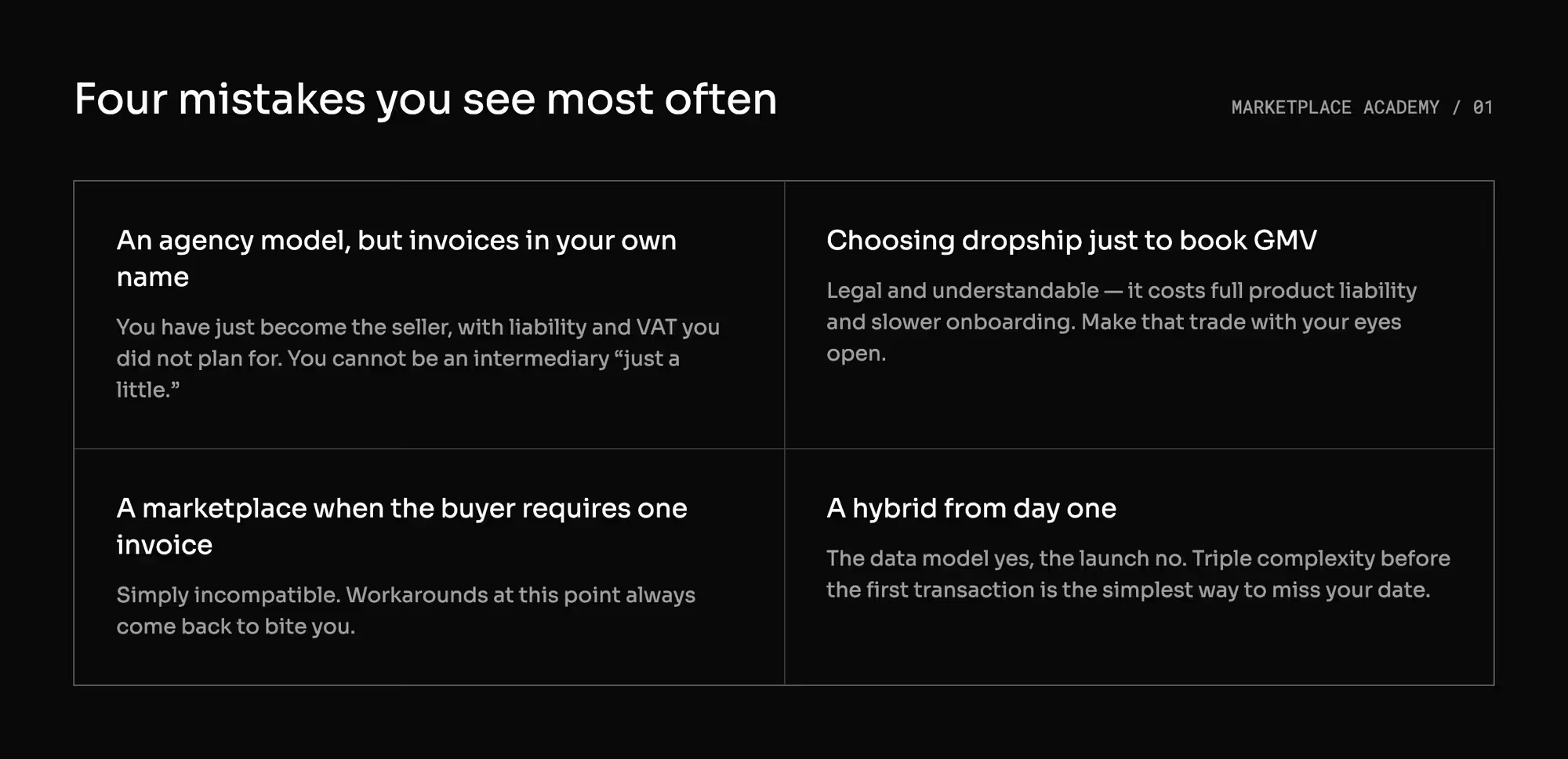
Which 4 mistakes do companies make when picking a marketplace model?
1. Running a marketplace but invoicing in your own name
In a marketplace, the seller is the seller, so the invoice goes out in their name, even when you issue it for them. The moment it goes out as yours, you have become the seller, and the liability and the VAT come with it. You cannot be an intermediary "just a little."
2. Choosing dropship to make the revenue line look bigger
The same €1,000 cart is €120 of revenue in a marketplace and €1,000 in dropship, because in dropship you buy the goods and resell them. Sometimes the board wants the second number. That is legal and entirely understandable, but the price of it is full product liability and slower onboarding. It is worth making that trade with your eyes open.
3. A marketplace when the buyer requires one invoice
These two are simply incompatible. Workarounds at this point always come back to bite you.
4. A hybrid from day one
The data model yes, the launch no.
Do you need a lawyer and a tax advisor?
This is a map of mechanisms, not legal or tax advice. Confirm the choice of model and its tax consequences with a tax advisor and a lawyer, for the specific country and year. Ask in particular whether the platform is treated as the supplier for VAT, how mandatory e-invoicing applies to you, and whether holding seller funds requires a license in your case. Rules and thresholds change faster than documents like this one.
Our role is different, and just as necessary: to put the right question at the right moment and to show what collapses under a bad choice, before you spend money on building.
Summary: Which model should you choose?
One invoice for the buyer means one creditor. Control of the selling price means dropship. Everything else points to a marketplace, and then the open question is whose account the money passes through.
Design the data model for a hybrid and launch a single model. Talk to a marketplace expert if you want to walk these four questions through your own case.
Frequently asked questions on marketplace platform models
What is a marketplace platform model?
A marketplace platform model is the commercial and legal arrangement behind a platform sale. It settles who is a party to the contract with the buyer, who issues the invoice, who accounts for VAT, and whose account the money passes through. Four arrangements cover almost every case: marketplace (3P), dropship, one-creditor, and hybrid.
What is the difference between a marketplace and dropshipping?
In a marketplace, the seller sells, and you earn a commission; in dropship, you sell and earn a margin. The seller sets the price in a marketplace, so their goods never have to pass through your systems. In dropship, you set the price, you carry full consumer liability, and every brand has to be loaded into your PIM and ERP before the first sale.
Can you run more than one marketplace model at once?
Yes, and most mature platforms end up there. The cost comes in three parts: business data does not mix between models, assigning a seller to a model is often irreversible, and the buyer sees one cart standing on two or three different arrangements of liability. Design for a hybrid, launch one model.
Sources
- Council Directive (EU) 2017/2455 - VAT obligations for distance sales of goods (deemed supplier)
- European Commission - VAT in the Digital Age (ViDA), adopted 11 March 2025
- European Banking Authority - Single Rulebook Q&A 2020_5354 on the PSD2 commercial agent exclusion
- Directive (EU) 2019/2161 - information duties for online marketplaces
Ready to build?
If you are facing this choice of model and want to walk through these four questions on your own case, let's talk.