
When You Need a Payment License to Run a Marketplace?

This is the only subject in this series where a wrong answer means running a business with no legal basis. It can also push your launch back by quarters if the right question comes too late.
Usually it never gets asked, because in this form it sounds absurd: "Are we a payments company?" The answer comes back from the room instantly: "No, we are a retailer." And then the subject disappears for two years.
A marketplace payment license is the authorization you need when your platform handles money that belongs to somebody else. A buyer pays €1,000 for a seller's product. If that money passes through an account in your marketplace's name, even for a day, you are holding funds you do not own, and in the EU that activity falls under PSD2. Whether you need an authorization, an exemption, or a licensed partner depends on where the money sits and who can decide about it in the meantime.
This article breaks down:
- Which question decides whether your marketplace needs a payment license?
- What is the one-side test, and why does a marketplace fail it?
- Which 4 product decisions pull you into the payments regime?
- Which 3 compliance paths are open, and what does each cost?
Key insights
- The commercial agent exemption carries two conditions, and the EBA has said that settling the buyer's debt is not on its own enough to fall outside PSD2.
- Four ordinary product decisions put you inside the perimeter: collecting the gross amount, running a seller balance, issuing prepaid value, and holding funds back.
- A wallet or a gift card looks like a storefront feature and is a regulatory one.
- Three paths exist: your own authorization, a licensed partner with segregated funds, or the exemption. Each has to be confirmed by a lawyer for a specific country.
What decides whether you need a license?
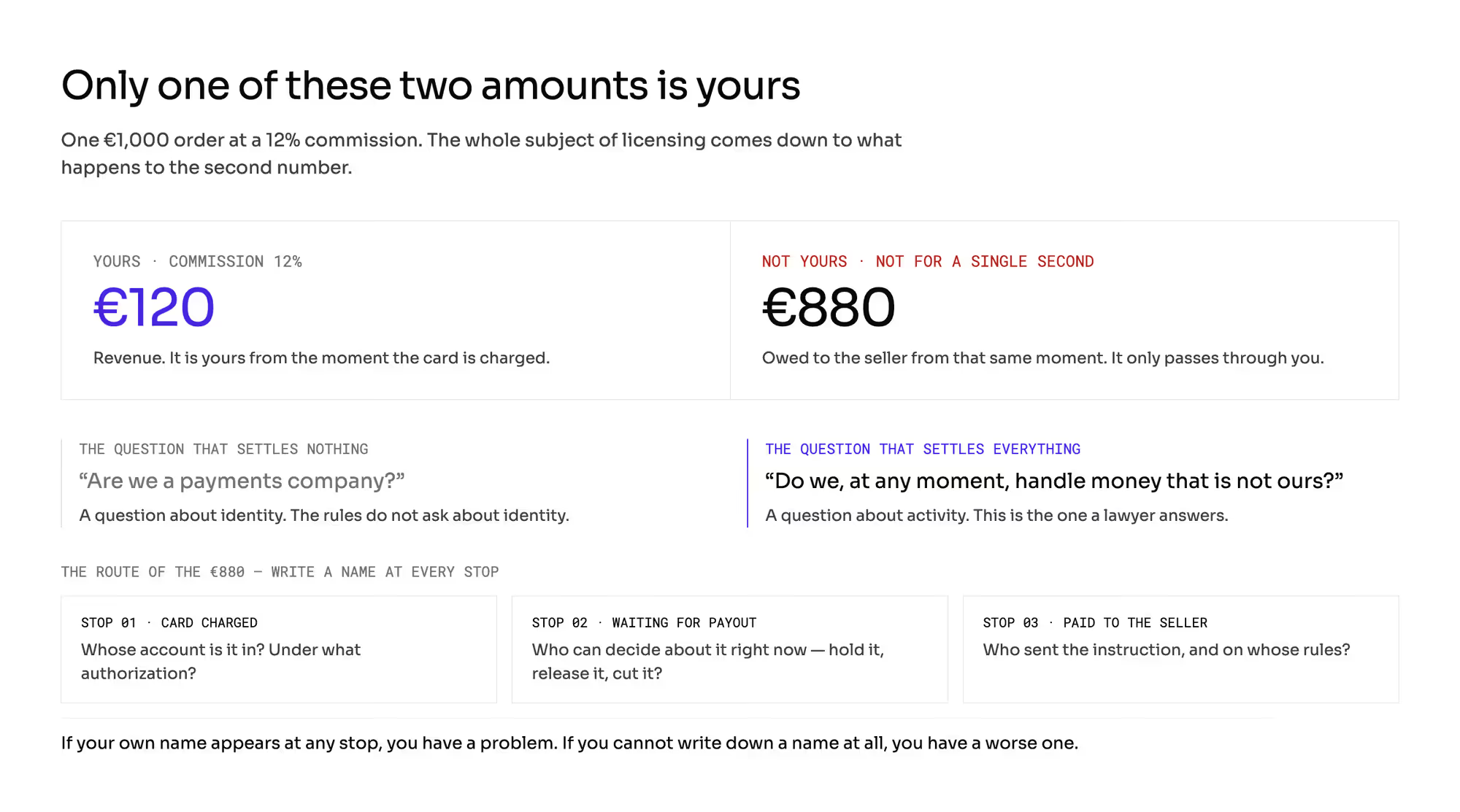
"Are we a payments company" is a question about identity, and the rules do not ask about identity. They ask about activity.
Nobody becomes a payment institution because they think of themselves that way, and nobody stops being one because they think otherwise. The question that settles it is this: do you, at any moment, handle money that is not yours?
Take one order and stay with it to the end of this article. A €1,000 cart at a 12% commission. €120 is yours. The remaining €880 is not yours for a single second.
From the moment the buyer's card is charged, it is owed to the seller. The whole subject comes down to one thing: where those €880 sit between the card charge and the transfer to the seller, and who can decide about them in the meantime.
Answer "in our account" or "we decide," and you have a matter for a lawyer who specializes in payments regulation, whatever your software vendor promised.
What is the one-side test?
The law provides an exemption for commercial agents. An intermediary who collects money in the course of a sale does not have to be a payment institution.
Most operators count on that exemption, and most are wrong, because it comes with two conditions, and the second one is what catches marketplaces.
Condition one: you act clearly on one side. You represent the buyer or the seller, and never both at once.
A purchasing agent acting for the buyer passes this test. A sales representative for a single brand passes.
A marketplace acts on both sides by its nature. You recruit sellers and win buyers at the same time; you set the rules for both, and when they fall out, you decide between them.
What counts is what you actually do, whatever the contract says.
Condition two applies precisely when you fail the first one. An intermediary acting for both sides can stay outside the payments regime only if it never comes into possession of, and never exercises control over, funds belonging to someone else.
That wording ("possession or control") is the most important sentence in this article and the source of most misunderstandings. Control is broader than possession.
The money can sit with a licensed partner, and you can still be treated as the one handling it if you are free to decide who gets paid out and how much.
Two things are worth knowing about this exemption before you lean on it.
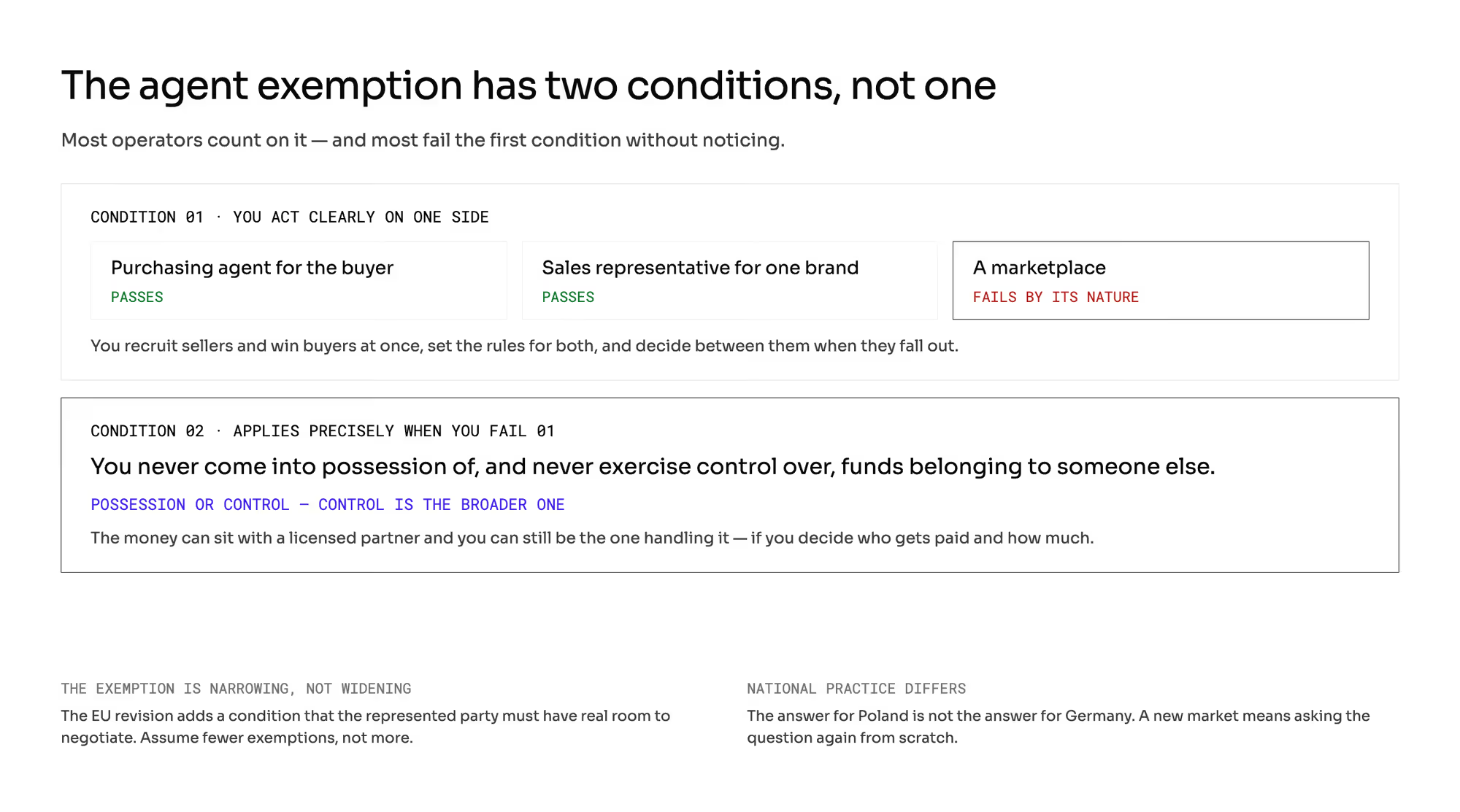
The direction of travel is unambiguous: the exemption is narrowing. The revision of the EU payment services rules adds a condition that the represented party must have real room to negotiate with the intermediary.
That cuts off automated platforms where nobody negotiates anything. Err on the conservative side about exemptions, and confirm the current state of the rules before you hang a schedule on them.
National practice differs. The possession and control condition sits in the recitals of the directive rather than in the operative text, so member states apply it in their own ways.
The consequence for you is mundane: the answer for Poland is not the answer for Germany, and outside the EU the mechanics can be different altogether. In the United States, this is a state-level regime, with a separate exemption for anyone acting on behalf of the payee and a list of states that do not recognize it.
Entering a new market is the moment you ask this question again.
4 moments where you start handling other people's money
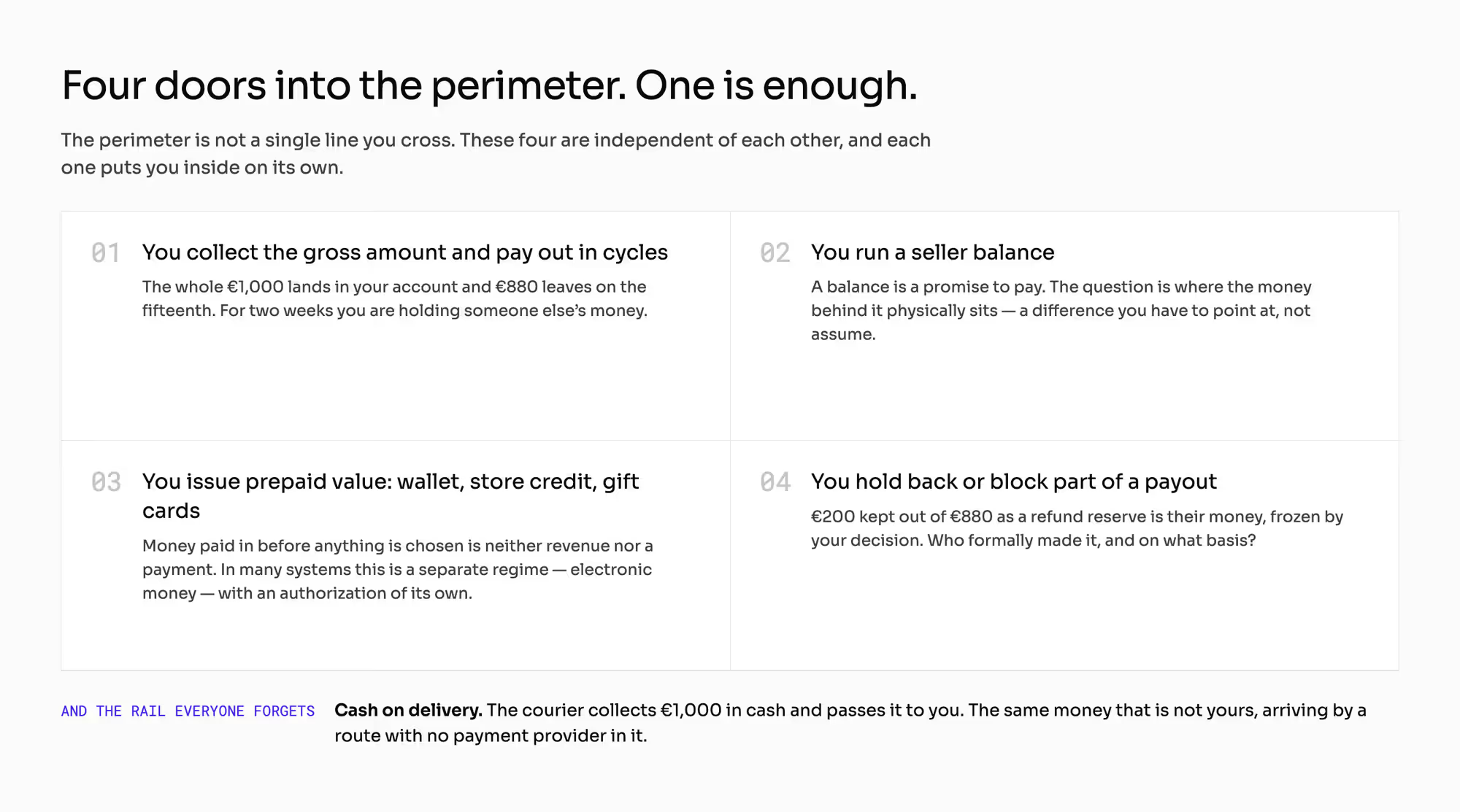
The perimeter has four independent doors into it, and one is enough to put you inside.
1. You collect the gross amount and pay out in cycles
The whole €1,000 lands in your account and €880 goes out to the seller on the fifteenth. For two weeks, you are holding money that belongs to someone else.
This is the obvious door and the most common one. The market picks this arrangement because it is the most convenient to operate, and very often it picks it without noticing.
2. You run a seller balance
A balance is a promise to pay; the control question is where the money behind that promise physically sits. If the seller sees €880 marked "available for payout" and it is sitting in your company account, this is a regulatory question.
If it sits in a segregated account at a licensed institution, the situation is different. But that is a difference you have to be able to point at rather than assume.
3. You issue prepaid value to the buyer
A wallet, store credit, a gift card. The buyer pays €1,000 before choosing anything; that money is not your revenue, and it is nobody's payment.
It is a liability you are holding. In many legal systems, issuing value of this kind falls under a separate regime, the electronic money regime, with an authorization of its own.
This is the most common accidental step into the perimeter, because wallets and gift cards enter the backlog as a marketing feature and not as a regulatory decision.
4. You hold back part of what the seller is owed
As a reserve against future refunds, or you block their payout until a case is cleared up. €200 held back out of €880 is their money, frozen by your decision. Even when it sits with your partner, the question of who formally made that decision and on what basis comes back as a question about control.
And there is one rail everyone forgets, because it has no payment provider in it: cash on delivery. The courier collects €1,000 in cash and passes it to you. The same money that is not yours, arriving by a different route.
Which 3 paths are open to you?
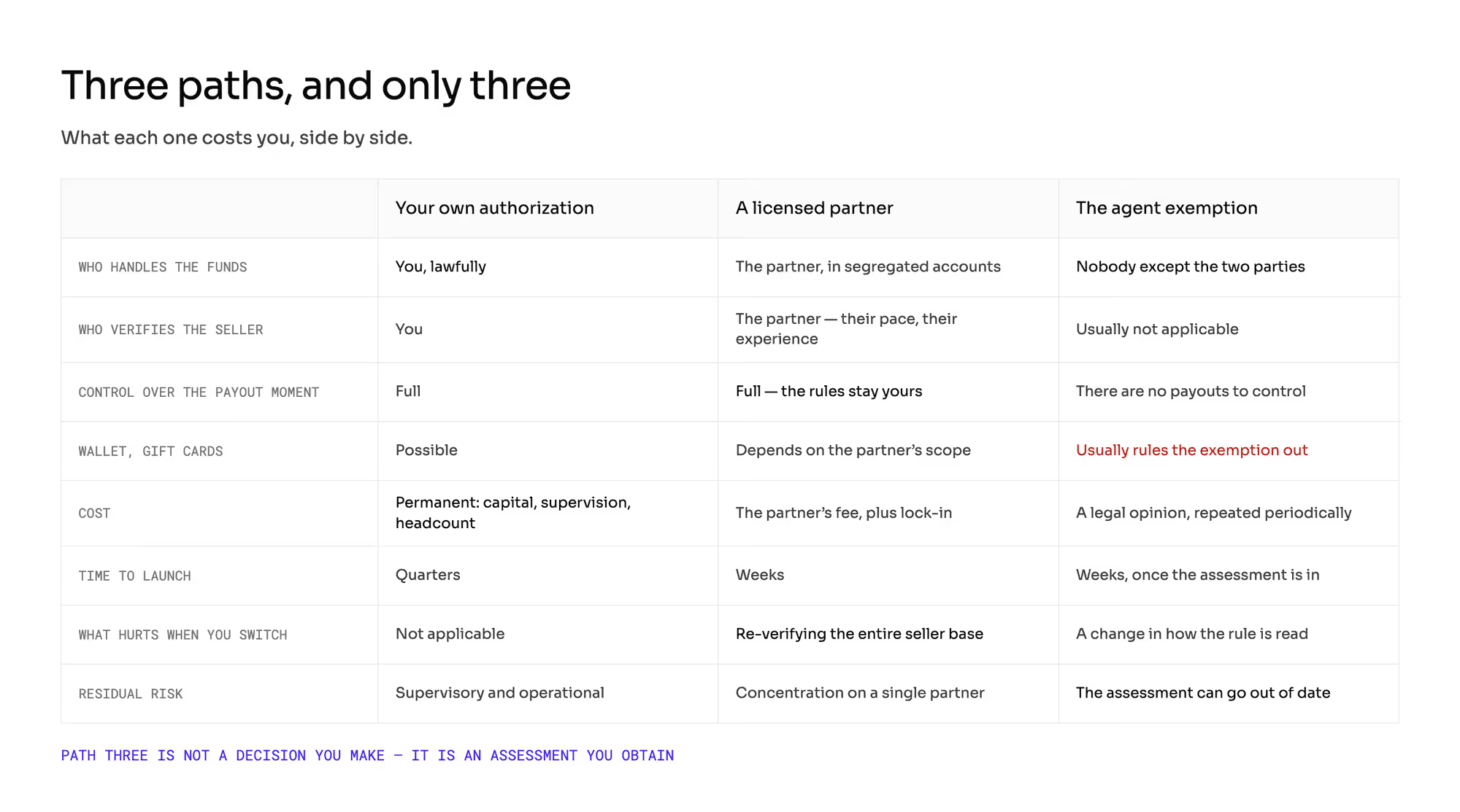
1. Your own authorization
You become a regulated entity. Formally, this is an authorization and the status of a payment institution; in everyday speech, a "license." You get full control over the flow, the moment of payout, and financial products of your own.
You pay with capital, the segregation of client funds from company assets, reporting, audits, and headcount you did not have before.
It is a second line of business. The cost is permanent, and in the legal systems we know the authorization process alone is counted in quarters rather than weeks.
It makes sense when payments are part of your product or your revenue model. It does not when they are a pipe.
2. A licensed partner with segregated funds
The money never lands in your account. Every seller has their own settlement account at a licensed institution, the €880 goes there directly, and you send the instructions.
Against intuition, this does not cost you control over the moment of payout. Your platform still decides which orders have matured, and it is the one that sends the "release the funds" signal.
What changes is who holds the money. The rules stay where they were.
Most marketplaces take this path, and it carries three real costs. Seller verification is done by the partner.
You control neither that experience nor how long it takes, and a seller stuck in verification is not selling. The partner's geographies and currencies become yours.
And changing partners means re-verifying your entire seller base, which is a real cost of exit.
3. The commercial agent exemption
It works when you genuinely act on one side, and you have neither possession nor control. Sometimes it is the right answer.
A purchasing platform that works only for the buyer is one such case. You obtain this as an assessment: in writing, from a lawyer, for a specific country and flow.
And it is the only one of the three that can stop applying without any action on your part, because it depends on how the rule is read.
How do the 3 paths compare on cost, control, and risk?
What does the regulatory perimeter decide?
1. Choosing a payment provider stops being a technical decision and becomes a regulatory one
If your partner will not run seller accounts and verification in your geography, path two is not open to you. You are left with path one or with something unlawful.
2. The payout cycle and the reserve follow from this decision
Before you settle on "we pay out three times a month, and we hold a buffer," you have to know whose money you are sitting on in the meantime.
3. The product roadmap turns into a legal question
A buyer wallet, gift cards, and store credit are not storefront features. Each of them can move you into a different regime, and each of them needs a fresh assessment rather than an amendment to the old one.
4. Geographic expansion resets the analysis
The same architecture can sit outside the perimeter in one country and inside it in the next.
5. Your seller contract has to describe this arrangement
Who holds their money, on what basis it can be held back, and what happens to it if you cease to exist. If the arrangement changes after signing, you amend every contract in your seller base.
How do you check your own setup? 6 questions
Draw the route of those €1,000 on a single sheet of paper, from the buyer's card to the seller's account. At every stop, write down the name of the entity whose account the money is sitting in and who can decide about it at that moment.
If your own name appears anywhere, you have a problem. If anywhere you cannot write down a name at all, you have a worse one.
Then ask your vendor six questions and write down the answers.
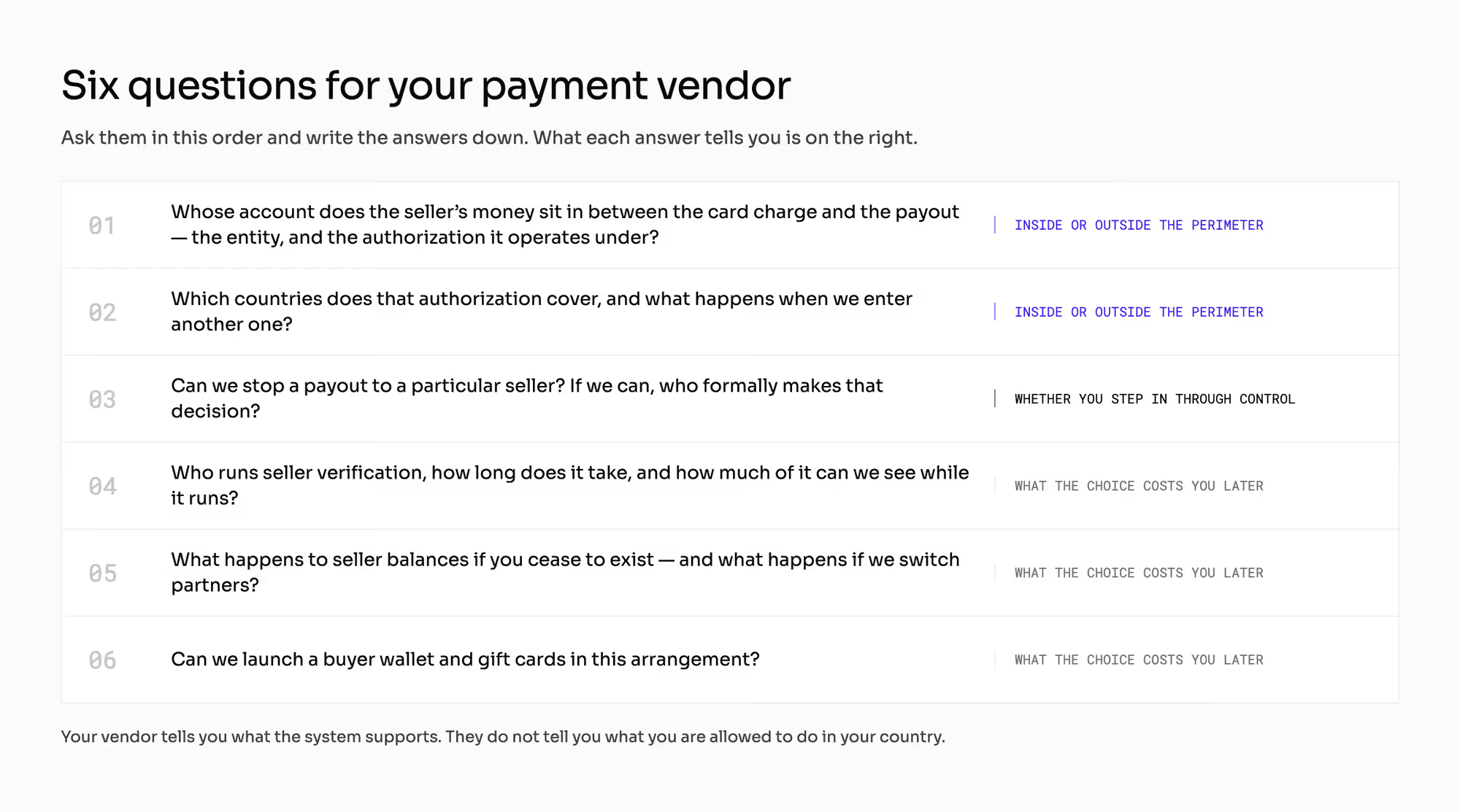
Answers 1 and 2 tell you whether you are inside the perimeter. Answer 3 tells you whether you are stepping into it through control.
Answers 4 to 6 tell you what this choice will cost you later.
Which mistakes do operators make about the regulatory perimeter?
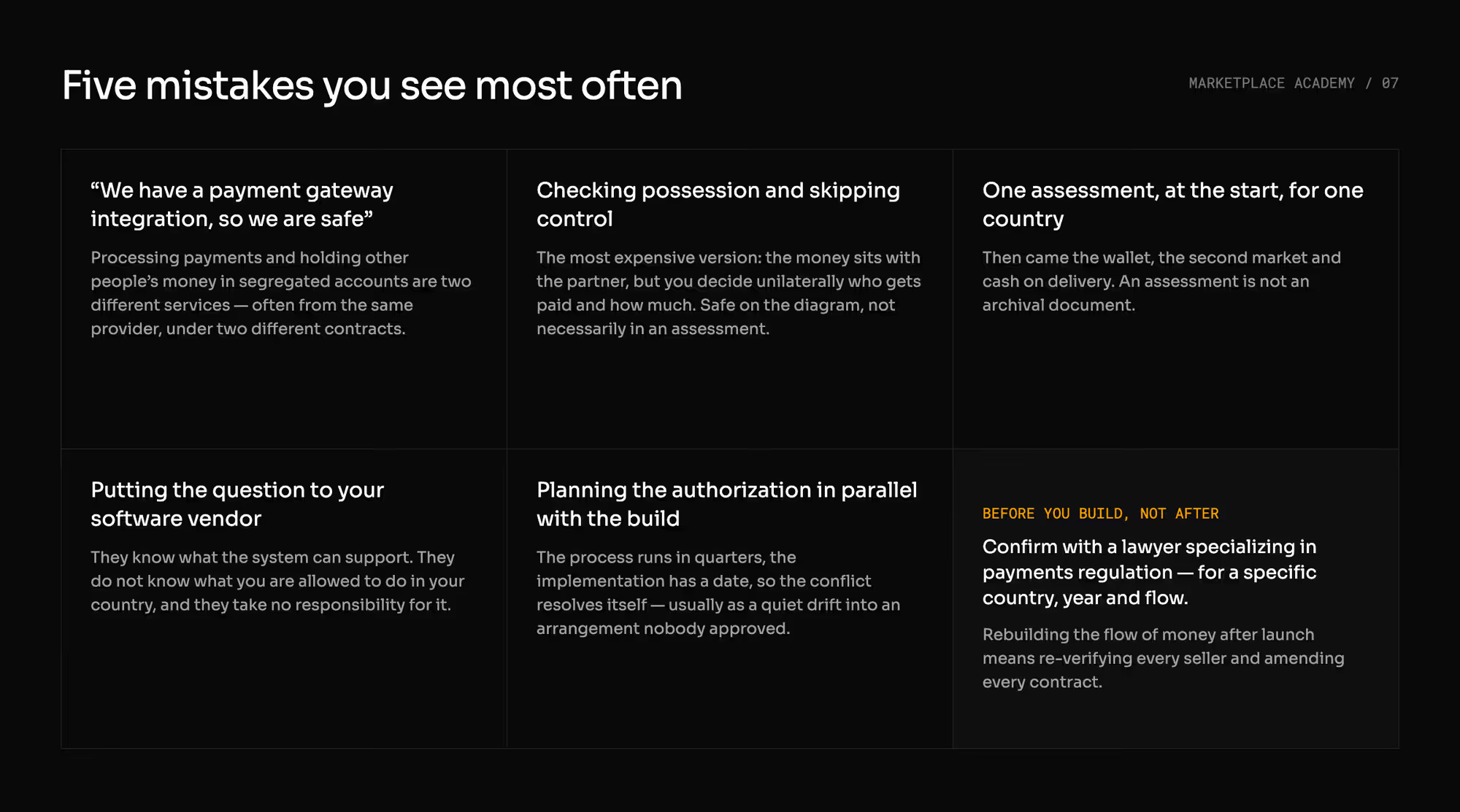
1. "We have an integration with a payment gateway, so we are safe."
Processing payments and holding other people's money in segregated accounts are two different services. They often come from the same provider under two different contracts.
Check which one you have.
2. Checking possession only and skipping control
The most expensive version: the money sits with the partner, but you decide unilaterally who gets paid and how much. It looks safe on the diagram, and it is not necessarily safe in an assessment.
3. An assessment done once, at the start, for one country
Then came the wallet, the second market, and cash on delivery. An assessment is not an archival document.
4. Putting this question to your software vendor
They will tell you what the system can support. They will not tell you what you are allowed to do in your country.
They do not know and take no responsibility for it.
5. Planning the authorization in parallel with the implementation
The process is counted in quarters, the implementation has a date, so the conflict resolves itself. It usually resolves as a quiet drift into an arrangement nobody approved.
What do you still have to settle yourself about a marketplace payment license?
The law does not say where exactly "control" ends. That is the sharpest practical problem in the whole subject: sending payout instructions according to rules fixed in advance is one thing, and deciding freely about other people's money is another.
The line runs differently in different countries, and it is sometimes disputed. There is no universal answer here, and anyone who hands you one without knowing your setup is guessing.
We deliberately give no thresholds, no capital requirements, no fees, and no dates on which rules take effect. They change faster than this text does, and the EU payments framework is being revised right now.
Confirm with a lawyer who specializes in payments regulation, for a specific country, year, and flow, whether your setup needs an authorization of your own, whether a licensed partner is enough, and whether you can rely on the exemption. Do it before you build the architecture: rebuilding the flow of money after launch means re-verifying every seller and amending every contract.
Summary: Which path should you take?
If the payment provider settles sellers directly and you never hold their money, the exemption may cover you. If you collect the gross amount, run balances, or issue prepaid value, you are choosing between your own authorization and a licensed partner.
Get the answer in writing, for the specific country and flow, before the payout cycle and the reserve are designed around it. Talk to a marketplace expert about how the model shapes the build.
Frequently asked questions on marketplace payment licenses
Do you need a license to run a marketplace?
Only if the buyer's money passes through an account in your name. A marketplace whose payment provider splits the payment and settles sellers directly usually stays outside the regime.
Collecting the whole amount and paying out later is payment activity in most jurisdictions.
What is the commercial agent exemption?
It excludes an agent who negotiates or concludes sales on behalf of one side only. The word doing the work is "only": act for the buyer, and the seller at once, and the exemption stops applying.
Marketplaces frequently do both without noticing.
Does a wallet or a gift card change the answer?
Yes, and this is the most common accidental step across the line. Issuing prepaid value means holding money against a future purchase, which is a regulated activity in its own right.
It reaches the backlog as a marketing feature and lands as a licensing question.
Ready to build?
If you want to draw the route the money takes in your own setup and find where you are handling funds that are not yours, let's talk.