
Cross-Border VAT on a Marketplace: Foreign Sellers, Imports, and Customs
Cross-border VAT on a marketplace is the tax treatment of an order that crosses a border, and it is settled per order line, because one cart can hold several.
As long as all your sellers are established in the same country as you and ship from a warehouse around the corner, your marketplace has one tax stream and one set of rules. The first seller from abroad, or the first parcel across a customs border, splits that into several streams.
Each of them needs different data on the same order line.
This is a map of mechanisms: the answer depends on the country and the year, and your advisor issues it. This article does the one thing your advisor will not do for you: it shows what your system has to record so that the advisor has anything to work with.
The country of dispatch, the classification of the goods, and who acted as the importer cannot be reconstructed from a two-year-old order.
This article breaks down:
- Which 3 independent facts decide a cross-border order?
- Who is the importer, and what does the buyer see?
- Which fields must a cross-border order line carry?
- Why is a return from an import 2 separate matters?
Key insights
- Three facts decide the treatment, and they can point to three countries: where the seller is established, where the goods leave from, and where they are delivered. One "foreign seller" flag glues them together and cannot be taken apart later.
- Either the charges are settled up front, or the buyer becomes the importer and hears the bill from the courier, with a handling fee your checkout never mentioned. The refused parcel is your cost, because the buyer bought from you.
- The order line needs the three countries, the customs trio of classification, origin, and value, the importer and the arrangement, proof that tax was collected, and the treatment frozen at the moment of sale.
- A returned import is two processes: the price refund runs normally, and recovering the duty and the import tax is a separate claim that needs proof and time. Who carries them belongs in the contract before the first return.
Which 3 independent facts decide a cross-border marketplace order?
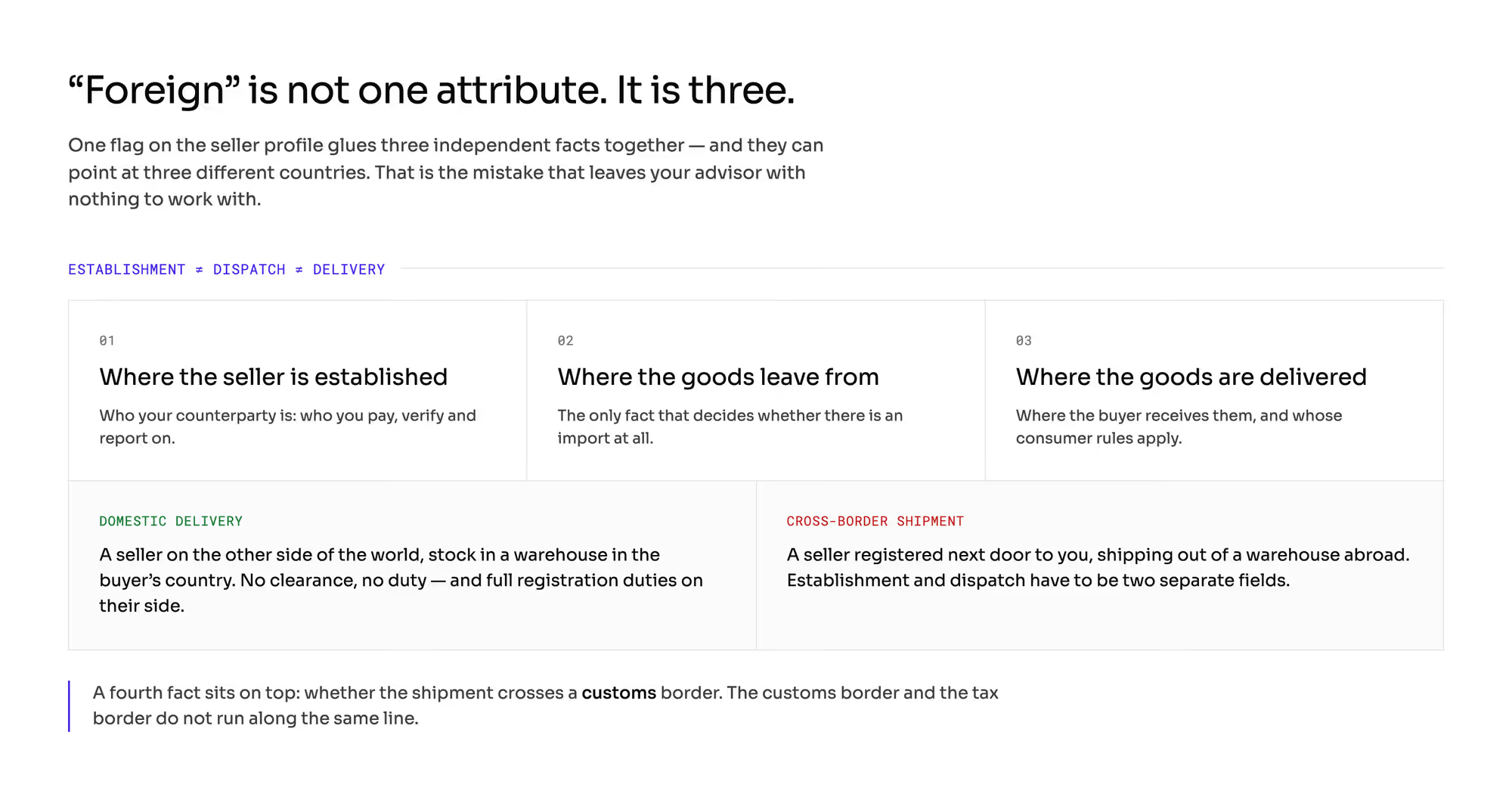
The first instinct is that a seller is either domestic or foreign, one flag on the profile. That is exactly the mistake that closes the door on your advisor.
In reality, the treatment of a single order line is decided by three independent facts, and they can point to three different countries:
- The country where the seller is established. This is who your counterparty is, who you pay, who you verify, and who you report on.
- The country the goods physically leave from. This decides whether you are dealing with an import at all.
- The country of delivery. Where the goods reach the buyer.
These three come apart more often than people expect. A seller on the other side of the world who keeps stock in a warehouse in your buyer's country is making a domestic delivery.
There is no clearance and no duty, and a full set of registration duties on their side. And the reverse: a seller registered right next door to you, shipping out of a warehouse abroad, is making a cross-border shipment.
The place of establishment and the place of dispatch have to be two different fields.
There is a fourth fact on top: whether the shipment crosses a customs border. The customs border and the tax border do not run along the same line: inside a common market, a flow can be cross-border for tax and domestic for customs.
One €1,000 cart, 3 different tax worlds: the worked example
Let us stay with the example that runs through the series: a €1,000 cart at a 12% commission, which is €120 for you and €880 for the seller. That arithmetic does not change in any of the three cases.
Everything around it does.
1. Case A: a domestic seller shipping from inside the country
One stream. The buyer pays €1,000, and that is all they see.
2. Case B: a foreign seller shipping across a customs border
Clearance appears, and somebody has to be the importer: the party answerable to the customs administration for the declaration, the duty, and the import tax. The buyer either pays everything up front or pays the rest on the doorstep.
3. Case C: a foreign seller shipping from a local warehouse
There is no clearance and no duty. Instead, the seller carries registration duties of their own in that country.
Your question is whether you may let them sell before they show those duties are met.
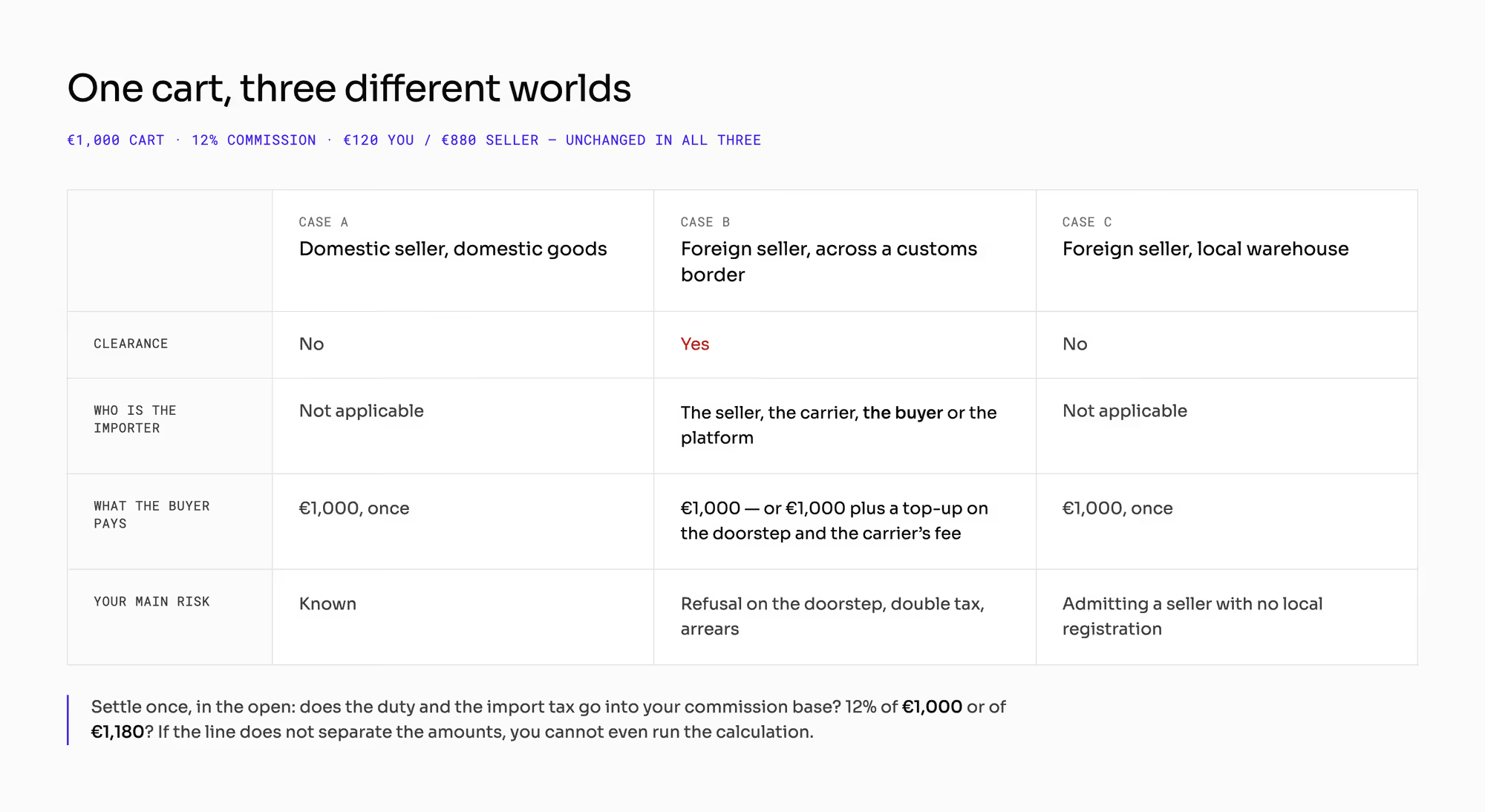
Hence, a question to settle once and in the open: do the duty and the import tax go into the base you calculate your commission on? If the buyer pays €1,000 plus, say, €180 of import charges, do you take 12% of €1,000 or of €1,180?
Those charges are not the seller's revenue, so a commission on them is hard to defend to the seller. But if your system does not separate the amounts on the line, you cannot even run the calculation.
"Online Marketplace VAT: When Does the Platform Become the Deemed Supplier?" covers the case where the platform itself is treated as the taxable person for part of these flows. That mechanism is called the deemed supplier.
What interests us here is the layer it does not touch: operations, data, and what the buyer sees.
Who is the importer, and why does the buyer find out on the doorstep?
In practice, there are two arrangements, and the difference between them is brutal for the buyer.
1. Charges paid up front: the DDP arrangement
The duty and the import tax are calculated with the order, collected with the price, and settled by the seller, the carrier, or the platform. The buyer sees one amount and nothing surprises them later.
In logistics jargon, this is a delivery term of the DDP type, duty paid.
2. Charges payable on delivery, the DAP arrangement
The buyer becomes the importer, usually without knowing it. The carrier presents them with the duty, the tax, and its own handling fee for processing the clearance.
That is a third item, and nothing anywhere in your checkout mentioned it. This is the DAP type, duty unpaid.
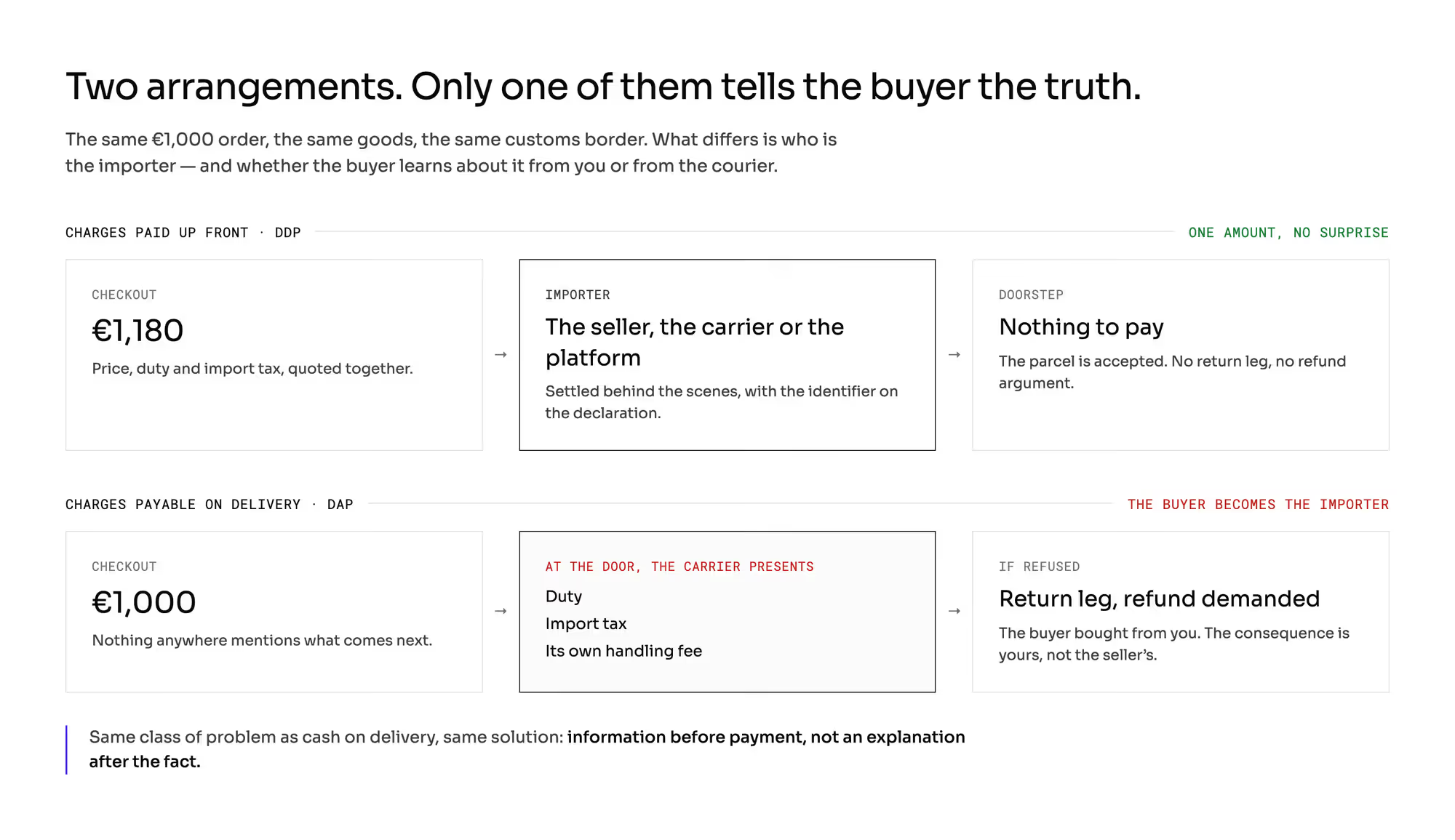
The consequence is yours, because the buyer bought from you. A parcel refused on the doorstep goes back to the sender, generates the cost of the return leg, and the customer demands a refund for goods they never accepted.
It is the same class of problem as cash on delivery ("Should Your Marketplace Support Cash on Delivery?"), with the same solution: information before payment.
It is worth knowing which way things are moving. In some jurisdictions, responsibility for import formalities and for duty is being shifted from the individual seller to the platform.
We give no dates and no thresholds here, because they change faster than this document does. The question "does our model make us the party responsible for clearance" goes to your advisor today.
Which fields must a cross-border marketplace order line carry?
This is the heart of the article. A tax advisor and a customs broker answer your questions only if they are handed data.
The fields below are not decoration: without them, the question has no answer, and you cannot backfill them afterwards.
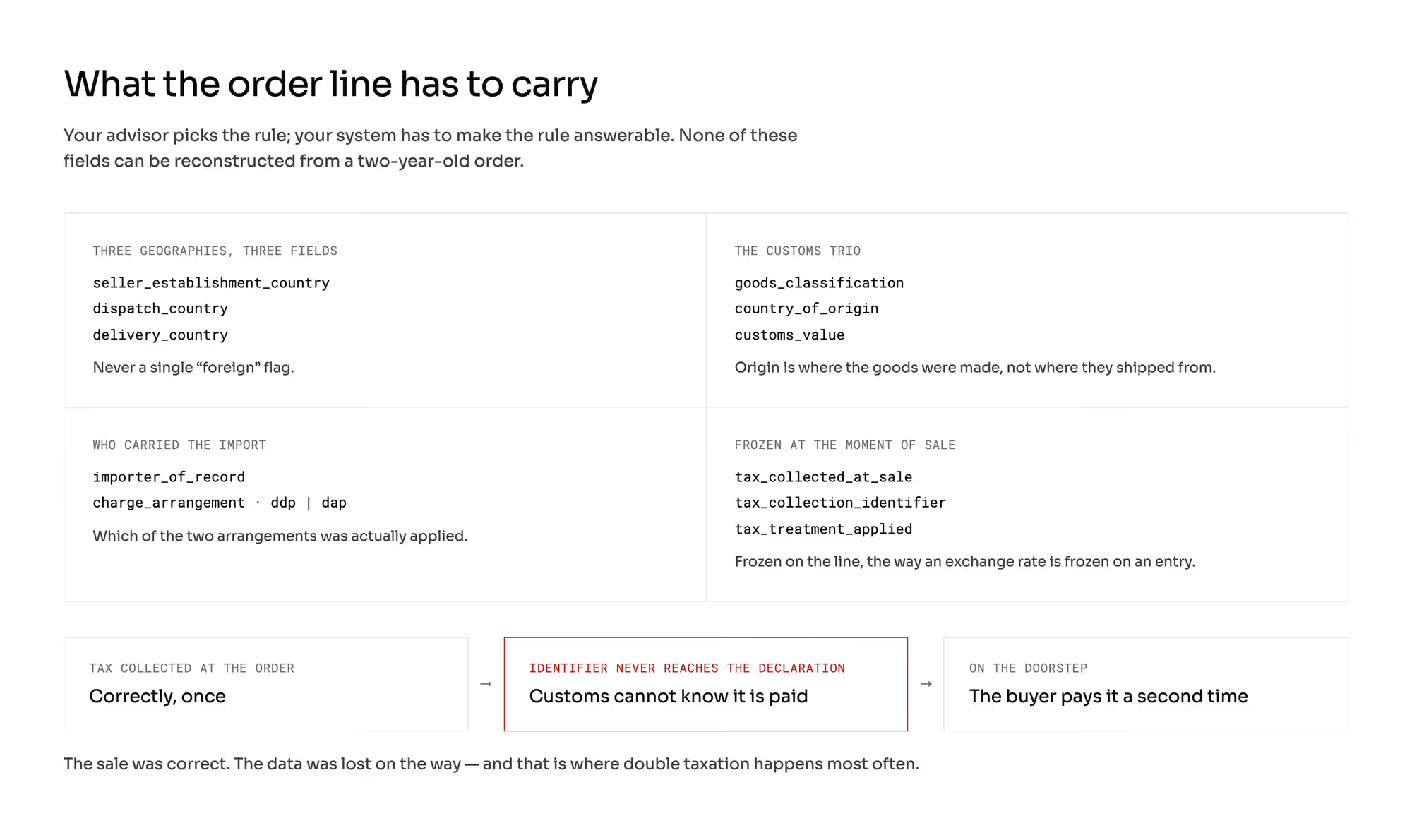
- The seller's country of establishment, the country of dispatch, the country of delivery. Three separate fields, never a single "foreign" flag.
- The classification of the goods, the country of origin, and the customs value. That trio sets how much duty is due. The country of origin is where the goods were made, and the country of dispatch is where they were shipped from. Those are two more fields people collapse into one.
- Who the importer is, and which of the two charge arrangements was applied.
- Whether the tax was collected at the time of the order and, if it was, the identifier that proves it. This is where double taxation happens most often. If the identifier never reaches the customs declaration, the administration has no way to know the tax is already paid, so it charges it again. The buyer pays it a second time on the doorstep. The sale was correct, and the data was lost on the way.
- The tax treatment applied at the moment of sale, frozen on the line. Exactly the way an exchange rate is frozen on an accounting entry ("Marketplace Ledger: Why Balances Must Match the Transfer"). The rules change, and recalculating an old order under today's rule gives you a number that was never true.
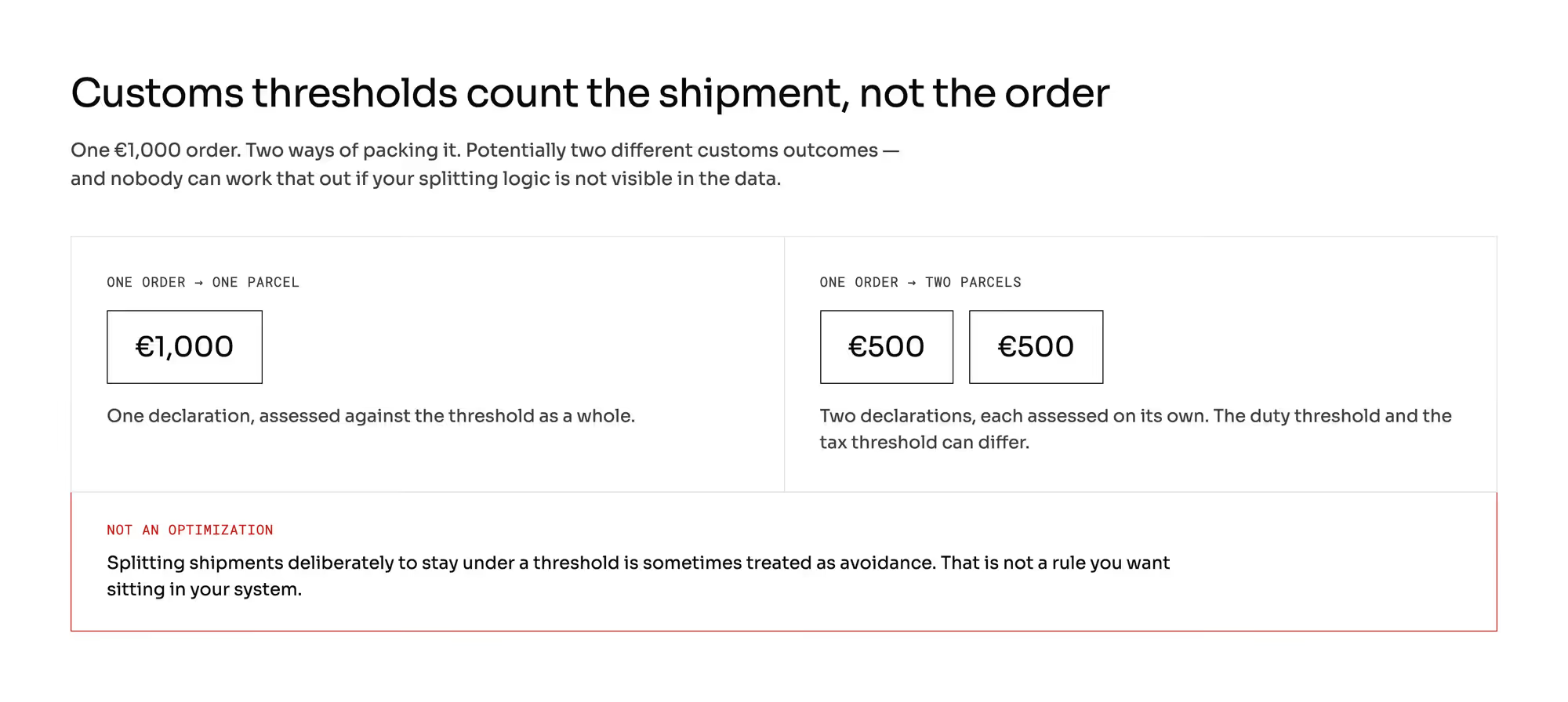
And the trap nobody expects: thresholds in customs apply to the shipment. A €1,000 cart sent as one parcel and the same cart sent as two parcels of €500 are potentially two different customs outcomes.
If your order splitting logic is not visible in the data, nobody can work that out. And splitting shipments deliberately to stay under a threshold is sometimes treated as avoidance.
That is not an optimization you want sitting in your system as a rule.
Why is a return from an import 2 separate matters?
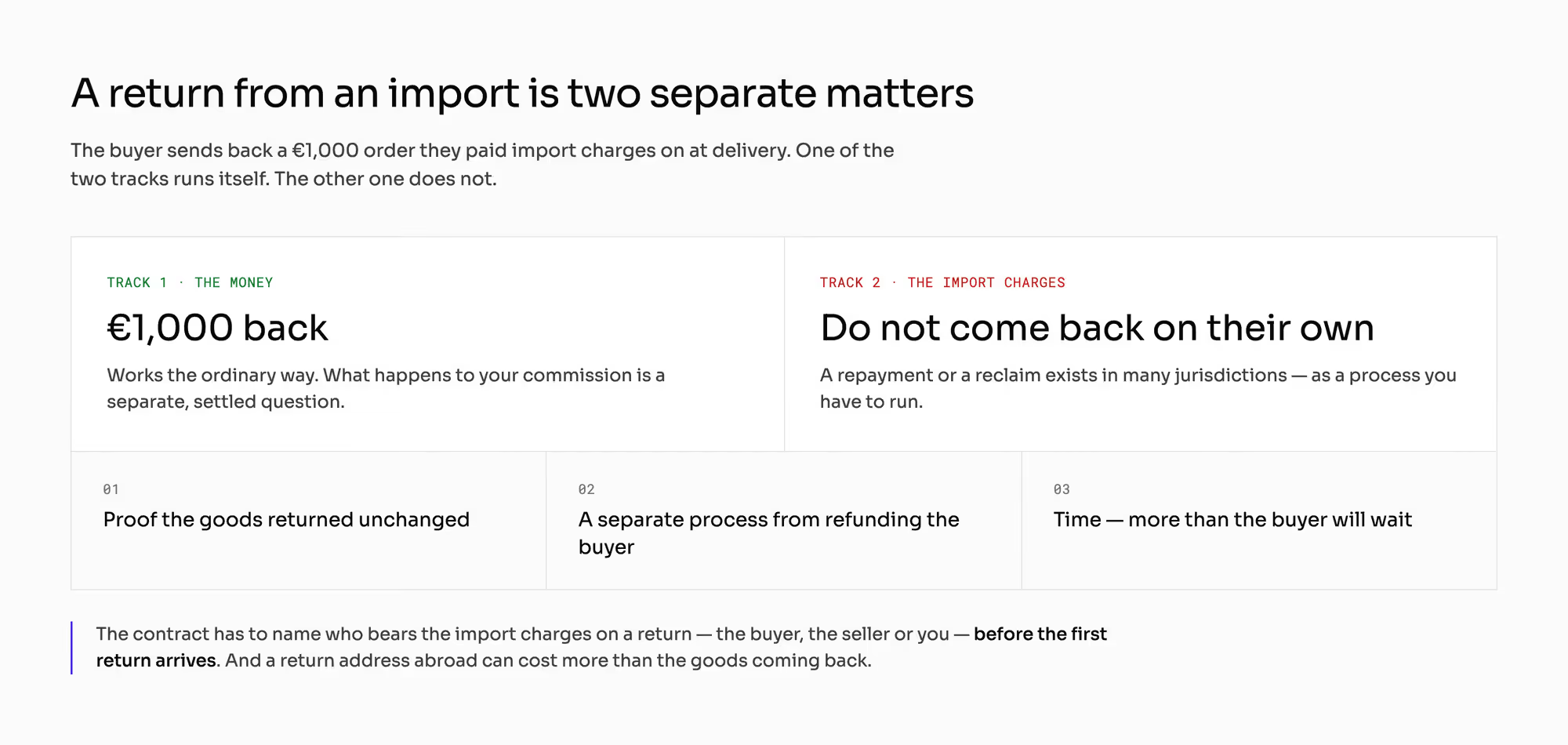
The buyer sends back a €1,000 order on which they paid import charges at delivery. The refund of the price works normally: you give back €1,000, and what happens to the commission is the subject of "Who Keeps the Marketplace Commission on a Refunded Order?".
The duty and the import tax do not come back on their own.
Ways of recovering them exist in many jurisdictions: a repayment of the charges on goods that come back, or a reclaim on goods that are shipped out again. They have three things in common.
They require proof that the goods are returned unchanged, they are a separate process from refunding the buyer, and they take time. That is why the contract and the terms have to say who bears the import charges on a return – the buyer, the seller, or you – before the first return arrives.
There is also the logistics side: a return address abroad can cost more than the goods coming back and turns the economics of a whole category upside down. And consumer rights apply regardless of where the seller sits.
"The seller is abroad" is not an answer for the buyer.
How do the 3 cross-border arrangements compare?
What changes per arrangement? | Domestic seller | Foreign, shipped from across a customs border | Foreign, shipped from a warehouse in the country |
|---|---|---|---|
Customs clearance | no | yes | no |
Who ends up as the importer | not applicable | the seller, the carrier, the buyer or the platform | not applicable |
What the buyer sees in the price | the whole amount | the whole amount or a top-up on the doorstep plus the carrier's fee | the whole amount |
Critical data on the line | standard | classification, origin, customs value, tax identifier | country of dispatch ≠ country of establishment |
Return | one process | two processes: the money and the import charges | one process |
Your main risk | known | refusal on the doorstep, double tax, arrears | admitting a seller with no registration |
What does cross-border marketplace VAT decide?
1. Payouts to foreign sellers are a separate mechanism
An exchange rate and its risk come into play, and in some arrangements, withholding tax on amounts paid abroad, whose rate a certificate of residence can bring down. That is a document you have to collect and then watch for expiry.
"How Marketplace Seller Payouts Work: Cycles, Holds, and Reserves" describes the cycles, and "Marketplace Seller Verification: KYC, Beneficial Owners, and Sanctions" describes the verification of the entity. What is added is a documentation layer that a domestic seller does not have.
2. Admitting a seller to a market stops being a commercial decision
In some markets, goods may be placed on the market legally only if an entity established there answers for their conformity, and separate registrations cover producer duties for waste and packaging. The practice of multi-country operators is unambiguous: permission to sell is granted per market, because every market has requirements of its own, consumer ones included.
That is a field in the seller profile, and it has to be checked before the market is switched on.
3. Accounting gets several streams instead of one
Domestic, cross-border, and import sales have to be separable in reporting, and corrections have to return to the period they belong to. If the tax treatment does not sit on the line, that work is done by hand every month.
4. The front end has to tell the truth about the price
An offer with a top-up on the doorstep and an offer with a final price are not comparable, even though both display €1,000. That is a real BuyBox problem.
It comes back in the chapter on price presentation.
How do you check cross-border marketplace VAT with a vendor and an advisor?
1. Questions for your platform vendor
- "Show me an order line from a foreign seller. Which field says where the goods physically left from, and which one says where the seller is established?" One field instead of two is a problem you cannot fix retroactively.
- "Where on the line do the classification of the goods, the country of origin, and the customs value sit, and who fills them in, the seller or you?"
- "How is the tax treatment frozen on the line, and what happens to old orders when we change the configuration?"
- "What does a return of an imported order look like? Do I see the refund of the price and the fate of the import charges separately?"
- "What does admitting a seller per market look like, and can we require a document before we switch a country on for them?"
2. Questions for your advisor
Ask which flows make you the taxable person or the party responsible for clearance; which registrations and documents to require from a seller established outside your country; how you document payouts abroad.
Which mistakes do operators make about cross-border marketplace VAT?
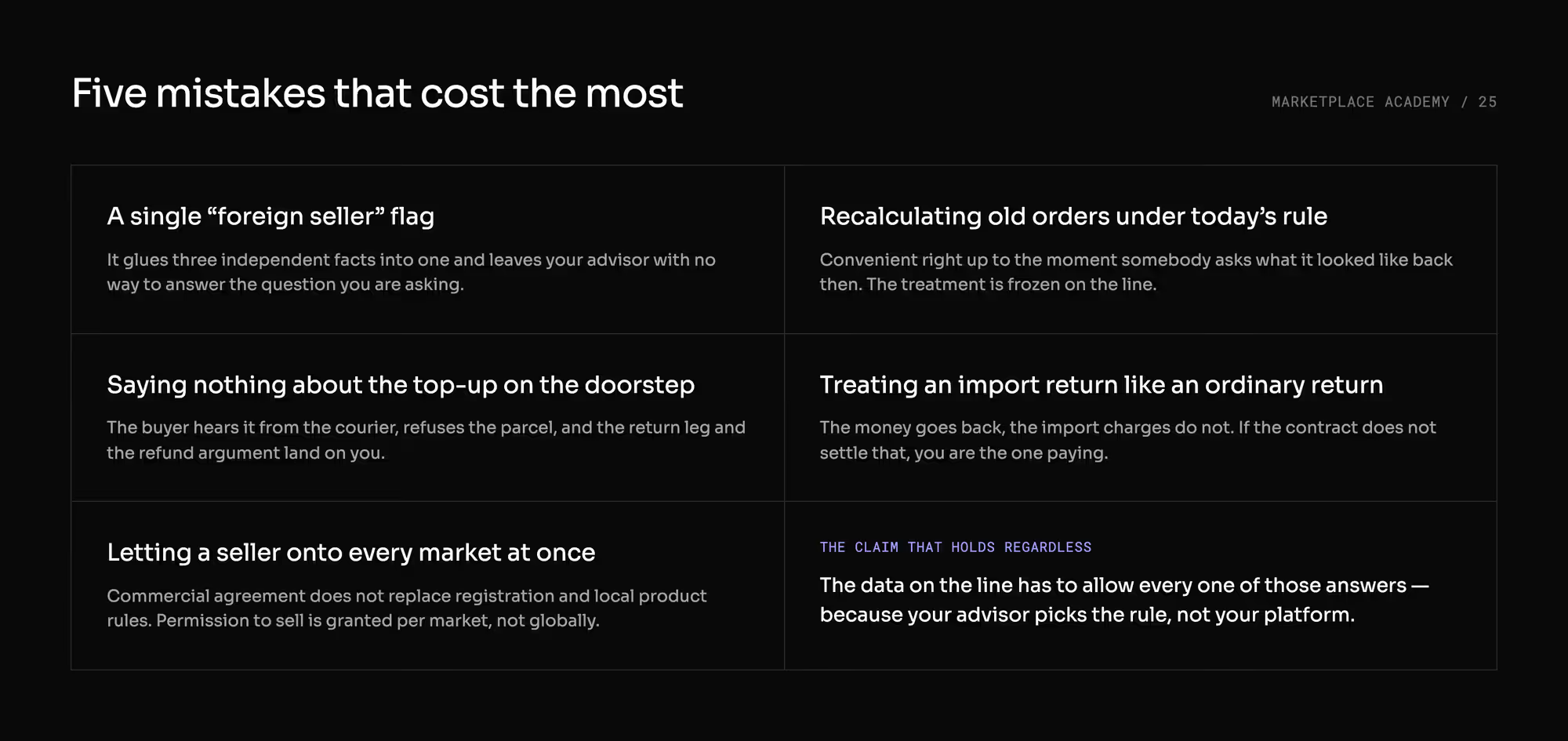
1. A single "foreign seller" flag
It glues three independent facts into one and leaves your advisor with no way to answer the question you are asking.
2. Recalculating old orders under today's rule
Convenient right up to the moment somebody asks what it looked like back then. The treatment is frozen on the line, the same way the rate is.
3. Saying nothing about the top-up on the doorstep
The buyer hears it from the courier and refuses the parcel, and the cost of the return leg and the argument about the refund land on you.
4. Treating an import return like an ordinary return
The money goes back, the import charges do not. If the contract does not settle that, you are the one paying.
5. Letting a seller onto every market at once
A commercial agreement does not replace registration and local requirements, and the cost shows up at an inspection, where your system cannot warn you.
What do you still have to settle yourself about cross-border marketplace VAT?
This guide deliberately contains not a single rate, threshold, or date. Those differ between countries and change during the year, so a number given here would be false certainty.
Confirm five things by name before you close the data model:
- Whether, and on which flows, your platform becomes the taxable person or the party responsible for clearance. A tax advisor and a customs broker, for your markets and as of today.
- How high the thresholds are and what they apply to. The threshold for duty is sometimes different from the threshold for tax, and they count per shipment.
- Which registrations, representatives, and documents to require from a seller established outside your country before you switch a market on for them. A tax advisor and a lawyer, because some of the requirements are tax ones and some are product ones.
- Whether the commission you invoice to a foreign seller and the payout you send them are subject to withholding tax, and how to document that.
- Who bears the import charges on a return, and whether recovering them is workable at your scale. That is a question for a customs advisor and for the contract with the seller.
Our claim is narrower and independent of those five answers: the data on the order line has to allow every one of those answers, because your advisor picks the rule. A system that decides the answer for you closes off the path your advisor may want to take.
Summary: What has to be on the line before you open a second country?
Three country fields instead of one flag, the customs trio, who the importer was, whether the tax was collected and the identifier that proves it, and the treatment frozen at the moment of sale. None of it can be reconstructed from a two-year-old order, which makes it a launch decision.
Ask a vendor to open an order line from a foreign seller and point to the field that says where the goods physically left from. Talk to a marketplace expert if you want to check whether your order line carries all three countries.
Frequently asked questions on cross-border marketplace VAT
What is cross-border VAT on a marketplace?
It is the tax treatment that applies once the seller's country, the country the goods leave from, and the country of delivery are no longer the same. A seller on the other side of the world shipping from local stock is making a domestic delivery. A seller next door shipping from a warehouse abroad is making a cross-border one. The place of establishment settles neither.
Who is the importer when a marketplace sells goods from abroad?
Whoever the delivery arrangement names, and by default it is often the buyer. Under a duty-paid arrangement, the charges are calculated with the order and settled by the seller, the carrier, or the platform.
Under a duty-unpaid one, the buyer becomes the importer, usually without knowing it, and pays the courier the duty, the import tax, and a handling fee. Which flows make your platform responsible for clearance is a question for a customs advisor.
Do customs thresholds apply per order or per shipment?
Per shipment, which is why one cart split into two parcels can settle differently from the same cart sent as one. That makes your order-splitting logic a customs input. Splitting deliberately to stay under a threshold is treated as avoidance in some jurisdictions, so it is not a rule to encode.
Ready to build?
If you are letting in sellers established abroad or goods that cross a customs border, and you want to check whether your order line carries the country of dispatch, the customs data and the importer, let's talk.