
Marketplace Multi-Vendor Shopping Cart: Grouping, Thresholds, and Shipments
A multi-vendor shopping cart on a marketplace is one cart holding items from several sellers at once, each with its own delivery and its own parcel.
This article breaks down:
- Why must a cart group items per seller?
- How does a free delivery threshold work across groups?
- How many shipments will the buyer get?
- Which 4 things change between the cart and the payment?
Key insights
- A cart must group items per seller because the delivery cost, the delivery date and the return path each belong to one seller and mean nothing averaged across the cart.
- A free delivery threshold works per seller group, with a progress bar inside each one, so the buyer sees what is missing from that seller rather than from the whole cart.
- The buyer gets one shipment per seller unless you say otherwise, so put the number of parcels on the screen before they pay.
- The four things that change between the cart and the payment are the stock, the price, the seller's status and the age of the cart itself.
Why is a multi-vendor cart a set of contracts?
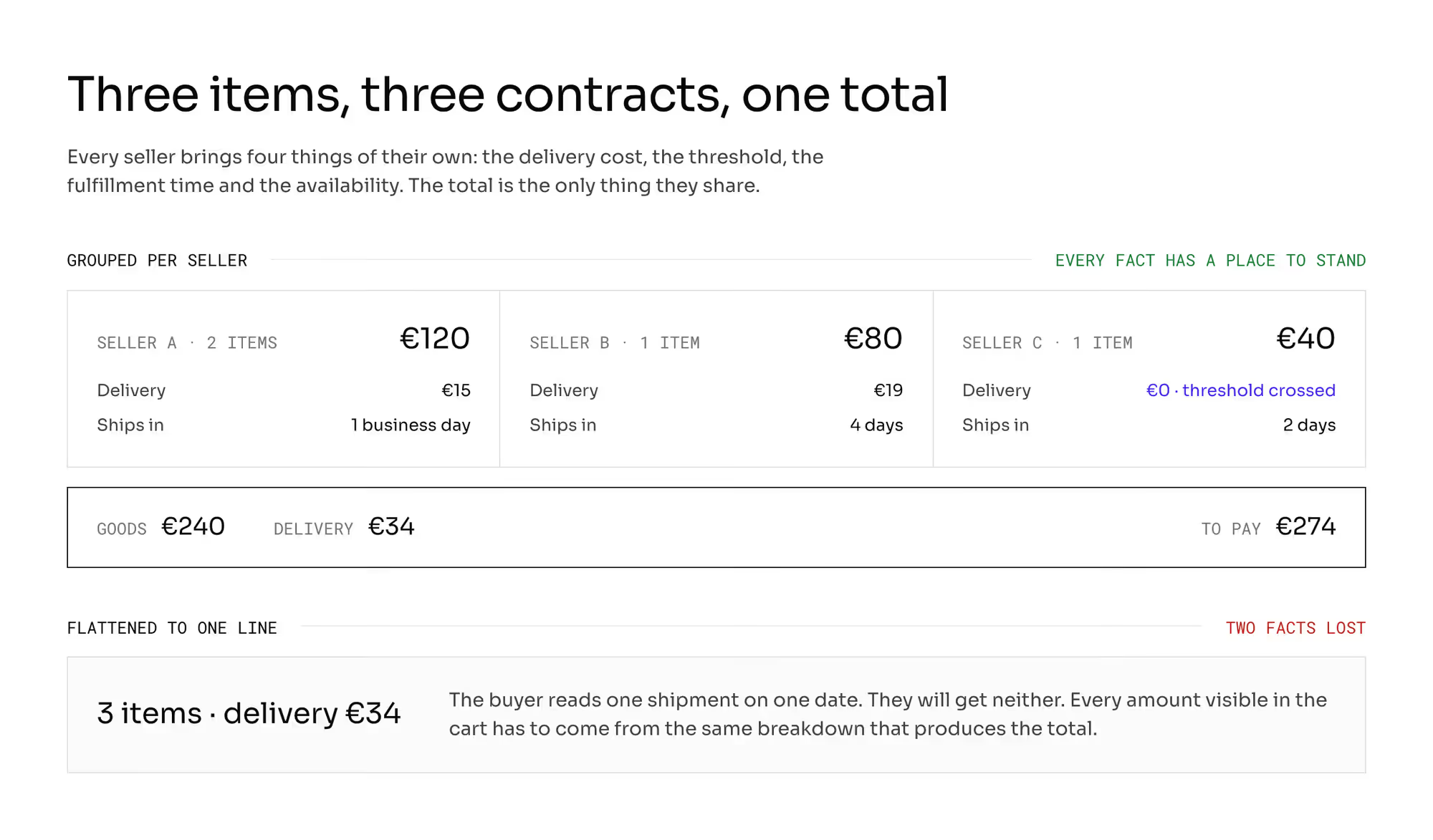
In your own store, the cart is a list: the items, one delivery cost, one delivery time, one total. In a marketplace, it is a set of contracts.
Every seller brings four things of their own: the delivery cost, the free shipping threshold, the fulfillment time, and the availability. Three items from three sellers are three parallel transactions under a single total.
That total is the only thing they have in common.
Take a cart: €120 from the first seller, €80 from the second, €40 from the third. Delivery: €15, €19, and €0, respectively, because the third one has a threshold that this group happened to cross.
Goods €240, delivery €34, €274 to pay. If the interface shows nothing but "delivery €34", the buyer reads that as one shipment for €34 and starts expecting one parcel on one date.
They will get neither one parcel nor one date.
This is not aesthetics. The public data description standards search engines rely on say the same thing: the delivery cost and the handling and transit times are properties of the offer, and one order can carry many independent deliveries, each with a status and a date of its own.
It is worth knowing who supplies this layer. In two independent solutions of this class, the cart and the checkout are explicitly written out of the product scope: one never delivered them at all.
The other withdrew its own storefront, and the availability of discount codes went with it. What you buy here is usually an interface to build.
Why must a multi-vendor cart group items per seller?
Splitting the cart into groups is the condition for being able to say anything at all. The delivery cost, the method, and the fulfillment time belong to a group.
Without a container, they have nowhere to stand, and they collapse into a single line under the total.
Group one: two items, delivery €15, ships in one business day. Group two: one item, delivery €19, ships in four days.
Without grouping, the buyer sees "3 items, delivery €34" and loses two facts at once: that part of the order will arrive separately, and that it will arrive later.
There is one more mismatch here, named less often and more expensive. The storefront groups the items visually while the pricing engine treats the cart as one whole.
A €30 discount then hangs under the total and belongs to no group, so the amounts inside the groups do not add up to what the buyer pays. You see it the first time a single item comes back: nobody can say how much is being returned and whose money it was.
The rule: every amount visible in the cart has to come from the same breakdown that produces the total. That same breakdown is what later splits the payment and what drives the refund.
Who sells in each group and how to word that on screen: showing who the seller is.
How does a free delivery threshold work across seller groups?
This is the most expensive misunderstanding in this cart. In solutions of this class, the threshold is set on the seller or on the product, never on the cart.
That is the market default.
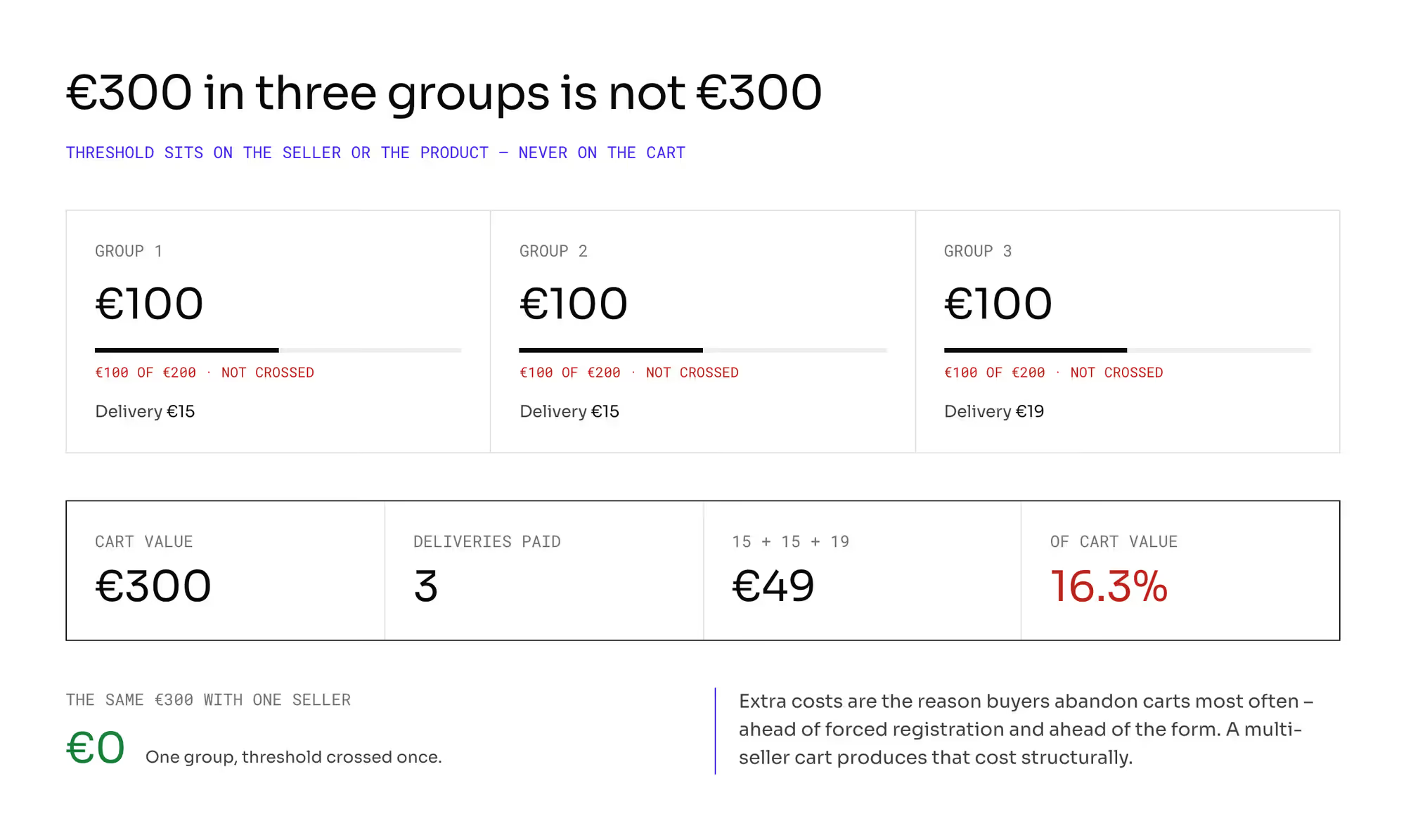
The buyer collects three lots of €100 from three sellers. The threshold is €200.
They spent €300 and did not cross the threshold once, because each group holds €100. They pay for three deliveries: 15 + 15 + 19 = €49, which is 16.3% of the cart value, revealed at the end.
The same €300 with one seller would have produced €0 of delivery.
This is the moment carts get abandoned. In research on cart abandonment, "extra costs too high" is the reason buyers give most often.
It comes ahead of forced registration and ahead of the length of the form. A multi-seller cart produces that cost structurally.
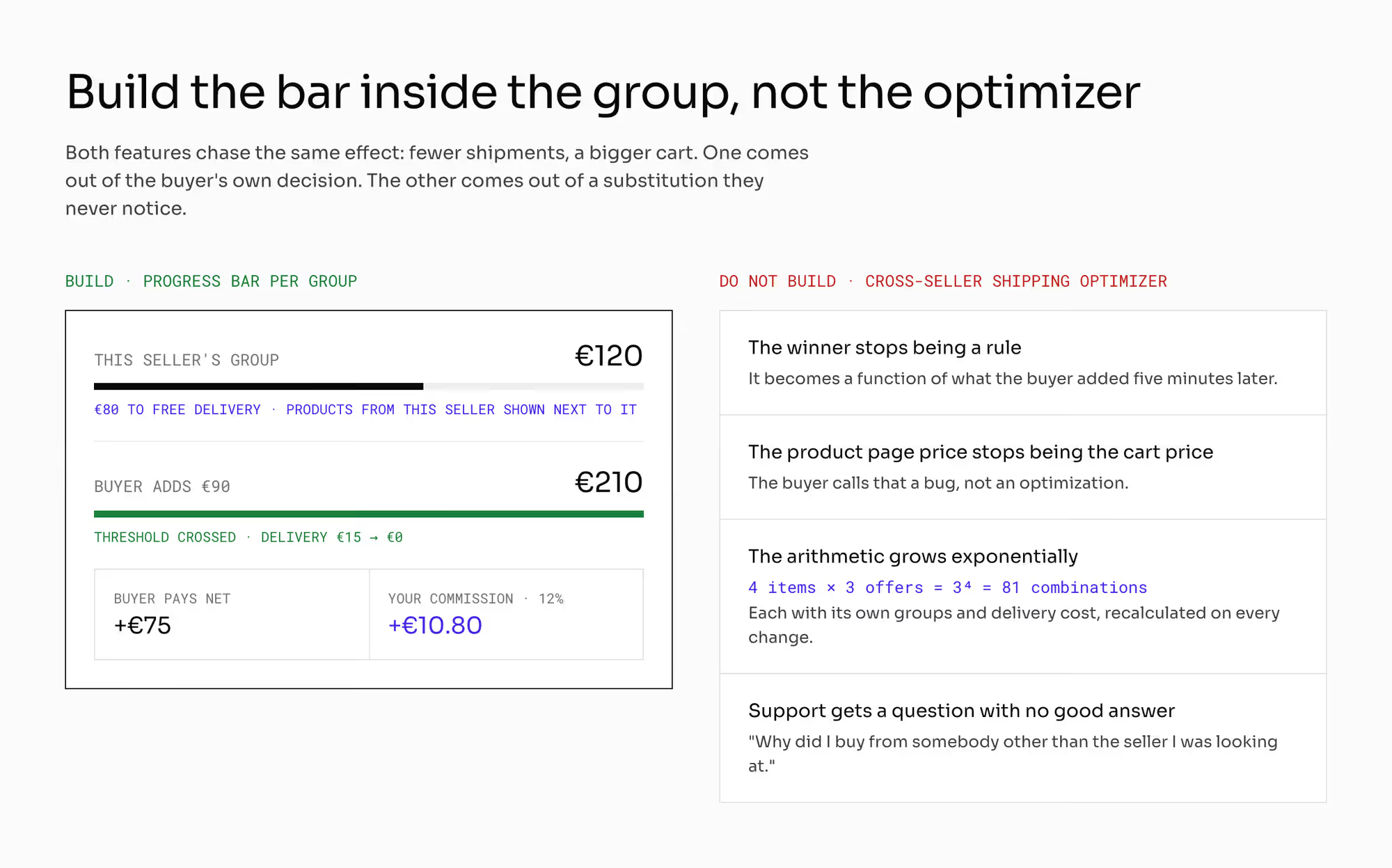
The market's answer is to put a progress bar in every group and to recommend products from that same seller. The group holds €120, the threshold is €200, the bar shows the €80 that is missing, and next to it stand products from that one seller.
The buyer adds an item for €90: the group grows to €210, the €15 delivery disappears, they pay €75 more net, and your commission grows by 12% of €90, which is €10.80. The same threshold without the bar works against you: it earns nothing from the people who never knew how much was missing, and it gives away delivery revenue from the people who crossed it by accident.
The threshold itself is not free. Research on free shipping thresholds shows that they raise cart size effectively, but that the lost delivery revenue can outweigh the gain on sales.
Here, that revenue is usually somebody else's. A threshold you set centrally is spent out of the seller's pocket, and a threshold set by each seller separately turns the cart into a mosaic.
Who funds the delivery is "How Marketplace Split Payments Work and Who Pays the Fees?". Rates, zones, and classes belong to the chapter on orders and logistics.
Why should you never optimise shipping cost across sellers?
There is a feature here that looks obvious on the workbench and that practically nobody on the market builds: optimizing the shipping cost across the sellers inside one cart. The idea is a hint along the lines of "the same item will reach you cheaper from another seller, because he is already shipping you something else", or a straight swap of the offer by the system.
Practitioners from large implementations warn against the complexity, and that warning is worth more than one more feature. Four reasons:
The winner stops being a rule and becomes a function of what is in the cart. The same offer wins or loses depending on what the buyer added five minutes later.
At that point, you cannot explain the criteria to him, and you cannot explain them to the sellers who are owed one (the rule that picks the winning offer and the rules on decisions about sellers).
The price on the product page stops being the price in the cart, because adding an unrelated item changes the one that was already there. The buyer calls that a bug.
The arithmetic grows exponentially: four items with three offers each is 3⁴, which is 81 combinations, every one of them with its own breakdown into groups and its own delivery cost, recalculated on every change to the cart.
Support gets a question with no good answer: "Why did I buy from somebody other than the seller I was looking at?"
The cheaper version of the same effect is a progress bar and recommendations inside the group: fewer shipments and a bigger cart, coming out of the buyer's own decision rather than out of a substitution they will never notice.
Which 4 things change between the cart and the payment?
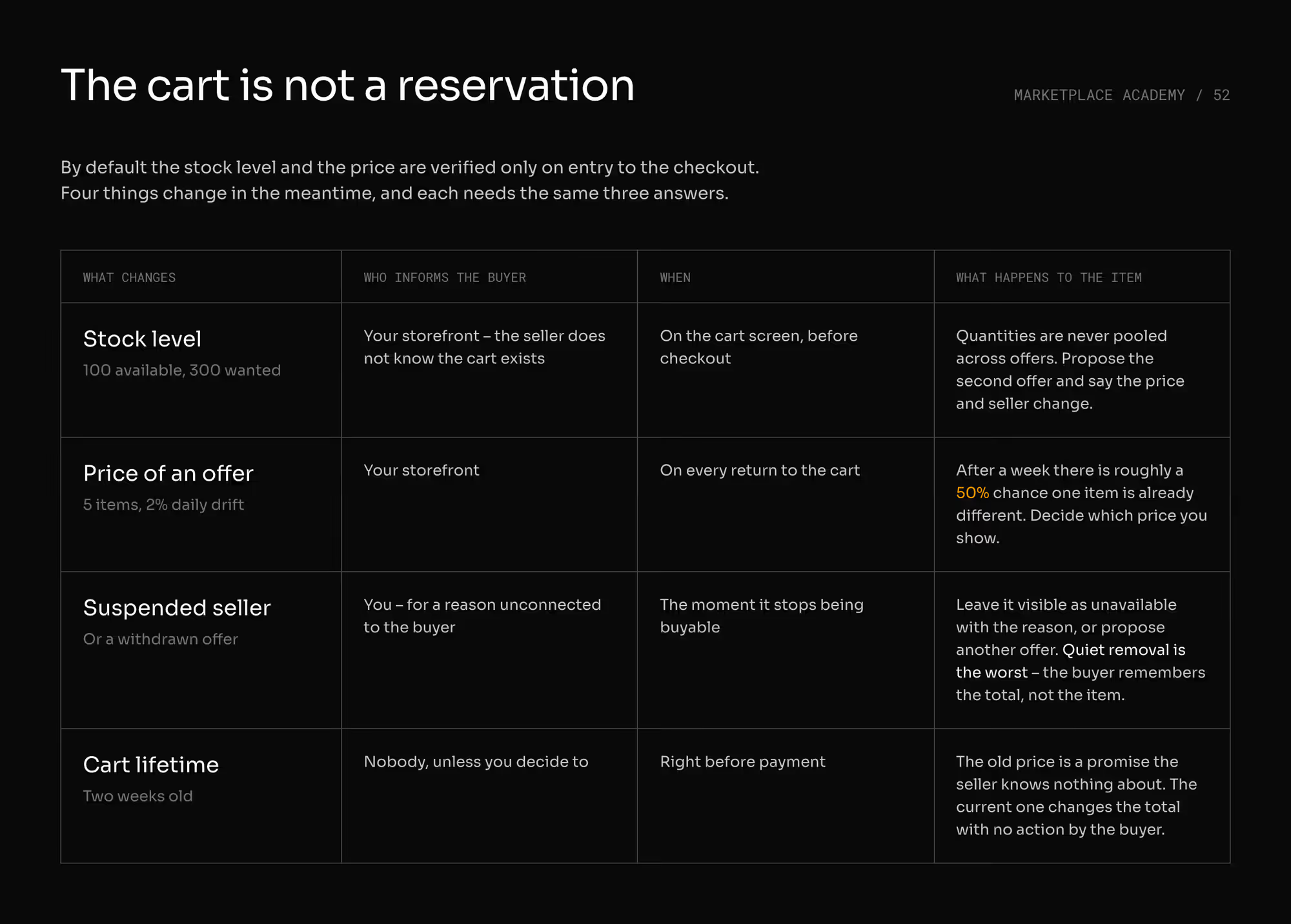
The cart becomes a reservation only when you build one. In the implementations, we know there is none by default: the stock level and the price are verified only on entry to the checkout.
Four things change in the meantime, and each needs an answer to three questions: who informs the buyer, when, and what happens to the item.
1. The stock level
The winning offer has 100 units, and the buyer wants 300. They will not get the missing 200 from the next offer.
The cart does not pool quantities across offers of the same product. You can propose the second offer, but you have to say that the price and the seller change.
2. The price
Assume a cart with five items and a 2% chance that the price of an offer changes during a day. After a week, the probability that at least one item is already different is about 50%.
The arithmetic is hypothetical, but it is enough to stop the question "which price do we show" from being theoretical.
3. A suspended seller or a withdrawn offer
The item stops being buyable for a reason unconnected to the buyer. You can leave it visible as unavailable with the reason given, propose another offer of the same product, or remove it quietly. Quiet removal is the worst, because the buyer remembers the total.
4. Cart lifetime
A cart from two weeks ago shows either the price from two weeks ago or the current one. The first creates a promise the seller knows nothing about.
The second changes the total without any action by the buyer, right before payment. The announcement of a price reduction, by the way, is calculated from the price history of the offer.
How do you handle a cart holding your goods and sellers' goods?
Your own part has delivery rules, thresholds, and lead times of its own, usually in a different system.
The sellers' part has as many sets of rules as there are sellers. Things left out when the cart is designed diverge as well: discount codes that work only on your assortment, and a different return window for two groups sitting on one screen.
In numbers: your part is €200 against a €150 threshold, so delivery is €0. The seller's group is €100 with delivery of €19.
The cart holds €300, and the buyer sees "delivery €19" after the category page had promised free delivery from €150. The promise covered two-thirds of this cart.
The rule: state the promise at the level of the group, or do not state it at all. One promise for the whole cart has to be bought: you fund the delivery in the groups below the threshold, and you write that into the contract.
One cart or one per seller: what changes?
What does each arrangement decide? | Threshold per seller | Threshold on the whole cart | No threshold |
|---|---|---|---|
Who sets it | the seller | you | nobody |
Deliveries to pay for: 3 groups of €100, threshold €200 (count) | 3 | 0 | 3 |
Amount charged for delivery in this cart (EUR) | 49 | 0 | 49 |
Who covers the real €49 | the buyer | you or the sellers, per the contract | the buyer |
What the buyer has to work out alone | that the threshold counts separately inside each group | nothing | nothing |
What it requires in the interface | a bar in every group plus recommendations from that seller | one bar under the total | nothing |
Main risk | disappointment at the total when the bar is missing | the cost grows with the number of groups | cart abandonment |
What does a multi-vendor cart change about the rest of your storefront?
1. The breakdown of the cart into groups carries on through the whole system
A €1,000 cart from three sellers (€500, €300 and €200) at a 12% commission gives €60, €36 and €24, which is €120 for you and €440, €264 and €176 to pay out, €880 in total. Three commission bases, three payouts, three possible refunds.
2. Everything you promise in the cart, the checkout has to deliver
The "go to checkout" button is where the scope of this article ends. One order or three, what happens when the second contract falls through, which documents get issued: that is checkout with several sellers.
How do you check a multi-vendor cart with a vendor?
- A cart with three sellers: does every group carry its own delivery cost, method, and fulfillment time in one view?
- Break the total down into groups and show which group each amount comes from, the discount included.
- Set a threshold at one seller and show the progress bar inside that group.
- Change the price and the stock level of an offer in a second session, then come back to the cart: what does the buyer see, and when?
- Suspend a seller whose item is sitting in the cart: what does the system do with that item, and does it give a reason?
- How many shipments does the cart show, and does it account for parcel splitting at the seller?
Which mistakes do operators make about a multi-vendor cart?
1. One delivery line under the cart total
The buyer finds out about three shipments after paying.
2. A free delivery threshold with no progress bar inside the seller group
It gives away delivery revenue from the people who crossed the threshold by accident, and it fails to raise the cart for the people who never knew how much was missing.
3. A cart total that cannot be broken down into seller groups
At the first return of a single item, nobody will work out how much goes back and out of whose money.
4. A cart described to the buyer as a reservation
Sales above the stock level, and cancellations charged against the seller's metrics for a promise your storefront made.
5. A mixed cart flattened to a single delivery and return rule
One delivery promise and one return window for two arrangements of liability, which means a message that is untrue for part of the cart.
What do you still have to settle about your own cart?
This chapter stops at the "go to checkout" button. It does not settle what the cart becomes once that button is pressed: one order or three, what happens on a partial failure, and which documents the buyer receives (checkout with several sellers).
Also out of scope are the delivery date you promise, the payment split, the moment the card is charged, refunds, the choice of the winning offer, and the comparability of the price on the product page. Zones, rates and shipping classes belong to the chapter on orders and logistics.
Nor does it settle what you have to show before the buyer places the order. The information requirements are a legal question, and they include the total amount payable and the identification of the party to the contract. Check them with a lawyer and set them against "Marketplace Consumer Rights: Who Delivers Them?" and showing who the seller is.
One number decides how much of this matters, and no documentation holds it: what share of your carts holds more than one seller. At 5% this layer is a niche. At 40% it is the main screen of your store. Nobody but you knows that number, and without it every decision in this article is a bet.
Summary: What does a multi-vendor cart have to get right?
Three things, and the first one carries the other two. Group by seller, because every promise in the cart — the cost, the date, the return — belongs to one seller and means nothing averaged across them.
Then say how many parcels are coming, because the count is what the buyer measures satisfaction against. And decide what happens between the cart and the payment, since stock, price, a suspended seller, and the age of the cart itself can all move underneath a buyer who has changed nothing.
Put two sellers' items in your own cart and count how many promises the page makes that belong to neither of them. Building a marketplace where a cart is a set of contracts with one payment on top?
Frequently asked questions on a multi-vendor shopping cart
What is a multi-vendor shopping cart?
A multi-vendor shopping cart holds items from several sellers, where each seller's items form a separate contract with its own delivery cost, delivery date, and parcel. One payment sits on top, which is why it looks like an ordinary cart and behaves like several.
How should a free delivery threshold work in a multi-vendor cart?
A free delivery threshold should work per seller group, and the screen should say so. A threshold applied to the cart total promises something the sellers never agreed to; applied per group with no explanation, it looks broken. A progress bar inside each group with a recommendation from that seller is what the market settled on.
Should a marketplace pick sellers to minimise total shipping?
A marketplace should not pick sellers to minimise total shipping, and almost nobody on the market builds it. The winning offer would depend on everything else in the cart, the price on the product page would stop matching the price in the cart, and four items with three offers each is 81 combinations to compute and explain.
Ready to build?
If you want to walk through your own cart group by group and count what the buyer pays for the part they cannot see yet, let's talk.