
Marketplace Revenue Recognition: Do You Book the Commission or the GMV?

Marketplace revenue recognition is how the financial reporting frameworks decide which figure counts as your revenue, and it is settled by a single test the frameworks call control.
The same sale lands in your financial statements either as €120 or as €1,000. That is a difference of an order of magnitude.
And the answer comes from a single question about facts: do you control the goods before they reach the buyer.
This guide is a map of mechanisms. Which framework you report under, and how an auditor applies it to you, depends on the country, on the year, and on whether you report inside a group.
One thing depends entirely on you, and you settle it before launch: whether your data can produce that answer and defend it two years later.
This article breaks down:
- Do you choose how to present marketplace revenue, or prove it?
- Which 3 indicators point to control?
- Does owning the goods for a moment make you the principal?
- What must your system record before anyone can answer?
Key insights
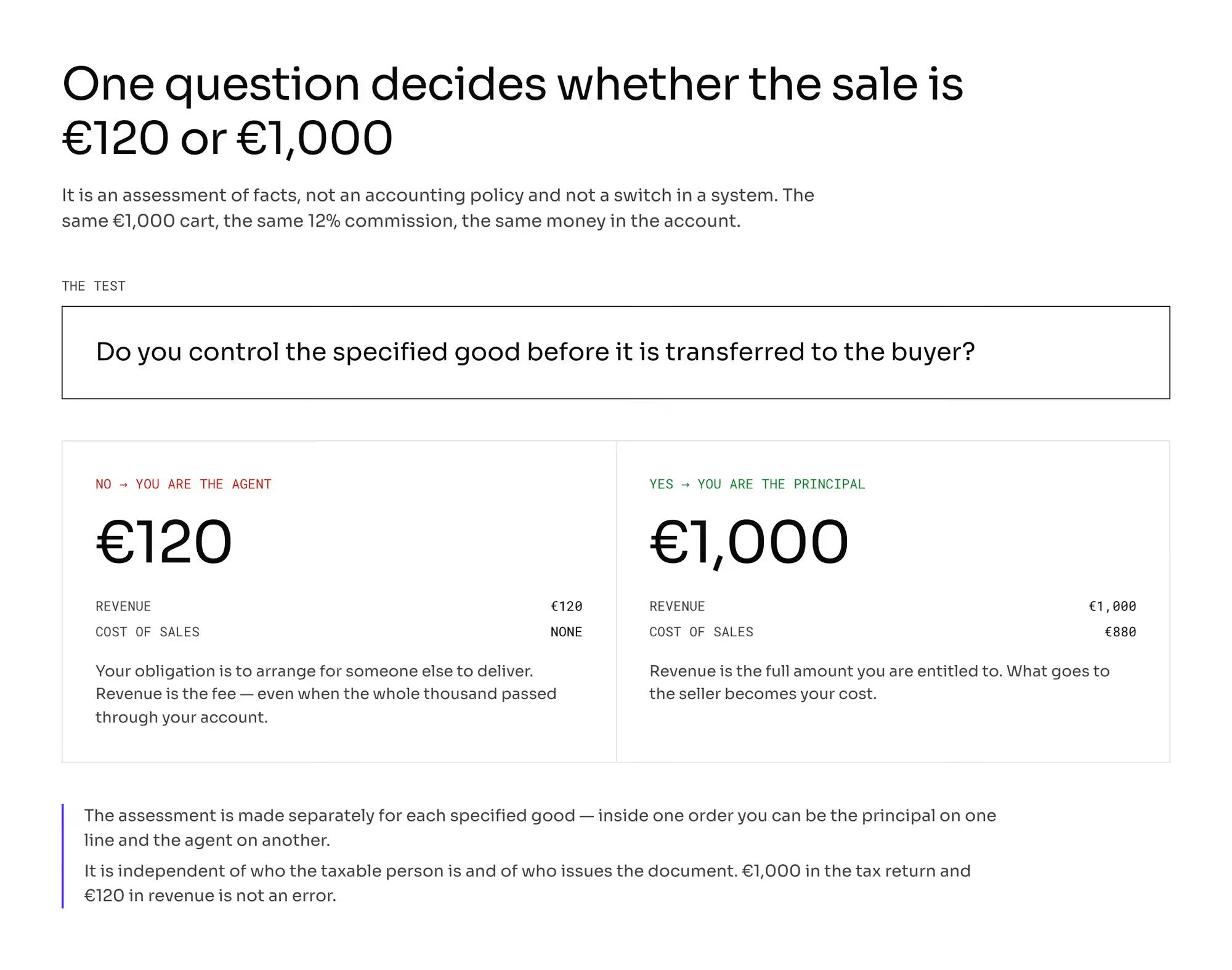
- The presentation follows from one test about facts: whether you control the specified good before it reaches the buyer. It is assessed per line, so one order can make you the principal on one item and the agent on another, and it is independent of who the taxable person is and who issues the document.
- The same €1,000 cart at 12% is either €120 of revenue or €1,000 of revenue against €880 of cost of sales. Gross profit is €120 in both, so a hundred million of turnover reports as €12 million or €100 million with identical money in the account.
- Three indicators point to control: who answers to the buyer for the promise, who carries the inventory and return risk, and who sets the price. They carry different weight in different contracts, and price discretion is the weakest of them.
- Taking legal title for a moment does not settle it. In the one-creditor model, the seller sets the price, the goods never sit with you, and issuing the invoice yourself does not make the case for gross presentation.
- Store the facts, and the presentation can be computed either way: who set the price and its history, who funds returns and discounts, whether the goods were ever yours, who answers for conformity, the amount broken down, and the source period. A flag saying "this sale is gross" is an answer somebody configured in week one.
Do you choose how to present marketplace revenue or prove it?
The financial reporting frameworks we know of frame gross versus net revenue recognition almost identically, and they reduce it to a single test.
You are the principal if you control the specified good or service before it is transferred to the buyer. Then your revenue is the full amount you are entitled to: the whole €1,000.
The €880 that goes to the seller becomes your cost.
You are the agent if your obligation is to arrange for someone else to deliver. Then your revenue is the fee or the commission.
It is those €120, even when the whole thousand passed through your account.
Three things about this test matter more than they look. First, this is an assessment of facts that an auditor makes.
Second, the assessment is made separately for each specified good, so within one order you can be the principal on one line and the agent on another. Third, this test is independent of who the taxable person is and of who issues the document.
The mechanism in "Online Marketplace VAT: When Does the Platform Become the Deemed Supplier?" makes you the taxable person on a sale you do not make in civil law terms. That does not automatically make you the principal in your accounts.
You can have €1,000 in the tax return and €120 in revenue. That is not an error.
Those are two different questions.
The platform model from "Which marketplace platform model should you choose" sets the default answer: an agency marketplace gives you the commission, while your own sales and dropship give you the whole GMV. But that is a default answer, and the test still has to be run.
€120 or €1,000 on the same sale: the worked example
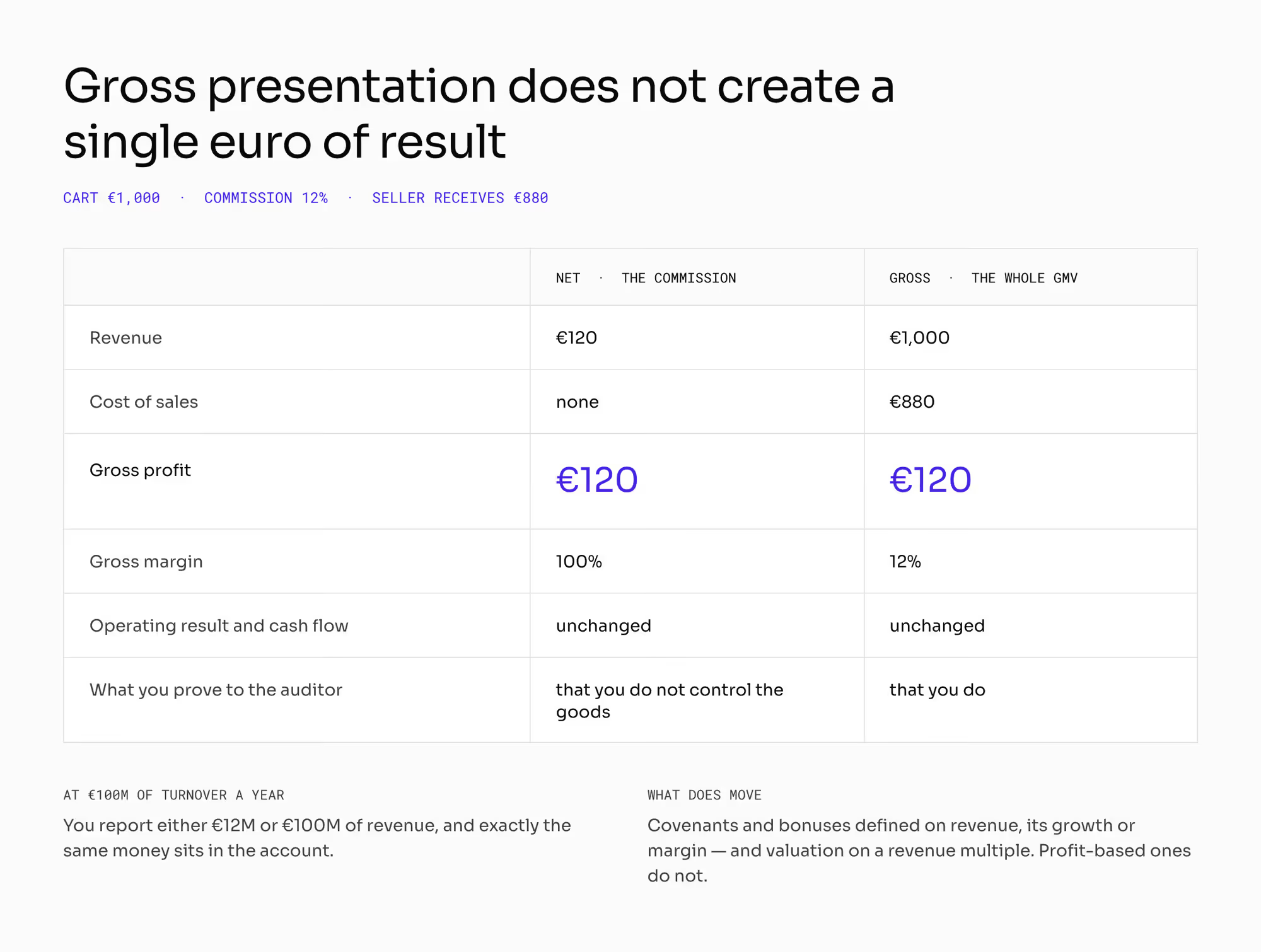
A cart of €1,000, a commission of 12%, the seller receives €880.
1. Net presentation: you are the agent
Revenue €120. There is no cost of sales.
Gross profit €120, margin 100%.
2. Gross presentation: you are the principal
Revenue €1,000. Cost of sales €880.
Gross profit €120, margin 12%.
The profit is identical to the cent. Gross presentation does not create a single euro of result.
It changes only the top of the income statement. At €100 million of turnover a year, you report either €12 million or €100 million of revenue, and exactly the same money sits in the account.
This is where the temptation starts. Sometimes a business model gets chosen so that the revenue line looks better.
What you buy that way is full liability for goods you have never seen, and slower onboarding of sellers. "Which marketplace platform model should you choose?" puts a price on both.
It is worth having that trade named in the committee room rather than in the corridor.
Which 3 indicators point to control?
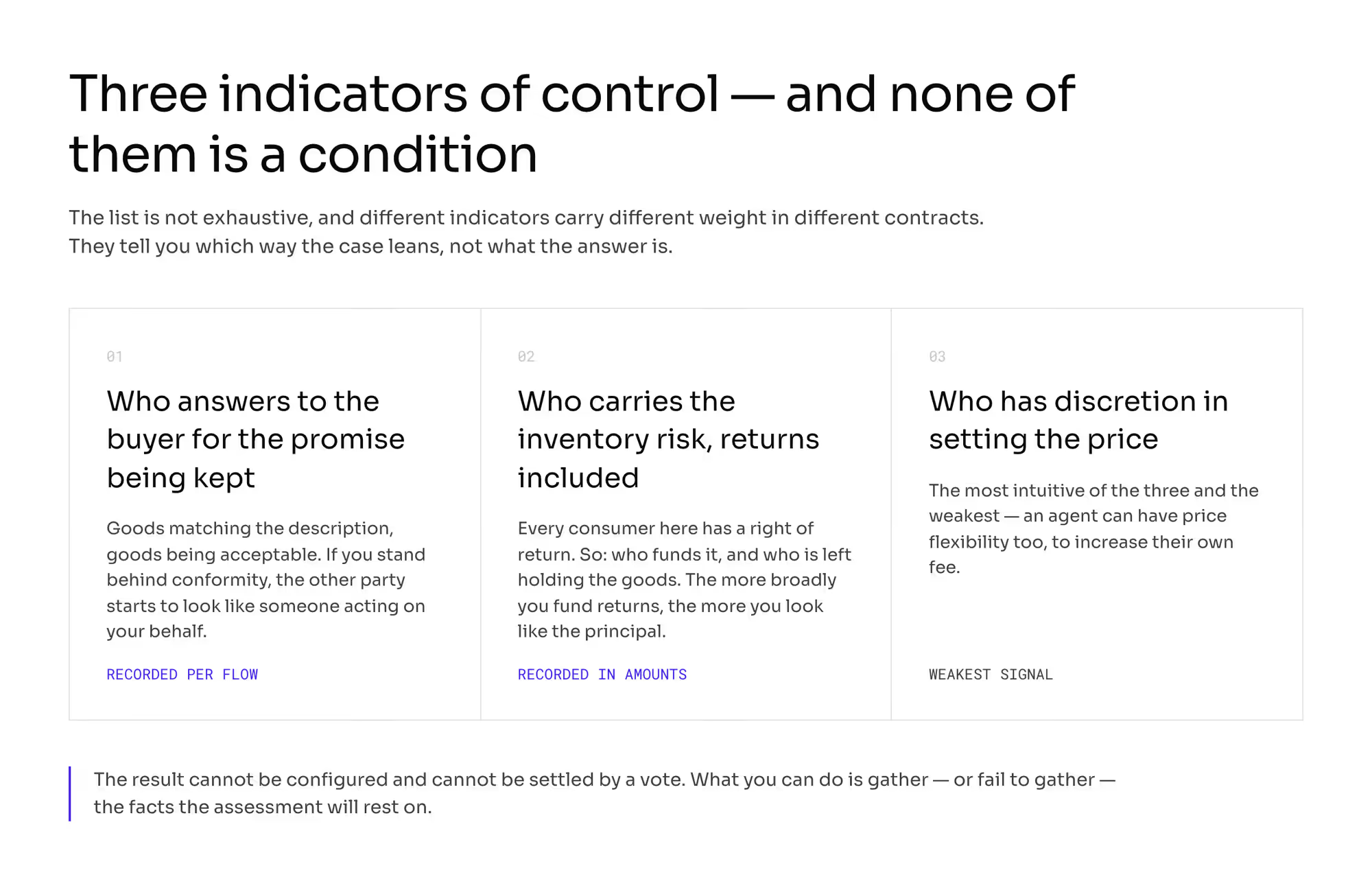
The standards give you pointers on what control looks like from the outside. These are indicators: it is stated outright that the list is not exhaustive, and that different indicators carry different weight in different contracts.
1. Who is responsible to the buyer for the promise
That means responsible for the goods matching the description and being acceptable. If in the customer's eyes you are the one standing behind conformity, the other party starts to look like someone acting on your behalf.
2. Who carries the inventory and return risk
In a marketplace, this point bites harder than it looks, because every consumer here has a right of return. So the question becomes: who funds the return and who is left holding the goods.
The amounts are settled by "Marketplace Refunds: Who Pays for Them and Out of What?" and "Who Keeps the Marketplace Commission on a Refunded Order?". The reporting consequence sits here: the more broadly you fund returns out of your own pocket, the more you look like the principal.
3. Who has discretion in setting the price
The most intuitive of the three and at the same time the weakest. The standard itself notes that an agent can have price flexibility too, to increase their own fee.
There is one practical consequence. The result of this test cannot be "configured" and cannot be settled by a vote.
What you can do is gather, or fail to gather, the facts an auditor will base the assessment on.
Does owning the goods for a moment make you the principal?
The most common misunderstanding goes like this: "We buy and resell, and the invoice to the customer is ours, so we have GMV in the books." Not necessarily.
The standard says outright that obtaining legal title to goods only for a moment before transferring them to the buyer does not have to mean control. And the one-creditor model from "Which marketplace platform model should you choose" is exactly that arrangement: the seller sets the price, the goods never sit with you, and the difference between the two prices is economically your commission.
If on top of that it is the seller who answers for conformity and carries the cost of a return, the case for gross presentation gets thin. The fact that you issue the invoice does not save it.
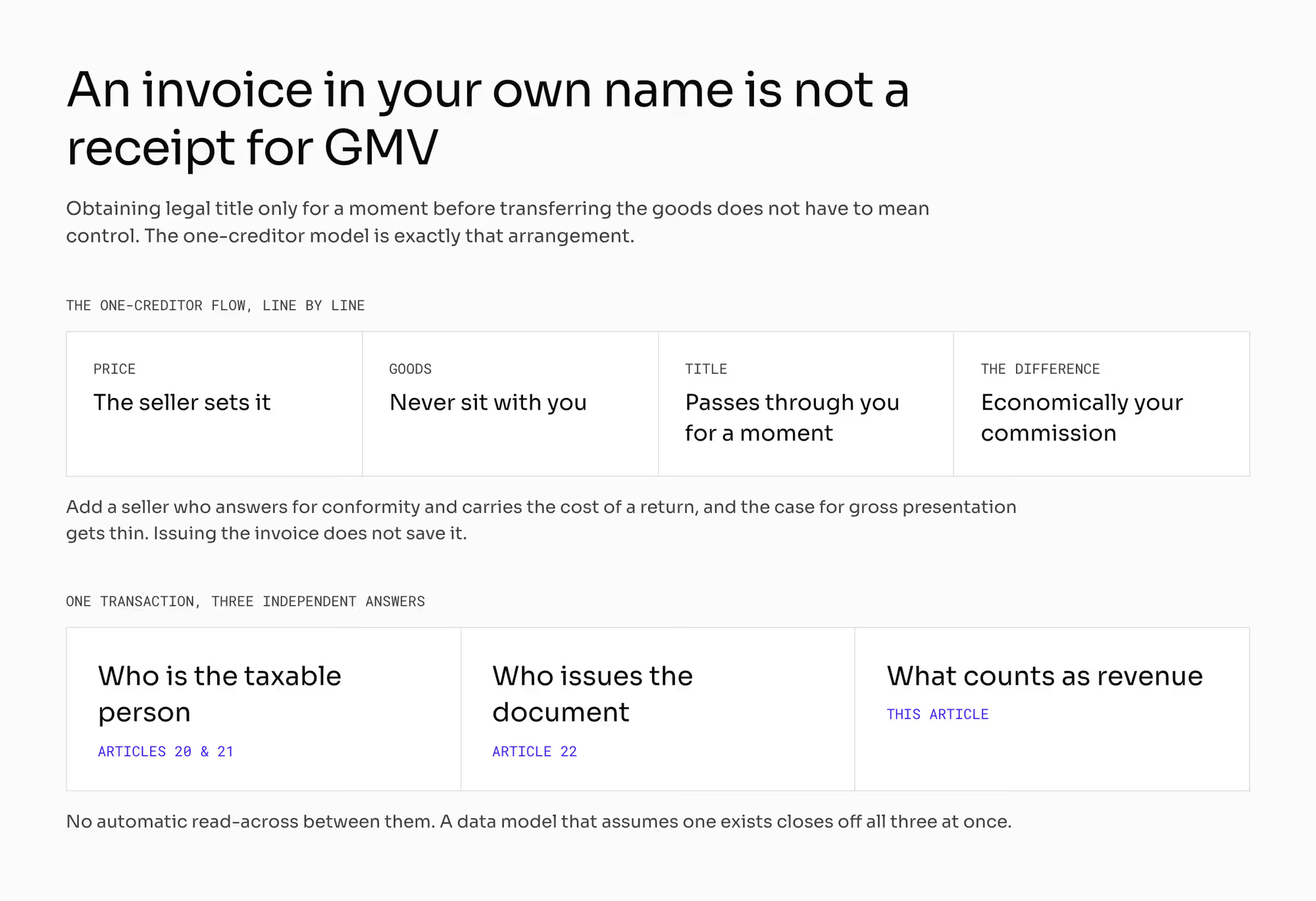
An invoice in your own name is not a receipt for GMV in the financial statements. "Marketplace Invoicing: Who Issues Which Invoice, and When?" settles who issues the document.
"Marketplace VAT: Are You the Agent or the Principal?" and "Online Marketplace VAT: When Does the Platform Become the Deemed Supplier?" settle who the taxable person is. This test settles what counts as revenue.
One transaction, three independent answers.
What does the presentation of revenue change, and what stays the same?
What moves between the two? | Net (the commission) | Gross (the whole GMV) |
|---|---|---|
Revenue on a €1,000 cart | €120 | €1,000 |
Cost of sales | none | €880 |
Gross profit | €120 | €120, unchanged |
Gross margin | 100% | 12% |
Operating result and cash flow | unchanged | unchanged |
Valuation on a revenue multiple | lower base, higher multiple | higher base, lower multiple |
Visibility of the effective commission | direct | a separate calculation |
What you prove to the auditor | that you do not control the goods | that you do |
That is why this is a decision for the board and not for accounting. Covenants built on debt to operating profit will not move, because the profit does not change.
Covenants built on revenue, on its growth, or on margins will. Check in your loan agreement whether its ratios are defined on today's basis of presentation.
The same note applies to bonuses: if the annual target sits on revenue and part of the sales moves from net to gross, you have just changed people's incentives without deciding to.
How should a marketplace define GMV?
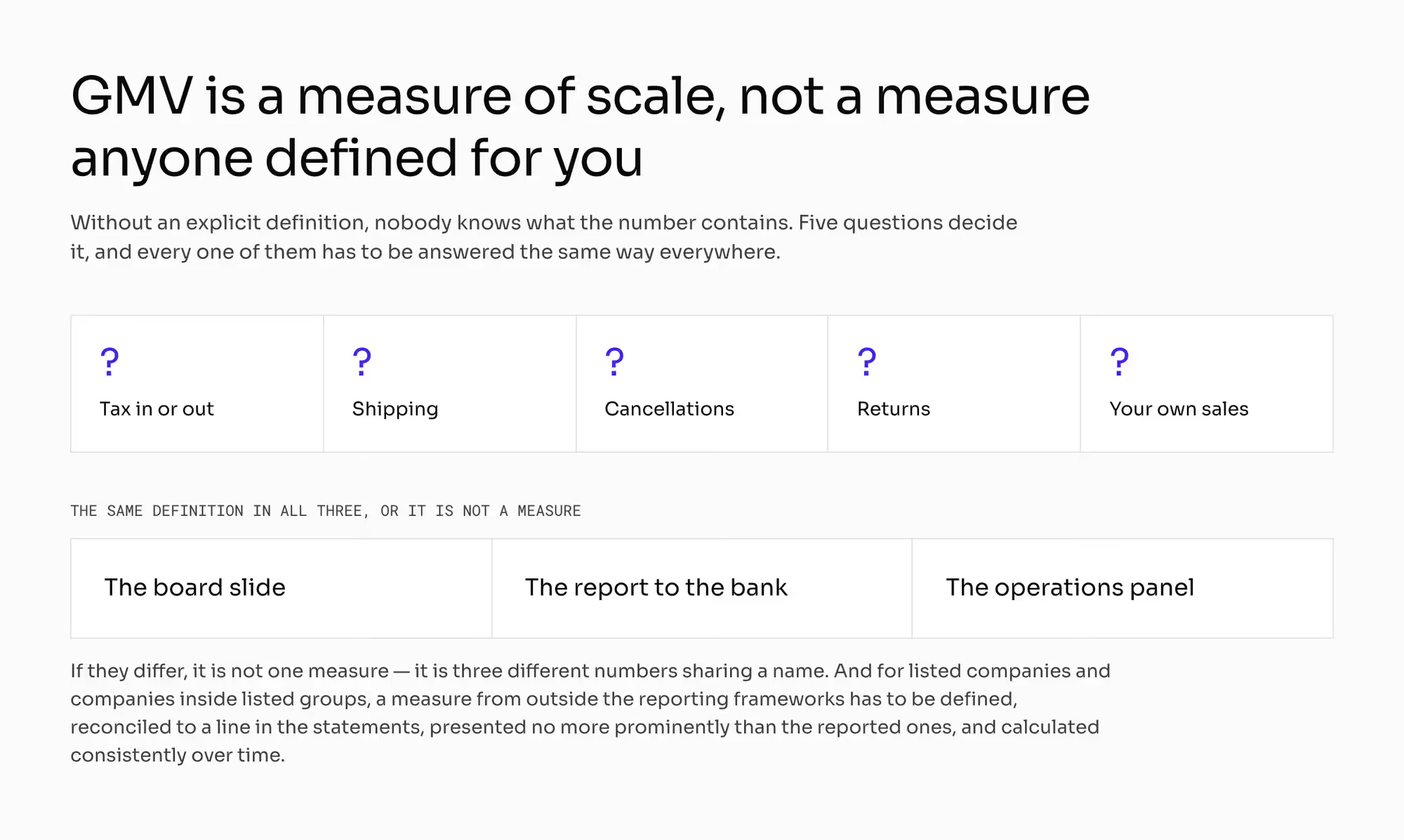
The turnover flowing through your platform is a sensible and widely used measure of scale. It is not, however, a measure defined by the reporting frameworks: it ignores costs, and without an explicit definition nobody even knows whether it includes tax, shipping, cancellations, returns, and your own sales.
For listed companies, and for companies inside listed groups, measures from outside the reporting frameworks carry a discipline worth knowing before somebody drops turnover onto a slide: they have to be defined and named in a way that does not mislead, reconciled to a specific line in the statements, presented no more prominently than the reported measures, and calculated consistently over time. Confirm with your auditor whether your measure falls under those requirements.
Even if it does not, one question stays yours: is the turnover on the board slide, in the report to the bank, and in the operations panel calculated the same way? If not, it is not a measure. What you have instead is three different numbers sharing a name.
What must your system record before anyone can answer?
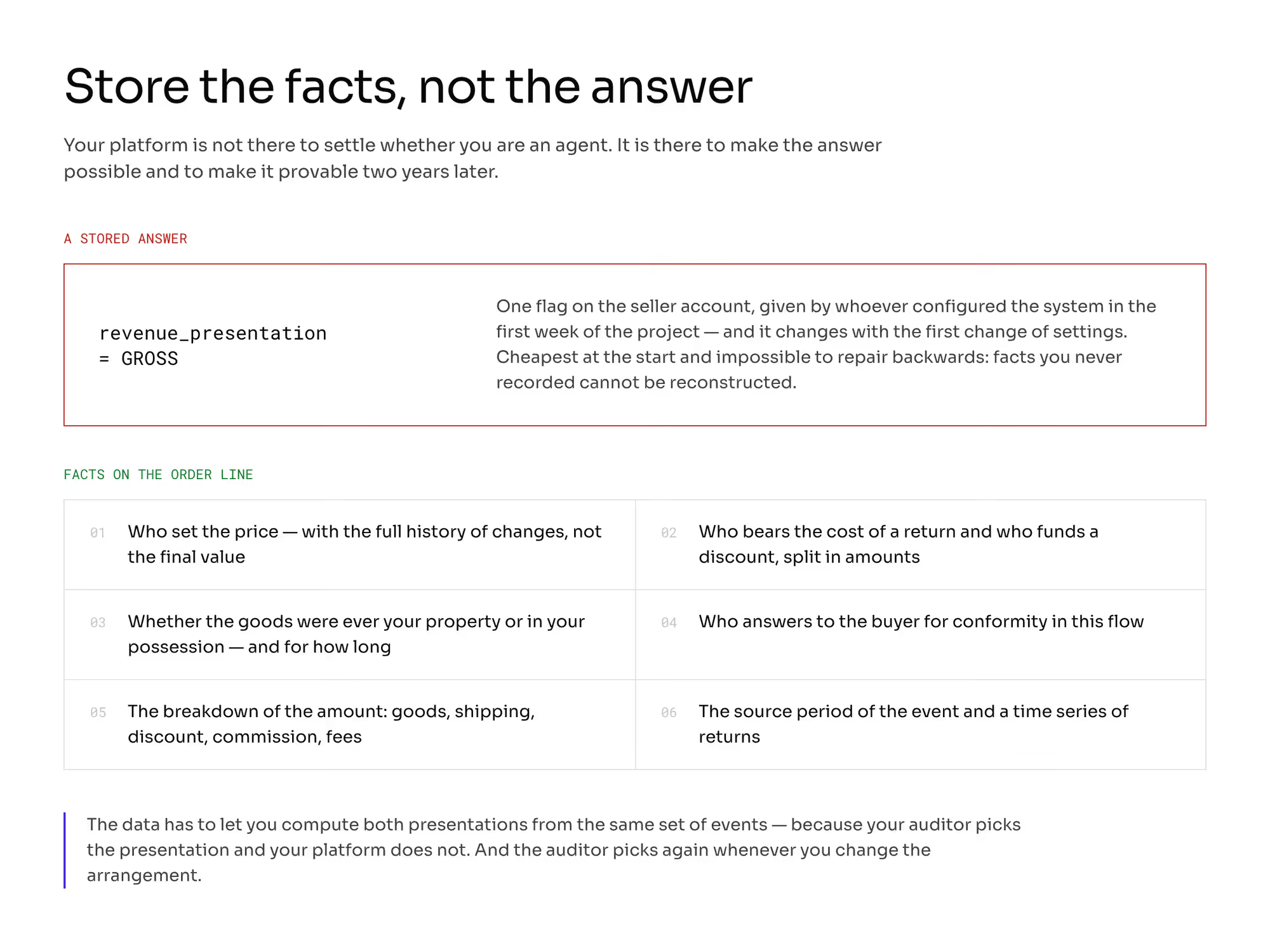
This is the only part of the article you carry into a specification. Your platform is not there to settle whether you are an agent.
Its job is to make the answer possible and to make it provable. So the facts have to be recorded on the order line and not in the settings:
- who set the price on this line and whether anyone on your side could change it, with the full history of changes and not the final value alone;
- who bears the cost of a return and who funds a discount, with the split in amounts when the two of you fund it half and half;
- whether the goods were ever your property or in your possession and for how long: that is the difference between control and momentary title;
- who answers to the buyer for conformity of the goods in this flow, because in a hybrid it varies between sellers and between channels;
- the breakdown of the amount into goods, shipping, discount, commission, and additional fees: without it you cannot compute either presentation;
- the source period of the event from "Marketplace Ledger: Why Balances Must Match the Transfer" and a time series of returns, because a sale carrying a right of return is recognized with an allowance for how much you expect to get back, and that estimate has to rest on something.
Do not store the answer in the schema; store the facts the answer is computed from. A flag saying "this sale is gross" is a stored answer.
That answer was given by whoever configured the system in the first week of the project. The data has to let you compute both presentations from the same set of events, because your auditor picks the presentation.
And the auditor picks again whenever you change the arrangement: when you start funding returns, say, or start guaranteeing a delivery date.
What does marketplace revenue recognition decide?
1. The classification moves when the facts move
The classification follows from facts, and you change the facts yourself: every promise made to a buyer in the seller's name moves you toward being the principal. If you find that out at the year-end close, it arrives as a surprise.
2. A hybrid means two presentations inside one set of books
Operational practitioners describe merging the reporting of your own sales with marketplace sales as something that ends up in tools outside the platform anyway. Count that cost in the business case instead of discovering it.
3. What the block on marketplace tax and accounting comes down to
That closes the block on marketplace tax and accounting. The earlier articles asked different questions: who the taxable person is, who issues the document, which period a correction belongs to, what happens with a foreign seller.
They share one denominator: a specialist gives the answer, and the only thing you settle before launch is whether your data holds the facts that answer will rest on. Tax, document, and revenue are three independent tests on one transaction, with no automatic read-across between them.
A data model that assumes the read-across exists closes off all three at once.
How do you check marketplace revenue recognition with an auditor and a vendor?
1. Questions for your auditor and your CFO
Bring a description of the flow and the amounts:
- "On a €1,000 cart with a 12% commission, is our revenue €120 or €1,000? Which facts about the transaction settle it?" Ask for the list of facts, because a list is the only thing you can encode.
- "Which of the planned flows can have a different answer from the rest?" Above all your own sales, the one-creditor model, and the flows where you fund the return or guarantee delivery.
- "What would have to change in our arrangement for the classification to shift? And how do you want to hear about that in advance?"
2. Questions for your platform vendor
Ask them at the demo, and ask to be shown on screen:
- "Show us where in the order data you can see who set the price and who funded the return." If it is a field on the seller account, the history changes with the first change of settings.
- "Generate the same period two ways: as a sum of commissions, and as turnover with a cost of sales." If only one of them is possible, somebody has settled the presentation for you.
- "How is turnover defined in your report: with tax or without, with shipping, with cancellations, with returns?"
Which mistakes do operators make about marketplace revenue recognition?
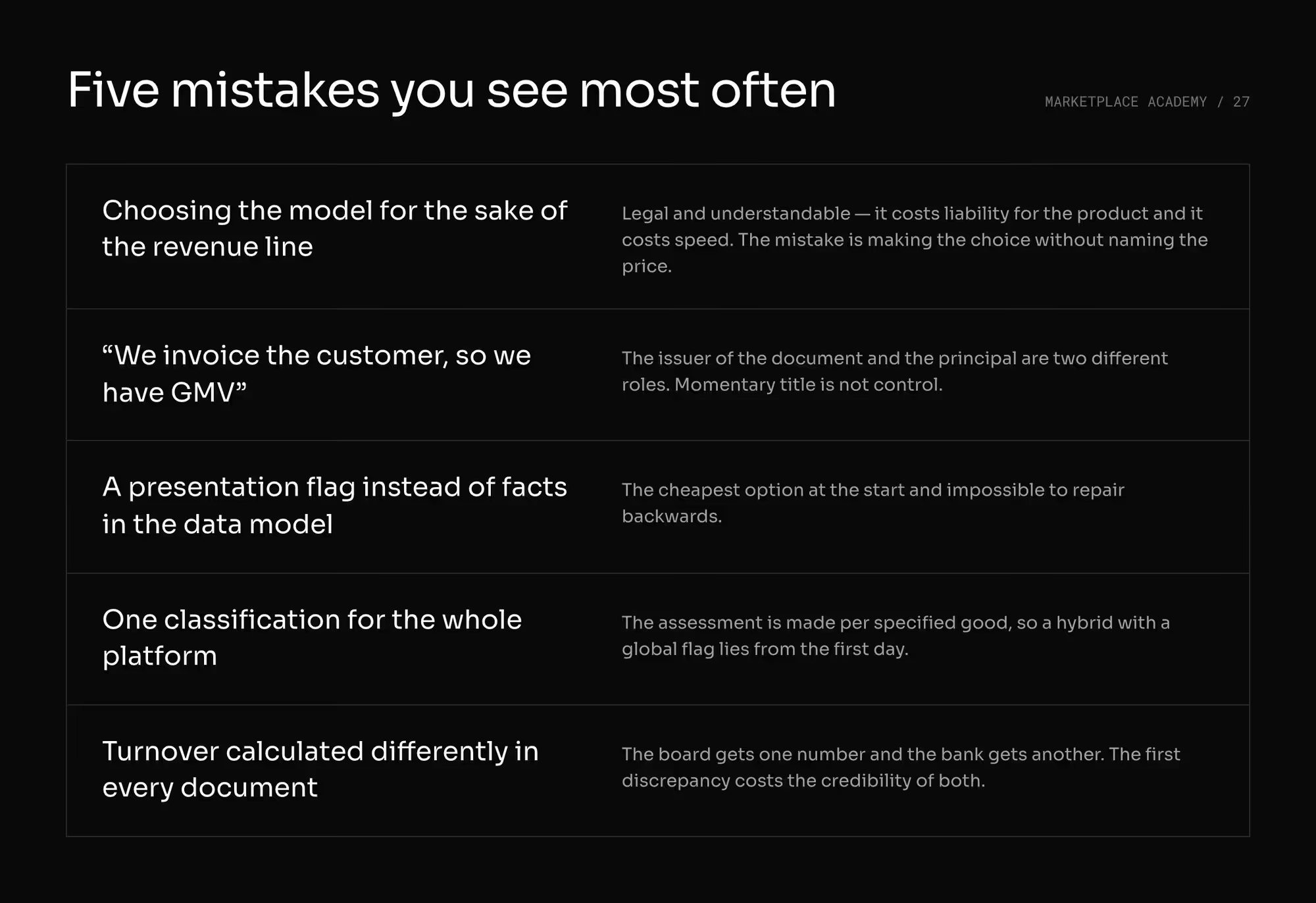
1. Choosing the model for the sake of the revenue line
Legal and understandable, but it costs you liability for the product and it costs you speed. The mistake is making it without naming the price.
2. "We invoice the customer, so we have GMV"
The issuer of the document and the principal are two different roles, and momentary title is not control.
3. A presentation flag instead of facts in the data model
The cheapest option at the start and impossible to repair backwards, because facts you never recorded cannot be reconstructed.
4. One classification for the whole platform
The assessment is made per specified good, so a hybrid with a global flag lies from the first day.
5. Turnover calculated differently in every document
The board gets one number, and the bank gets another. The first discrepancy costs you the credibility of both.
What do you still have to settle yourself about marketplace revenue recognition?
This guide is a map of mechanisms, and it is no substitute for accounting, tax, or legal advice. It deliberately carries no rates, no thresholds, and no dates.
Confirm five things by name before you fix the data model and before you promise the board any figure at all.
- Whether you are an agent or a principal, assessed separately for each type of flow. Your auditor and your CFO, in writing, with the list of facts that settled it.
- Which framework you assess this under, and whether the answer is the same in the standalone statements and in the consolidated ones. Your auditor.
- Whether the fiction that moves the tax obligation onto the platform affects your presentation of revenue. We read these as two independent tests, but a divergence between the tax return and the financial statements is something you have to be able to explain. A tax advisor together with your auditor.
- How you recognize expected returns, and whether your data is enough to estimate them. *Your auditor. The document side sits in "Marketplace Credit Notes: Which Period Does a Correction Belong To?".*
- Whether a change of presentation moves covenants, bonus agreements, or disclosure obligations. A lawyer together with your CFO.
Our claim is narrower than any of those answers and independent of them: the data has to let you answer in each of those ways. That is the only part of the problem you settle yourself, and before launch.
Summary: What do you settle before launch, and what does the auditor settle?
The auditor settles the presentation, once per kind of flow and again whenever the arrangement changes. You settle whether the facts behind that judgement exist: price authorship with its history, who funds returns, whether the goods were ever yours, who answers for conformity, the amount broken into its parts, and the source period of every event.
Recorded on the order line, none of it can be reconstructed later.
Ask a vendor to generate one period twice, as a sum of commissions and as turnover with a cost of sales. Talk to a marketplace expert if you want to know whether your data can produce both presentations.
Frequently asked questions on marketplace revenue recognition
Does a marketplace book the commission or the GMV as revenue?
The commission, unless you control the goods before they reach the buyer. An agency marketplace recognises the fee it is entitled to.
Your own sales and dropship point the other way, toward the full amount with the seller's share as a cost. The test is applied per specified good, so a hybrid platform carries both answers at once.
Is GMV the same as marketplace revenue?
No, and the frameworks do not define GMV at all. It measures the turnover flowing through the platform, which ignores costs and says nothing on its own about tax, shipping, cancellations, returns, or your own sales.
Define what yours contains, then make sure the board slide, the report to the bank, and the operations panel all use that definition.
Does the deemed supplier rule change how a marketplace books revenue?
No. Who accounts for the tax and what counts as revenue are two separate tests on the same sale.
You can carry €1,000 in the tax return and €120 in revenue on one order, correctly. A divergence between the two is something you have to be able to explain, so raise it with a tax advisor and your auditor together.
Ready to build?
If you want to check whether your orders can produce revenue on both presentations from one set of events, let's talk.