
Best Mirakl Alternatives in 2026: 8 Platforms Ranked by Cost and Ownership
Mirakl is the name enterprise procurement recognises, and for a lot of marketplace operators, that is the whole reason it got on the shortlist. It is the largest enterprise marketplace overlay on the market, with the reference customers and the implementation partners that a board asks about.
Most teams looking for Mirakl alternatives are not unhappy with the software. They are unhappy with what the contract does as the marketplace grows. You pay a licence plus a share of marketplace GMV, so the bill rises with your own success, and the marketplace layer expects an eCommerce platform underneath that you license and implement separately.
This guide covers what Mirakl is, what its pricing model is made of, and how 8 Mirakl competitors compare on the two things that decide a long contract: what the cost does as you scale, and how much of the platform you end up owning.
The marketplace solutions below run from purpose-built marketplace infrastructure you host yourself to full-stack SaaS. Remember that the right Mirakl alternative is the one that matches the reason you are leaving it.
Place | Platform | Type | Who runs it | Source code | Cost model |
|---|---|---|---|---|---|
1 | Mercur | Open-source | You | Public MIT core, Enterprise source for licensees | No licence fee on the open-source edition, commercial licence for Enterprise, no GMV fee on either |
2 | Spree Commerce | Open-source | You | Open | No licence fee on the open-source edition, Enterprise Edition priced on request |
3 | CS-Cart Multi-Vendor | Self-hosted | You | Available to licensees | |
4 | Spryker | Self-hosted | You | Available to licensees | Negotiated per contract |
5 | VTEX | Full-stack SaaS | Vendor | Closed | Negotiated per contract |
6 | Marketplacer | SaaS marketplace overlay | Vendor | Closed | Negotiated per contract + separate commerce platform |
7 | Nautical Commerce | Full-stack SaaS | Vendor | Closed | Free tier, paid plans scale with usage |
8 | Sharetribe | Full-stack SaaS | Vendor | Closed | $99 to $299 per month billed yearly + fee per transaction above an allowance |
Prices are quoted only where the vendor publishes them, and every figure was checked on the vendor's own pricing page in September 2026. The fuller comparison, with what each one fixes against Mirakl, is further down.
Key insights
- Mirakl uses contract pricing and publishes no figure. You pay a licence plus a share of marketplace GMV, and the quote you compare is for two platforms, because the marketplace layer needs an eCommerce platform underneath.
- Mirakl is a suite, so the first question is which part of it you are replacing. Several products marketed as Mirakl alternatives replace Mirakl Connect, which is a different product from the marketplace platform.
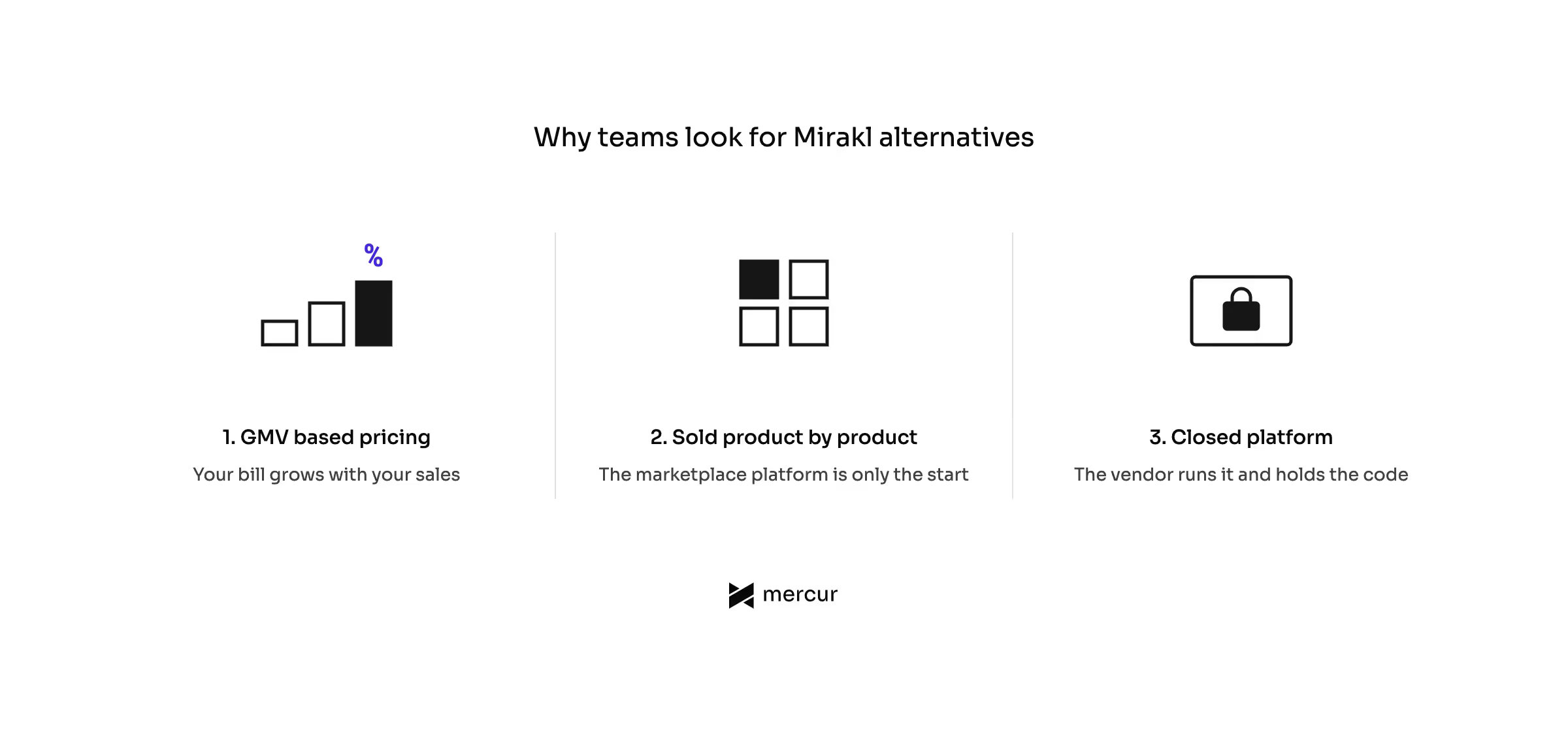
- Teams leave Mirakl for three reasons: a bill that grows with GMV, a suite sold product by product, and a platform the vendor runs on closed code.
- Top 8 alternatives split into 3 types: platforms you run with the code in your hands, licensed platforms you host yourself, and hosted SaaS where the vendor runs everything.
- Cost and ownership move together. Every platform here that takes no share of your sales is one you run yourself, and every platform someone else runs keeps the code closed.
What is Mirakl and who is it for?
Mirakl is a marketplace overlay. It runs the third-party seller side of your business, and it expects a commerce platform underneath that you license, host, and pay for separately.
Seller onboarding, offer management, order routing, commission structures, and settlement sit in Mirakl. The storefront, the checkout, the marketplace app, and the payments sit in Salesforce Commerce Cloud, Adobe Commerce, SAP Commerce Cloud, or whatever else you already run.
That shape explains most of what people like and dislike about it. A retailer that already has a working eCommerce platform can add third-party sellers without replatforming, which is a real advantage. The same retailer ends up with two systems, two vendors, and two roadmaps to keep in sync.
Mirakl suits enterprise marketplace programmes with a budget and a procurement process. It is a proven platform, and Mirakl customers include some of the largest retailers and B2B operators in Europe and North America.
If your project has to clear a committee that wants a name it already knows, this is the name that clears it fastest. It suits you least when you have your own suppliers, when you want predictable costs at scale, or when the marketplace logic you need sits outside what the platform anticipates.
Which Mirakl product are you replacing?
Mirakl sells a suite, and the products in it solve different problems. Sorting this out first saves you from comparing the wrong things.
- Marketplace Platform is the core: sellers, offers, orders, commissions, settlement. This is what most people mean by Mirakl.
- Mirakl Connect is a network product. One seller profile reaches many marketplaces. Its alternatives are feed and channel tools, and they have almost nothing to do with running your own marketplace.
- Dropship Platform is the vendor model where you sell the goods yourself, and the supplier ships them. Different operation, different product.
- Ads, Payout, and Agentic Activation are separate products again. Retail media and marketing tools, seller payouts, and the advanced features around catalogue optimisation all sit outside the marketplace platform itself.
Every platform in this guide replaces the first item on that list, the Marketplace Platform: sellers, offers, orders, commissions, and settlement.
This matters when you read a comparison list. Review directories rank by star rating and review volume, so their Mirakl lists fill up with partner management and affiliate tools, which do not run a marketplace at all. Syndicated listicles open with dropship and feed products, which sit closer to Mirakl Connect than to the marketplace platform.
How much does Mirakl cost?
Mirakl publishes pricing for one product, and the marketplace platform is not it. Mirakl Connect has a public price list that starts at $699 a month. The marketplace platform is an enterprise contract negotiated individually, so a number from someone else's deal tells you very little about yours.
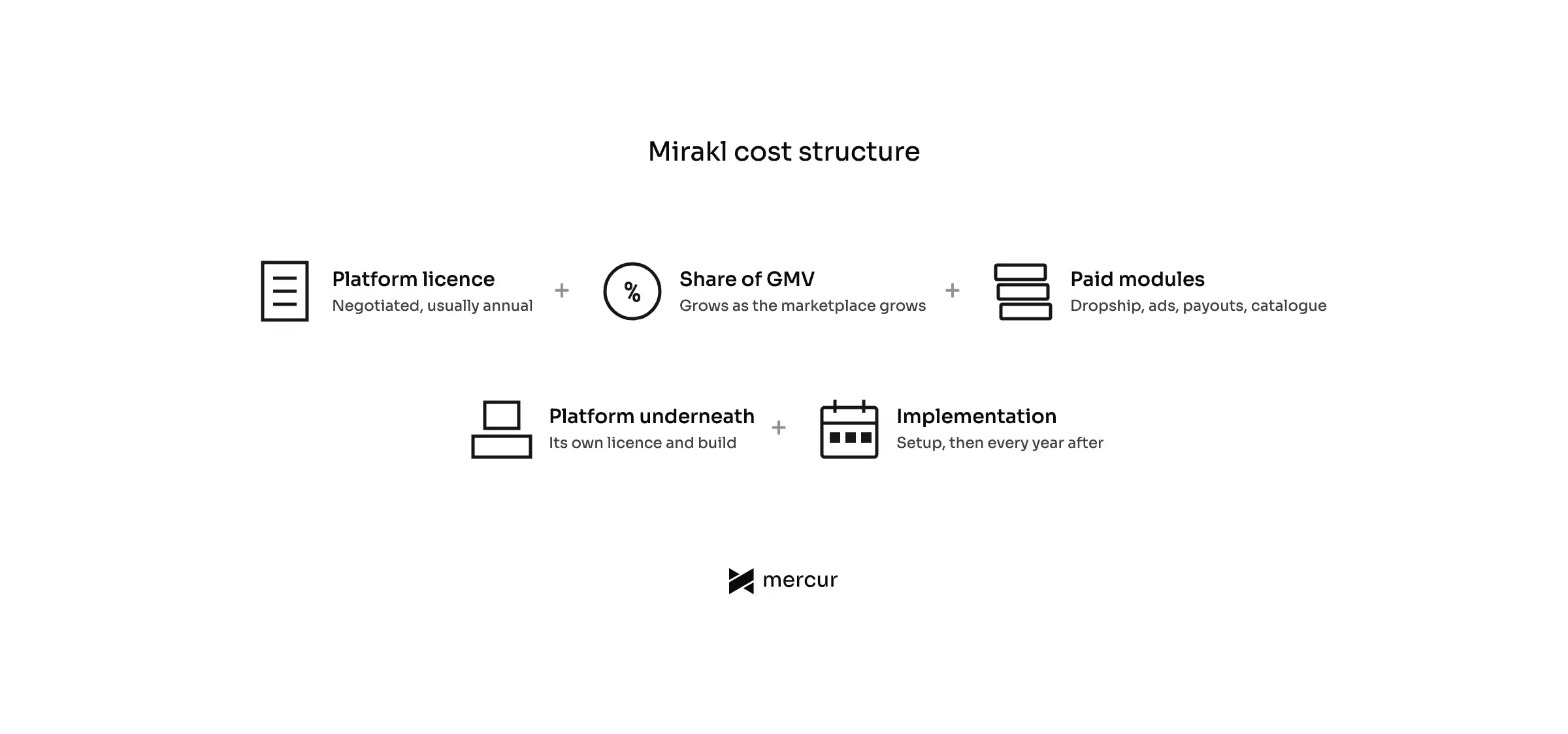
What you can work with is the cost structure. Five things add up on a Mirakl programme:
- The platform licence, negotiated and usually annual.
- A share of marketplace GMV, which grows every month the marketplace grows.
- The other products in the suite. Dropship, retail media, payouts, and catalogue optimisation are sold as separate products, so the marketplace platform is where your quote starts.
- The eCommerce platform underneath, with its own licence and its own implementation.
- Add implementation and ongoing maintenance, and you have the total cost of ownership.
The line worth modelling is the second one. A percentage of GMV is the only item on that list that rises without giving you anything new, and it rises fastest exactly when the marketplace is working. It is the one line tied to your transaction volume instead of to the software you are running.
Why look for Mirakl alternatives?
I have been building marketplaces for 7+ years, and the teams I work with include people who ran Mirakl for years before they moved. Nobody left because the software stopped working. They left because of what the contract does as the marketplace grows.
The bill climbs with GMV, the suite comes product by product, and the code stays with the vendor. Below is what each pain point looks like, so you can tell which one you have hit.
GMV-based pricing grows with your success
GMV-based pricing model means the better your marketplace does, the more you pay for the same platform. As you grow, it becomes one of the largest lines on the bill, and break-even on the whole programme gets measured in years.
The meter also runs before your first third-party sale. An enterprise marketplace programme takes months to go live, so ask when the fee starts, at signature or at go-live.
The suite is sold product by product
The marketplace platform is the start of the quote. Dropship, retail media, payouts, and catalogue optimisation are separate products on Mirakl's own product page, and the eCommerce platform underneath is separate again. Where Mirakl does publish a price, on Connect, you can see the shape of it: a monthly plan banded by GMV, with features such as AI image optimisation sold as add-ons on top.
It does mean the number you compare against an alternative has to include every module you plan to switch on, the third-party apps you bolt on, and the platform underneath.
You don't own your platform
Mirakl is a closed SaaS on the vendor's cloud. The source code is unavailable to Mirakl customers, so deep customization at that level runs on Mirakl's roadmap and timeline instead of your team's, and anything requiring custom development becomes a request you file. Deployment is the vendor's cloud. If data residency matters to you, it becomes a contract question instead of something you configure.
For a marketplace that has become a real business, that is a strategic position, and it is more than a technical detail. Vendor lock-in is the part that shows up years later, when the exit turns out to be a rebuild. It decides how fast you can respond when the law changes, when a large seller asks for something specific, or when you want to move to another platform.
What to look for in a Mirakl alternative?
Match the platform to the reason you are leaving.
- If the problem is cost at scale, look for a platform that charges for the software. A licence you can predict beats a percentage you cannot.
- If the problem is the customisation ceiling, look for a platform whose code your own developers can read and extend.
- If the problem is the second platform underneath, look for marketplace software that handles commerce natively, so one system covers the storefront, the checkout, and the seller side.
Your own business model decides a lot of this too:
- B2B marketplaces need bulk ordering, approval workflows, and supplier management that B2C platforms don't cover.
- Service marketplaces need booking and scheduling instead of stock levels.
- Hybrid models put more weight on technical integration with the systems you use.
Be honest about your technical expertise too. A platform you run yourself removes the ceiling and hands you the operational work. Budget for it as headcount growth or as a partner retainer, because the work does not disappear.
8 Mirakl alternatives compared by cost and ownership
The list runs from the platforms where you own the most to the platforms where you own the least. Cost follows the same line, because the platforms that take no share of your sales are the ones you run yourself.
Place | Platform | Type | What it fixes vs Mirakl | Who runs it | Source code | Cost model | Best for |
|---|---|---|---|---|---|---|---|
1 | Mercur | Open-source | No GMV fee, full code ownership, commerce and marketplace in one platform | You | Public MIT core, Enterprise source for licensees | Free on the open-source edition, commercial licence for Enterprise, no GMV fee on either | Technical teams who want enterprise-grade platform quality with ownership of the code and lower costs |
2 | Spree Commerce | Open-source | No licence fee and no GMV fee on the open-source edition | You | Open | No licence fee on the open-source edition, Enterprise Edition priced on request | Ruby teams who want an open-source base |
3 | CS-Cart Multi-Vendor | Self-hosted | No share of your sales | You | Available to licensees | Straightforward product marketplaces on a fixed budget | |
4 | Spryker | Self-hosted | Composable architecture your developers build on directly | You | Available to licensees | Negotiated per contract | Strong engineering teams with complex B2B logic |
5 | VTEX | Full-stack SaaS | Commerce and marketplace in one platform | Vendor | Closed | Negotiated per contract | Retailers replatforming commerce and marketplace together |
6 | Marketplacer | SaaS overlay | The closest like-for-like swap, usually at a lower entry price | Vendor | Closed | Negotiated per contract + separate commerce platform | Mid-market retailers adding sellers to a store that already sells |
7 | Nautical Commerce | Full-stack SaaS | Multi-vendor commerce at mid-market scale without an enterprise contract | Vendor | Closed | Free tier, paid plans scale with usage | Mid-market operators who want it hosted |
8 | Sharetribe | Full-stack SaaS | Fast setup, no developers needed | Vendor | Closed | $99 to $299 per month billed yearly + fee per transaction above an allowance | Founders and small teams launching fast |
1) Mercur
Mercur is an enterprise-grade open-source marketplace platform that answers all three reasons for leaving Mirakl at once.
- There is no fee on your GMV, so growth does not raise the bill.
- The code is yours and open to read and extend.
- It runs on your own infrastructure, so data residency is your decision.
The open-source edition carries no licence fee, and Mercur Enterprise (with enterprise features) is licensed separately – both editions take no share of your sales, so the costs stay at zero no matter how much you sell. Mercur handles commerce and the marketplace in one system, so you are not licensing a separate eCommerce platform to sit underneath the marketplace layer.
Around 80% of marketplace functionality is ready on day one: vendor onboarding, a vendor panel, an admin dashboard, a buyer storefront, a commission engine, order splitting, split payments, and a catalogue per vendor. That is purpose-built marketplace infrastructure you do not have to write, and your build is the 20% that is specific to your business.
It runs on standard JavaScript and TypeScript, so any web developer can work on it, and you are not recruiting certified specialists.
Mercur is deployed across 30+ enterprise commerce projects with $6B+ in client trade volume. Our Mercur vs Mirakl comparison sets the two side by side on architecture.
What to check: you may need developers or an implementation partner. If you have neither and no plan to get either, look further down this list.
2) Spree Commerce
Spree Commerce is an open-source commerce platform with a multi-vendor marketplace layer, written in Ruby on Rails. The code is open, so you deploy it wherever you want, and nobody takes a share of your transactions.
There is an Enterprise Edition with SLA-backed support, long-term support releases, and role-based access control. Its price is not published.
What to check: whether your team works in Ruby. That is the question that decides this one, because an open-source platform is only as maintainable as your ability to hire for its stack.
3) CS-Cart Multi-Vendor
CS-Cart Multi-Vendor gives you the source code for a published price. You run it on your own servers, you get strong vendor management tools out of the box, and no part of the bill is tied to what you sell. The price is on their page: $725 a year for Standard, rising to $1,449 and $3,599, or a one-time licence from $3,590.
It is a mature PHP product with a catalogue of over 1,600 third-party extensions behind it, and it looks its age next to newer platforms. The savings on licence fees come back as setup and ongoing maintenance.
What to check: whether your team can host and maintain PHP, and if a marketplace built for straightforward product catalogues covers what you run today.
4) Spryker
Spryker is a modular, headless, API-first platform that your developers host and extend themselves. It is licensed commercially, and your team builds on the code directly, which puts the platform in front of your developers in a way an overlay does not.
It suits a strong engineering team with a complicated business model, and it suits B2B well, where deep integration with an ERP, dynamic pricing, bulk ordering, and approval workflows are the requirements that break simpler platforms. Pricing is negotiated per contract.
What to check: the size of the team this needs. Spryker rewards engineering capacity and punishes its absence, so the licence is the smaller half of the budget conversation.
5) VTEX
VTEX is a commerce platform with marketplace capabilities included, so one system covers B2C, B2B, marketplace, and omnichannel. You replace the overlay and the commerce engine underneath with a single platform.
VTEX does not publish its pricing either. It is an enterprise contract, negotiated per deal, and the marketplace module is one part of a broader commerce suite, so you buy the suite to get it. Its strongest presence is in Latin America.
What to check: ask what the price is tied to before you compare it with Mirakl, because an undisclosed enterprise contract can be structured any way at all.
6) Marketplacer
Marketplacer is the closest like-for-like swap for Mirakl. It is an Australian-developed SaaS platform that runs the seller side on top of the eCommerce platform you already have, with pre-built connectors for the major commerce systems. It handles B2C and B2B marketplace models in one platform.
Negotiated pricing is agreed deal by deal. The entry point usually sits below Mirakl's, which is the reason it shows up on most shortlists.
What to check: it is still an overlay, so you are still paying for a commerce platform underneath and still running two roadmaps.
7) Nautical Commerce
Nautical Commerce is a full-stack SaaS platform for mid-market operators who want marketplace and commerce in one hosted product. There is a free tier for testing and paid plans that scale with usage, which is a lower commitment than an enterprise contract.
It sits between a builder and an enterprise platform. More capable than a no-code tool for multi-vendor operations, but still a hosted product where the roadmap belongs to the vendor.
What to check: what usage-based means in your numbers. Model it against your own growth plan, because a price that scales with usage is similar to a price that scales with GMV.
8) Sharetribe
Sharetribe is a hosted marketplace builder and the fastest way on this list to get something live. A non-technical team can launch in weeks with seller accounts, listings, and payments handled for them. It runs product and service marketplaces, and most of the businesses on it are small businesses.
Plans run $99 to $299 per month billed yearly, with a monthly allowance of transactions and a fee for every one above it.
It is on this list because some teams shopping for Mirakl alternatives are earlier than they think and need a working marketplace before they need an enterprise platform.
What to check: the customisation ceiling and the per-transaction fee, which are the two reasons teams outgrow it. Our guide to Sharetribe alternatives covers what happens next.
How to migrate off Mirakl in 4 steps
Mirakl is a layer above a separate commerce engine, so leaving it is a migration of the seller side plus a decision about everything underneath it.
1. Map the modules you have switched on
List what is live today: the marketplace platform, and then dropship, retail media, payouts, catalogue optimisation, and any connectors.
Mark which ones your operation depends on daily and which ones you bought and never used. This list is your real scope.
2. Export your sellers, offers, and settlement history
Pull your seller records, offers, orders, and settlement history early. How cleanly you can extract everything is a measure of how locked in you were, and a preview of how locked in you would be on the next platform.
Model that data against the new platform's structure before you build anything. Commission structures and catalogue hierarchies are where the mismatches sit, and they are cheap to fix on paper and expensive to fix in production.
3. Decide what runs underneath
This is the decision an overlay defers and a migration forces. If you move to another overlay, you keep the commerce platform and its licence. If you move to a platform that handles commerce natively, the second system and its cost come off the books, and the project gets bigger in the short term.
4. Run in parallel then cut over
Move a subset of sellers to the new platform and run both for a period. A staged switch lets you validate seller onboarding, order routing, and payouts with real transactions before you move your whole seller base and turn off the contract.
Summary: Which Mirakl alternative fits your marketplace?
The right Mirakl alternative follows from the reason you are leaving:
- If the problem is the GMV share, you need a cost that is tied to the software instead of your turnover. CS-Cart publishes a licence price and takes no share of sales. An open-source platform such as Mercur or Spree Commerce keeps the licence line at zero at any volume.
- If the problem is the platform underneath, you need marketplace software that handles commerce natively. VTEX does that as a hosted suite. Mercur does it as code you own.
- If the problem is the customisation ceiling, you need the source in your own repository. Mercur, Spree Commerce, and Spryker each give you that, with different stacks and different amounts of work.
And if none of this is your problem, Mirakl is a good platform. It is stable, and there is an ecosystem of specialists around it. If you have no suppliers of your own and need a large seller network live quickly, a share of GMV on the vendor's cloud may be a fair trade.
If you would rather start from your own situation, talk to the marketplace experts about scope, timeline, and what a migration off Mirakl would cover.
Frequently asked questions on Mirakl alternatives
Which marketplaces use Mirakl?
Mirakl is used mainly by large retailers, distributors, and manufacturers running enterprise marketplace programmes, across both B2C and B2B. Mirakl publishes its customer stories on its own site, and the pattern in them is consistent: established businesses adding third-party sellers to a store that already sells. Startups launching a marketplace from nothing are not the audience.
Is Mirakl like Shopify?
Mirakl is not like Shopify. Shopify is an eCommerce platform that runs a store end to end, while Mirakl is a marketplace layer that adds third-party sellers on top of a commerce platform you already run. Mirakl does not give you a storefront, a checkout, or payments, so running it means budgeting for the commerce platform underneath as well.
Which white label marketplace platform is the best?
The best white label marketplace platform is the one whose code and branding you control end to end, which in practice means a platform you host yourself. Mercur and Spree Commerce are open source, so every part of the buyer and seller experience is yours to change, and CS-Cart Multi-Vendor gives you the same control under a published licence. Hosted SaaS platforms let you brand the storefront and stop at the limits of their theming.
Is Mirakl a good company?
Mirakl is a good company for what it sells. The platform is stable, sellers are familiar with its panel, and there is a large ecosystem of implementation partners and certified specialists, which is exactly what an enterprise procurement process looks for. The questions buyers weigh are commercial: a cost that grows with GMV, a suite sold product by product, and a closed codebase that puts changes on the vendor's roadmap.
What is the best marketplace software?
There is no single best marketplace software, because the type of platform decides more than the brand does. Marketplace software splits into overlays, full-stack SaaS, licensed self-hosted platforms, and open source, and each has a different cost curve and a different customisation ceiling. Our comparison of 13 marketplace platforms covers all of them, and there is a separate guide to the best B2B marketplace platforms if your buyers are companies.
More articles
Ready to build?
See the product – open the demo, or book a walkthrough with our experts.